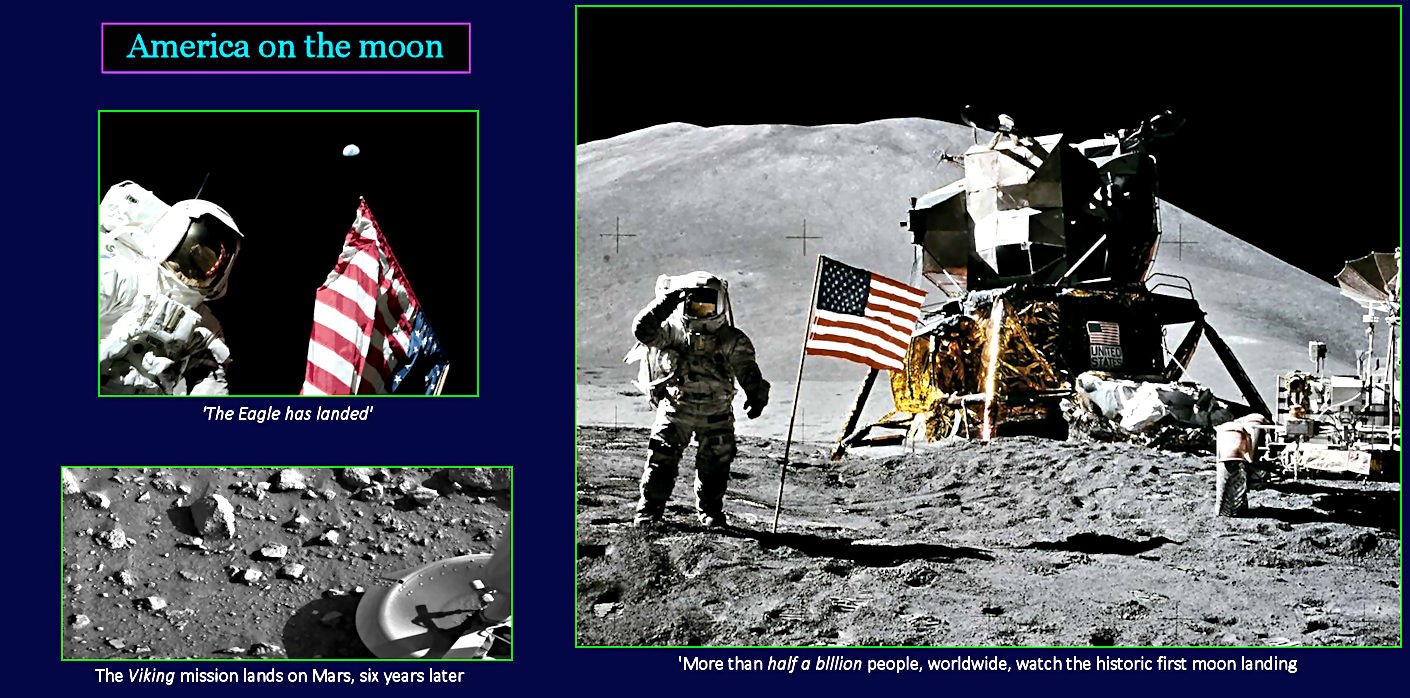
1969 Moon LandingNo event in history compares with the live TV coverage of America's first sensational moon landing. It's viewed by an astonishing 85% of all American households, and an equally impressive 20% of all humans living on the planet. This record that will likely stand forever. It commemorates a feat which was repeated five times in the next three years, but never again. By anyone. Some nations have landed probes on the moon, but not humans. The event marks what may be the high point of America's standing in the world. Later events, like the retreat from Vietnam, the disgrace and resignation of a president, and recent mass shootings, have tarnished that brand. Regardless, the moon landings set up one of the most vibrant decades ever to light up the planet. The 1970s. Rock music and computers electrify America in a way that today is just routine. Those who experienced it remember. |
| ||||||||||||||||
| |||||||||
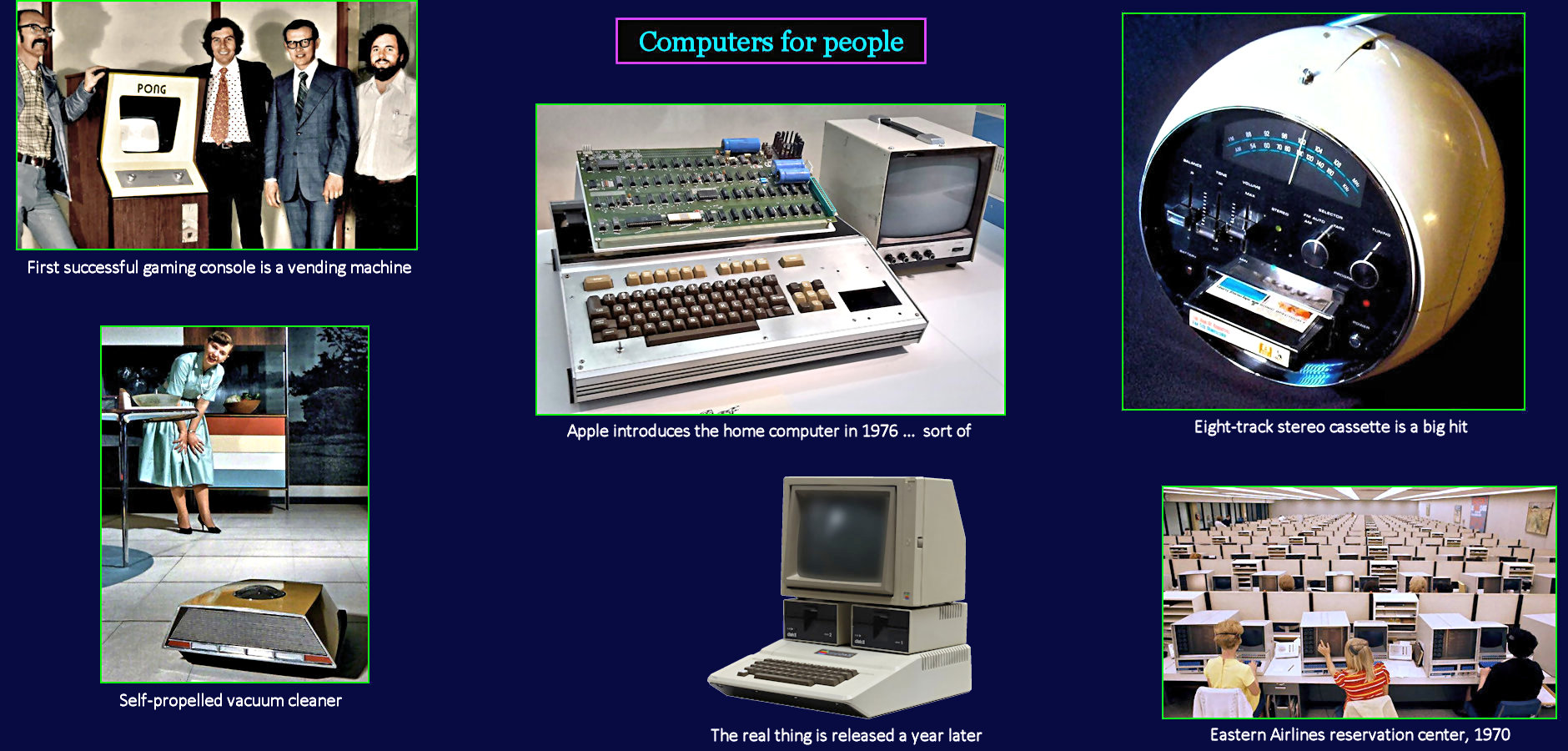
Latest Tech Marvels Photos of the early days of computers, like these, appear laughable quaint today. But ten years earlier, they would have seemed fanciful dreaming. | |||||||||
| |||||||||
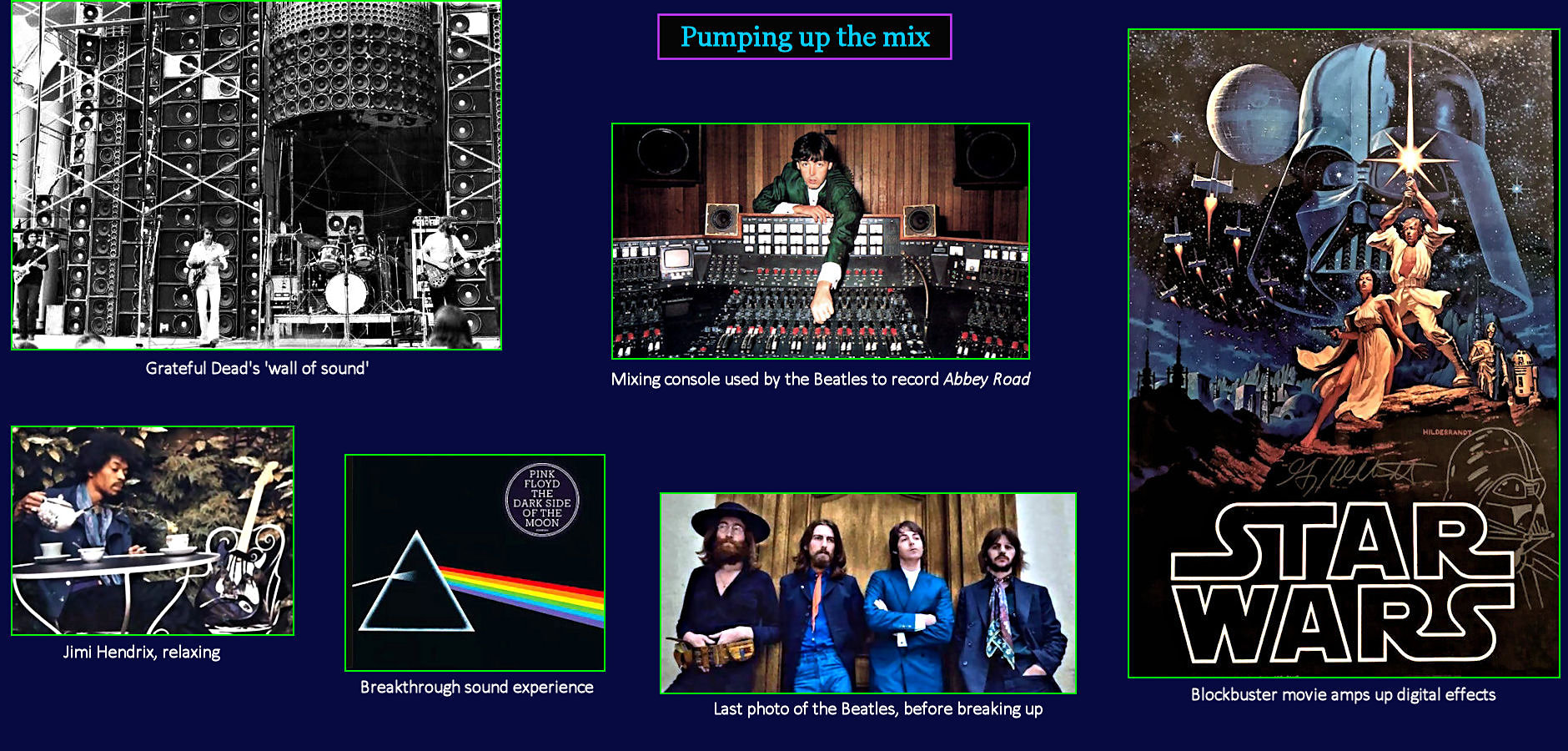
New Sounds The Beatles are breaking up after releasing their ground-breaking Abbey Road album, and Jimi Hendrix has overdosed, but barriers keep tumbling down in the music industry. Pink Floyd and Led Zeppelin continue to push sonic boundaries, while the Grateful Dead stage concerts that seem to never end. Meanwhile, digital effects come into their own in the first Star Wars movie, in 1977. | |||||||||
| |||||||||
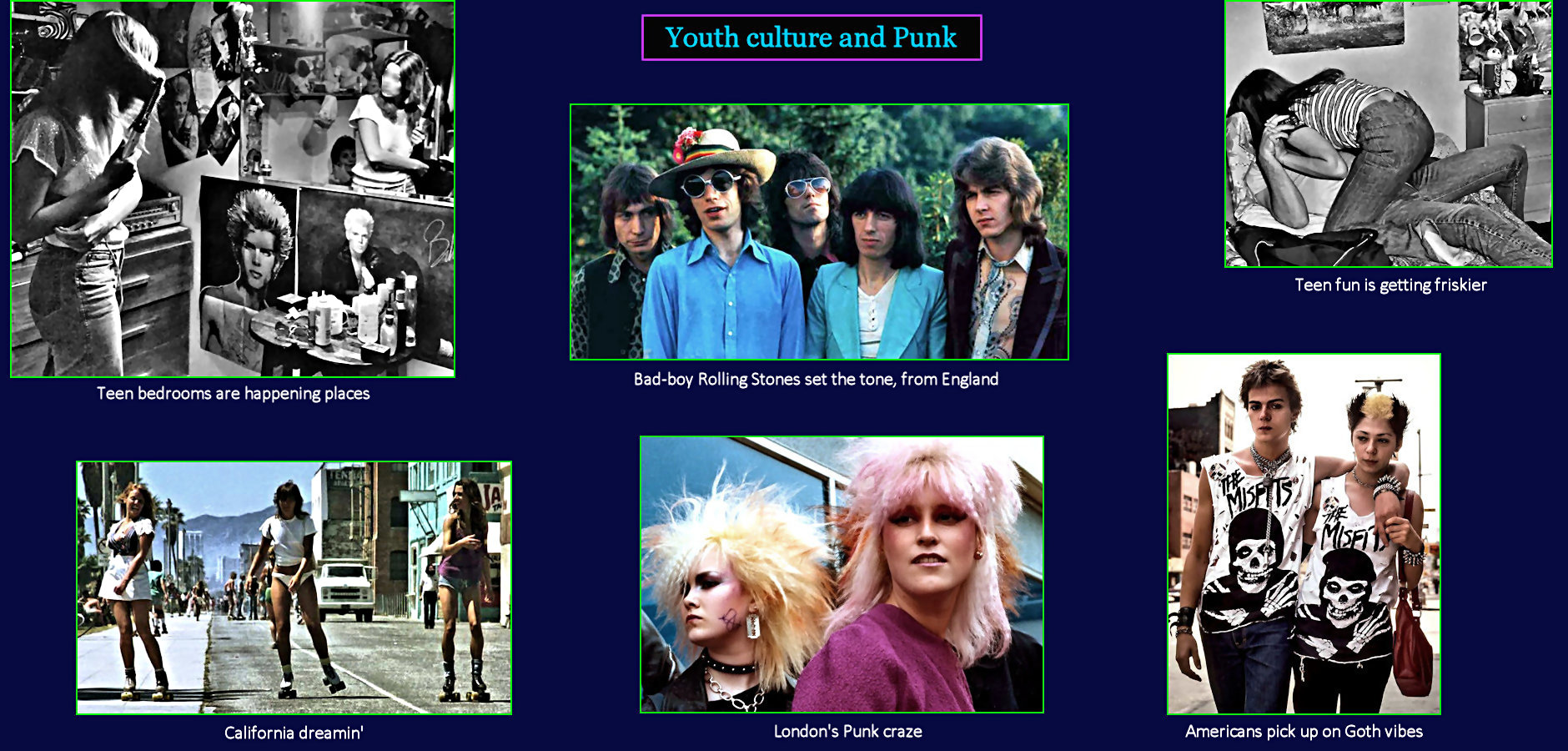
World of Their Own As drugs continue to permeate college campuses, and even high schools, America's youth generation is on a tear. Parents are losing control. | |||||||||
| |||||||||
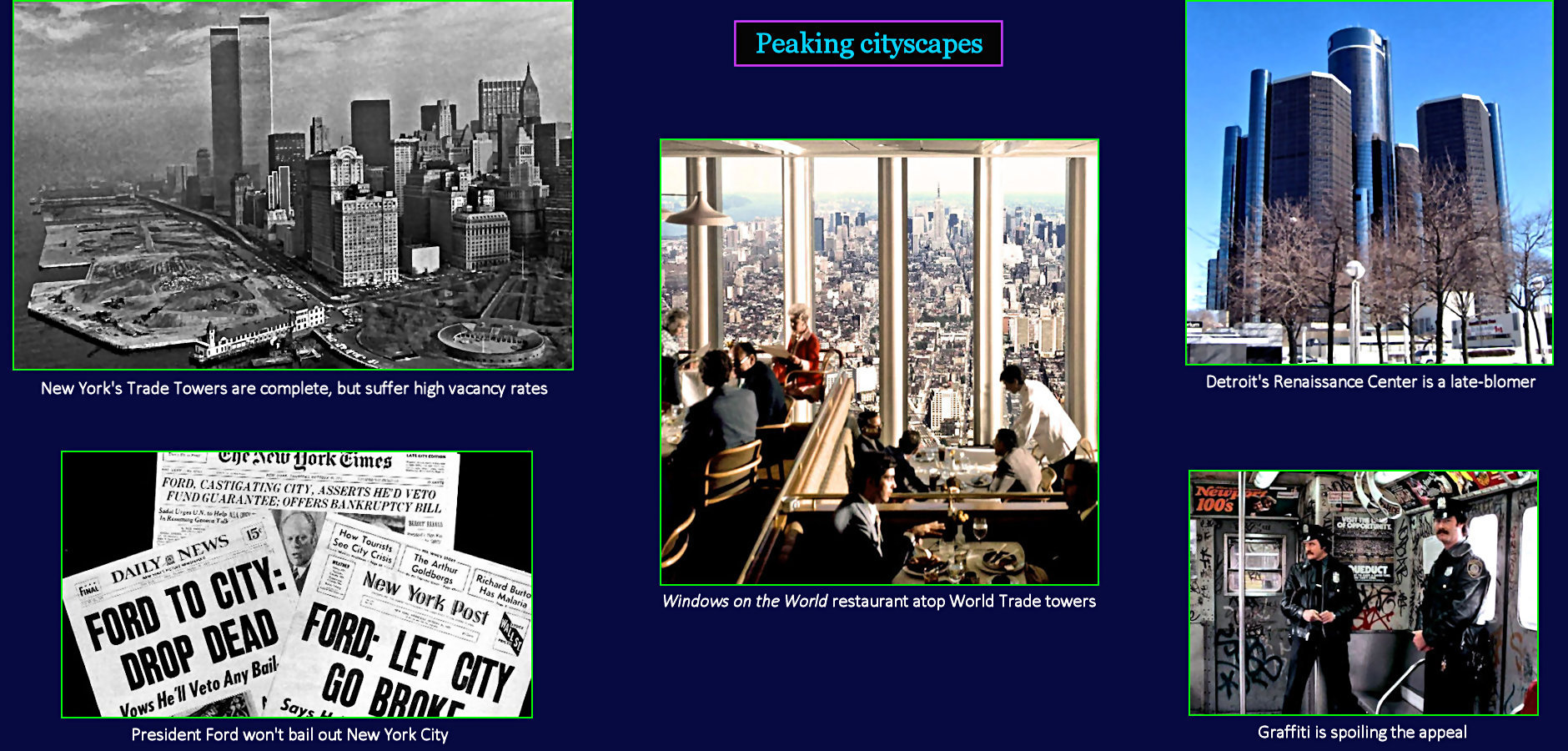
End of an Era? New York throws up the last of its great skyscrapers when the World Trade Center shoots skyward above the Financial District. But the towers struggle to find tenants, as New York slides into decline. The city barely avoids default and bankruptcy in 1975, after President Ford declines to provide a federal bailout, prompting a famous headline (lower left). Still, the swank restaurant on the top of the Trade Towers provides a splendid view, and is always packed. In Detroit, the Renaissance Center is another bold attempt to revitalize a great American city, after 20 years of declining population related to increasing automation in the auto industry. In later years, it too struggles with vacancy. | |||||||||
| |||||||||
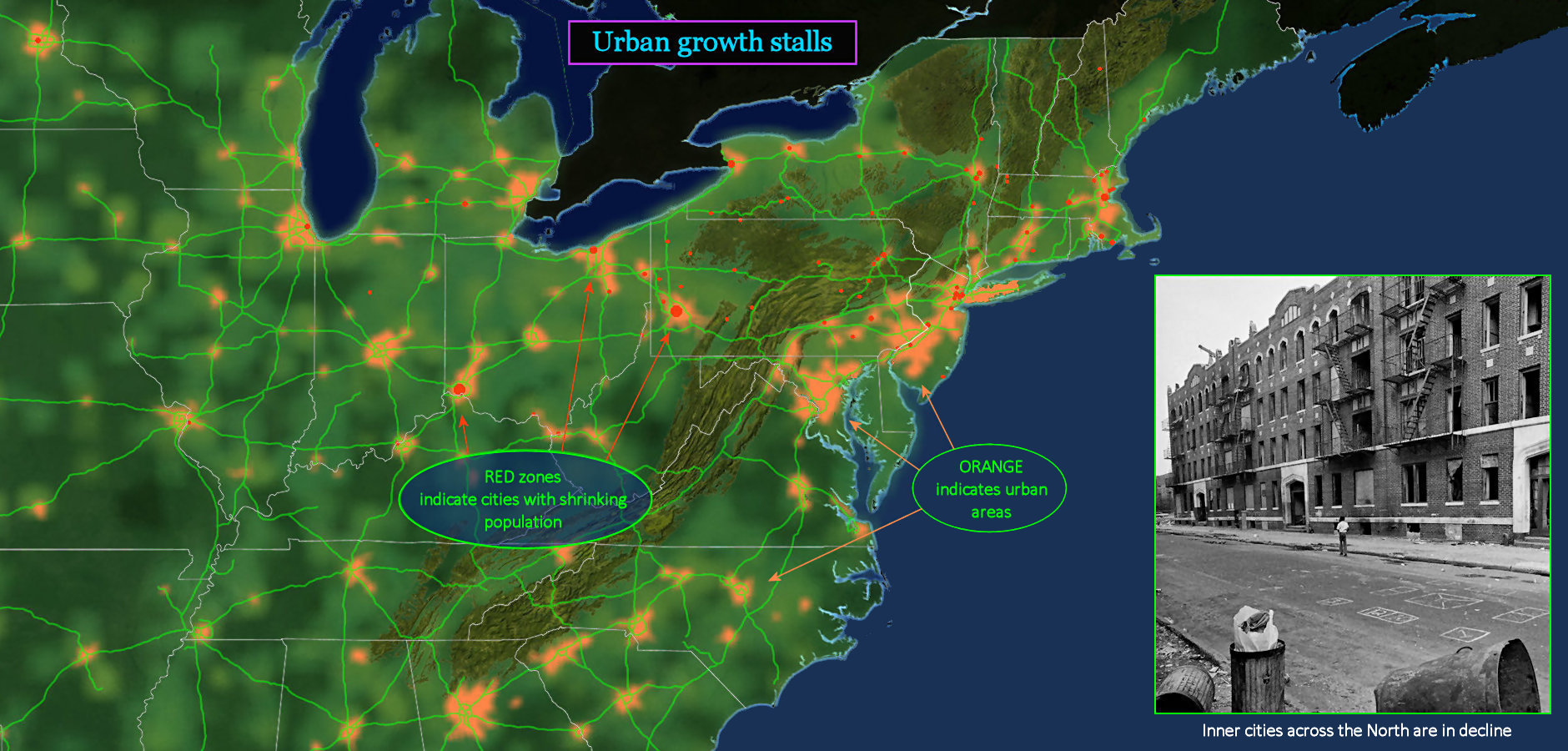
Spreading Contagion The problems in New York and Detroit are symptomatic of a more general decline of cities all across the Northeast. Most are bleeding residents to surrounding suburbs, where crime is low, and graffiti doesn't bloom overnight on every vertical surface. in the map above, the ORANGE shows the extent of urban sprawl, while the RED indicates decay in urban centers. With manufacturing in decline all over America, cities that were built upon an earlier manufacturing boom find themselves saddled with structures and housing units that are no longer needed. | |||||||||