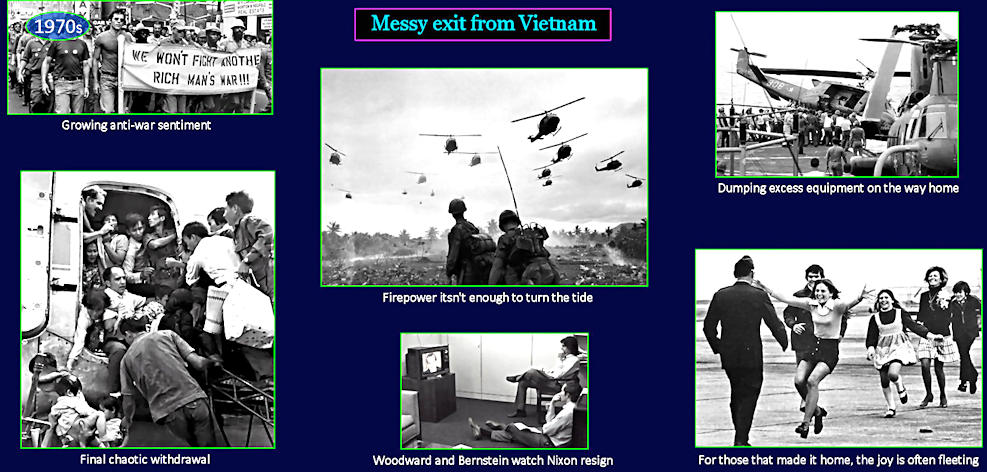
Losing Isn't FunFor America, the story of America in the 1970s is largely the story of trying to extricate itself from the Vietnam War. Student protests against the war continue to grow, as President Nixon relies on renewed bombing. An earlier US bombing campaign during the 1960s had been scaled back due to disappointing results, but Nixon now authorizes direct bombing of North Vietnam, and even neighboring Cambodia. This included extensive use of napalm bombs, which release a gelatinized form of gasoline that causes extensive, gruesome burns among civilians and combatants alike. This sparks further protests. Meanwhile, Americans are starting to hear the term 'Middle East' a lot, as conflict between Israel and the surrounding Arab countries grabs attention. Newscasters are beginning to talk about something called 'strategic' oil. |
| ||||||||||||||||
| |||||||||
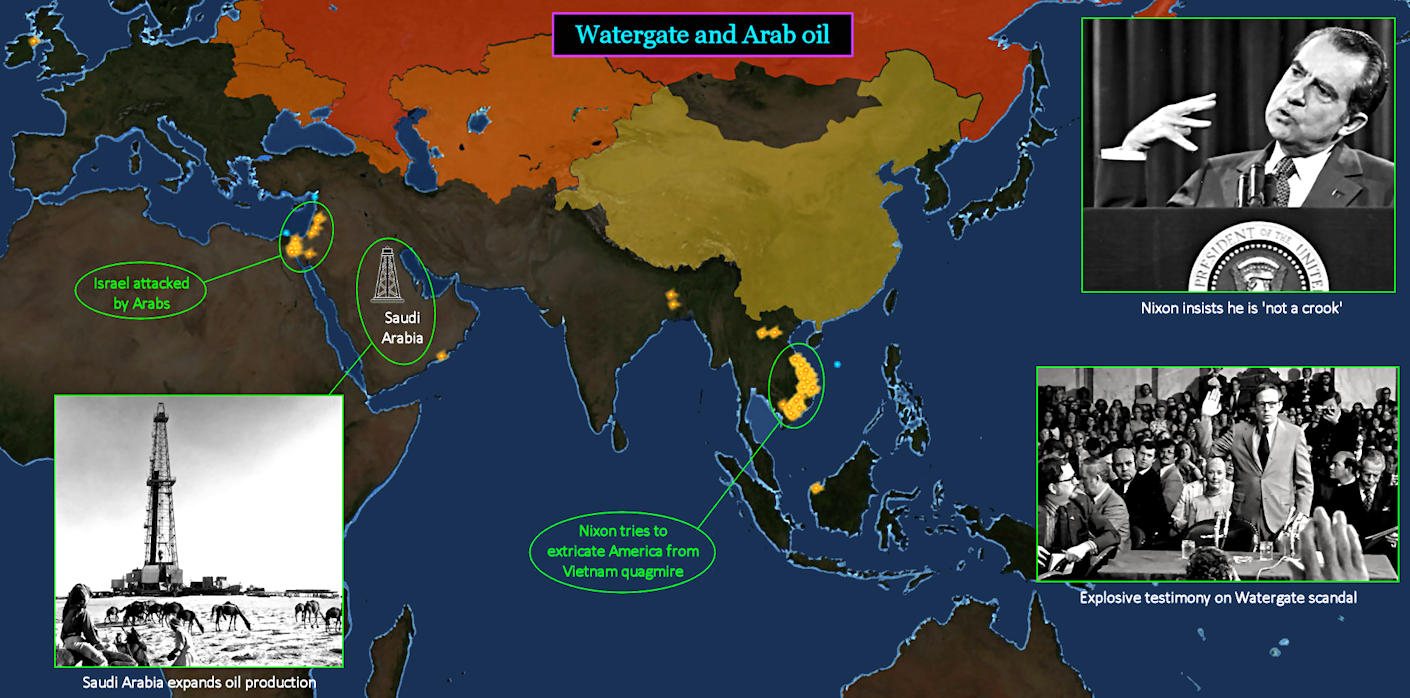
Cancer on the Presidency By mid-1973 the press is all over Nixon, who has been implicated in the long-running Watergate Scandal. This involves illegal White House efforts to spy on political opponents. Nixon tries to shift the focus away from Congressional hearings by talking about 'peace with honor' in Vietnam. With US troops now gone, he is trying to prop up the corrupt south Vietnamese government, as it continues to lose ground to advancing communists. At the same time, he is dealing with blowback from the Arabs for US support of Israel against an attempted Arab invasion, six years previously. Despite success in other areas, Nixon is finally forced to resign, after his involvement in Watergate is revealed by a set of secret tape recordings of Oval Office conversations. | |||||||||
| |||||||||
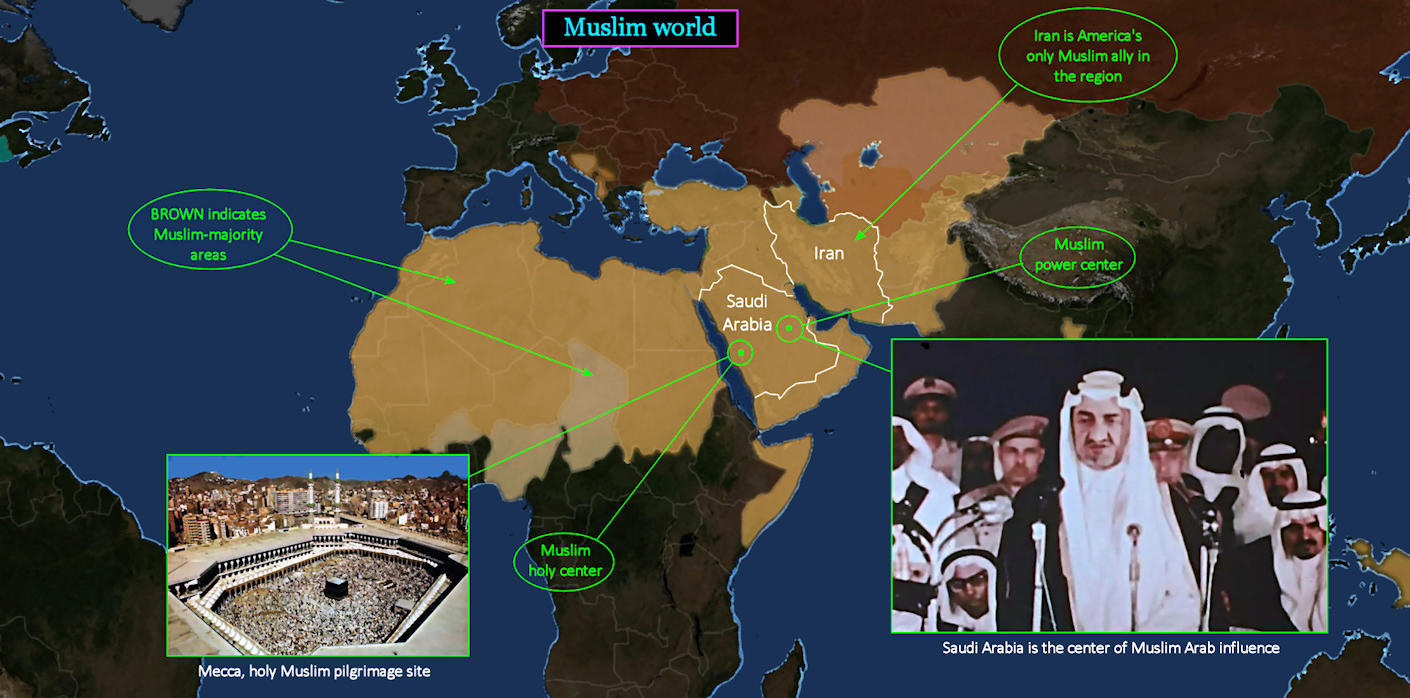
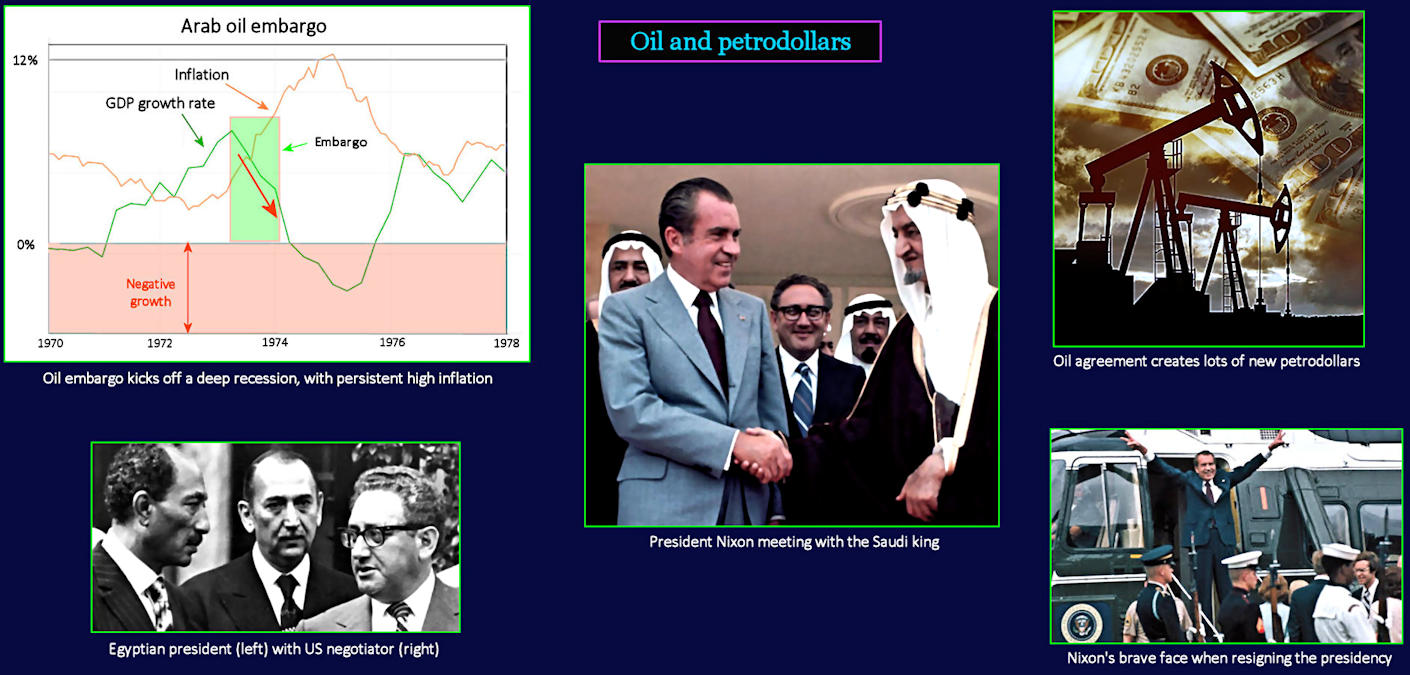
Arab Oil While Nixon is distracted by other problems, he fails to pay attention to a brewing situation in the Middle East. Saudi Arabia, which controls the largest share of oil exports from the region, has turned critical of America for its support of Israel against fellow Arab nations. Saudi Arabia's next-door neighbor, Egypt, has been humiliated by the Israelis, thanks to the American assist. The Saudi king decides it’s time to begin flexing the power of Arab oil. | |||||||||
| |||||||||
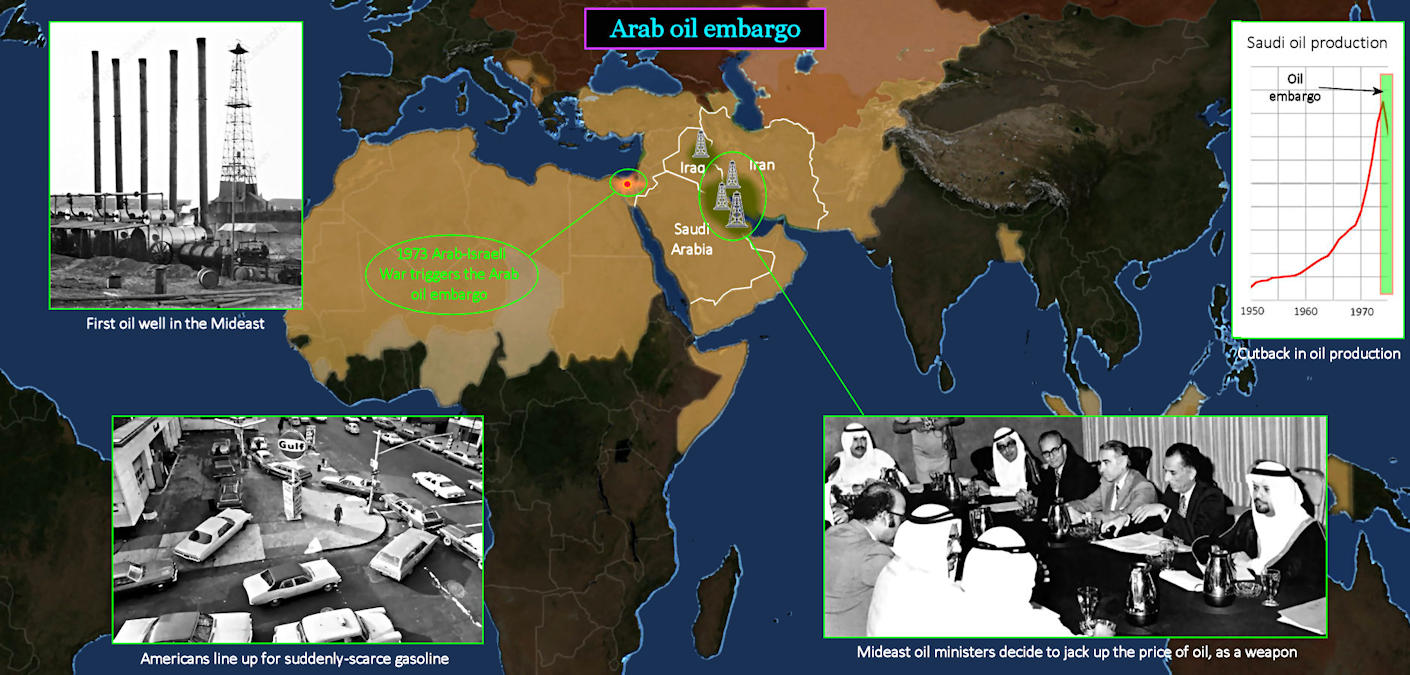
Oil Panic Just two months after Nixon is forced to resign, the Arab Oil Embargo hits America. Almost all the big oil-producing nations, which are almost all Arab, join the embargo. It suspends oil shipments to any nation that supported Israel in its war against Egypt. America is the biggest target, and takes the hit hard. Gas prices in the US quadruple in a few months, and remain cripplingly high until the embargo is lifted, a year later. This is after President Ford pledges a more 'even-handed' approach to the Middle East, but the damage is already done. Imports of more fuel-efficient cars from Japan climb so rapidly that Japan overtakes the US to become the world's leading auto producer by 1980. | |||||||||
| |||||||||
Dollar Diplomacy The US still needs to import lots of Middle East oil. Countries which supply the oil are paid in US dollars, but have the right to exchange the dollars for gold. Some countries make such a demand, which slowly drains total US gold reserves. To stop this, Nixon simply ends the backing of dollars in gold, in 1971. At the same time, he makes a clever deal with the Saudis to accept payment for oil shipments only in US dollars, no matter what nation is doing the buying. In return, the US guarantees Saudi military security. This agreement ensures a continuing need for US dollars worldwide, to purchase Saudi oil. Because oil can only be purchased with dollars, such deals are sometimes called 'petrodollar' transactions. | |||||||||
| |||||||||
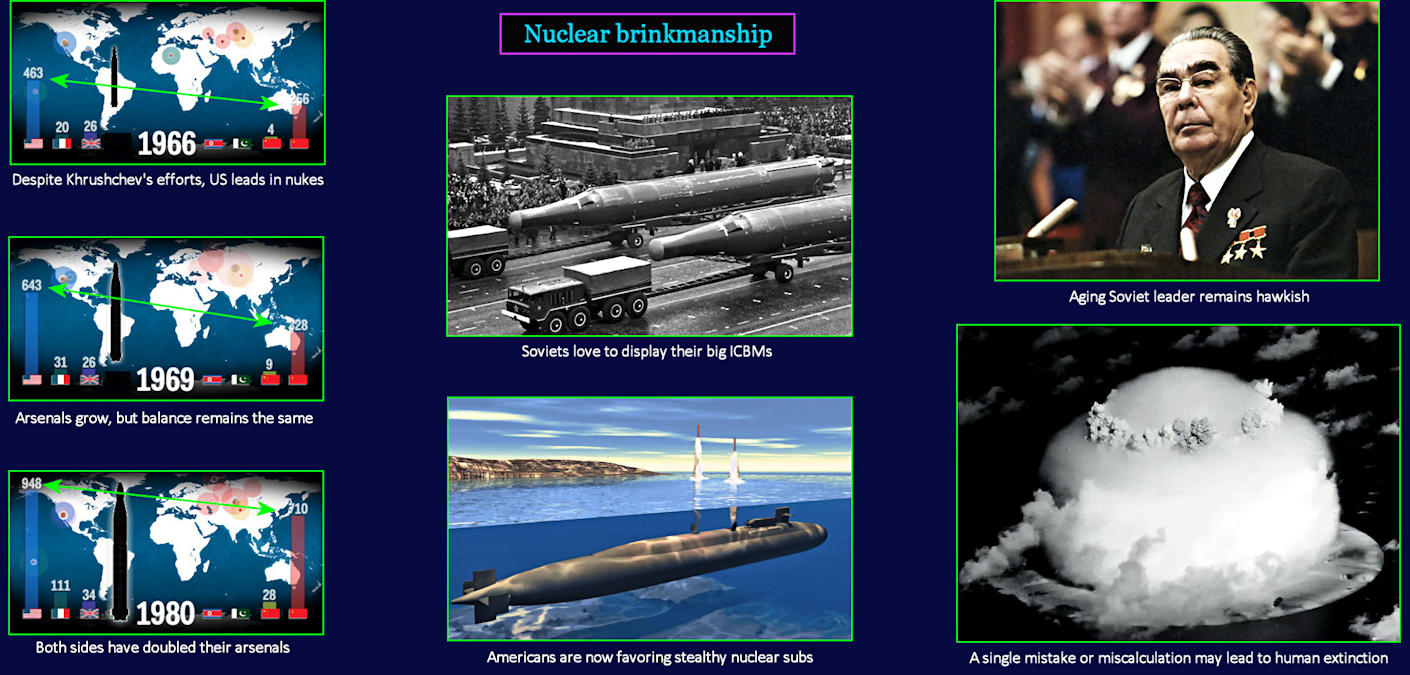
Duck and Cover The days when Americans worried about a looming nuclear attack may seem remote to us now, but the threat of nuclear annihilation is an everyday reality throughout the 1970s. Arsenals of nuclear-tipped ICBMs continue to grow, with no thaw in US-Soviet relations. If anything, the Soviets now seem even more resolutely focused on surpassing their hated overseas rival. Schoolchildren are taught how to 'duck and cover,' in the event of a nuclear attack, by crawling under their desks. This would be laughable, if it didn't underscore how unprepared America is, in the 1970s, for a real atomic war. Even more chilling is the reality that the arsenals still exist today. Missiles on both sides still wait in their silos, ready to launch, should someone push the panic button. | |||||||||