| |
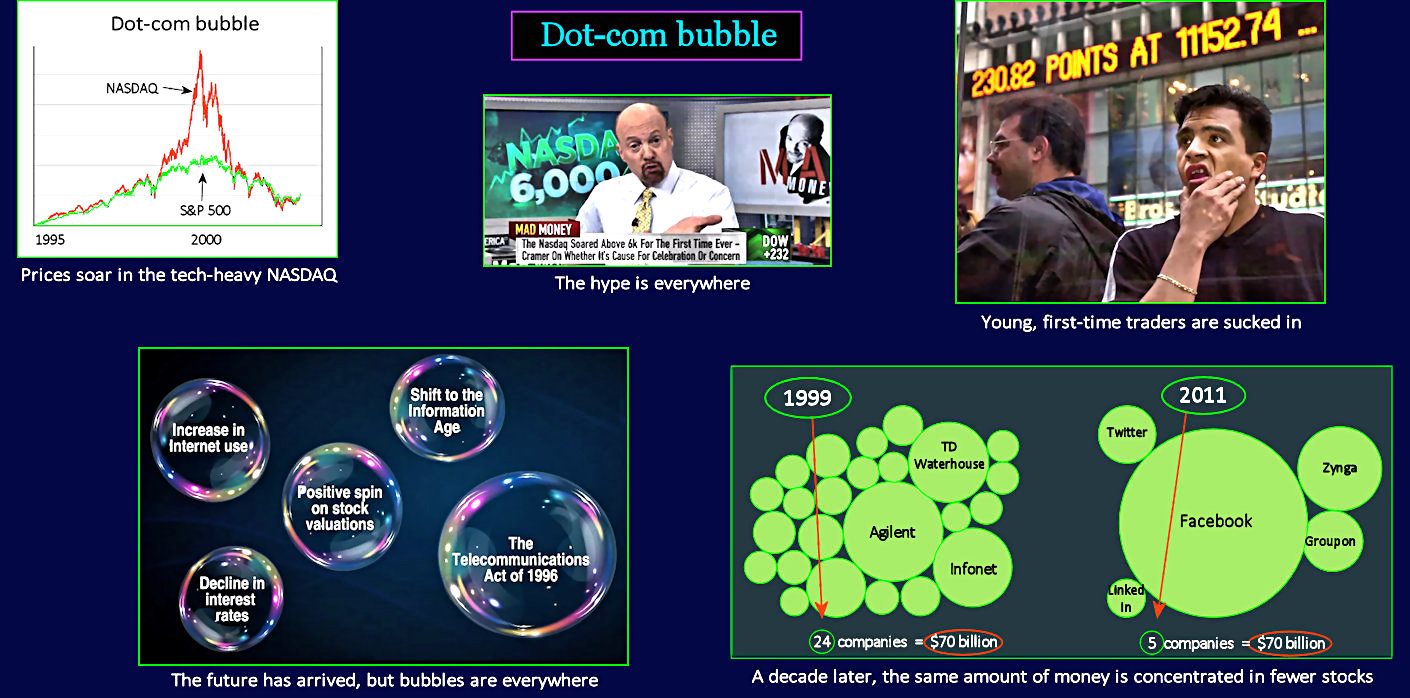
Fantasyland Americans easily fall for the hype, as they can't make heads or tails out of all the new 'tech' talk suddenly flooding their world. They're happy to follow the advice of financial pundits, who somehow seem to understand why these opaque, but shiny new objects, offer an amazing chance to get in on the ground floor. Of something. Besides, new tech stocks seem guaranteed to pop ... until the bottom drops out, in early spring. Then, many simply disappear. Those that remain pick up the scraps, resulting in a much more concentrated market (lower right). |
| |||||||||
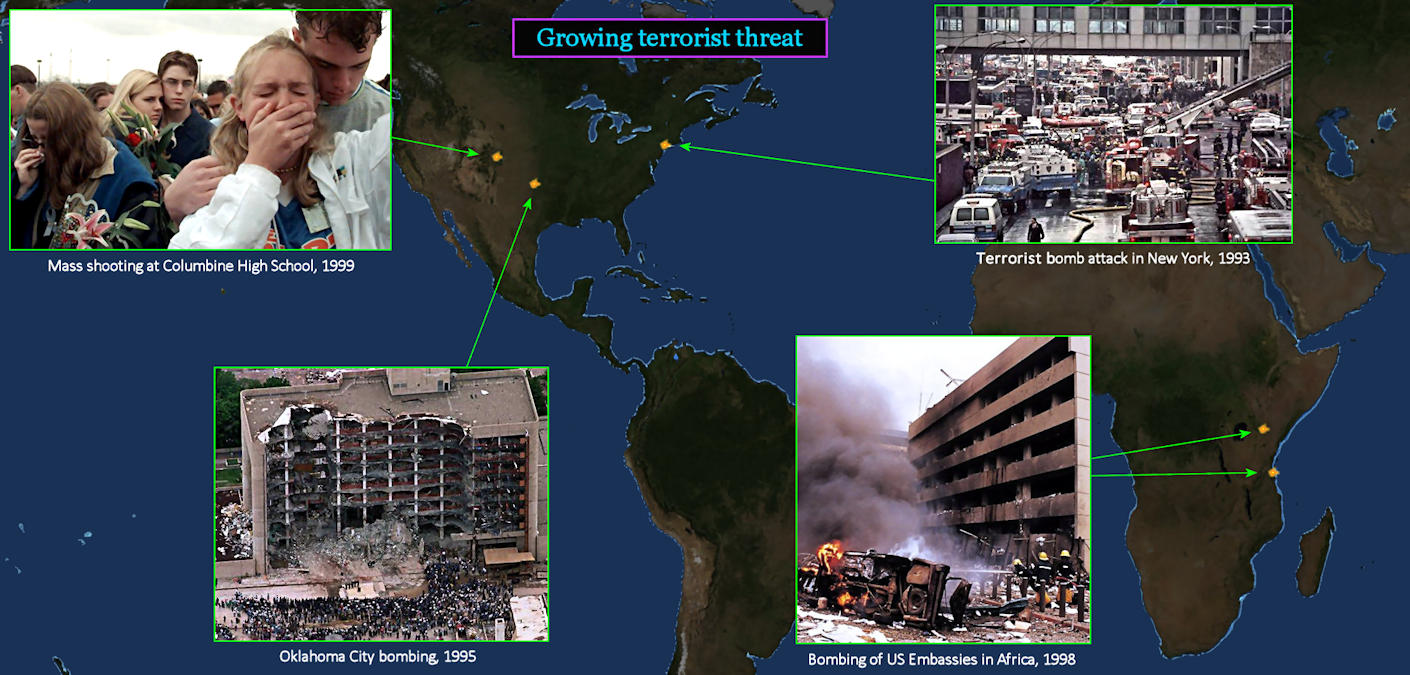
Background Rumble Meanwhile, the previous decade has witnessed a disturbing rise in violent, seemingly senseless attacks. These are no longer confined to a distant and vaguely-perceived Middle East, but are showing up right back home. This begins with the first bombing of the World Trade Center, in New York. There isn't much real damage, but within two years the whole side of a federal building in Oklahoma City is blown off. This concentrates the attention. Next, hundreds die in a pair of bombings of US embassies, somewhere in Africa (Tanzania and Kenya), followed by a truly jarring slap in America's face. Two 12th-graders in Colorado turn a pair of handguns, and a shotgun, on their fellow students, killing 13 and injuring 21 more. | |||||||||
| |||||||||
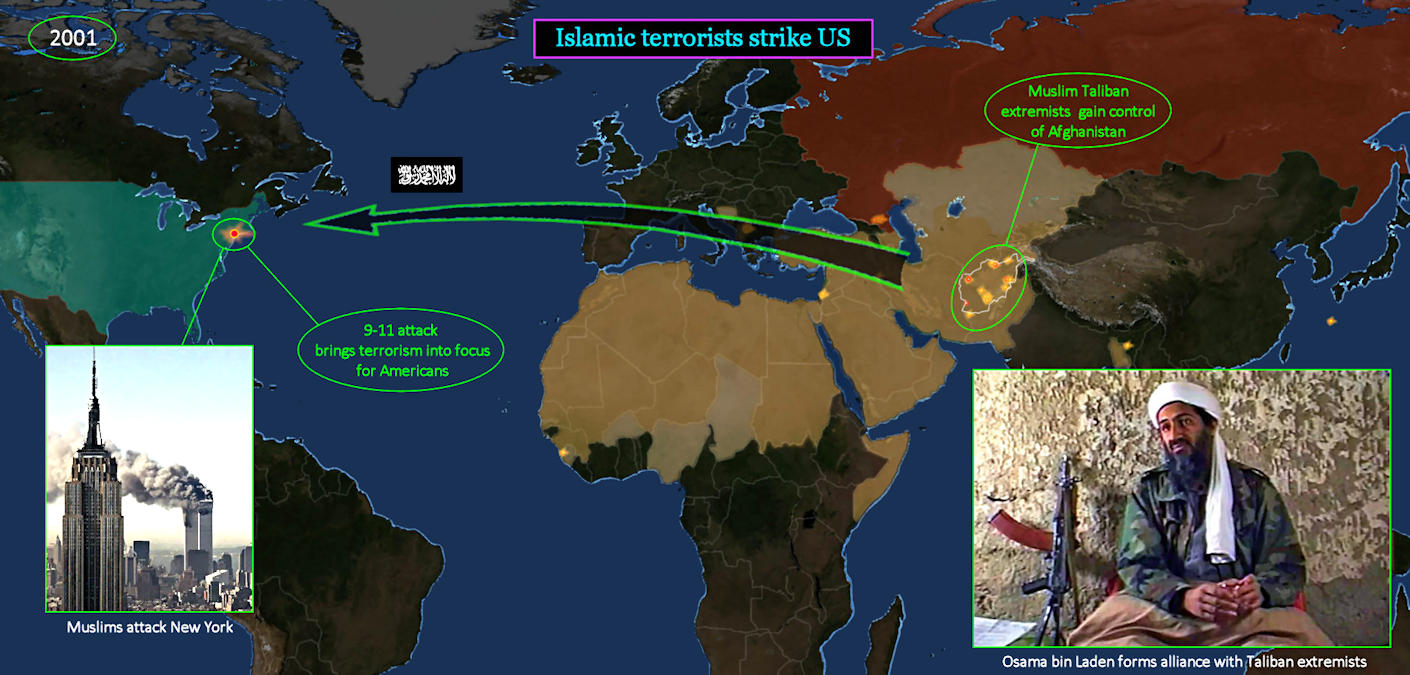
Second Day of Infamy All this sets the stage for the main event of the decade. Two commercial airliners, hijacked by former Saudi Air Force pilots, are deliberately flown into the World Trade towers in New York, bringing both of them down in a smoking pile of toxic rubble. This is the fevered work of former-Saudi-rich-boy Osama bin Laden, who instantly becomes the most hated man in America. As bin Laden hoped, the attack throws the US into a tizzy, locking down all of New York and forcing the grounding of every aircraft in the nation. Osama's plan is to provoke America into a futile, and self-destructive attempt to retaliate against an enemy it can't even locate. He very nearly succeeds. | |||||||||
| |||||||||
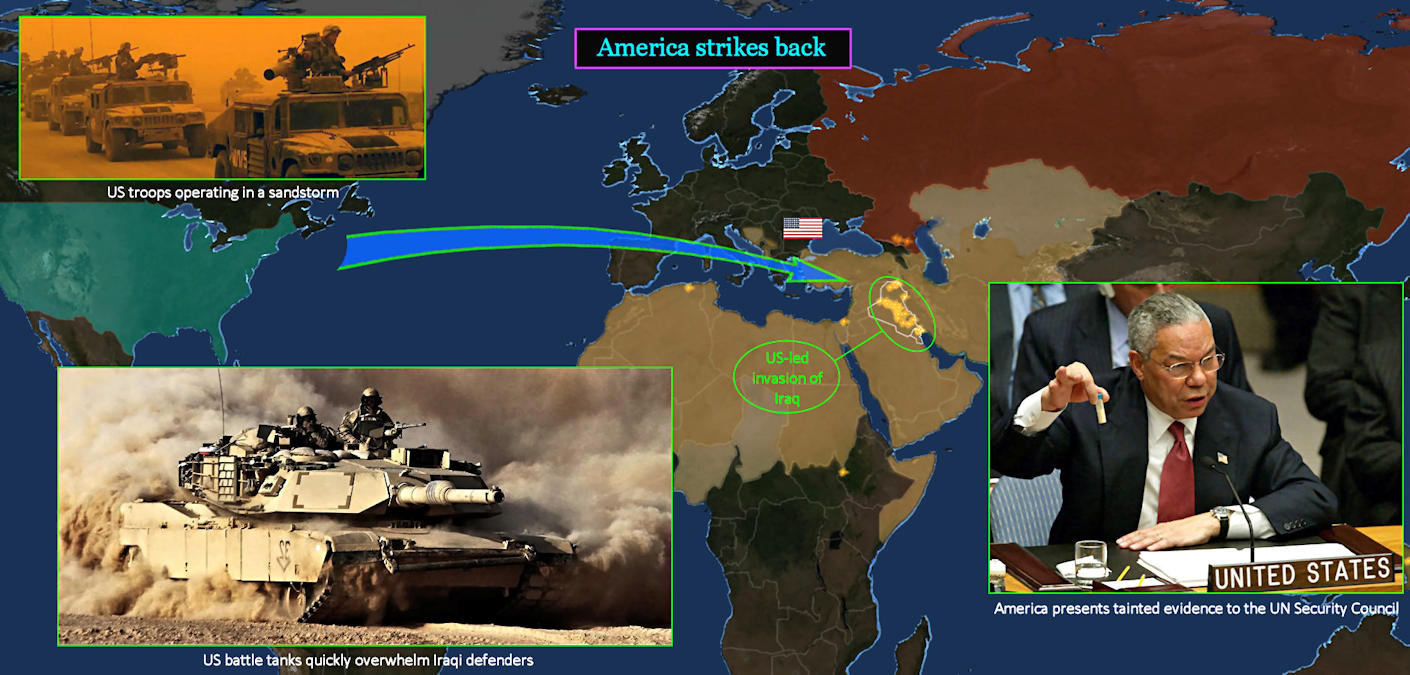
How DARE They? This all lands in the lap of newly-elected President George W. Bush, the son of former President George H.W. Bush. The younger Bush instantly knows what he has to do. Attack Iraq. No matter that the terrorist pilots were from Saudi Arabia, and did their planning in Germany. Bush is eager to match the glory his father earned fighting Iraq in the 1990s, before inexplicable stopping short of the finish line, and leaving Saddam Hussein alive. Security professionals try to warn Bush off, but he pulls out all the stops looking for evidence that Iraq is working to produce 'weapons of mass destruction,' including nuclear and chemical weapons. He launches a ferocious 'shock and awe' attack on Iraq, with virtually no support from the world community. He wins his war. | |||||||||
| |||||||||
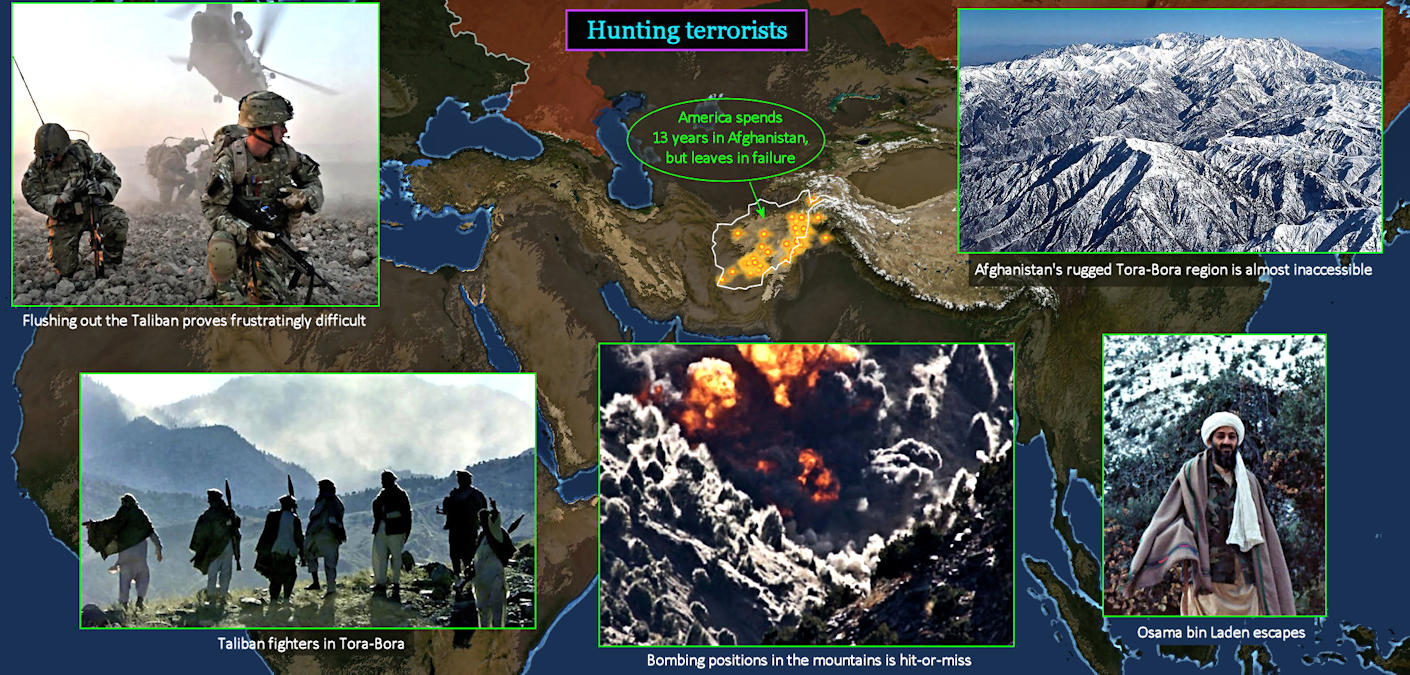
Darn For the next decade-plus, America pursues an unwinnable War on Terrorism, searching high and low for al-Qaeda training camps in Afghanistan, but eventually returning empty-handed. Terrorists move around, popping up here and there, like moles in the Whack-a-Mole game. When bin Laden is finally tracked down and killed ten years later, by President Obama, he is living in comfort and seclusion in Pakistan. | |||||||||
| |||||||||
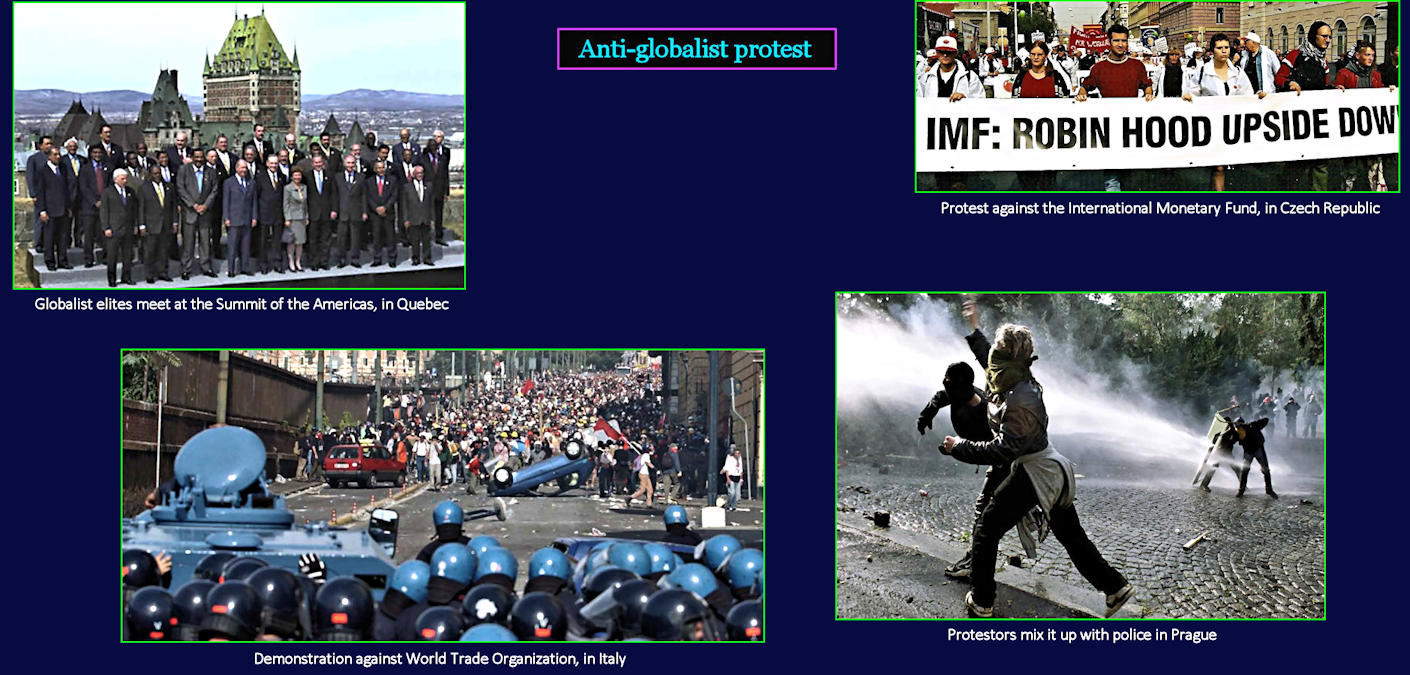
Backlash America's heavy-handed wars against Iraq and Afghanistan provoke a generalized protest against all institutions which have been imposing their will on the world, since the end of the Second World War. The World Trade Organization (WTO) is a magnet for protest, but so too is the World Bank, and the International Monetary Fund (IMF). These pillars of globalism have pursued policies leaving developing nations deeply in debt to the Global North, financing sometimes half-finished infrastructure projects that seldom bring the benefits that are promised. The Global south remains saddled with periodic debt-restructuring, which somehow never removes the need to continue making interest payments. Recently, China has pursued a similar course. | |||||||||