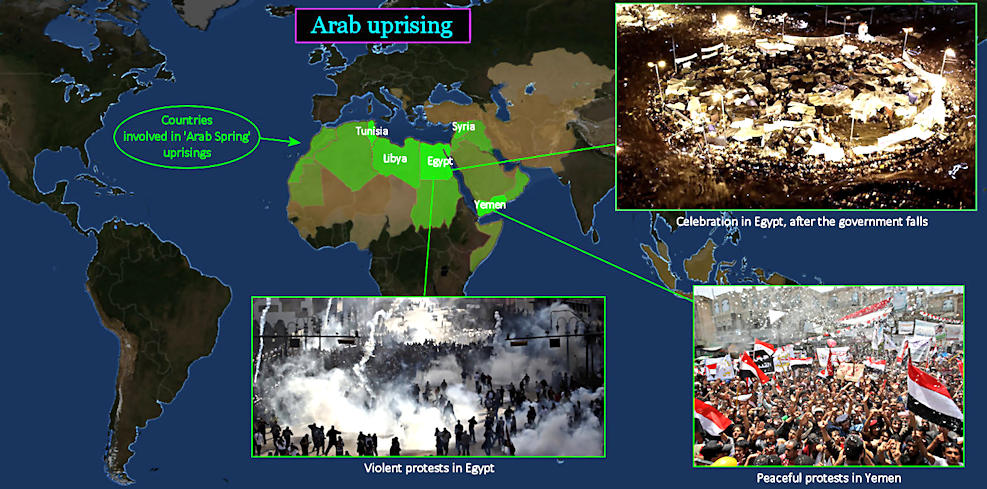
Protests Bring ChangeThe spring of 2011 brings hopeful winds of change, in the form of an unexpected series of uprisings in Africa and the Mideast known as the 'Arab Spring.' It begins in Arab countries lying along the northern coast of Africa. The protests only last for two years, but during this period several countries are able to oust repressive regimes. This promises to herald the awakening of democratic yearnings throughout the Arab world. It doesn't last. Soon after, the world is surprised to find that the Russians haven't gone quietly into the night, to disappear forever. Instead, a new Russian leader emerges, Vladimir Putin, determined to restore Russia's former greatness. This begins with the sudden annexation of part of Ukraine, which was formerly part of the Soviet Union, but is now struggling to chart a new path as an independent nation. It's the beginning of a war that will last a decade. |
| ||||||||||||||||
| |||||||||
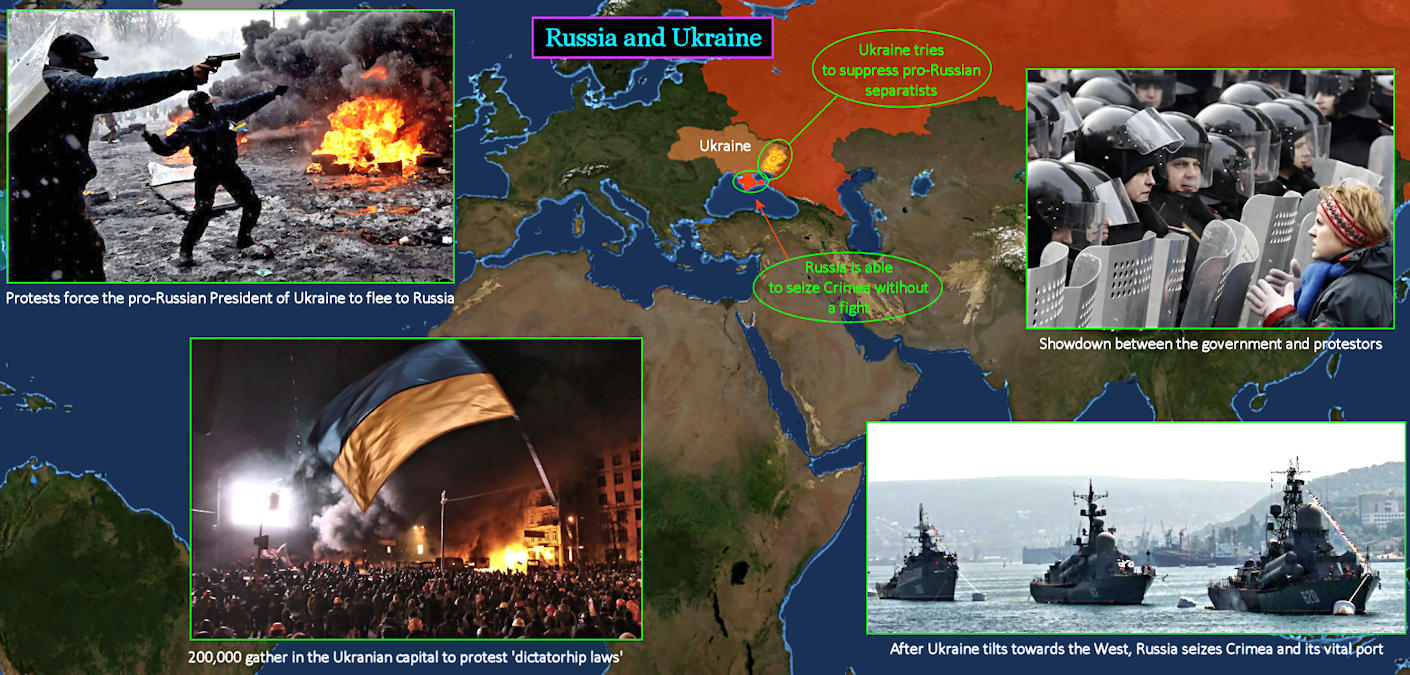
Spark of Hope The situation in Ukraine provides the world with another cause for cautious optimism. Although Ukraine joined the Soviet Union right after the Russian Revolution, and many Ukrainians also speak Russian, the republic decides to chart an independent path after the breakup of the Soviet Union in 1991. Some Ukrainians toy with the idea of joining NATO, which results in a tug of war between pro-Russia and pro-NATO factions. Russia takes advantage of the confused situation to seize the Crimean peninsula, in a surprise attack. Western nations cry foul, but it's a done deal. | |||||||||
| |||||||||
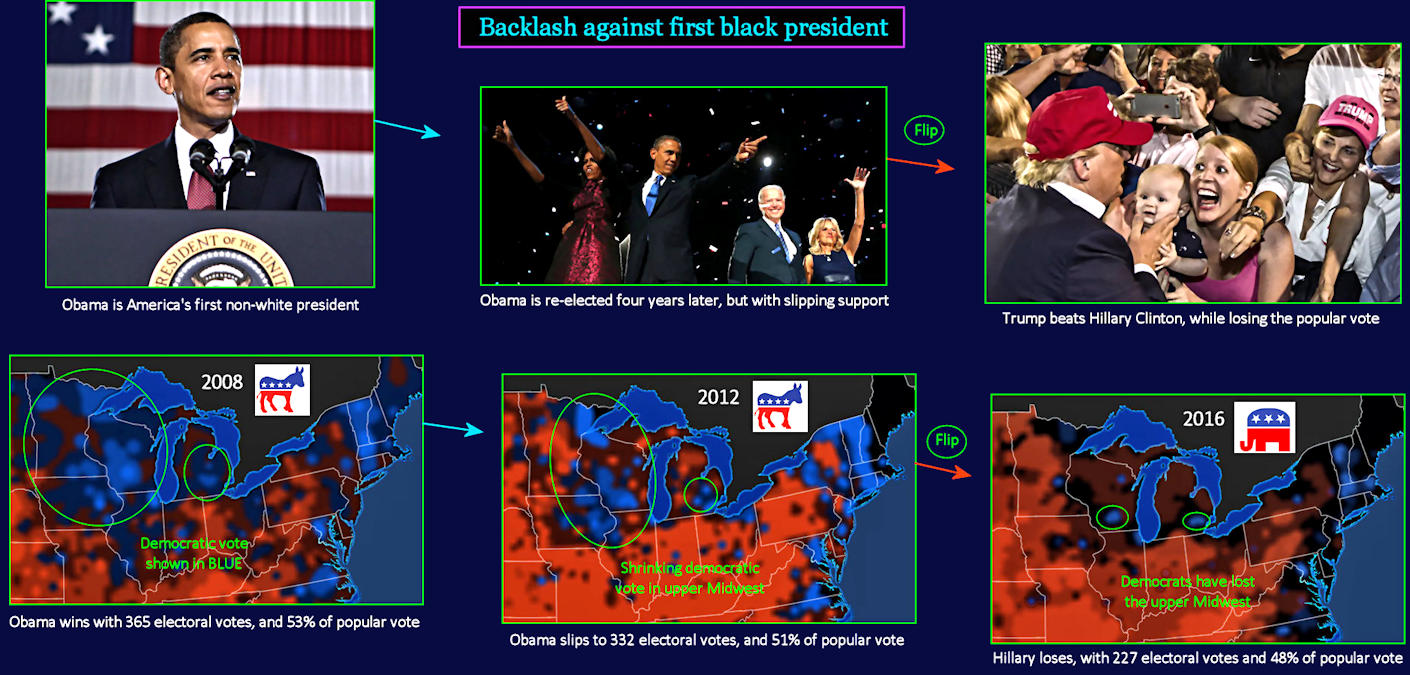
Obama Hopes for a coming resurgence of liberal values in the world are boosted in 2008, when America elects its first non-white president. President Obama is a deep thinker and gifted speaker, who makes a brilliant splash with his equally talented and charismatic wife. The first rush of enthusiasm soon begins to fade, however, and when Obama is re-elected, it's a closer race. After his second term, his vice-president is expected to take over. Hillary Clinton, the wife of former President Clinton, appears poised to become the first female president, in a final show of victory for liberals. Instead, she is upset by a charismatic populist with visions of greatness, who will go on to divide America for the next decade. Donald Trump. Demographics in America are shifting. | |||||||||
| |||||||||
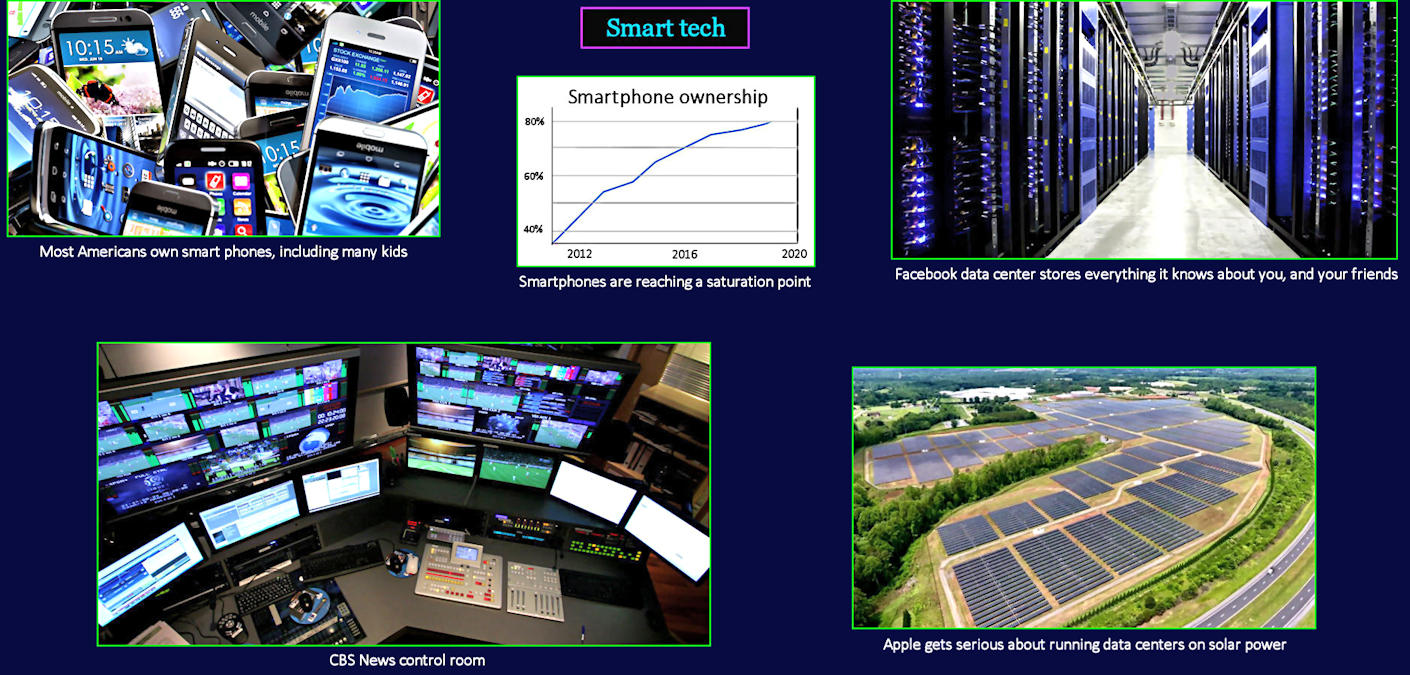
Phones That Are Computers The first mobile phone to offer Google browsing is introduced in 2008. It's also the first to use the new Android operating system. Within five years, more than half of Americans are using smartphones. Soon, America is digitally divided into upscale users of Apple's iPhone, and everyone else, using Android. Meanwhile, Facebook is leading the revolution sparked by social media apps, which can be conveniently used on mobile phones. This is a big deal, as Americans are increasing ditching their relationship with finicky desktop computers, with their complicated settings and mystifying instructions. Phones apps are much simpler to understand, as they only communicate with a single source, like a store or airline, and remember what you like. | |||||||||
| |||||||||
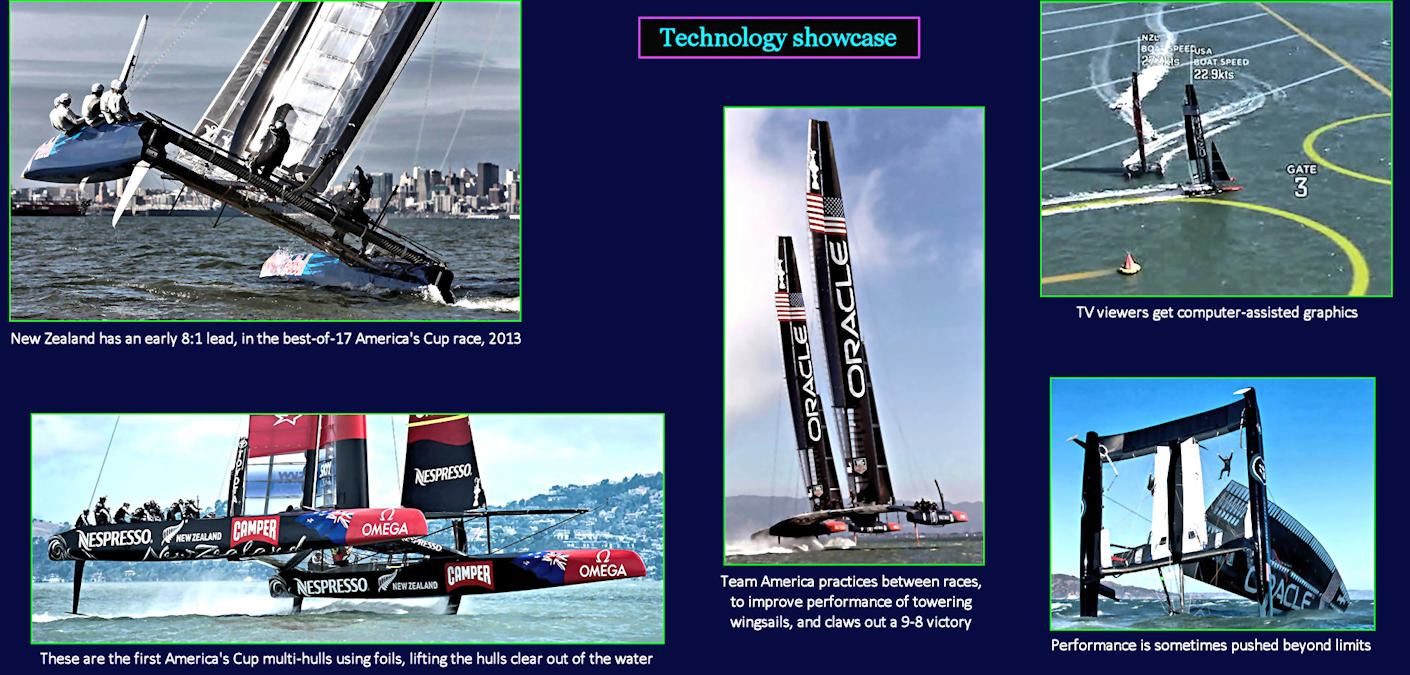
Awesome The America's Cup race series in 2013 reveals to many Americans the sweeping breadth of technology that has been quietly developing all around them. In the best-of-17 race series, TV viewers get many opportunities to watch the action, which is fast-paced and dazzling. Yachts no longer sail majestically by with billowing white sails, but actually fly above the water on thin foils that act as stilts. The sails are towering vertical wings, computer-controlled to extract the last bit of performance. Even the capsizes are spectacular, with huge catamarans pitch-poling forward, leaving crewmembers dangling from the webbing. America finally wins with an impossible 9-race sweep, coming back to erase an 8-1 deficit. Go team America! | |||||||||
| |||||||||
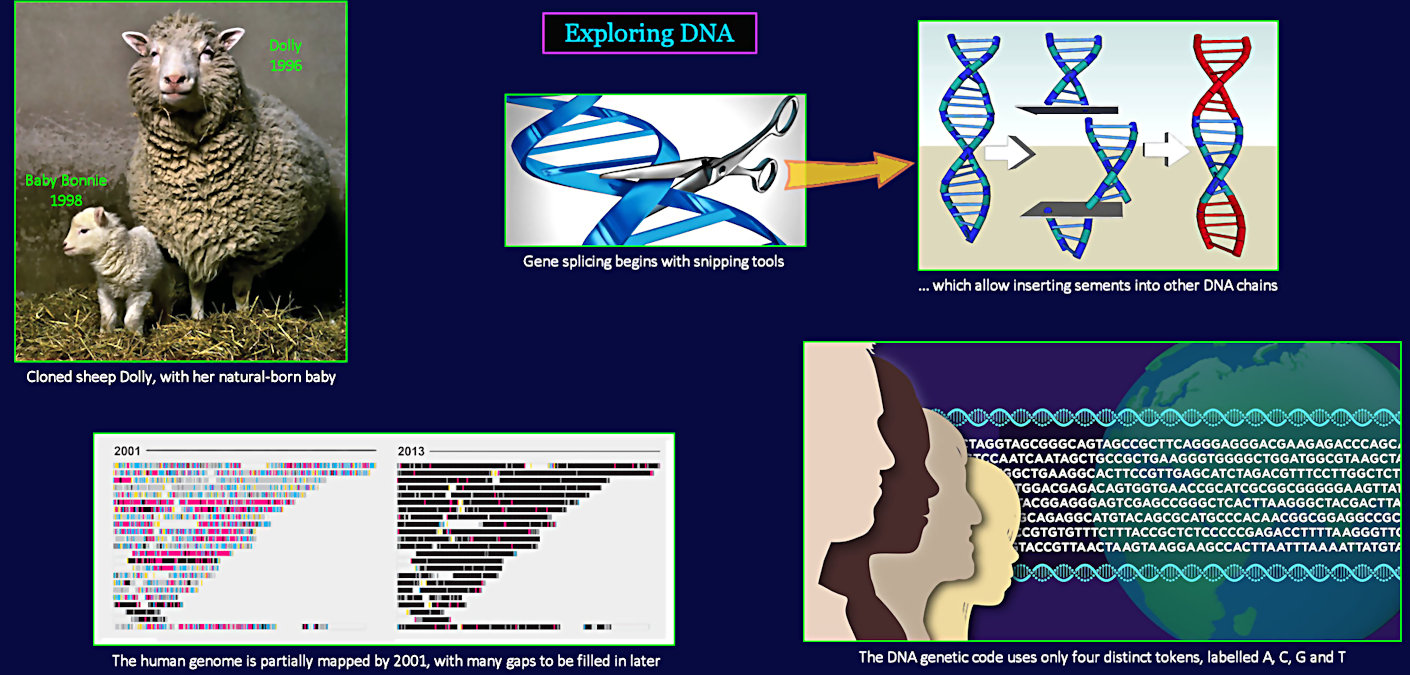
Clones and Splices Even more spectacular, though not available on live TV, are the new advances in cloning and gene-editing. Researchers can now produce not only identical cloned sheep, but also better tomatoes, and corn with super-plant qualities. This is made possible by learning to manipulate the DNA chains which seem to control most biological functions. This genetic code can now be artificially altered, to produce slightly modified life forms with improved qualities. Scientists race to complete a full mapping of the human genome, which is composed of very long chains of just four simple elements. They learn to 'snip' these chains, here and there, to insert segments of code from other sources. It's all magic. | |||||||||