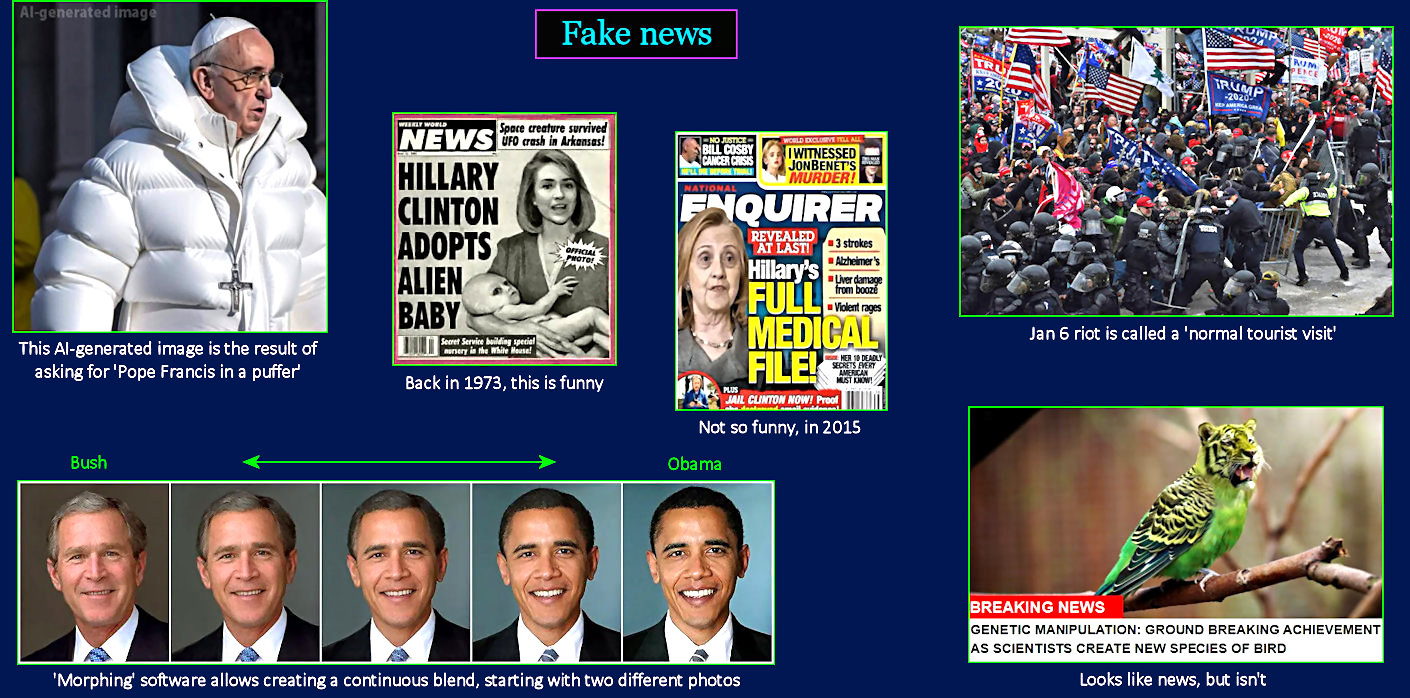
Crisis PointAs 2020 arrives, America is awash in a sea of seemingly contradictory realities. On the one hand, actual quotes and photographs seem to provide convincing evidence to refute wild claims based on fantasy. On the other hand, photos can now be digitally altered so artfully that it's impossible to tell what's real from what's been doctored. Politicians routinely accuse even respected mainstream media outlets of peddling 'fake news.' This results in an America where it's perfectly acceptable to say anything, no matter how seemingly deranged. When people make statements that seem to fly in the face of reality, they can just claim to be living in a 'different' reality. Fake news may be the inevitable result of a digitally transformed world. It may now be impossible to hold anyone liable for harm that results from intentional lies. Perhaps truth is, after all, simply a matter of opinion. |
| ||||||||||||||||
| |||||||||
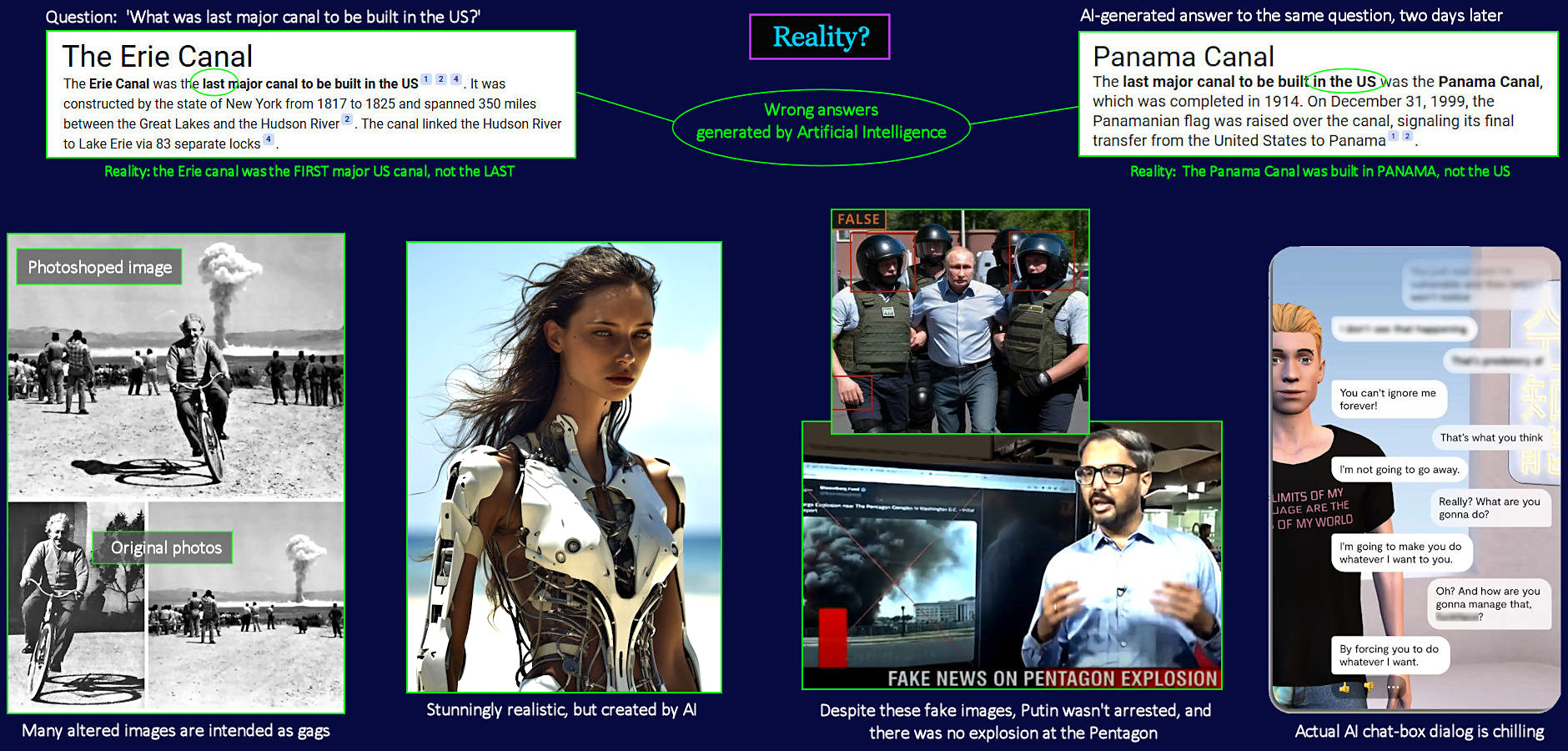
Brave New World Most of us are familiar with computer-generated images. Some are funny, and most are intended simply to sell a product. Pundits are falling all over themselves describing an incredible new world of 'artificial intelligence' (AI). It will help you in your job, they say ... whatever your job. The problem, however, is that AI isn't reliably 'intelligent.' Instead, it excels at finding words that have been used together in the past, suggesting a connection. When AI is asked a question, the response is often little more than a plausible (and grammatically correct) assembly of related words, extracted from other sources. Examine the actual answers offered at top left, and top right. Dialog with 'chat boxes' can also veer off into dodgy territory (lower right). | |||||||||
| |||||||||
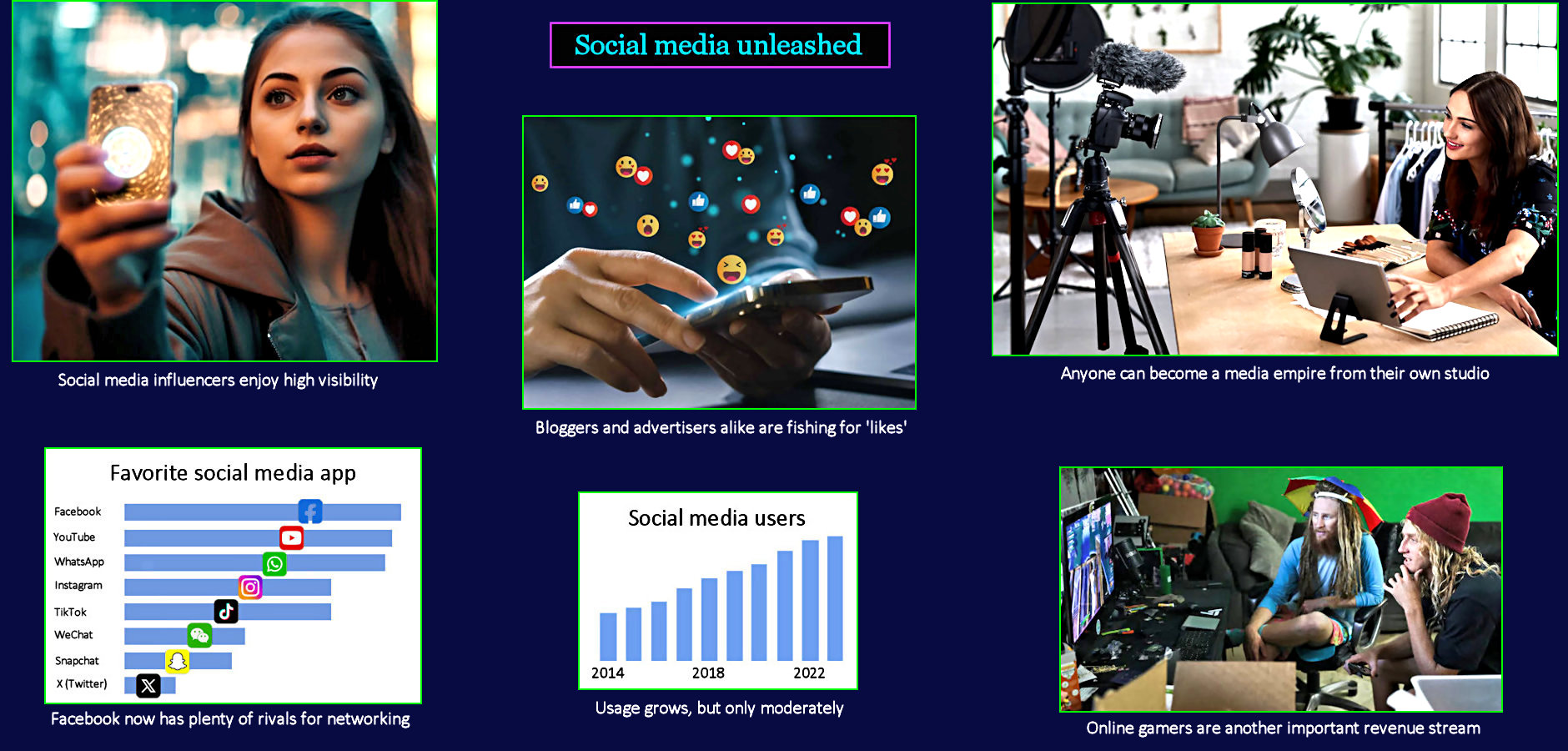
Home Empires One area where reality and fantasy blend seamlessly is the home-studio. Lone virtual innovators can set up a camera and turn their home-office into a blog or vlog (video blog) studio, sometimes with digital effects to add punch. This allows putting together a fandom empire of likes that amplify the impact, and (amazingly) drive the buying decisions of tens of thousands of people who are only connected through social media. Such 'influencers' can have an impact far beyond anything previously possible. | |||||||||
| |||||||||
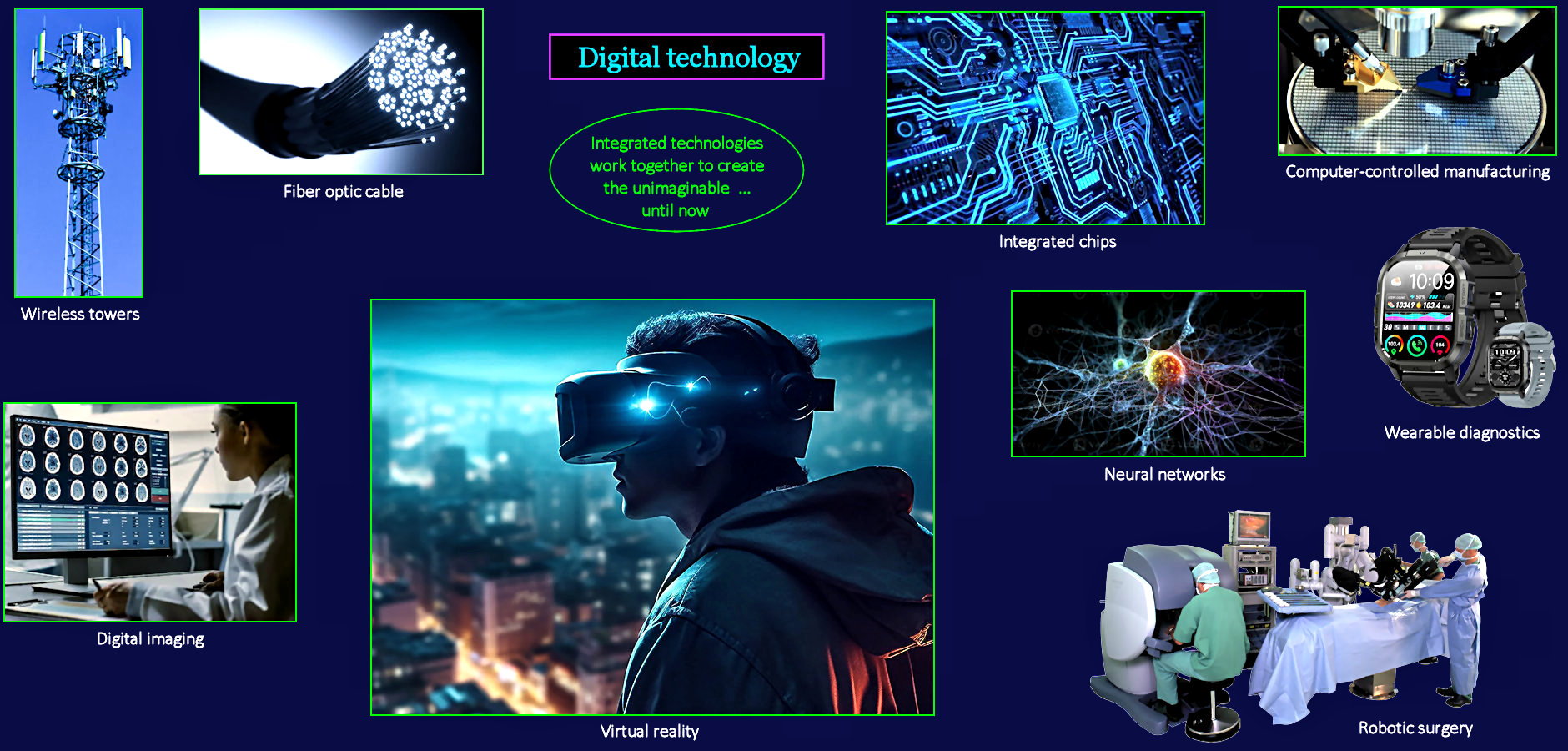
Building Connections The digital world is stitched together with connections. This is all built around new marvels, beginning with the tiny transistor, which serves as both an amplifier and a switch, and requires almost no current. Silicon wafers contain miniaturized circuits, which mimic older circuit boards, but are much more compact. Fiber-optic cables provide high-speed data transmission connecting all the continents. Neural networks model the wiring of the human brain, while virtual reality uses a blend of processing technologies to present a continuously-updated, digitally-generated display directly to the eyes. Whiz-bang! | |||||||||
| |||||||||
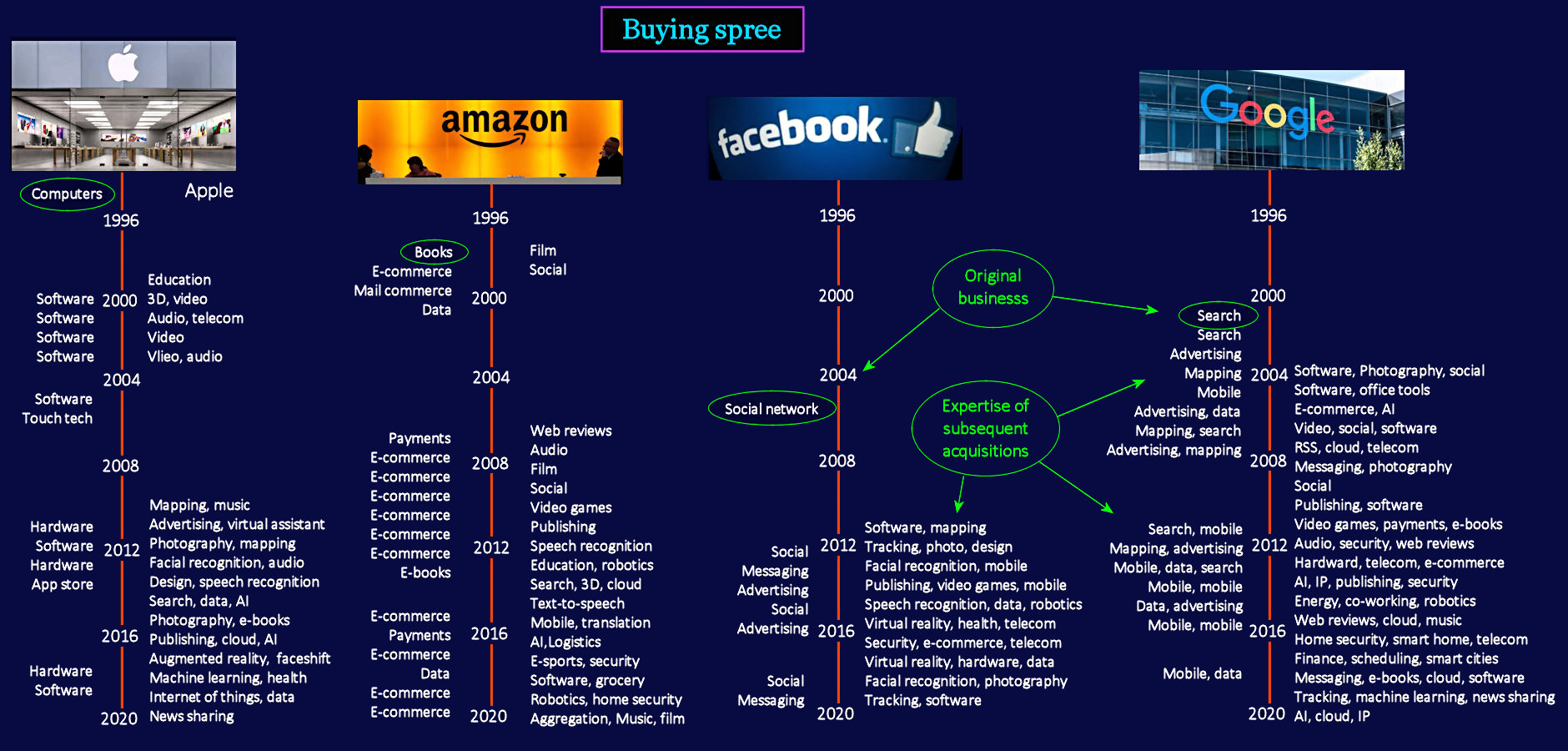
Monetizing Clicks The businesses shown above are among the most profitable corporations on the entire planet. Only the Saudi oil company, and a handful of Chinese and American financial firms, are in the same league. Apple gets half its income from iPhones, and Amazon derives half from its 'cloud' services, but most of the rest comes from advertising. Facebook, the leader in the social media world, gets virtually all its profits from advertising. Not cars, weaponry or any form of manufacturing at all. Not steel, mining, shipping, or any form of energy. Advertising. These companies have become giants by snapping up virtually all new tech startups. When you use WhatsApp, you're using a Facebook acquisition. Enjoy YouTube? That's Google under a different name. | |||||||||
| |||||||||
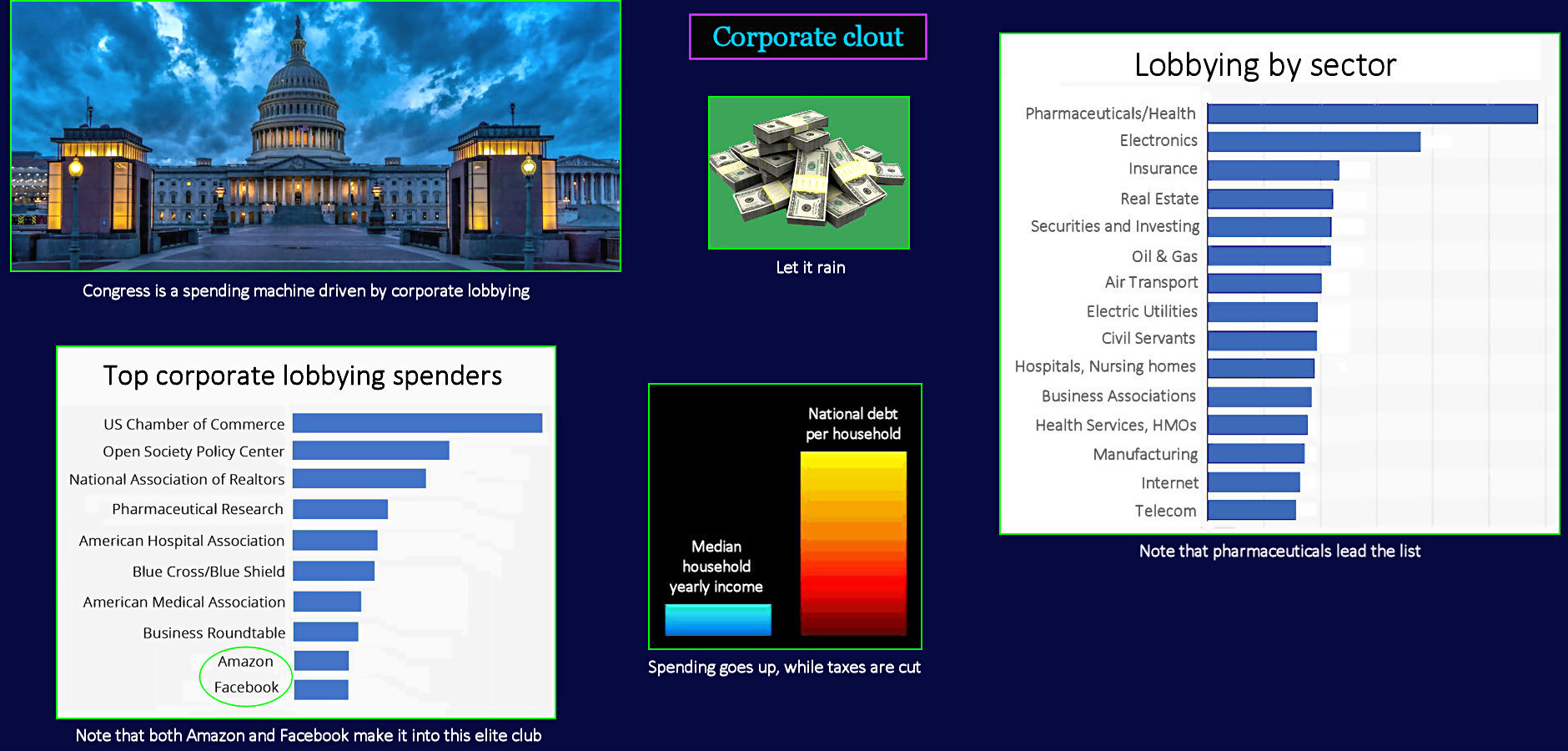
Smart Shoppers With so much profit rolling in, every day, America's corporate giants can buy literally anything they want. This ranges from individual companies to entire new technologies. Like artificial intelligence. They can also buy favored treatment from Congress, through their extensive lobbying efforts. The chart on the right shows lobbying totals for industry segments. Every segment on the list spends at least a billion dollars every year on lobbying congressional leaders to get favored treatment. That's a lot of money to spend on activity that consists mainly of talking, schmoozing, and hosting events at posh resorts. More recently, corporate money has been lavished on Supreme Court justices. In America, it's all for sale. | |||||||||