| |
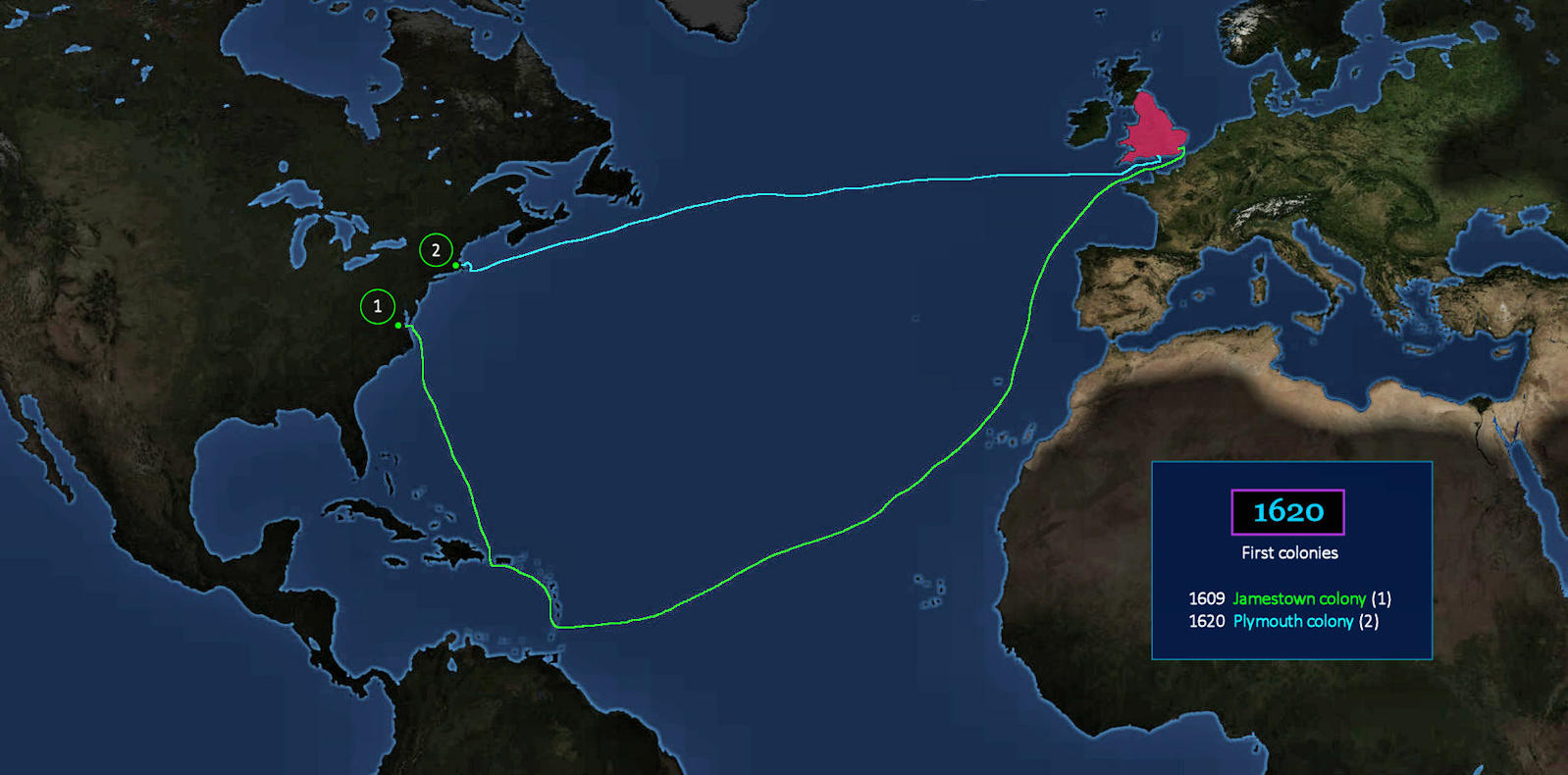
Setting up Shop Even though English explorers find little of value in America, English merchants are still willing to sponsor a couple of early colonies. Perhaps the settlers themselves can find something worth sending back to England. Colonists in the north establish a number of small farming towns, but find little of value. Virginia settlers, however, hit on a strain of tobacco that is highly desired in London. For a few years, it's a bonanza. |
| |||||||||
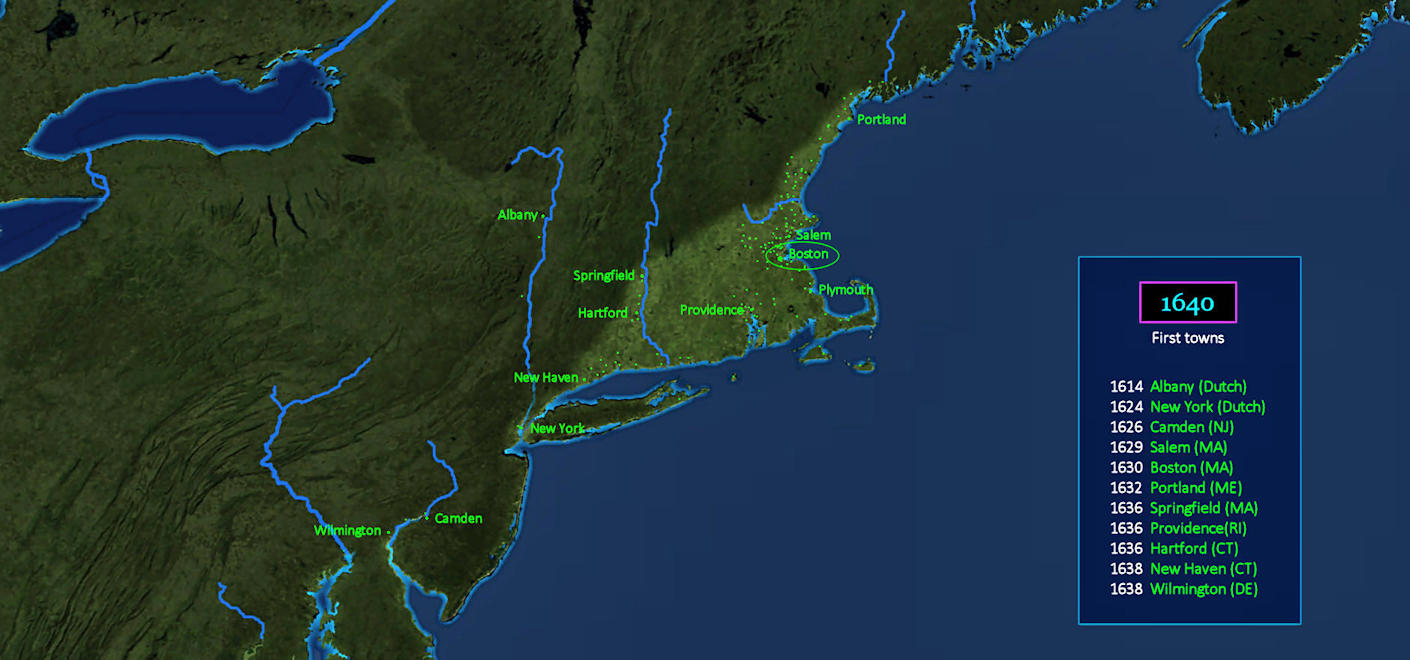
Boston is the Hub Most northern towns are clustered around the fine port of Boston, and up the coast to the north, close to sources of timber and fish. There are a few towns sprinkled elsewhere, mostly located along rivers and shoreline, where boats can provide connections with other locations. Boatbuilders are busy all along the coast. New England also has beaver, particularly in upstate New York and along the Hudson River, but the beaver trade is soon exhausted. | |||||||||
| |||||||||
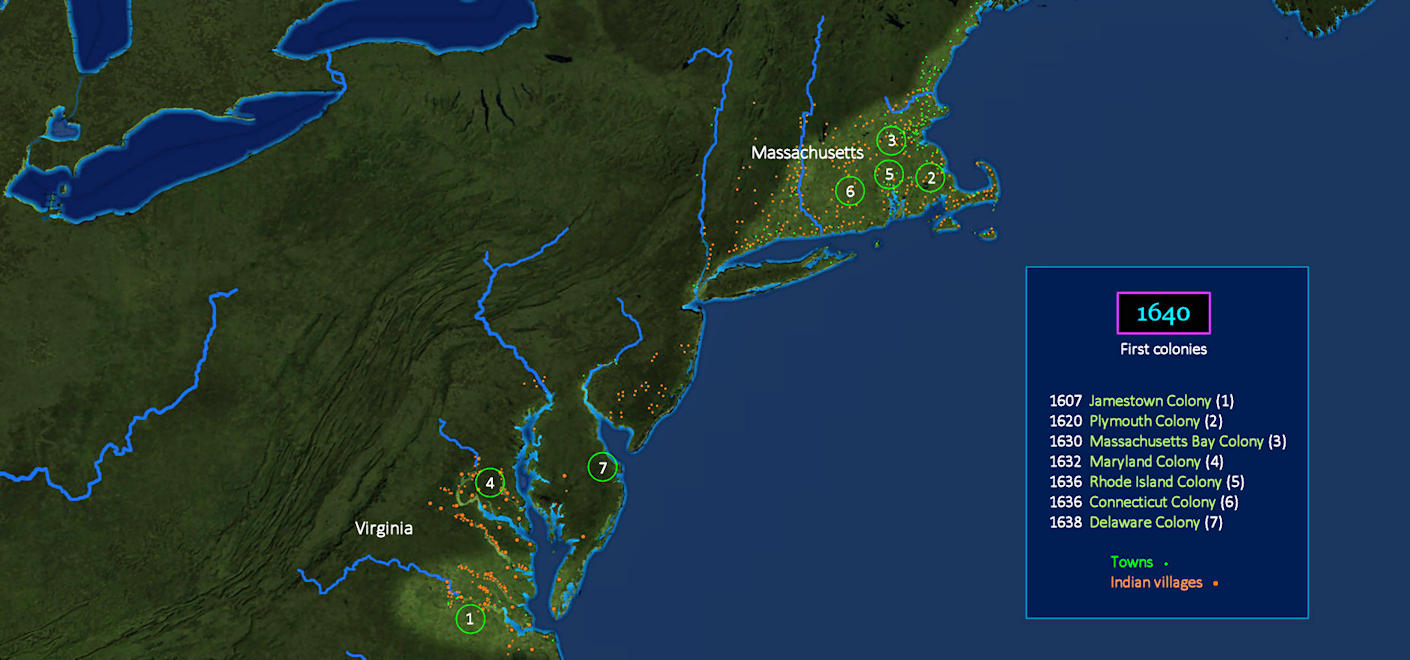
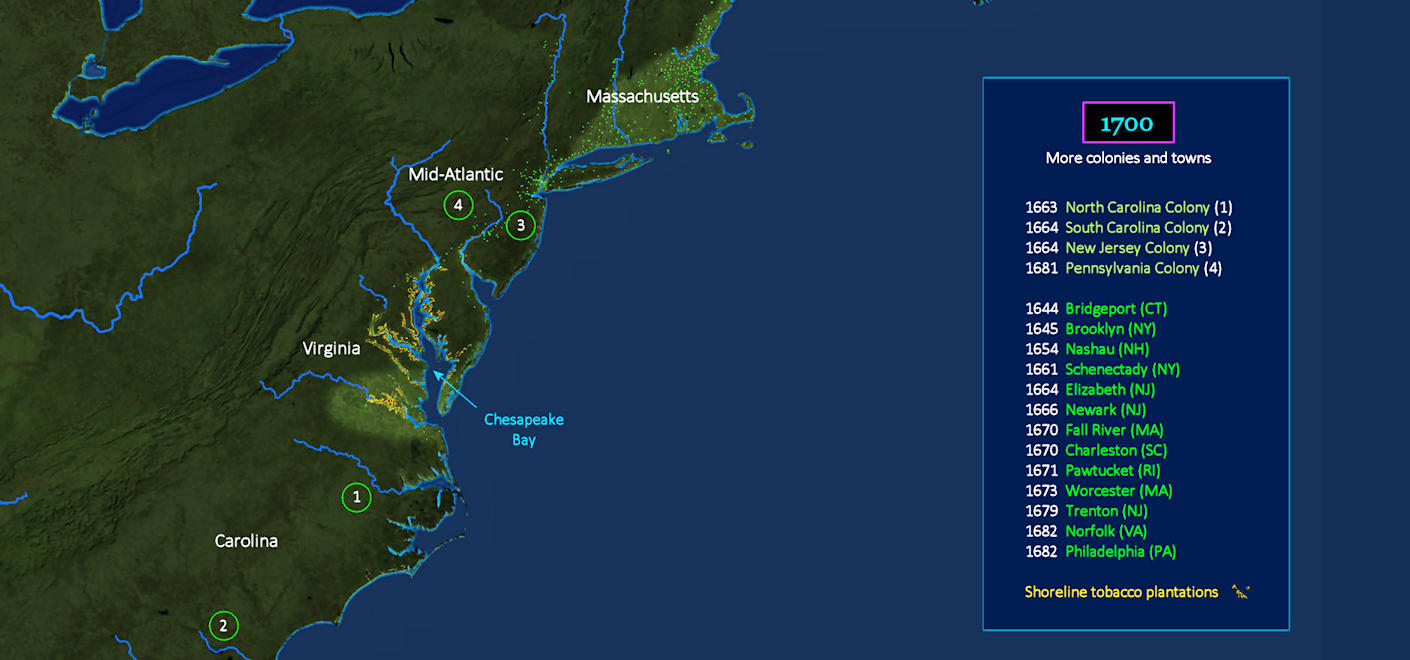
New Colonies among Indians As colonists continue spreading inland from the coast, the King grants new charters for additional colonies (WHITE numbers). New arrivals soon discover, however, that they are now pushing into the middle of Indian country. The Indians have been slow to show themselves, being naturally wary of strange intruders who seem to have magical powers. While they initially try to avoid antagonizing the colonists, however, a looming confrontation appears inevitable, as new settlers continue to arrive in alarming numbers. | |||||||||
| |||||||||
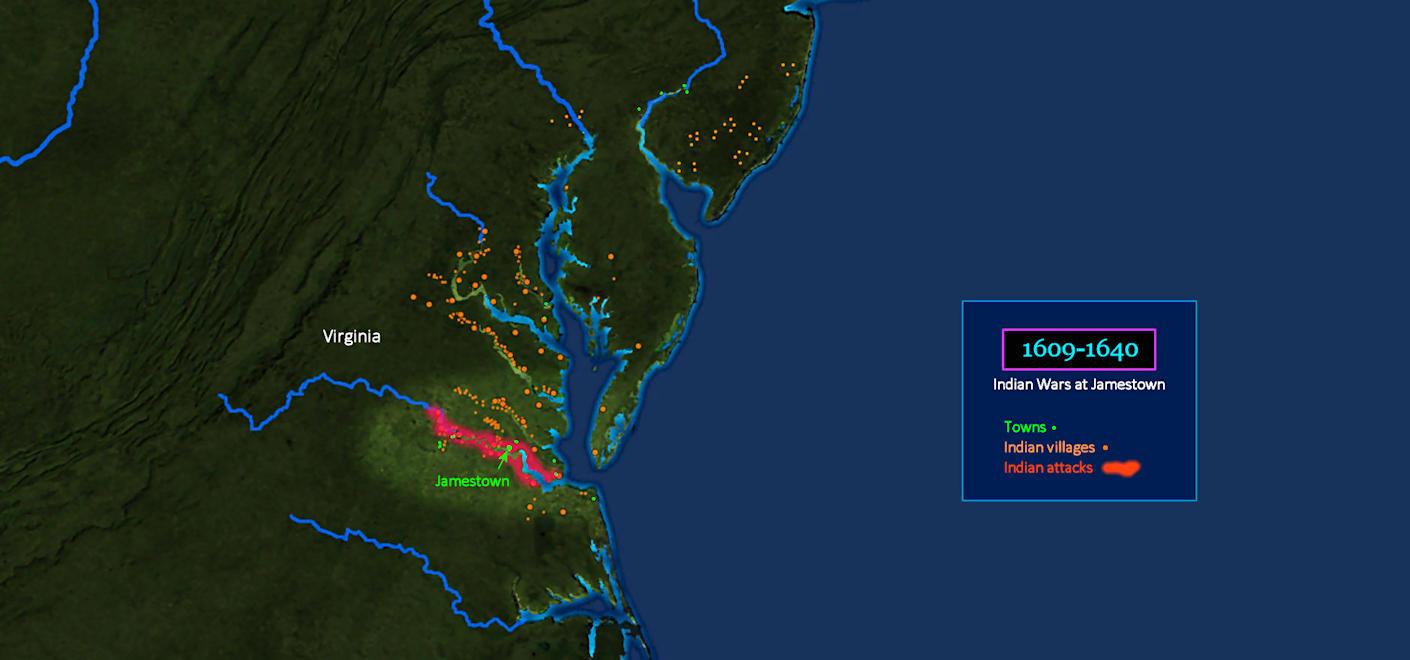
On the Warpath The Virginia colony at Jamestown initially occupies a site that the Indians don't even want, as it lacks good drinking water. But as settlers spread up and down the river, they soon come into conflict with the 20,000 Indians that surround them. The Indians try to get along, at first, but quickly decide the Englishmen have to go. A sudden, coordinated attack kills a third of the settlers, but fails to stop the English. It takes four separate Indian wars over 30 years, but the Indians finally give up and accept English rule. | |||||||||
| |||||||||
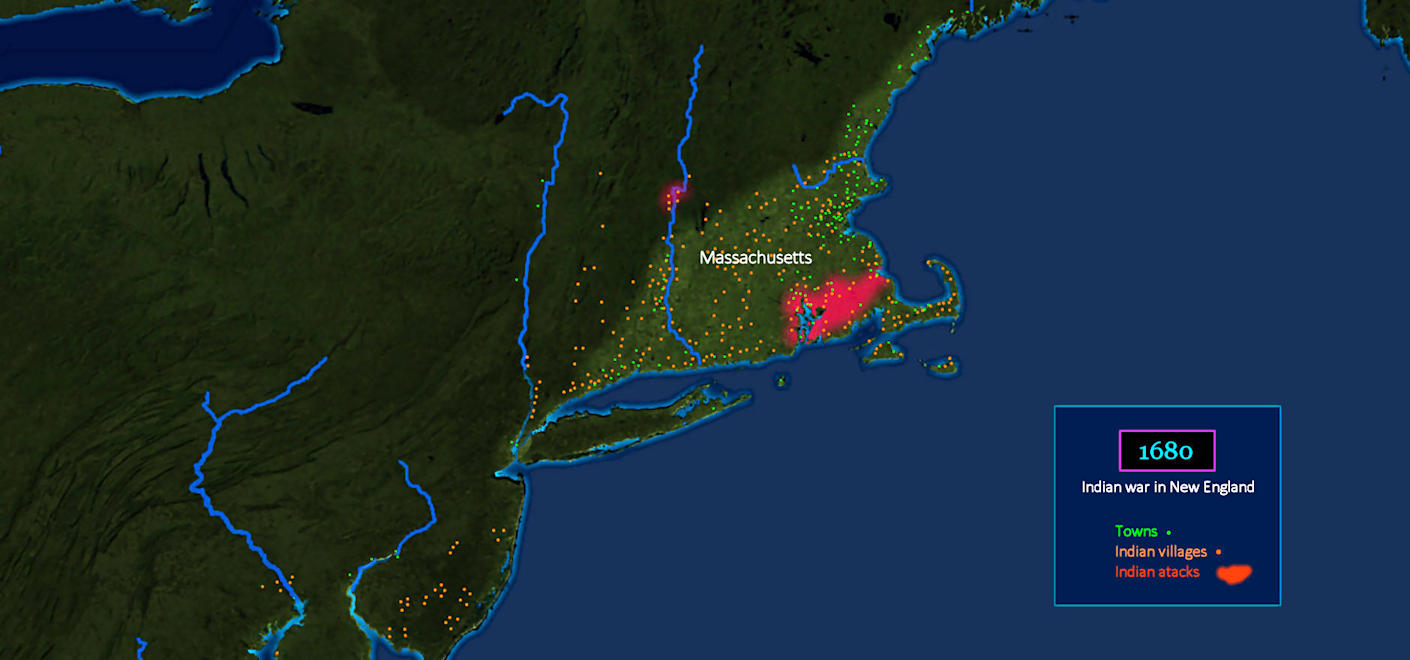
Different Indians, Same Warpath Almost the same thing happens in Massachusetts, but with one important difference. Instead of resisting immediately, the northern Indians bide their time for 50 years, before finally deciding they have to put up a fight. It's called King Philip's War, but that's just the name the Indian leader chooses to take. He's still an Indian. The war lasts three years, but the Indians can't sustain the conflict, and are finally forced to submit. | |||||||||
| |||||||||
More Colonies Settlers in Virginia spread along every tidal inlet in Chesapeake Bay, including up into Maryland. They develop a huge monoculture, growing only tobacco, because of its high profit margin. Inland areas are low-lying and marshy, so everything moves by boat. This includes tobacco casks, which are rolled up gangplanks at every plantation, and loaded directly onto vessels that come by to pick up tobacco for export. But life soon gets harder, as over-production quickly drives the price down. | |||||||||