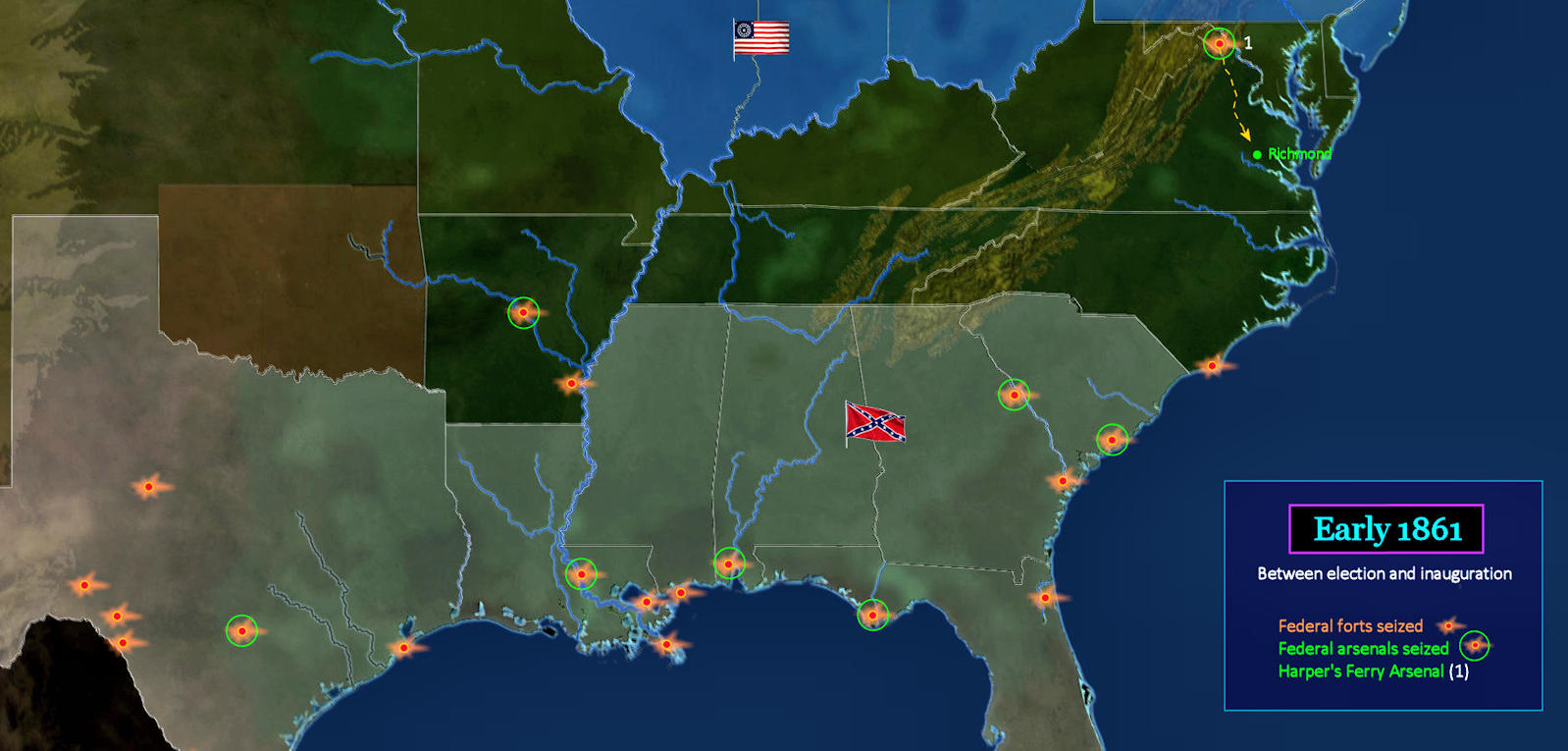
Civil War BeginsRebels seize federal assets Union strategy Battle of Bull Run 1862 Battles in the West |
| ||||||||||||||||
| |||||||||
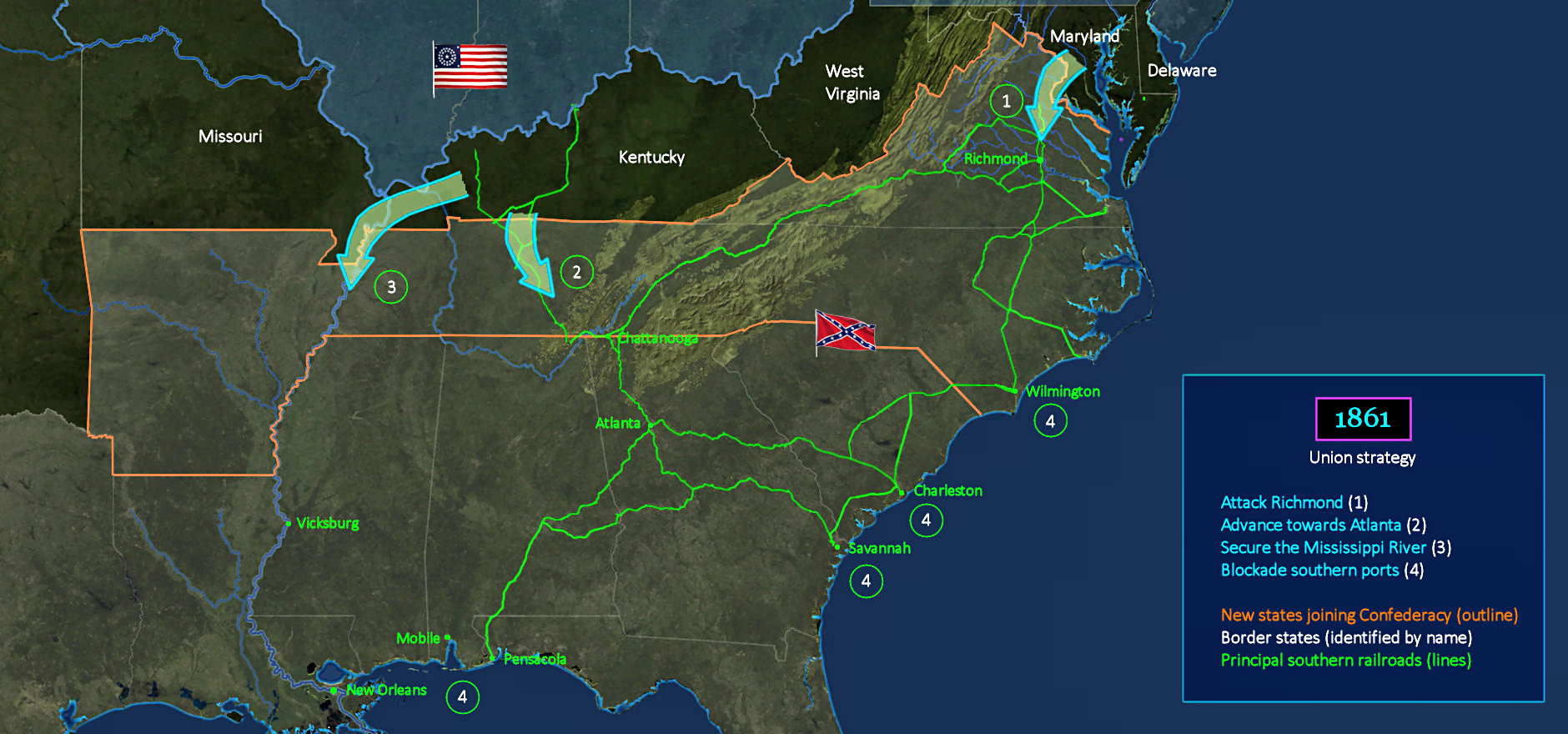
Hardening Battle Lines After Lincoln takes office and calls up the militia, Virginia and the other slave states outlined in ORANGE feel compelled to join the Confederacy. This leaves just the border states named above as neutral in the coming war. They share sympathies with the South, but are unwilling to fight to preserve slavery. The Union strategy is intended to force all the Confederate states back into the Union. Hopefully, the main attack on Richmond will end the war immediately, but there are no guarantees. | |||||||||
| |||||||||
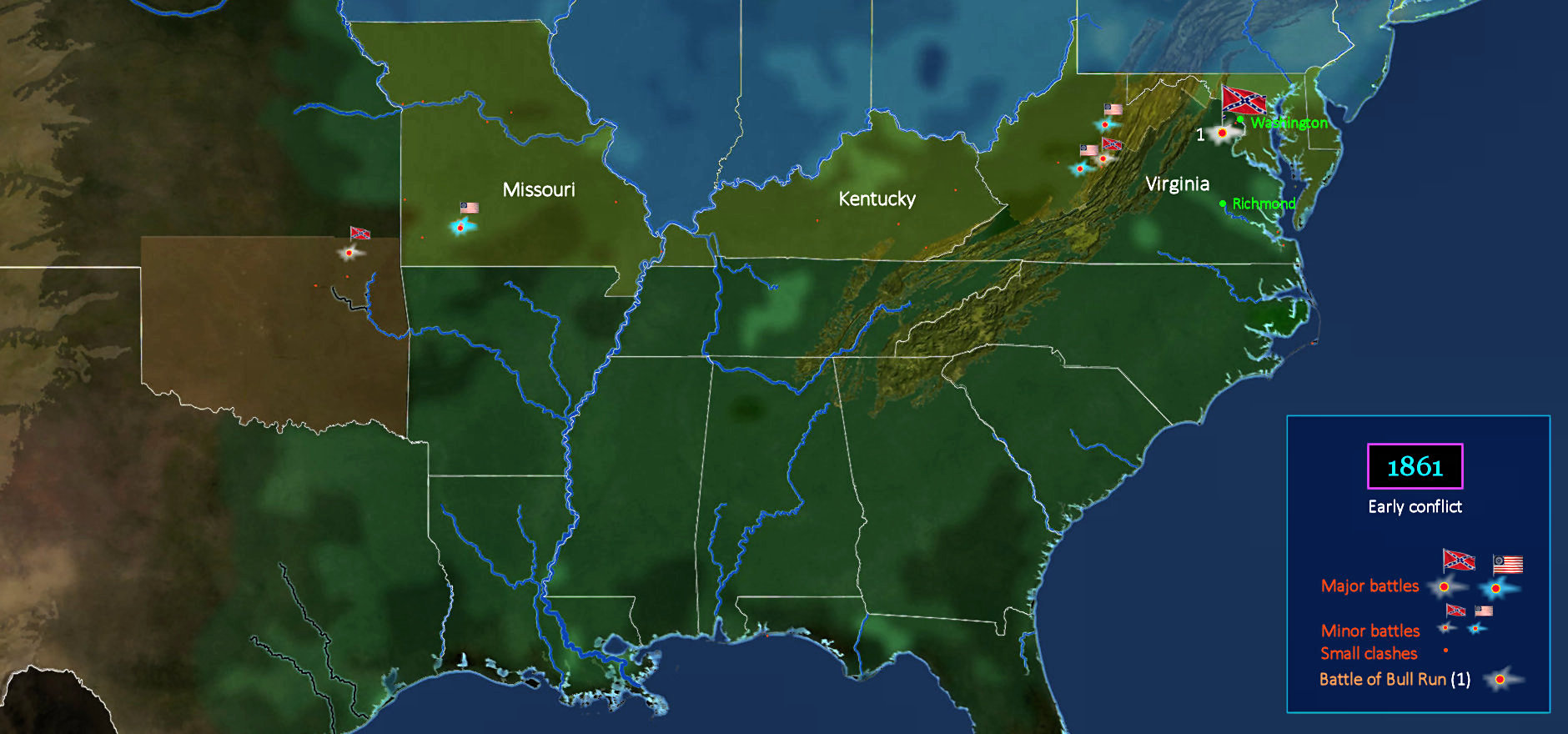
First Battles The first big battle of the war occurs just weeks after Lincoln takes office. A hurriedly-assembled army of northern troops, now called 'federals,' heads towards the Confederate capital of Richmond. Blocking their path is a southern army of 'Rebels' protecting a rail depot. The two forces clash at the Battle of Bull Run, with both sides struggling until late rebel reinforcements arrive by rail. This causes a Union retreat that quickly turns into a rout. Just 30 miles north, Washington is thrown into near-panic. | |||||||||
| |||||||||
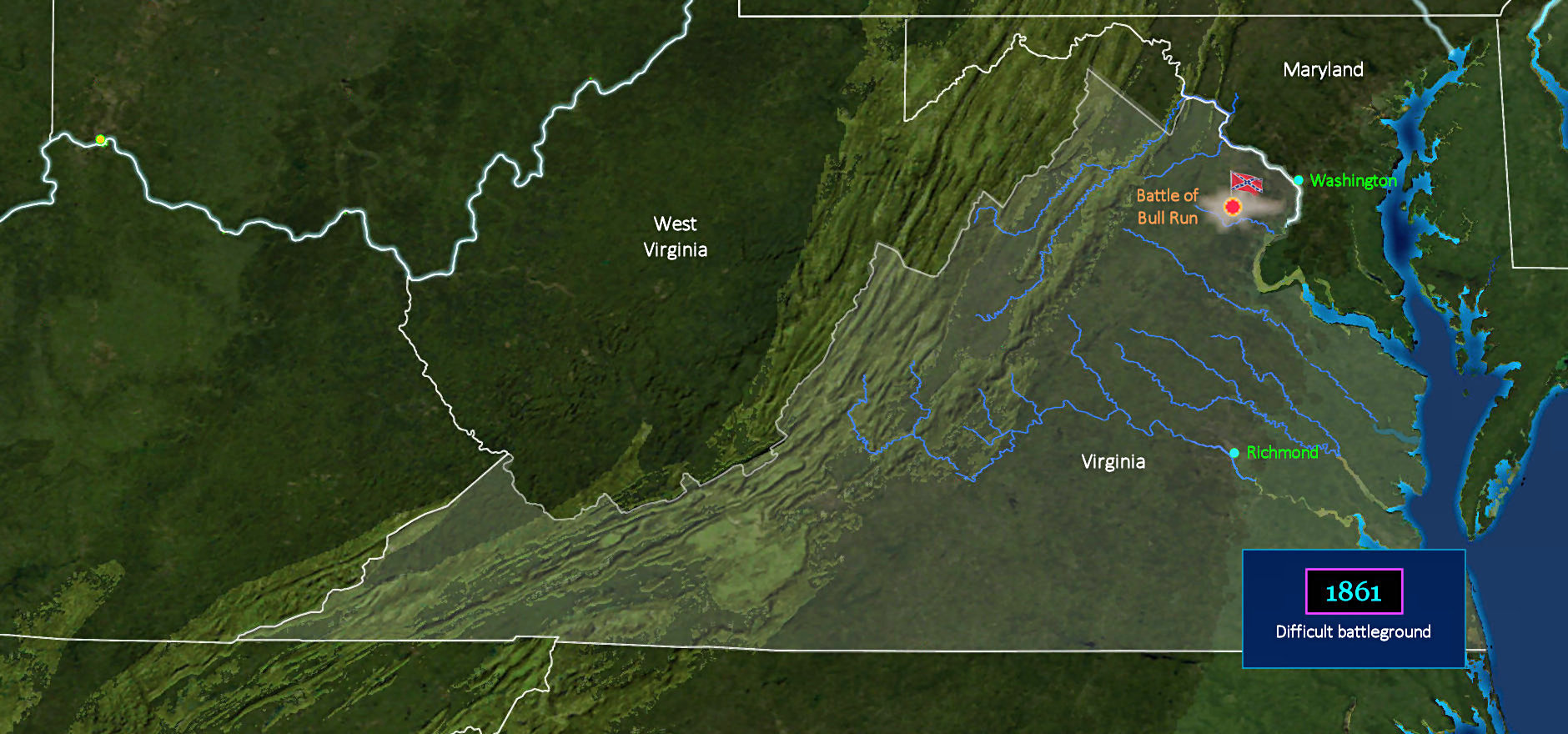
Duel Between Capitals The Civil War gets its name from the fact that it is fought entirely by Americans, against Americans. It rages all across the country, but most intensely around the Confederate capital of Richmond. This might seem to be an easy target, but the entire region between the two capitals is nearly roadless, and so wild that locals call it the 'Wilderness.' Beyond that, any Union campaign to take Richmond must deal with obstructions presented by a series of rivers. There are no bridges. | |||||||||
| |||||||||
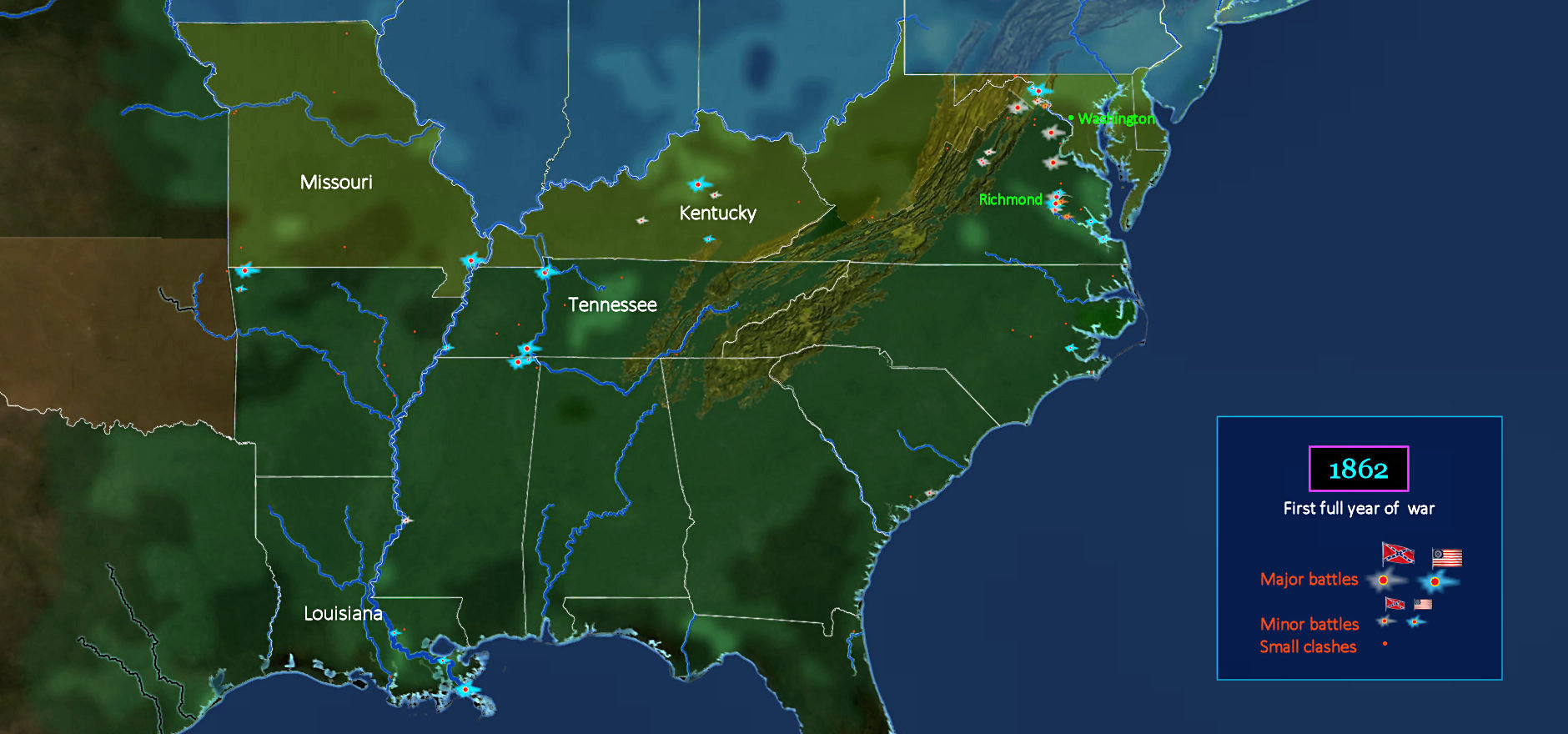
The Real Contest Begins Both sides spend the remainder of 1861 assembling, arming and training the armies they will need to continue the contest. This takes many months. The following year is the first full year of total war, with armies being deployed in Kentucky and Tennessee, in addition to those already concentrated in the East. As before, however, the major field of battle is Virginia, where Union commanders are slow and cautious. Confederates, under Robert E. Lee and 'Stonewall' Jackson, are able to control the battlefield. | |||||||||
| |||||||||
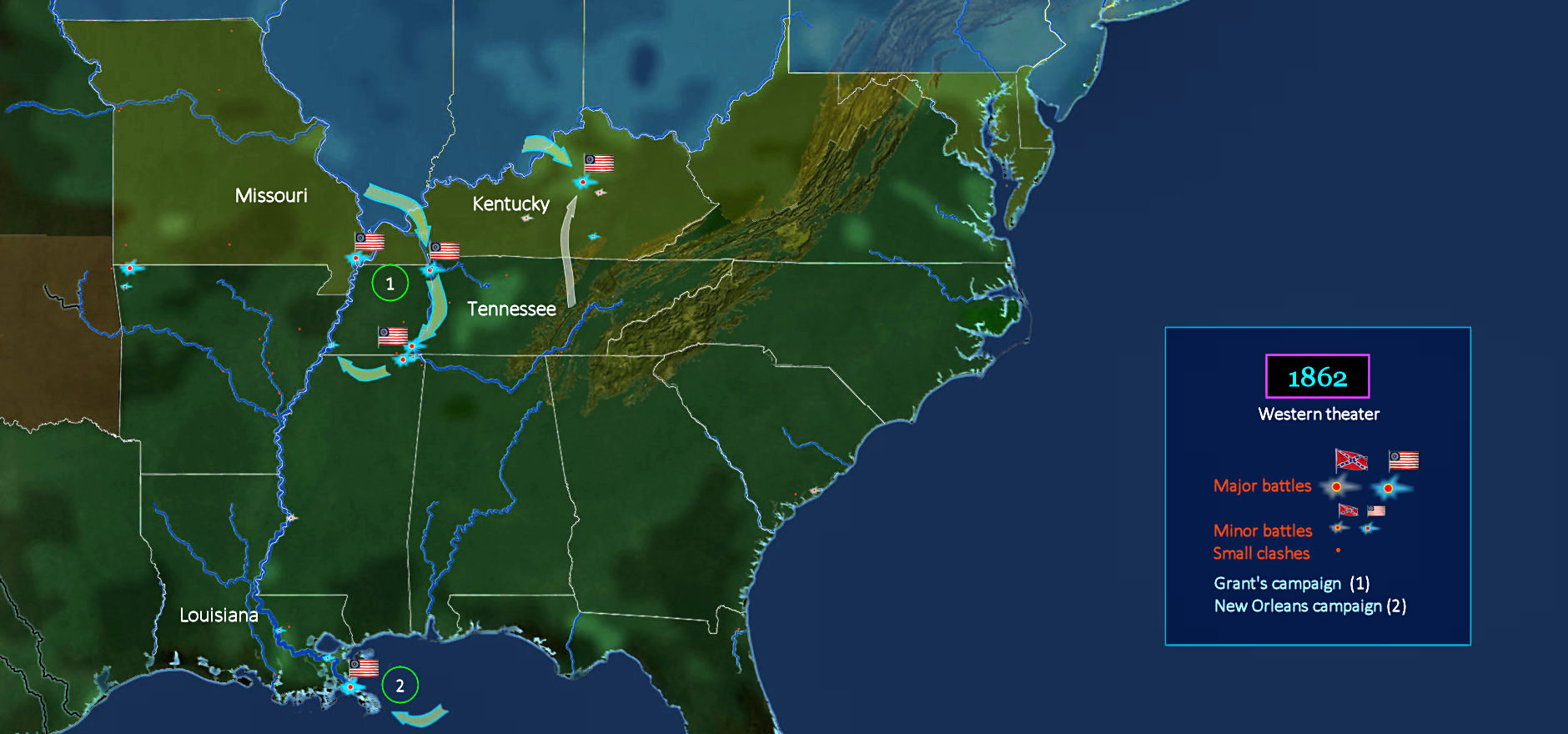
Union Success in the West By contrast, things in the west go well for the Union, under the leadership of young and untested General Ulysses S. Grant. Meanwhile, the naval attack on New Orleans succeeds in shutting down the port. Unfortunately, however, the news of each Union success in the west is drowned out by anxiety over the seeming inability to corner and defeat Lee's rebel army, in Virginia. The government in Washington is always under threat, and in a perpetual state of high anxiety. | |||||||||