| |
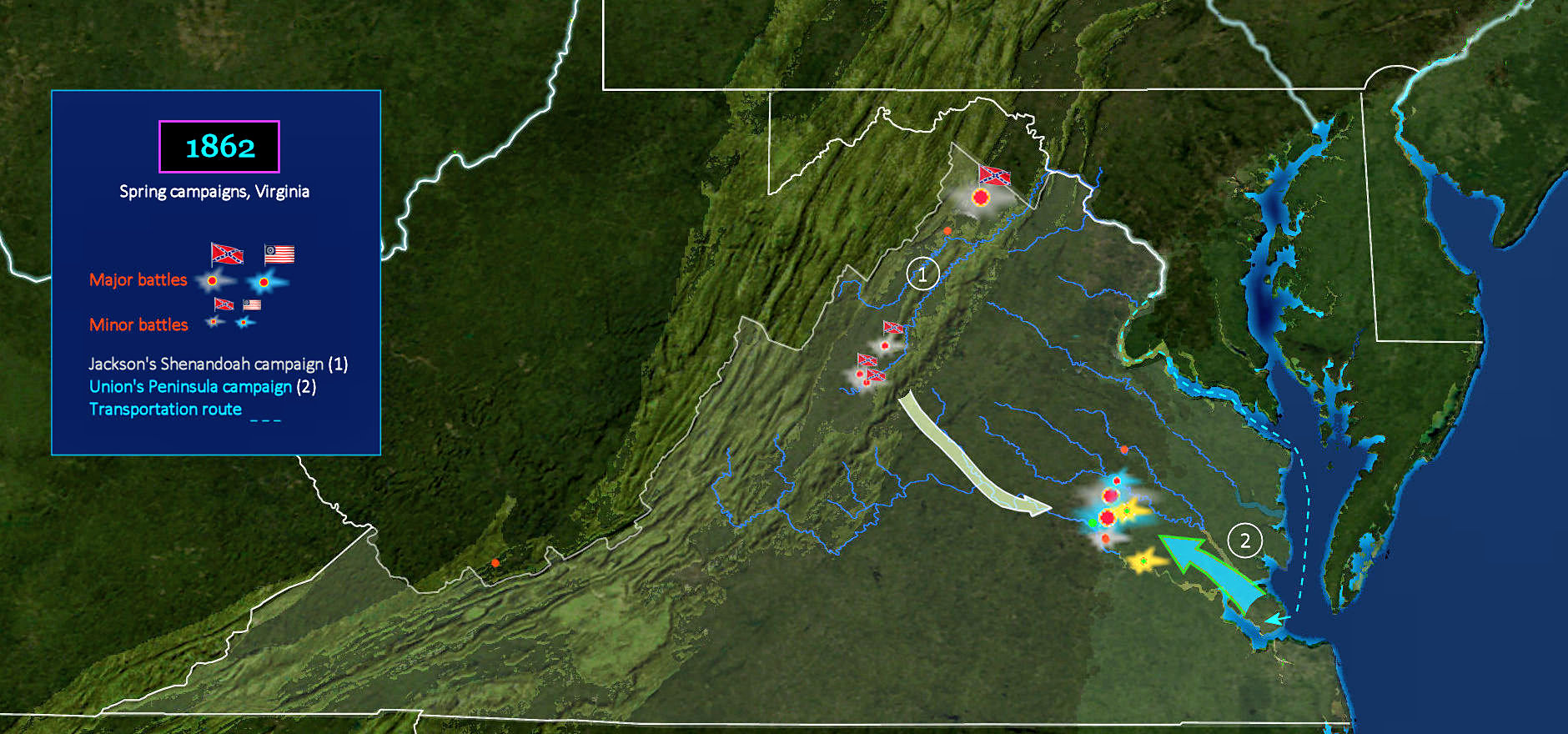
Virginia, the Main Event Fighting with the home-field advantage, Stonewall Jackson rampages up and down the Shenandoah Valley, defeating Union forces in several locations (1). Meanwhile, Lee faces a determined Union effort to advance towards Richmond from a landing site on the lower Chesapeake (2). The federals manage to fight their way to the very outskirts of the city, before losses and dwindling supplies force them to withdraw. |
| |||||||||
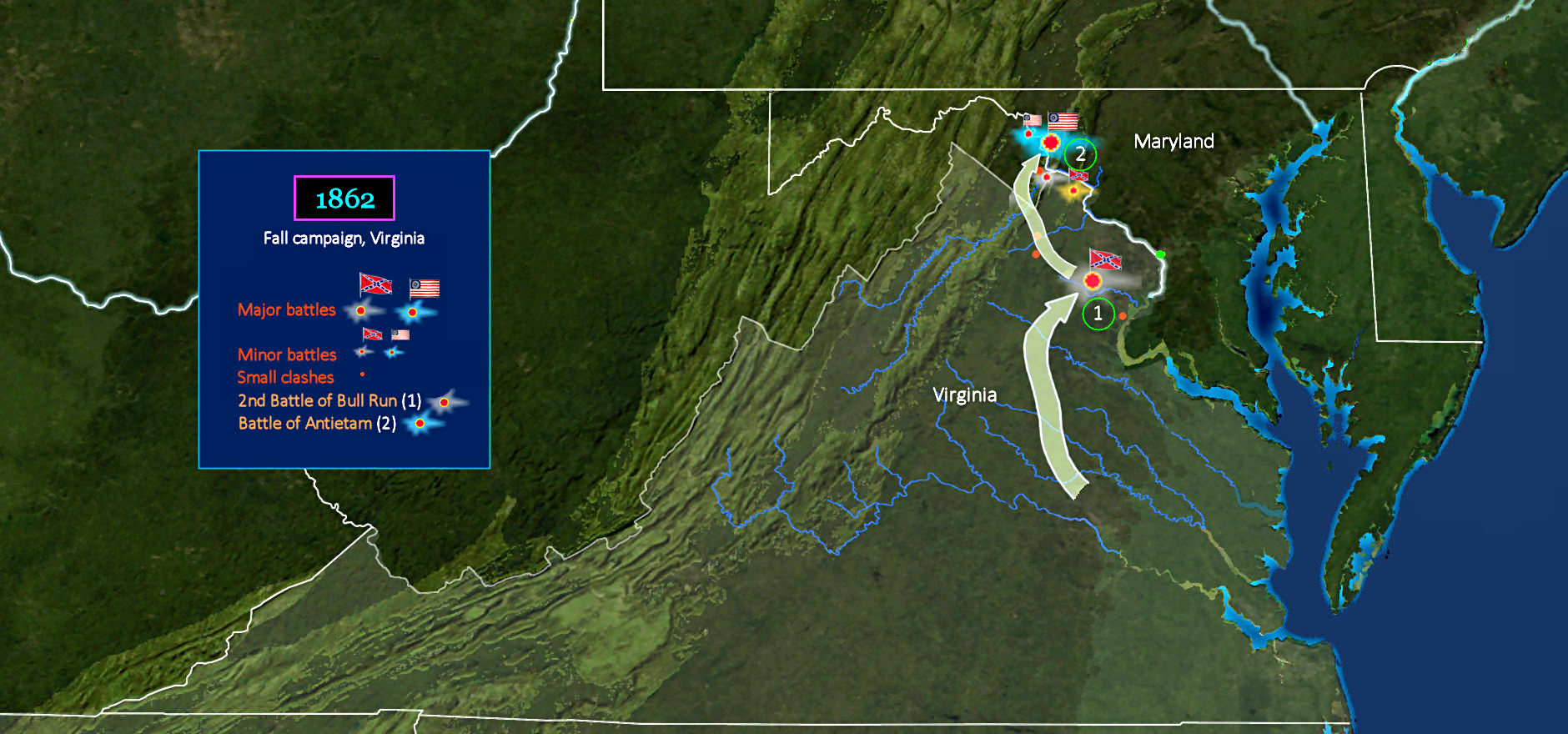
Lee Goes on Offense While the federals are withdrawing back towards Washington, Lee is able to temporarily move out of his defenses around Richmond, and head north to threaten the northern homeland. He wins a decisive Second Battle of Bull Run, and then races north to cross into neutral Maryland. There, he is finally stopped at the climactic Battle of Antietam. Like the federals earlier in the year near Richmond, he is not actually defeated. Instead, he's forced to head home to lick his wounds and re-supply. | |||||||||
| |||||||||
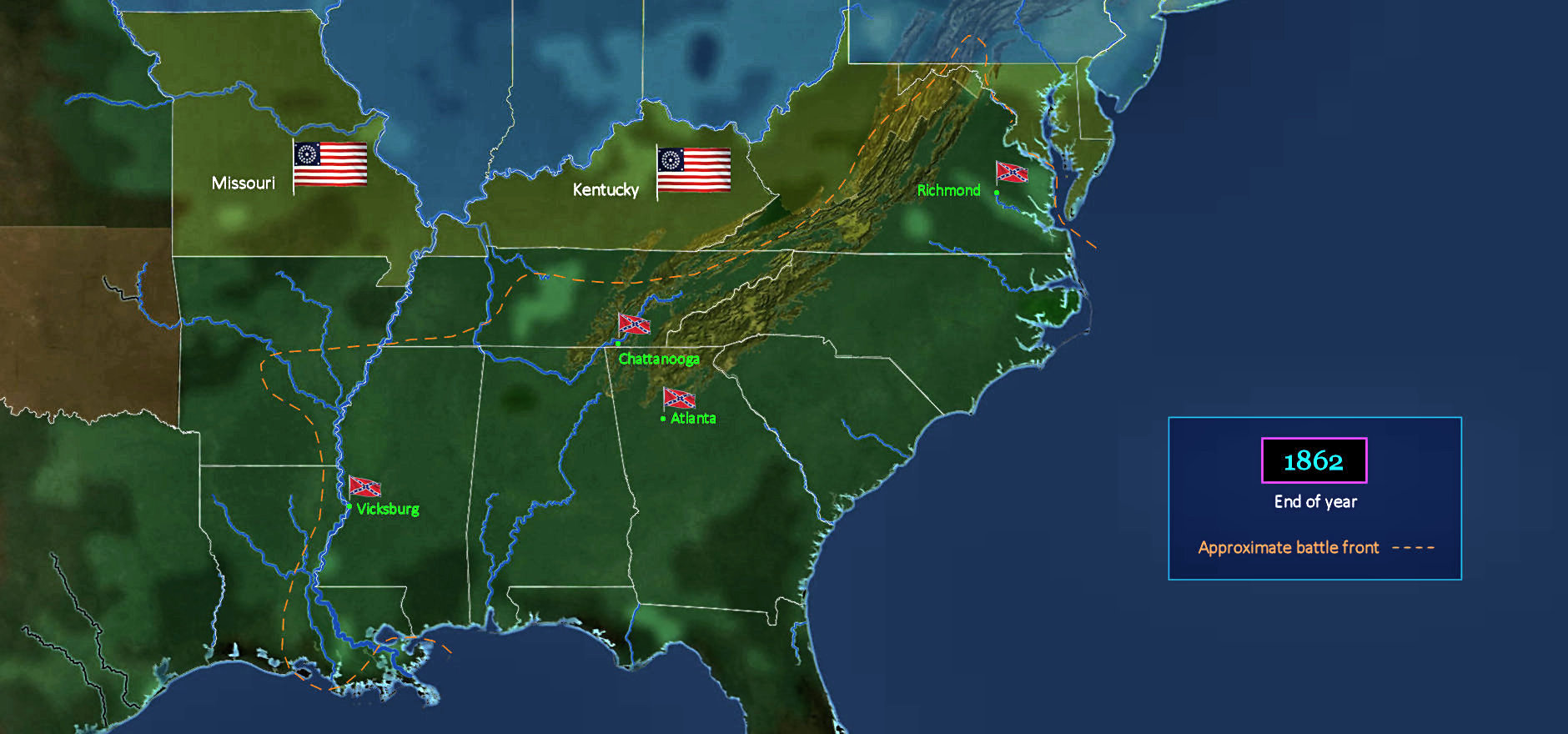
Mixed Picture By the end of the year, the Union has made significant progress in the west, with only Vicksburg left to defend the Mississippi River. Union victories in the border states have pushed the line of battle south, with Chattanooga now under threat, and the all-important rail hub at Atlanta just beyond. In Virginia, little has changed, despite frightful battle losses on both sides. The Confederacy's main weapons factories in Richmond are still intact, and Lee is confident he can thwart any new Union thrust. | |||||||||
| |||||||||
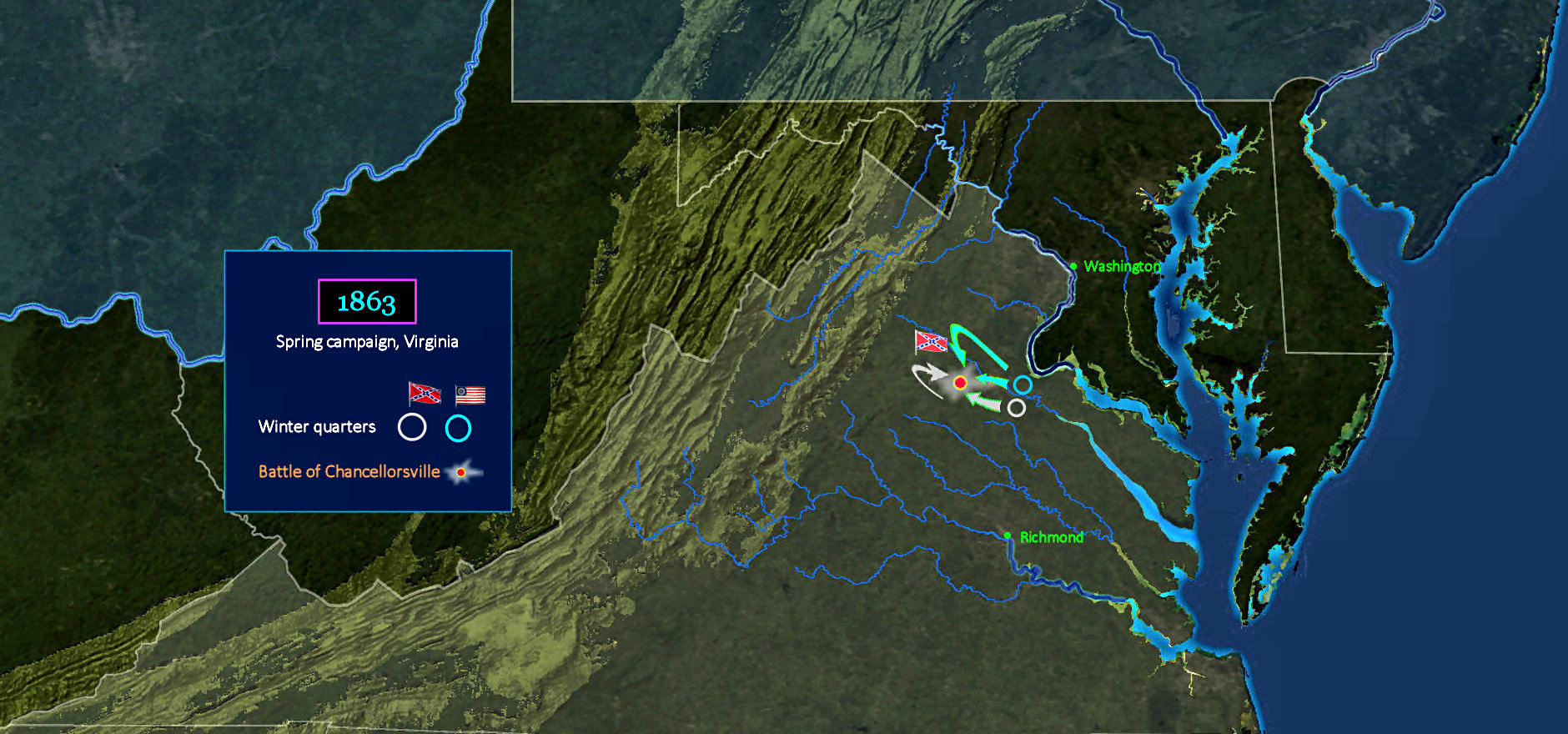
Chancellorsville, Lee's Masterpiece The 1863 campaign season opens in Virginia, with Union and Confederated armies moving out of winter quarters which are barely six miles apart, but on opposite sides of a river. The Union plans to come at Lee from two sides (BLUE arrows), but heavy rains prevent river crossings, and the plans change hourly. Despite being outnumbered, Lee sends Jackson on a wide encircling move (curved GRAY arrow) to attack the Union rear. Nonetheless, the federals are able to stabilize, and make an orderly withdrawal. | |||||||||
| |||||||||
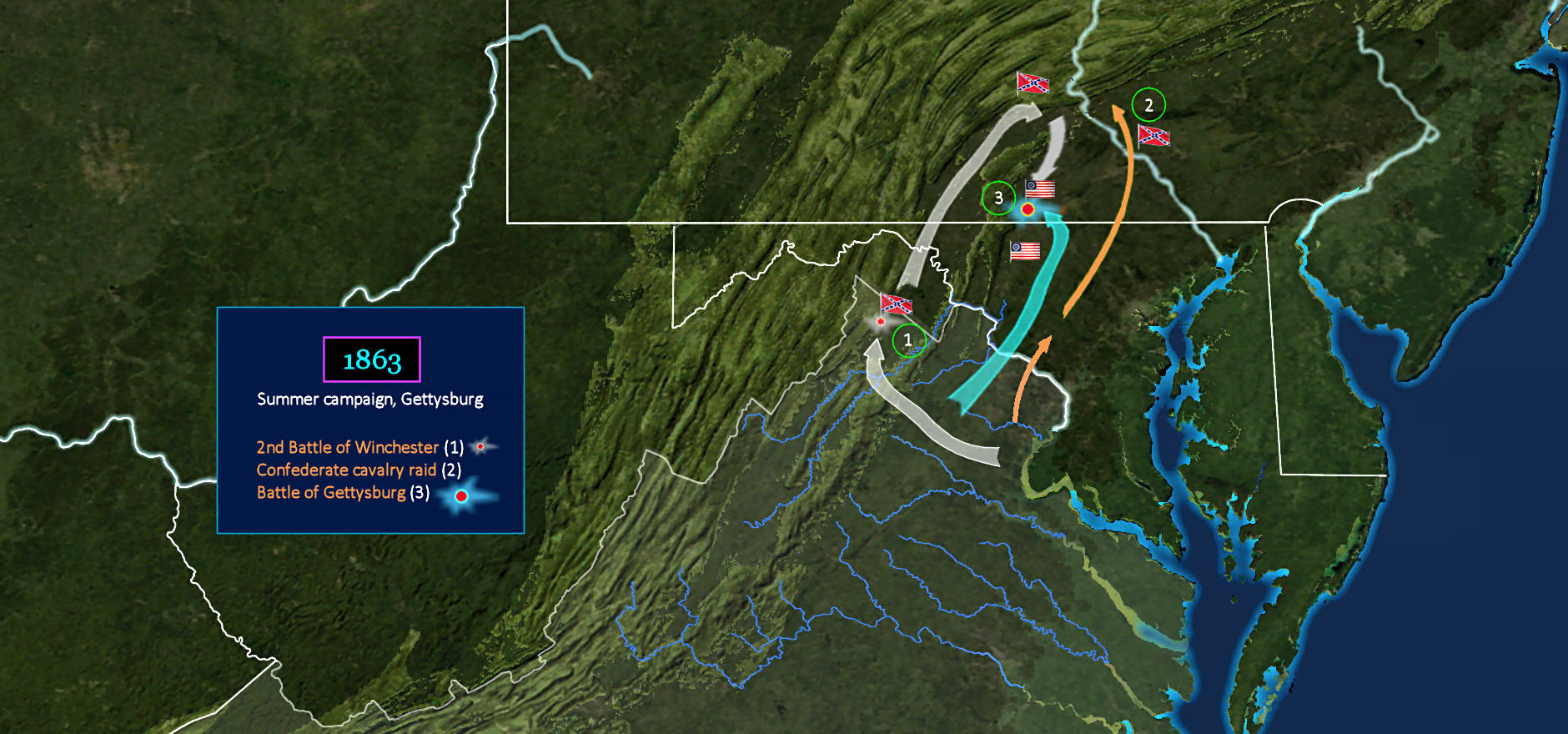
Tide Turns at Gettysburg The withdrawal of the Federal army gives Lee another opportunity to take the war north. Riding high from his success at Chancellorsville, he again makes a dash into Union territory. Lee is low on supplies, but so are the federals, and he now believes his army is essentially unbeatable. He is determined to deliver a final knockout punch that will finish off the federals for good, and end the war. The climactic battle comes at Gettysburg, where Lee's final grand assault is torn to shreds, and he is forced to withdraw. | |||||||||
| |||||||||
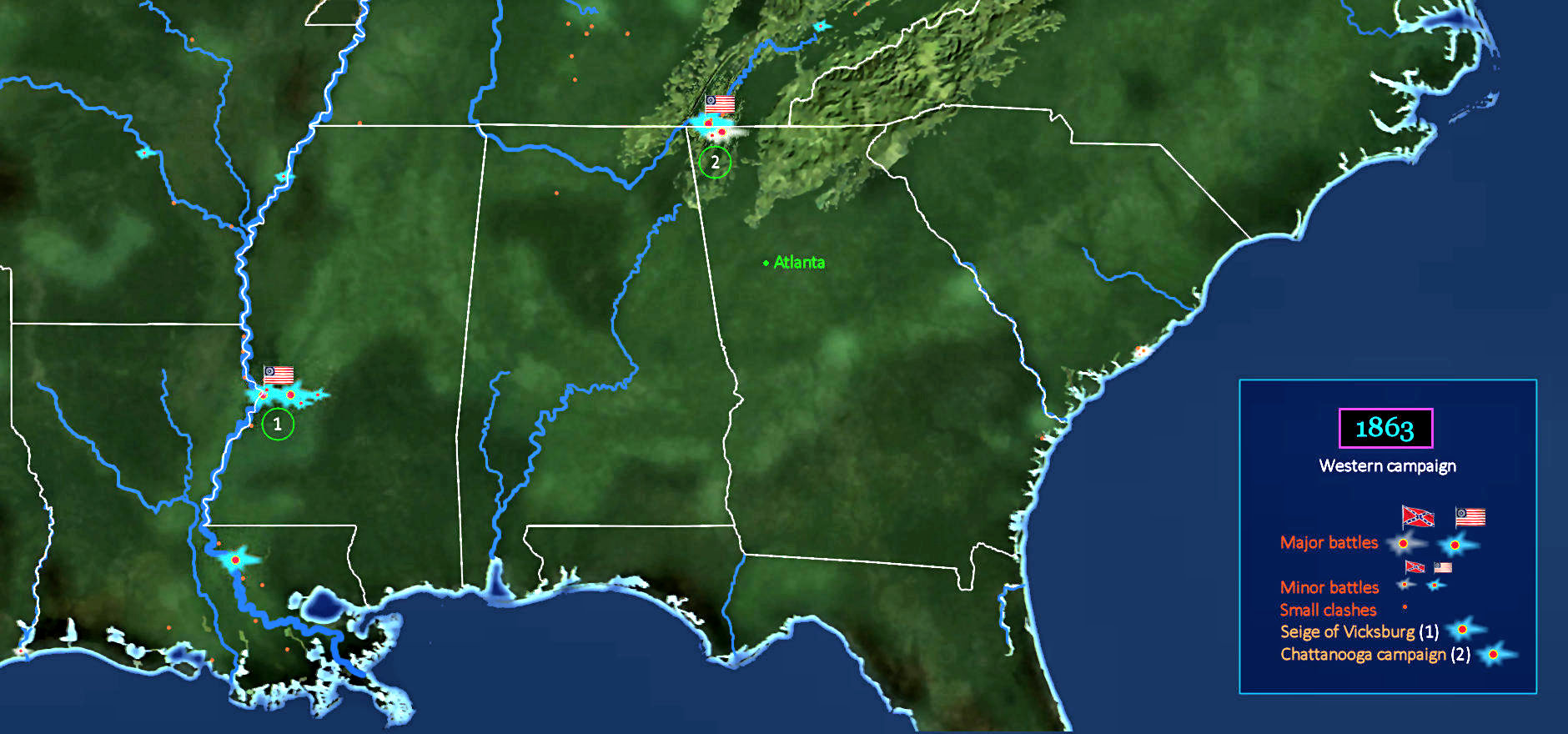
Vicksburg Falls At the precise moment that Lee is turned back at Gettysburg, the Union celebrates another great victory with the fall of Vicksburg. This is the last rebel holdout on the Mississippi, and marks the end of resistance in the west. Further east, the federals take Chattanooga by October, leaving the road open to Atlanta. The Confederacy is shrinking fast. | |||||||||