Industrial Era BeginsManufacturing Iron and coal Railroads Railroad Land grants Railroad stops New vs existing railroads |
| ||||||||||||||||
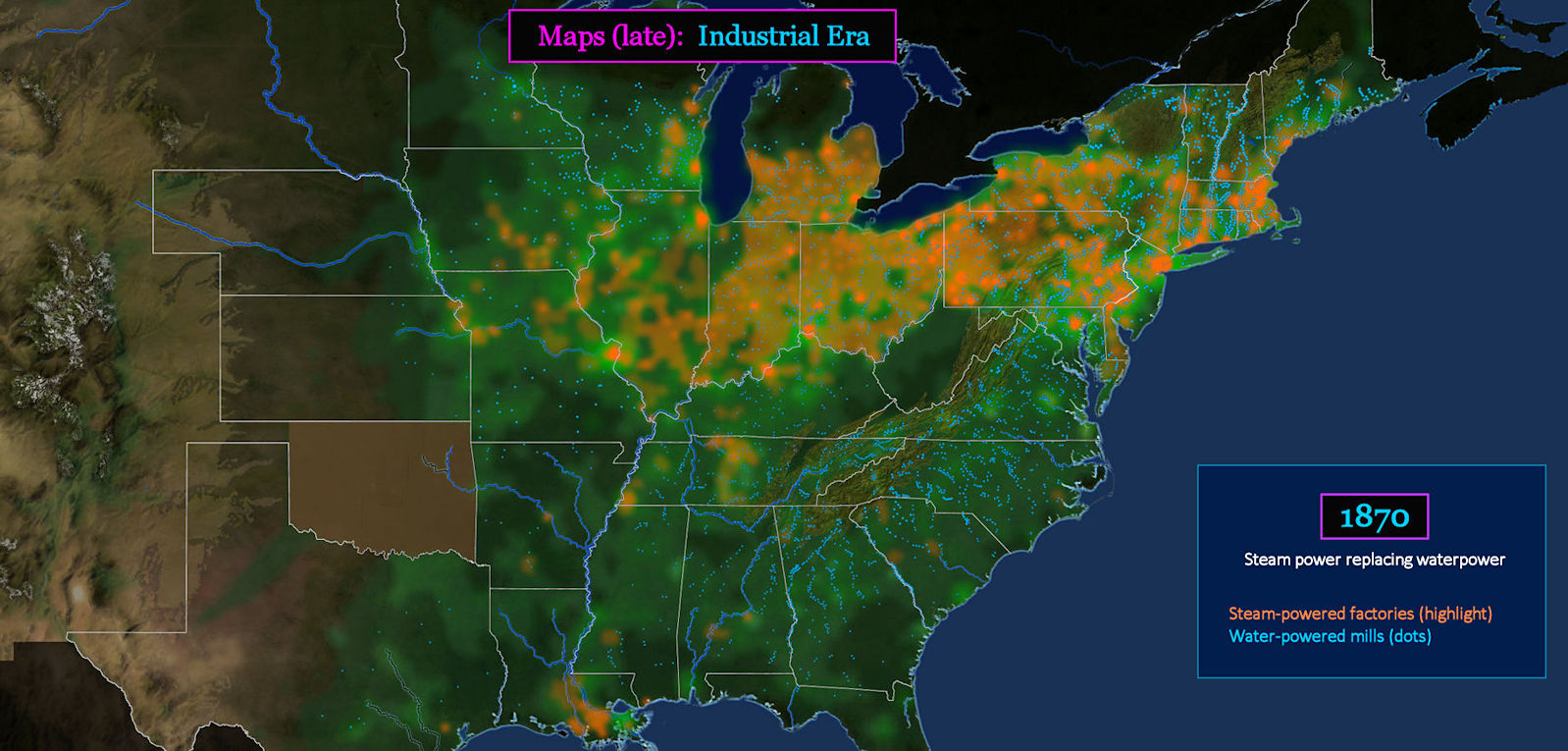
| |||||||||
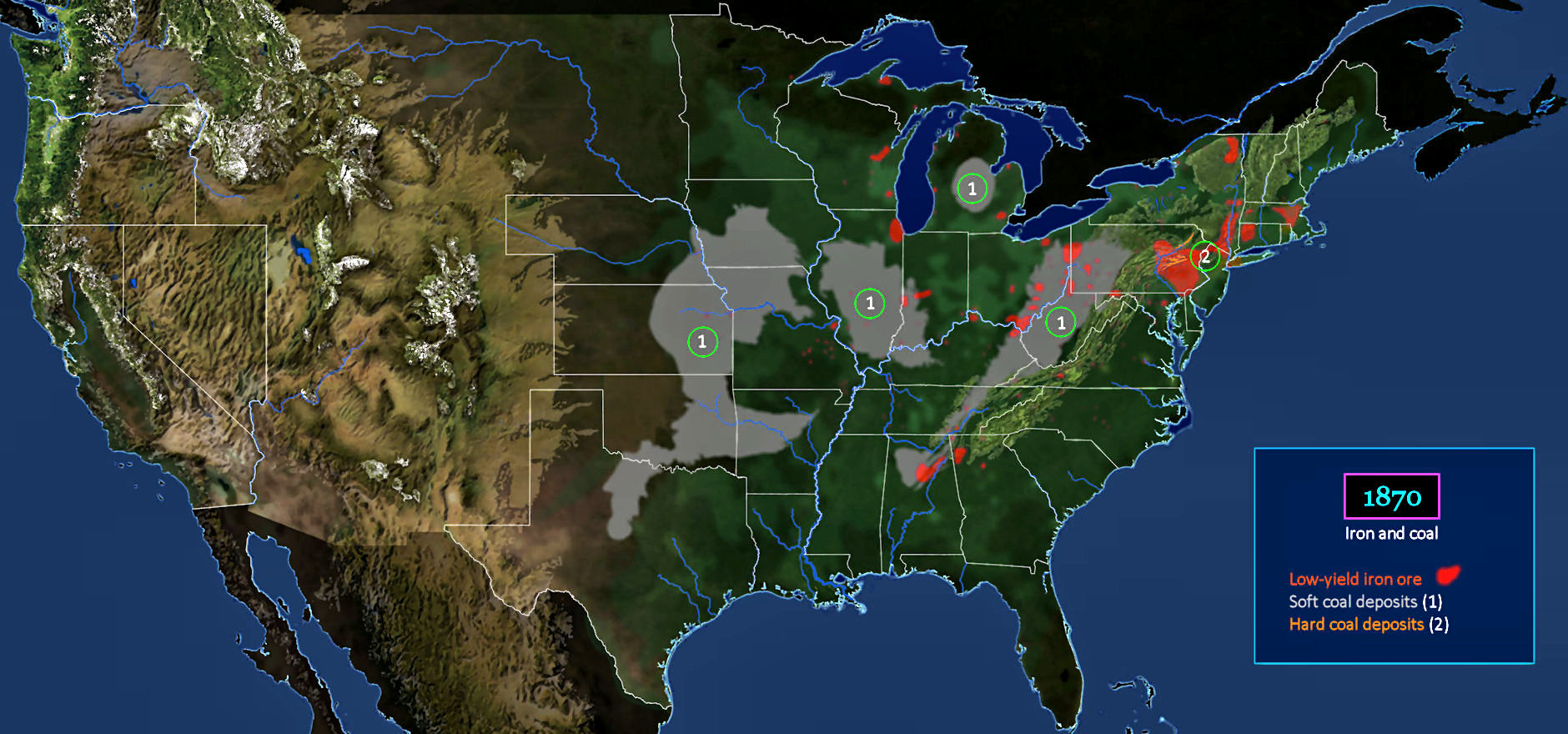
Iron and Coal The only remaining ingredients required to produce the Industrial era are iron and coal. Reliable, high-powered equipment needs shafts and gears, which previously were all made of wood. Only iron machinery can be run all day, every day, at speed. But to make iron, you also need coal. It takes roughly equal amounts of coal and iron ore to keep a blast furnace operating. As luck would have it, America has plenty of both, plus railroads to handle the transport requirements. This is what some call Destiny. | |||||||||
| |||||||||
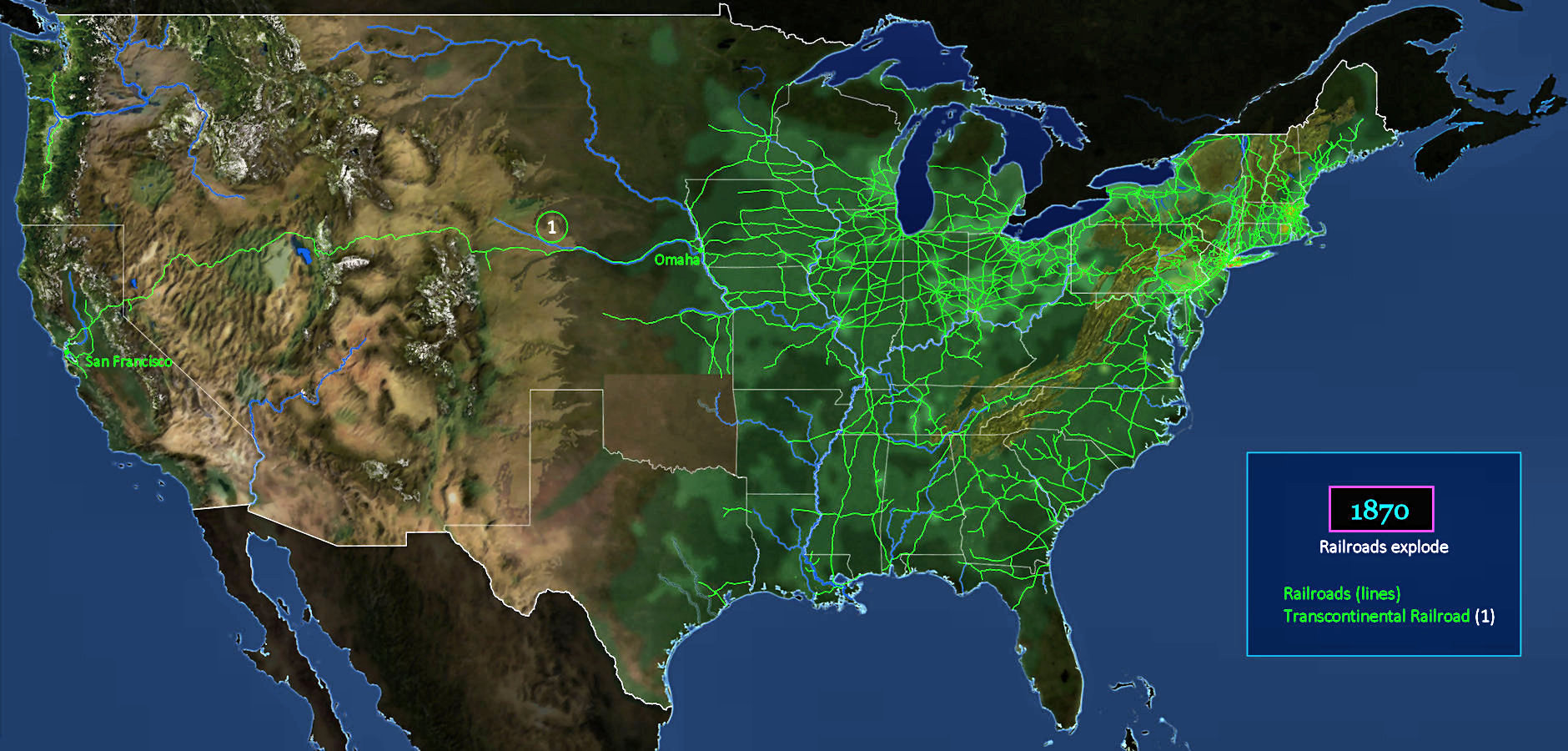
Railroad Explosion The map shows that transformation of America caused by the first big burst of railway construction. Steam engines have been around for years, but recent advances in design now make them suitable to power locomotives. The other factor which initially slowed rollout of the early railroads is the scale of investment required to purchase land, build bridges, and lay rail. The solution is to issue company stock directly to the public, which widens the investment pool available. | |||||||||
| |||||||||
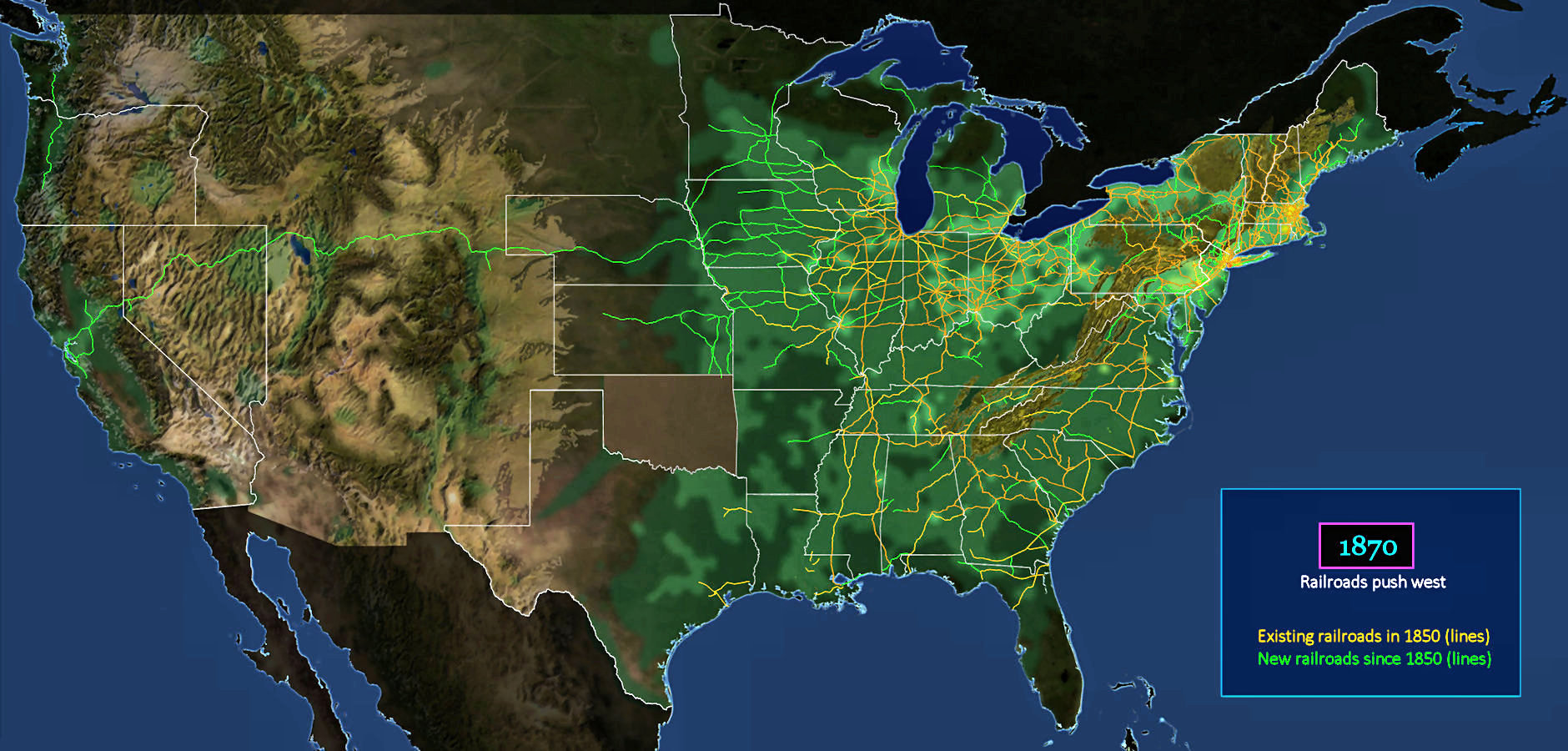
Continued Expansion West This is the same basic map, but showing railroad lines in two different colors. The ORANGE lines are the older lines, while the GREEN lines are ones built in the last 20 years. Clearly, most of the energy is going into pushing lines further west. This process is accelerated by grants of free public land, by the government, as a subsidy to help spur development of vacant land (explained below). When construction is complete, extra land is sold off to the public, turning the railroads into land sales agents. | |||||||||
| |||||||||
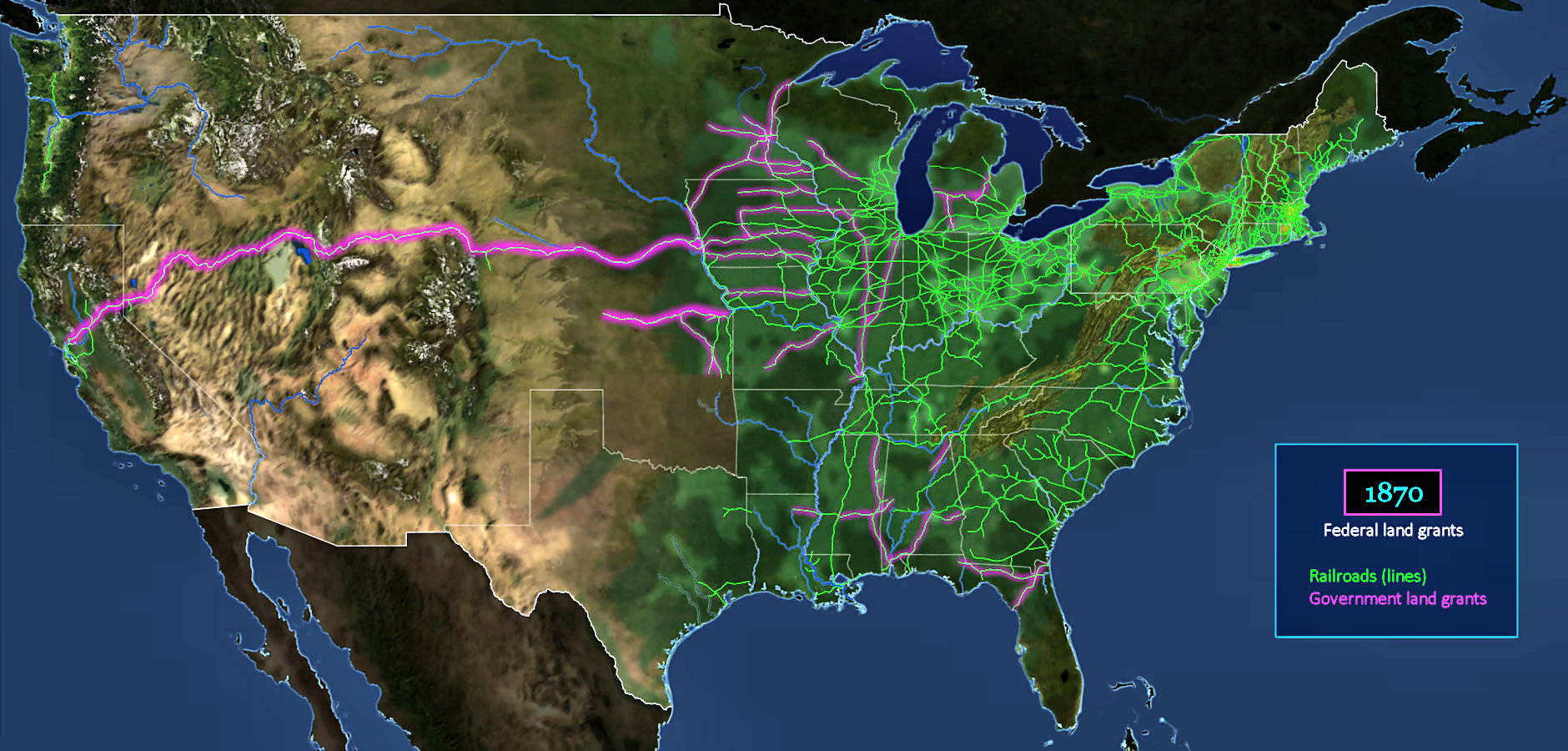
Railways Eat Money When the government decides to get behind the construction of a railroad line all the way out to San Francisco, the projected costs are astronomical. The federal government doesn't have money to spend on infrastructure, but it has plenty of land, which it gives away in 20-mide-wide paths to companies willing to lay the track (in PURPLE). The railroads can then sell off the unused land, on either side of the track, to recoup startup costs. This concept is used to promote rail development all over the Midwest. | |||||||||
| |||||||||
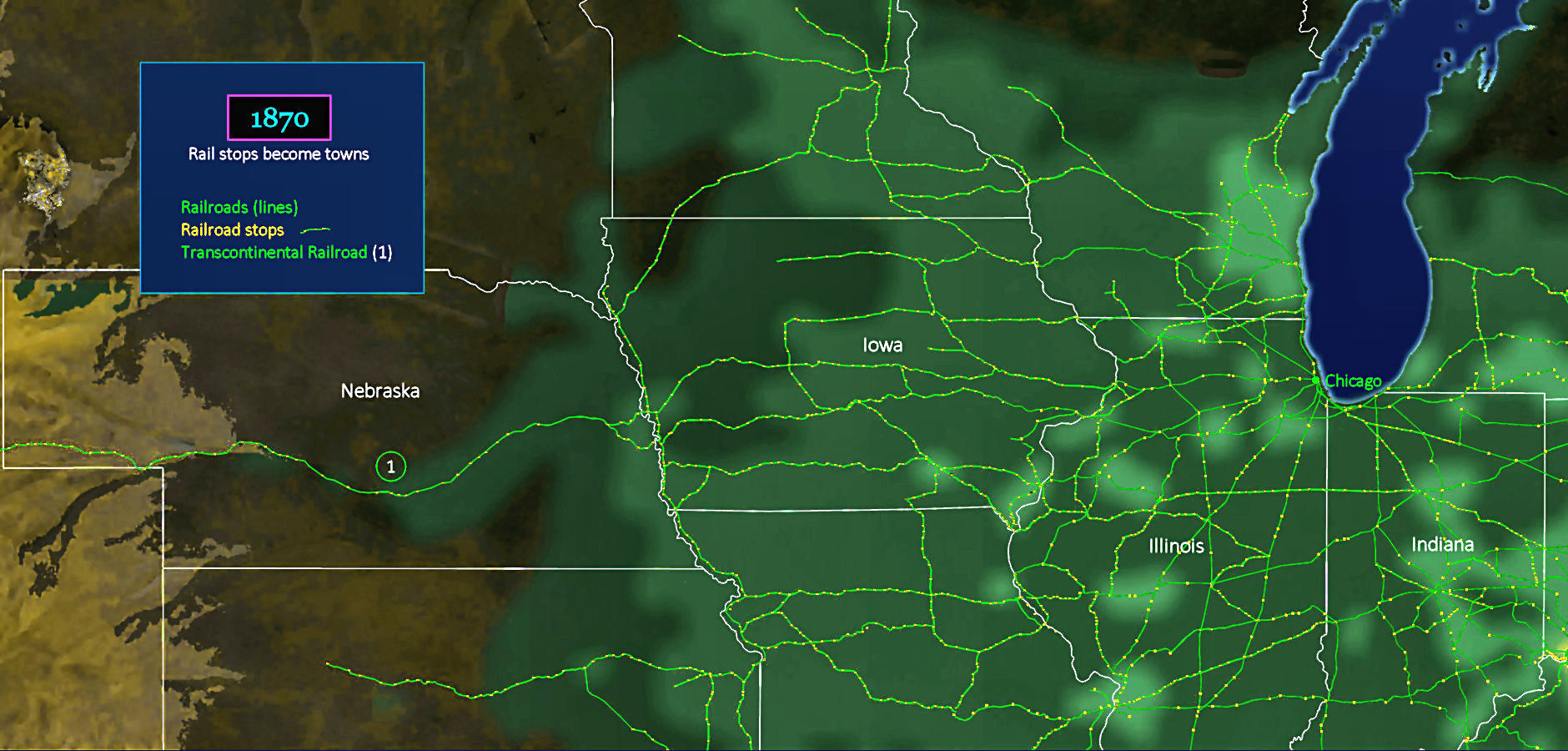
Railroads Boost Land Prices The other factor propelling the explosion of railroads west is land value. Railroads initially build a rail stop every 10 miles or so, to provide places to load and unload passengers and freight. They quickly learn, however, that this has the magical effect of boosting real estate development around every rail stop. It doesn't take long to realize that building additional rail stops between existing stops, and managing the sale of the surrounding land, can become an additional source of rail company profits. | |||||||||