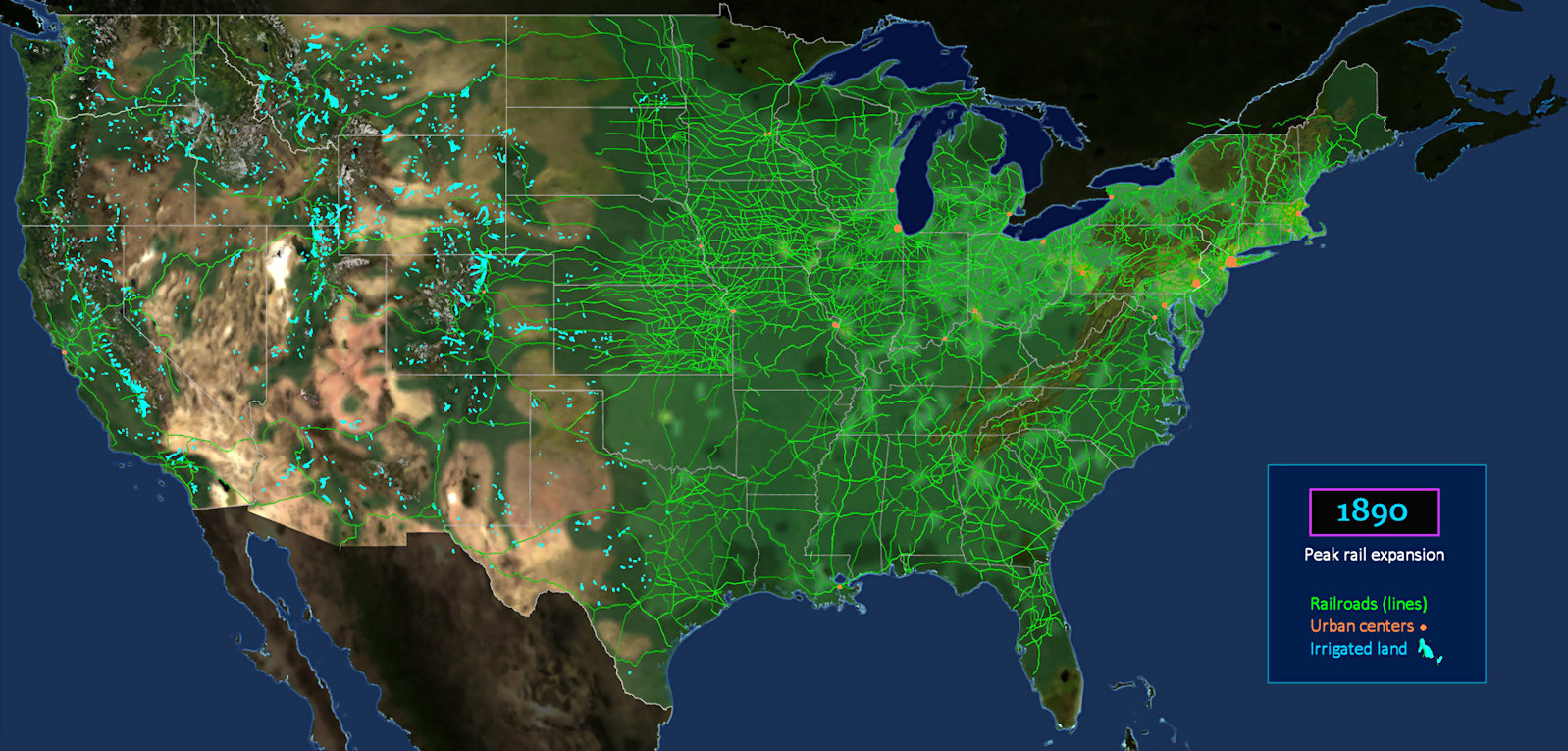
Western ExpansionEven more railroads Western irrigation Growing industrial activity More railroad land grants The Homestead Act Land grants for state colleges |
| ||||||||||||||||
| |||||||||
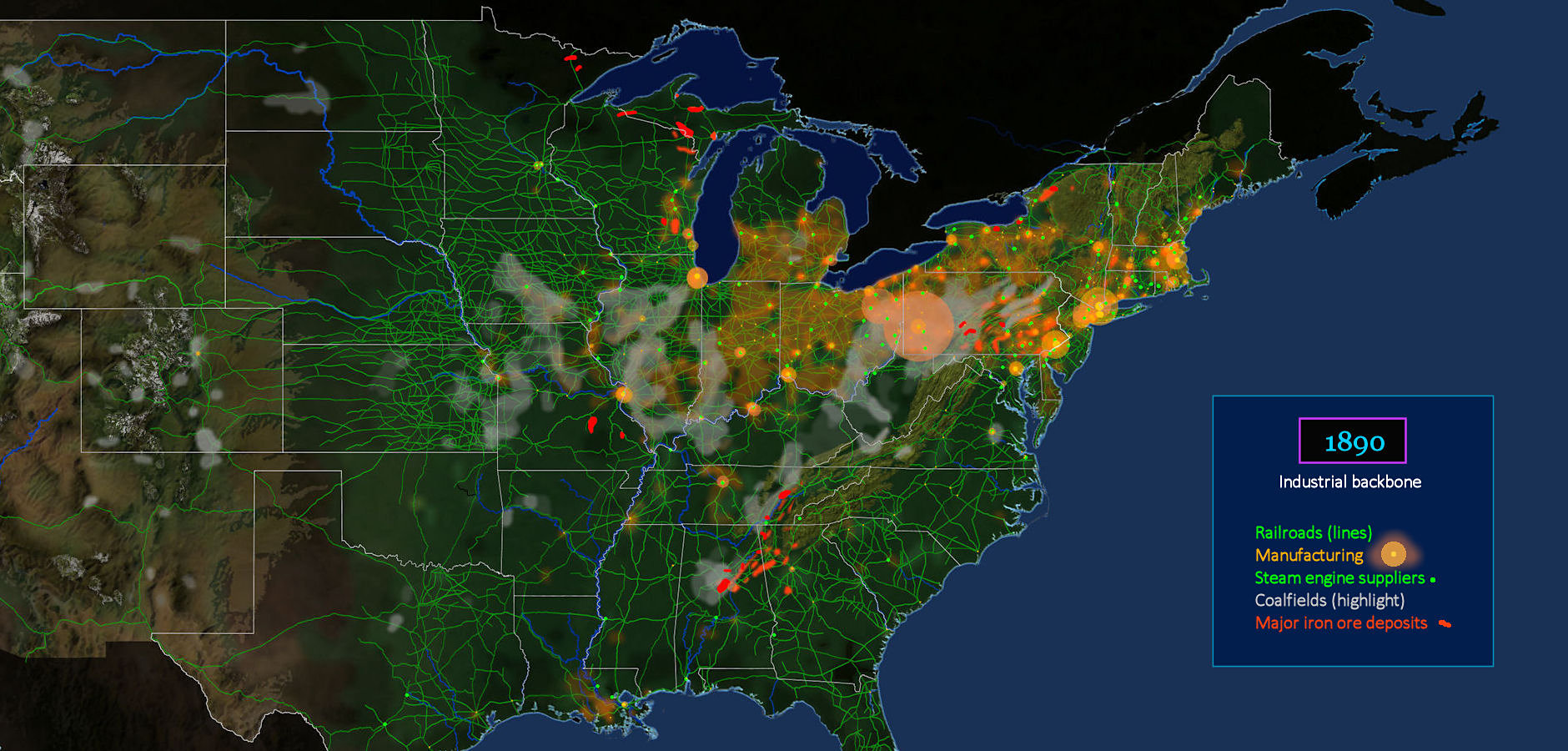
Steel Means Business By this time, steam-powered manufacturing has spread across most of the northern tier of states, shown above in ORANGE. Iron is now being mined principally from the huge new fields in Minnesota, and Michigan's Upper Peninsula (RED). Railroads now service these previously inaccessible fields, bringing ore down to Duluth, where it is loaded into huge 'ore boats.' From there, it is shipped down the Great Lakes to Cleveland, before continuing on to Pittsburgh by rail. | |||||||||
| |||||||||
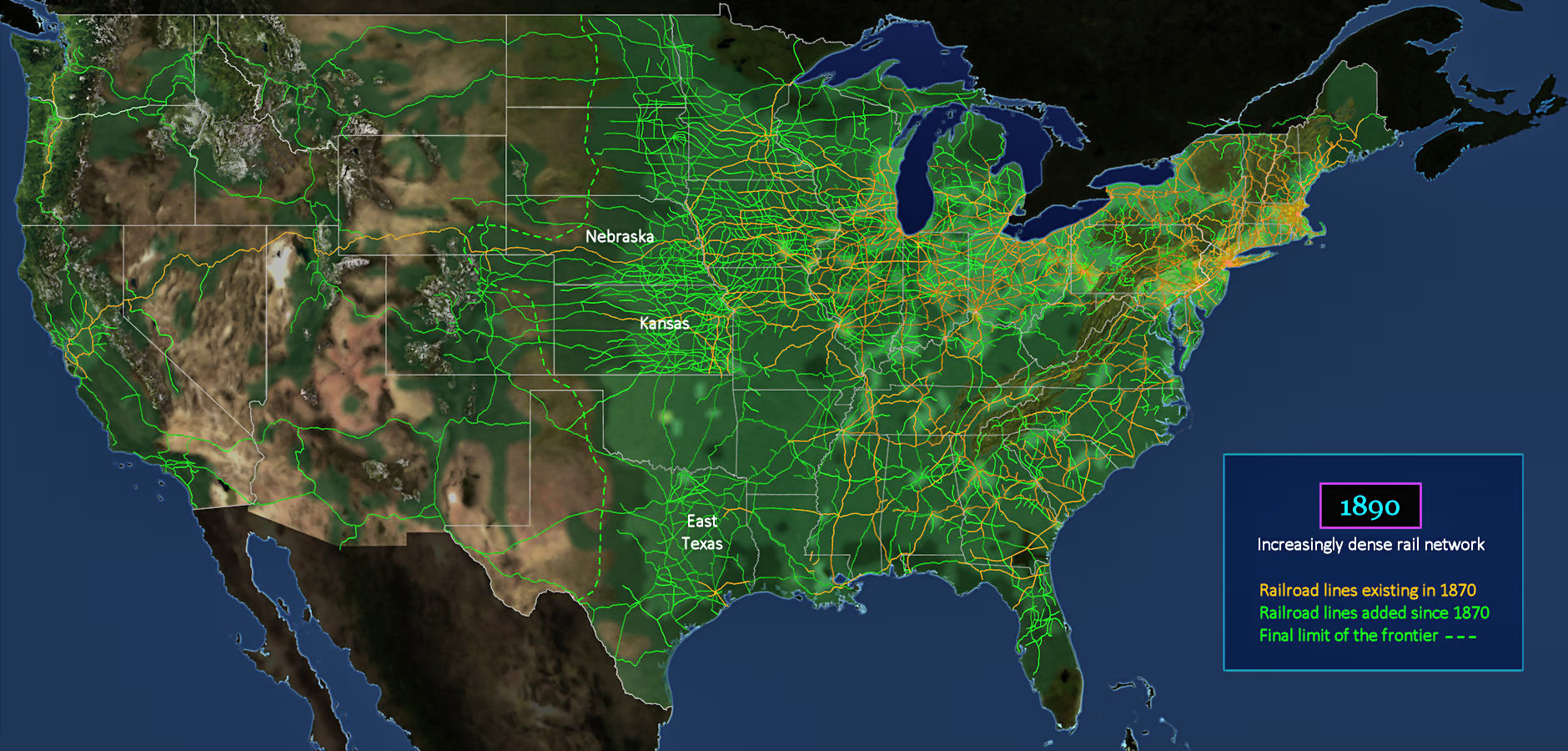
Railroad Frenzy Slowing This marks the crest of the wave of development spurred by railroad expansion. Additional transcontinental railroads have been added to the west coast, but otherwise the pattern of expansion is limited to areas which already have rail service, with the exception of Nebraska and Kansas. The darker GREEN highlights underneath the rail system shows settled land, which basically ends at the edge of the prairie. ORANGE lines are existing railroads, while bright GREEN are the new lines. | |||||||||
| |||||||||
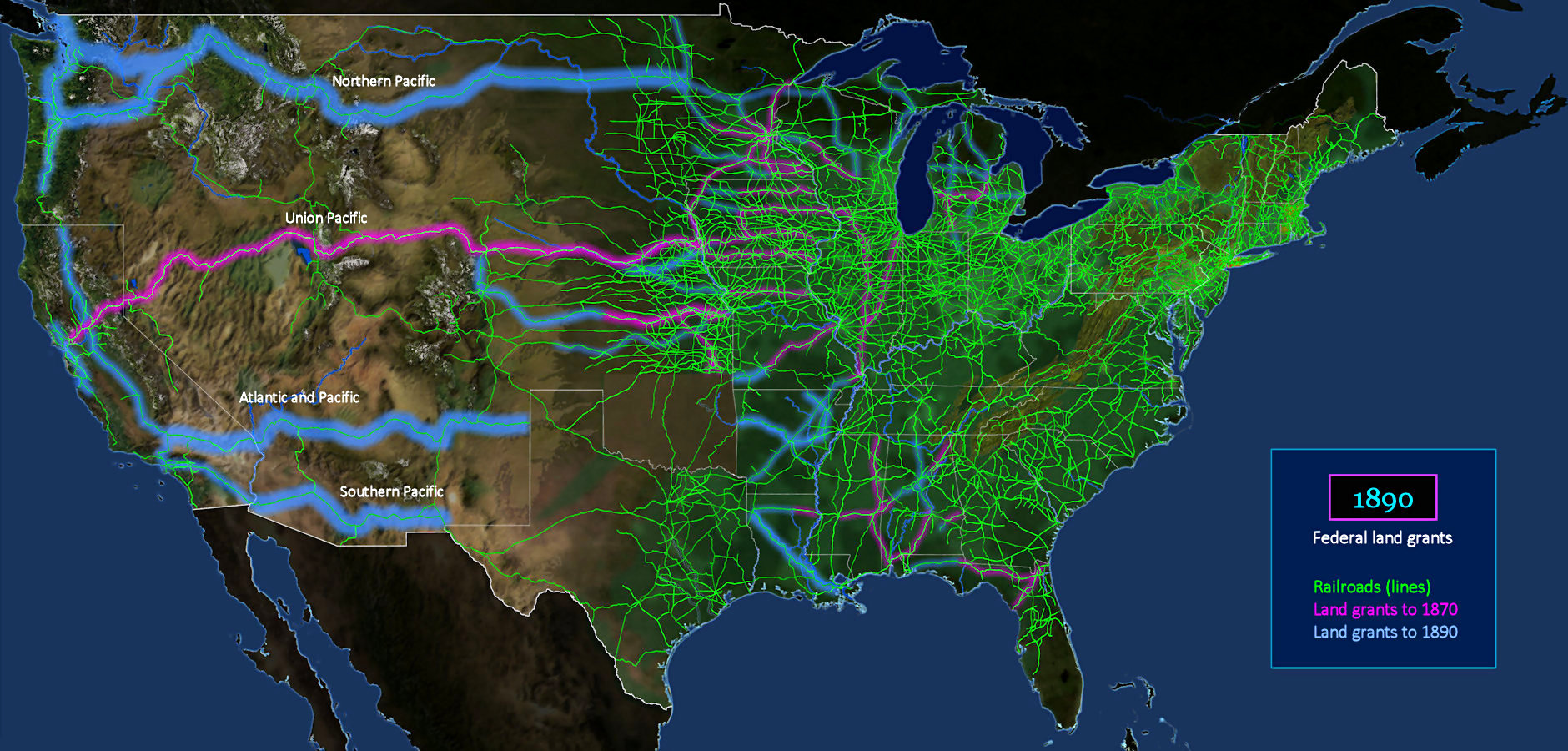
More Railroad Land Grants The first transcontinental railroad is the Union Pacific, which survives an early financial scare to become profitable. When the government tries to encourage additional routes to the Pacific, however, investors decline to submit bids due to high expected costs. The government has to double the width of railroad land grants, from 20 miles to 40 miles, in order to elicit bids. By 1890 there are four routes, although the most northerly, the Northern Pacific, struggles with profitability for years. | |||||||||
| |||||||||
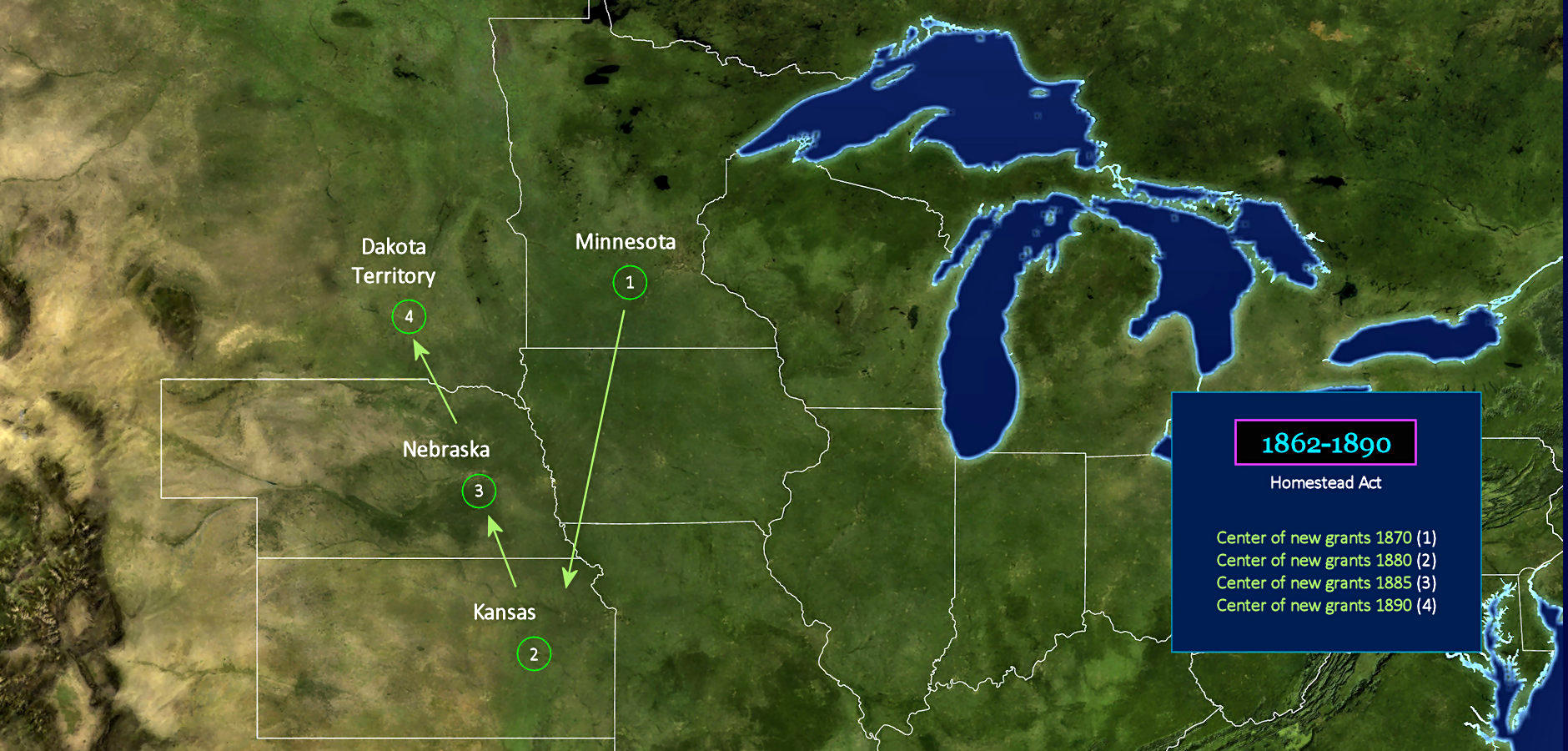
Land for Free (almost) The federal railroad land grants only award half the land within the overall width of the grant to the railroad operators. The remaining land is offered directly to settlers, in 1/4-square-mile plots, under the Homestead Act. The price is so low that it amounts to free land. Basically, if you're willing to farm the land, it's yours. This eventually results in many setters taking direct possession of their homesteads, although the center of activity gradually shifts. Early settlers select plots in Minnesota. | |||||||||
| |||||||||
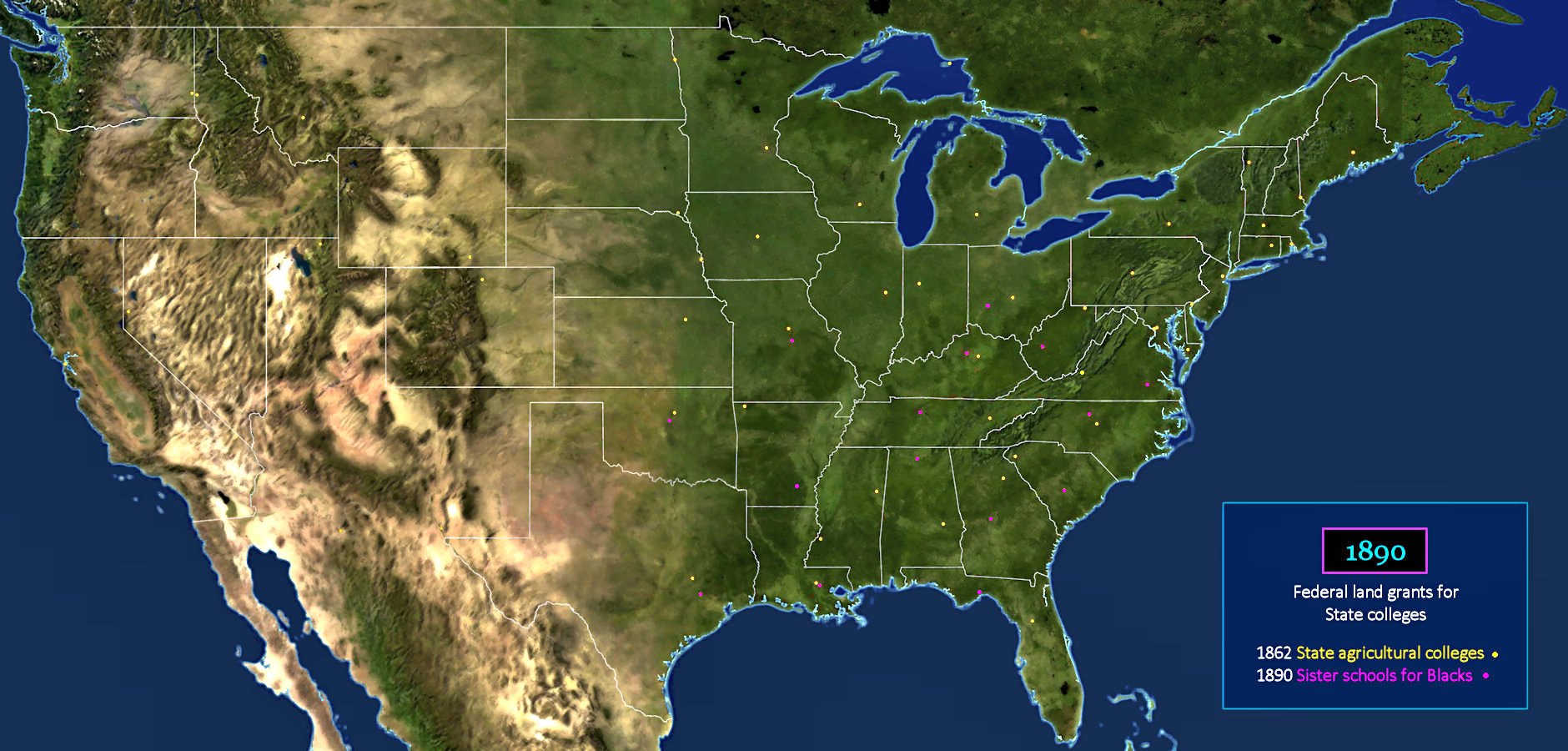
Support for Colleges The federal government also promotes national development by giving away pieces of public land for State colleges. These land grants begin during the Civil War, establishing agricultural and technical schools (in YELLOW) to introduce modern farming methods to rural areas, where schooling is otherwise spotty. In the South, the program is expanded in 1890 to include sister schools specifically for Blacks (in PURPLE). These generally receive reduced funding. | |||||||||