| |
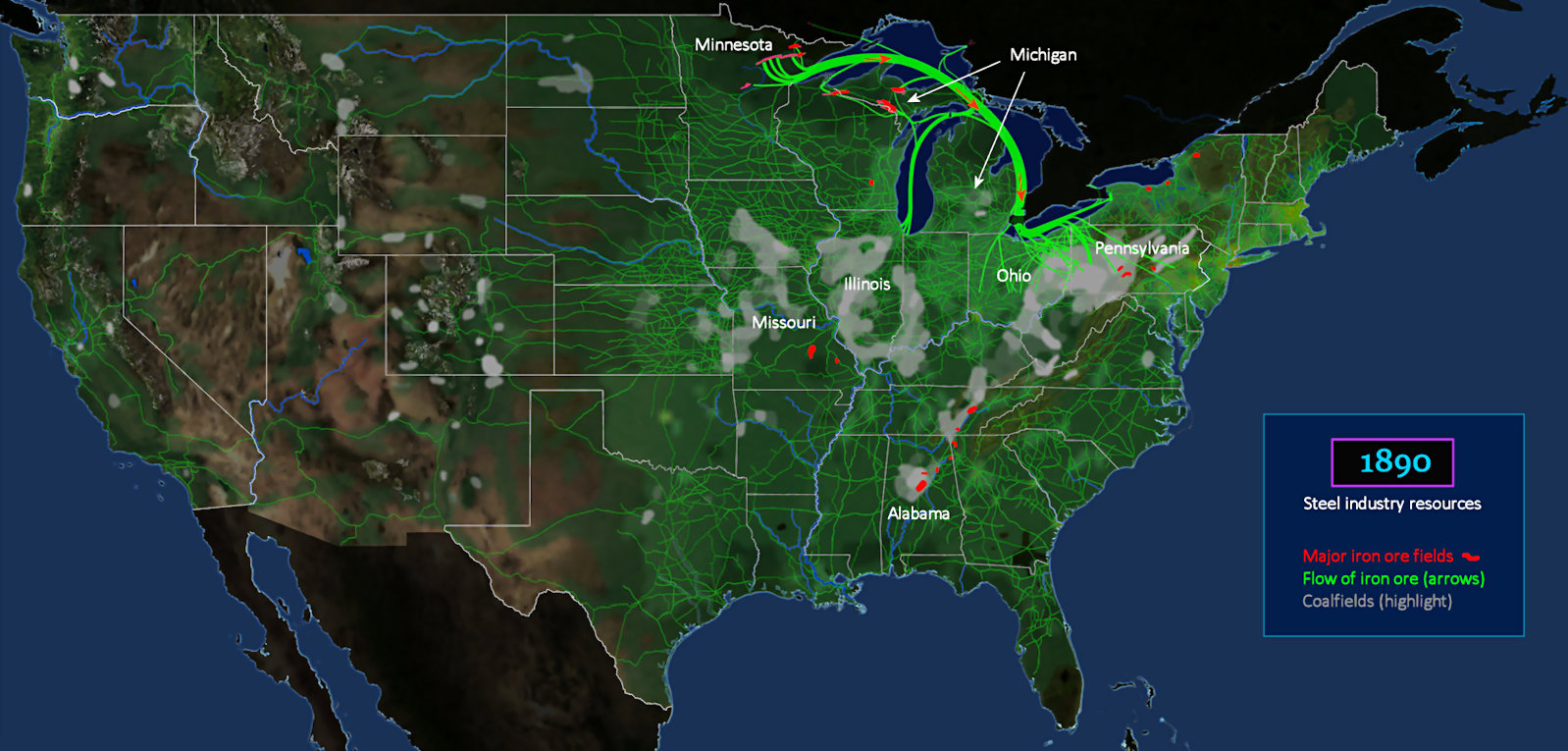
Great Lakes Ore The final piece of the puzzle that unlocks the explosive power of steel is development of the world's largest iron ore deposits, in northern Minnesota. Railroads transport ore to the far western tip of the Great Lakes, at Duluth. From there, huge ore boats two football fields in length transport the ore through locks in Michigan all the way down to Cleveland, and from there to Pittsburgh by rail. |
| |||||||||
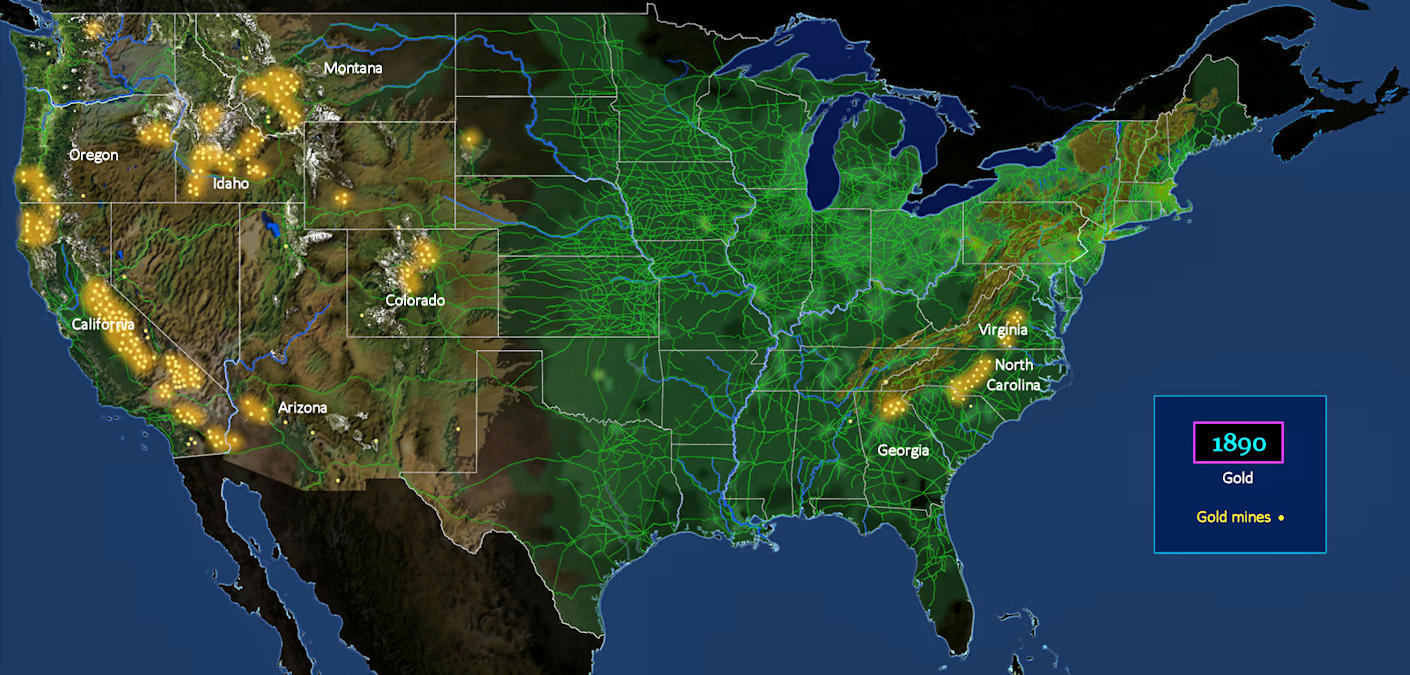
Riches from the Ground The West has little to entice farmers, but is blessed with an abundance of riches below ground. This begins with development of the California gold fields, but spreads to other gold-rich areas in the mountains of Oregon, Idaho, Montana and Colorado. Lesser deposits are found in Arizona, and the eastern states of Georgia, North Carolina and Virginia. | |||||||||
| |||||||||
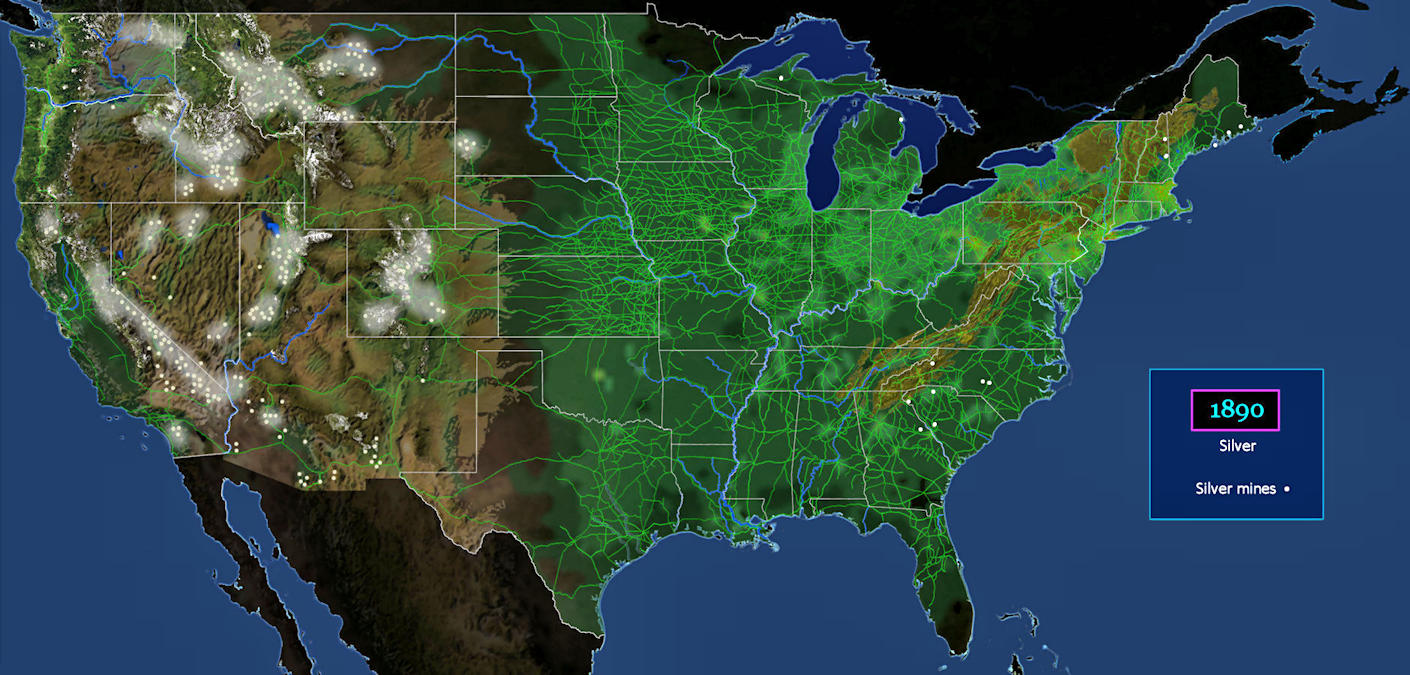
Silver, Too Prospectors drawn to the gold fields soon discover silver in the same general areas, beginning a bonanza period. This begins in the corner of Nevada, with discovery of the famous Comstock Lode in 1850. The boom period lasts 60 years. | |||||||||
| |||||||||
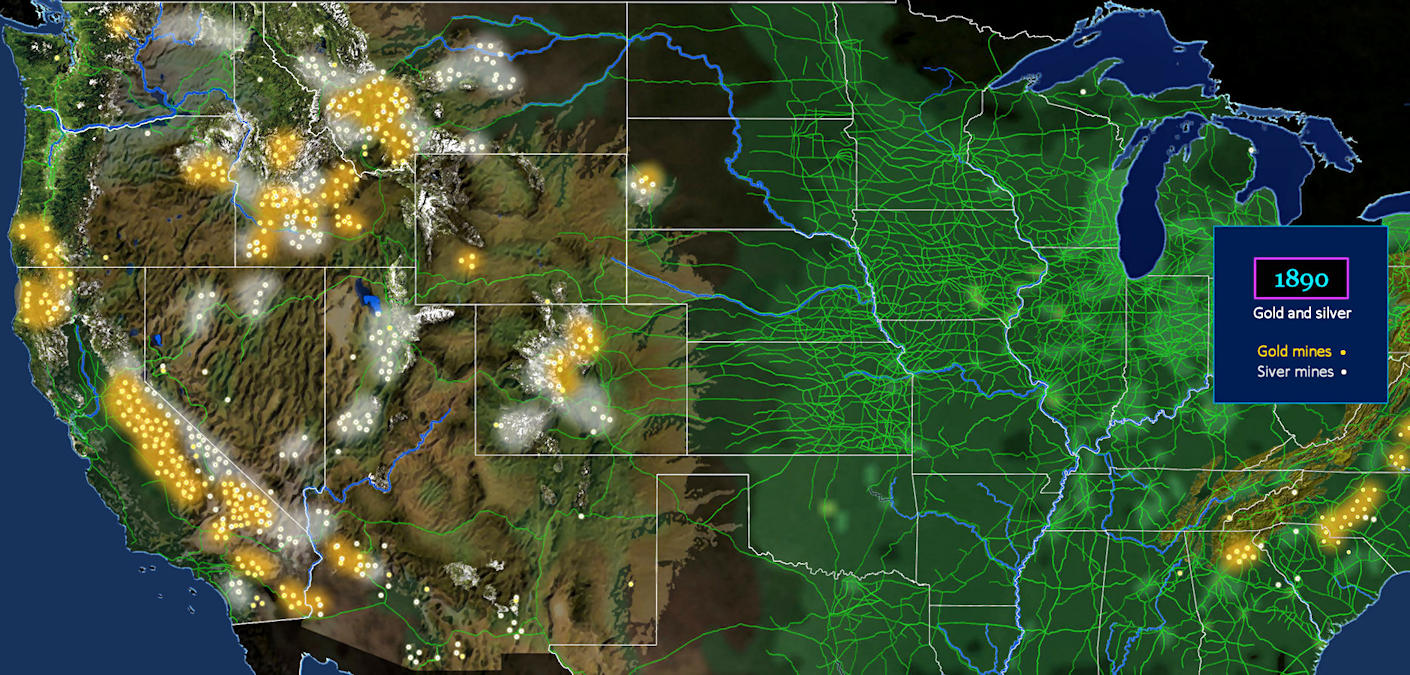
Metallic Twins Here we see that gold and silver deposits are often located in the same regions. The great California gold rush of 1849 only lasts only a few years, while silver production continues to grow. Small amounts of gold dust continue to be gathered from streams, and washed out of soft hillsides with pressurized water. Veins of silver sometimes extend horizontally underground. The last major silver field is discovered in Leadville, Colorado, in 1873. | |||||||||
| |||||||||
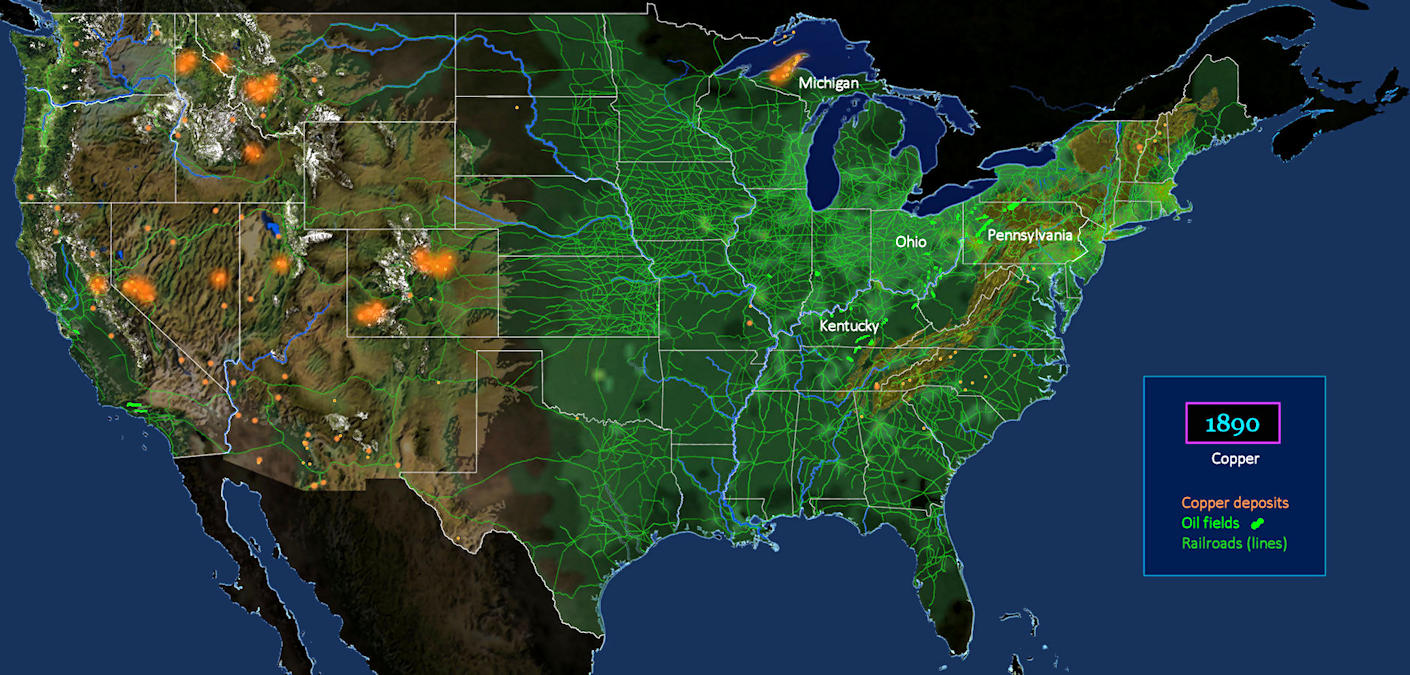
Copper and Oil Copper is another metal found widely in the western mountains and deserts, and in northern Michigan. Copper has become the dominant metal used for electric wiring. Petroleum deposits are being discovered at the same time in western Pennsylvania, Ohio and Kentucky. This will soon become important, as autos powered by gas engines will soon become practical. | |||||||||
| |||||||||
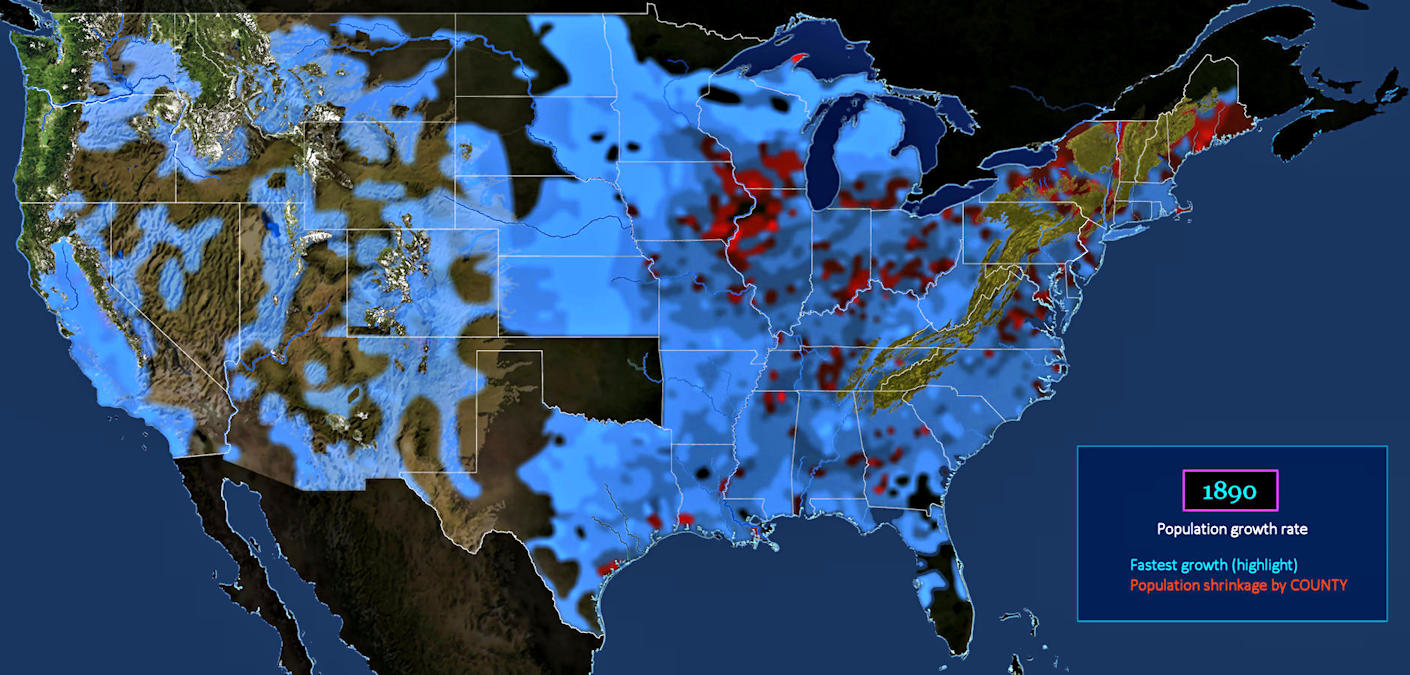
Midwest Turning Red The pattern of population migration has changed yet again, as people begin leaving the Midwest (RED zones) to try their luck in lands further west. This turns out to be the peak of the great western migration, however, as the prairie states quickly lose their appeal, offering little but hardship and isolation. Western mining operations have also generally peaked, and irrigation of western land for ranching operations is stalling. The West has little else to entice newcomers. | |||||||||