| |
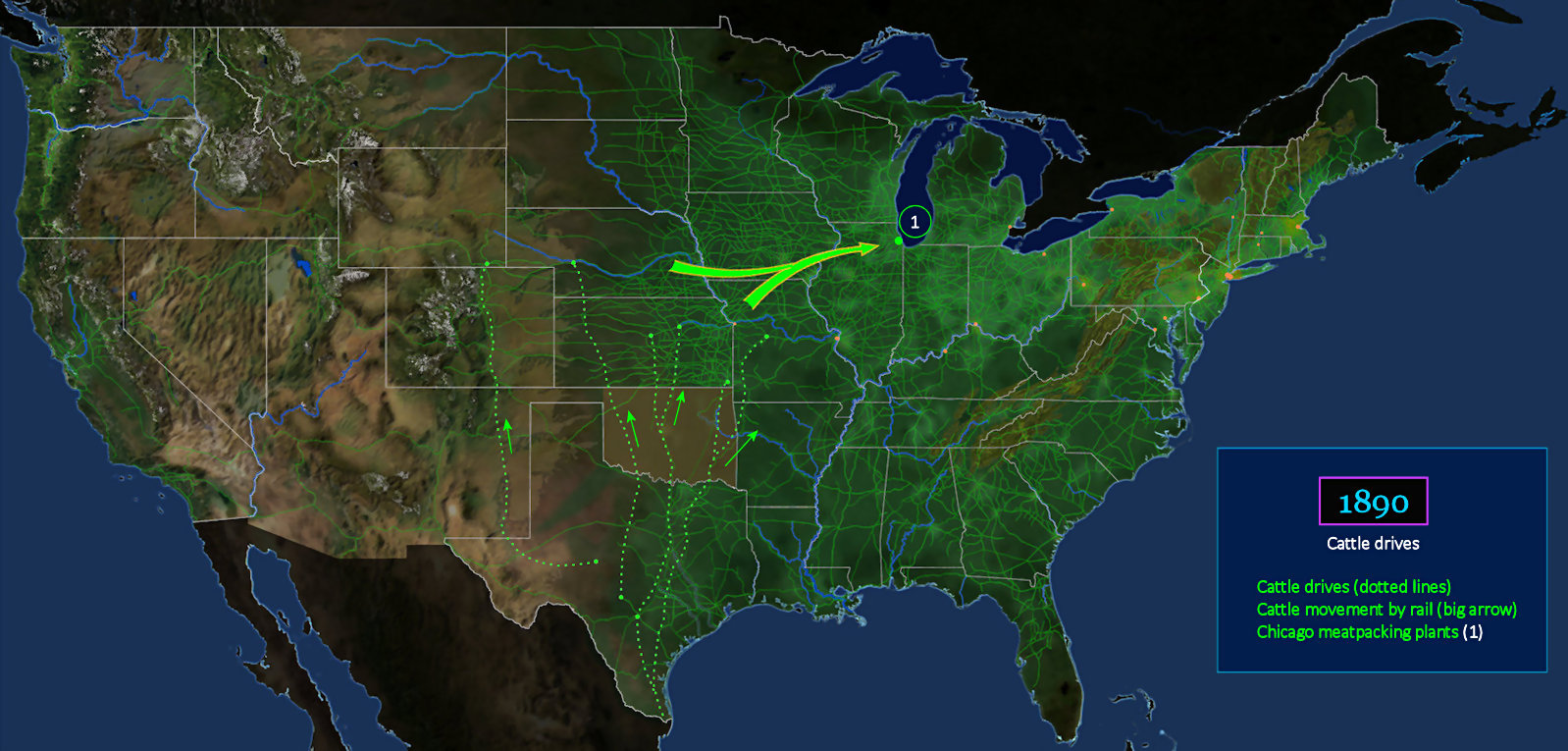
Cowboys and Cattle In Texas, the brief era of cowboys and cattle drives (depicted in so many westerns) is over. It's no longer possible to get herds from Texas to the rail junctions in Nebraska and Kansas, because settlers along these routes are installing newly-invented barbed wire fencing. This ends the period of free-range ranching. |
| |||||||||
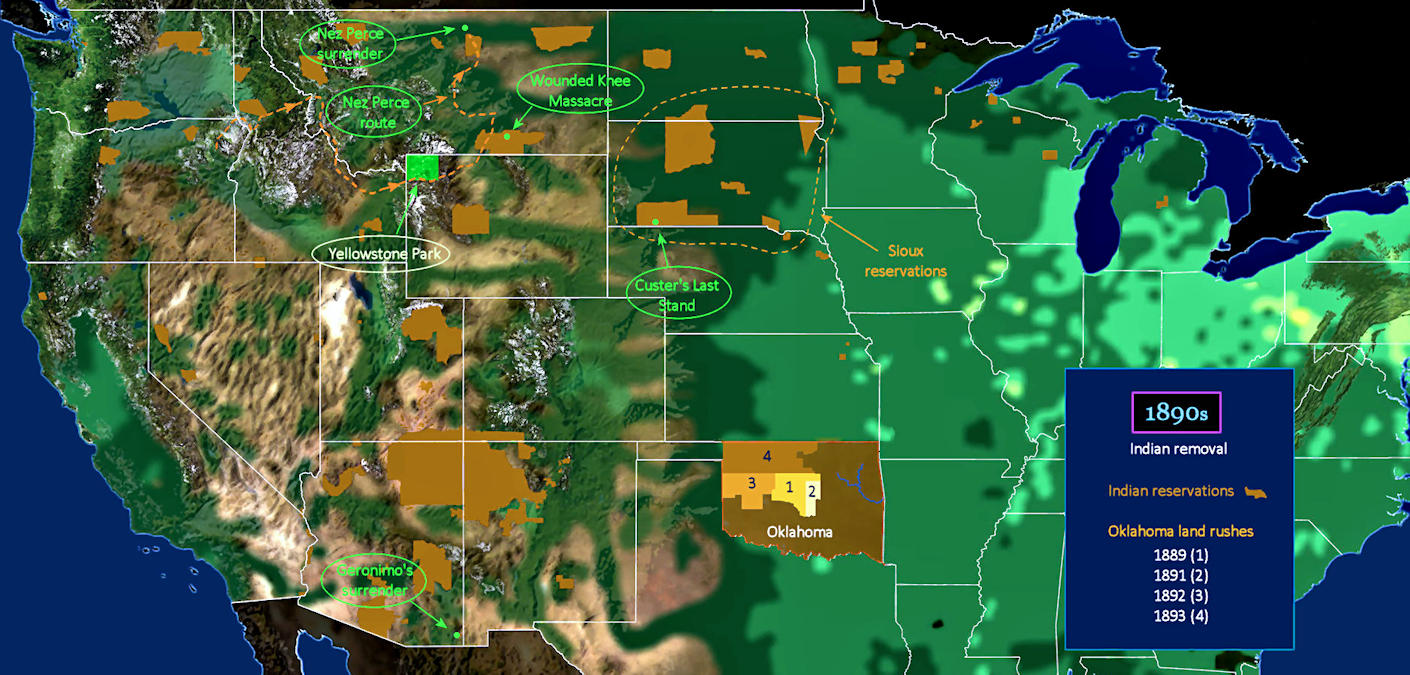
The Last Roundup Settlers and Indians never learn to get along. Settlers continue encroaching, and Indians continue resisting. The process of moving Indians onto reservations resumes after the Civil War, as the US Army is tasked with rounding up all remaining Indian tribes and moving them to reservations. This is a 40-year effort, and the reservations shown above remain to this day. Meanwhile, most Indian land in Oklahoma is opened to white settlement. This begins with four land rushes, numbered above. | |||||||||
| |||||||||
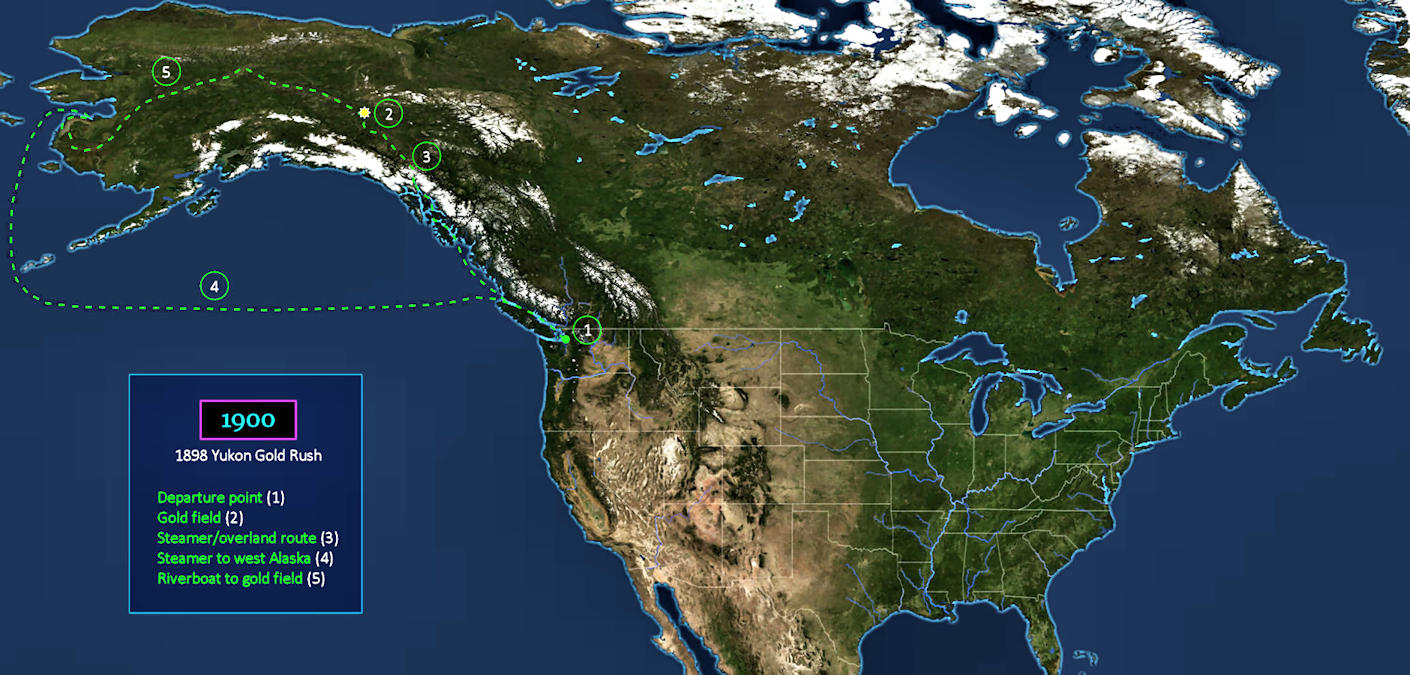
Gold Rush, Again America's final gold rush occurs far to the north, in the Alaska Territory purchased from Russia right after the Civil War. The long way around involves two steamship voyages, but becomes unusable when the river portion freezes over. The shorter route begins with a steamship leg, but then requires a daunting overland trek that includes a near-vertical ascent up one particularly difficult snow-covered trail. Some 100,000 hearty adventurers try to reach the goldfields, but only a third succeed. | |||||||||
| |||||||||
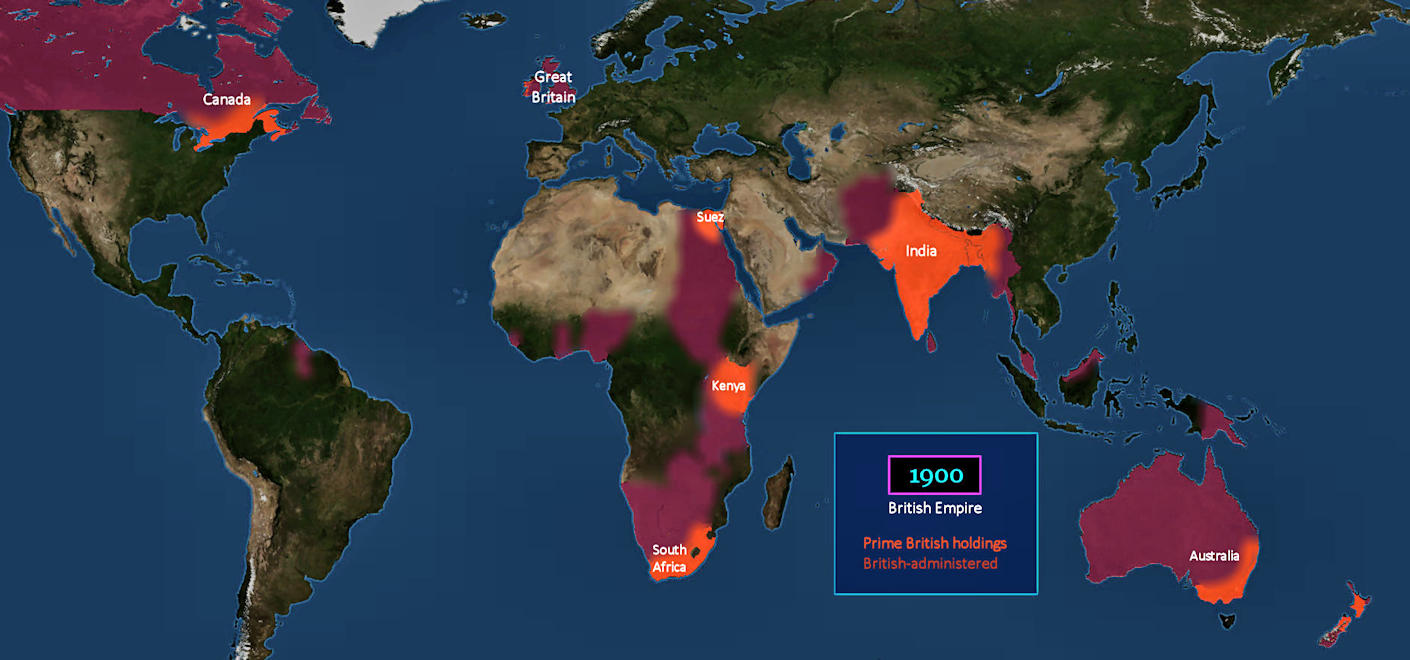
Age of Empire 1900 marks the high point of something called the Age of Empire, when European powers jostle for control of Africa and Asia. Britain is the clear winner. The regions highlighted above are all administered by Britain, although only the bright regions are really important. India is the prime source of British overseas wealth, as British railroads have turned it into a colony organized to supply the mother country with cheap raw materials. Britain is able to maintain its Empire mainly through control of shipping. | |||||||||
| |||||||||
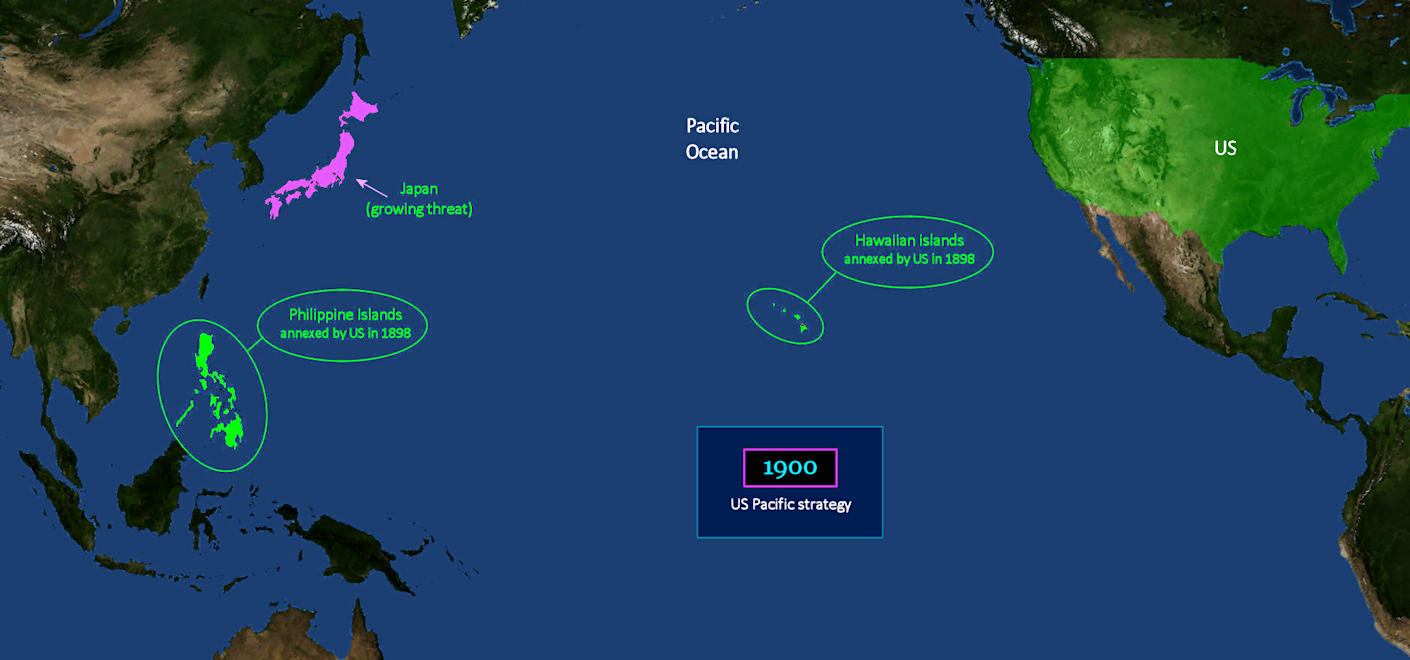
America Wants In While the British, French, Germans and Portuguese are busy dividing up Africa, America is also in an expansionist mood. It launches the brief and wildly successful Spanish-American War in 1898, to gain control of Spanish naval bases. Spanish brutality in Cuba is the pretext, but the Spanish colony in the Philippines is the hidden goal, opening the Pacific to American sea power. Hawaii is annexed at about the same time, through the efforts of American sugar-plantation owners. | |||||||||
| |||||||||
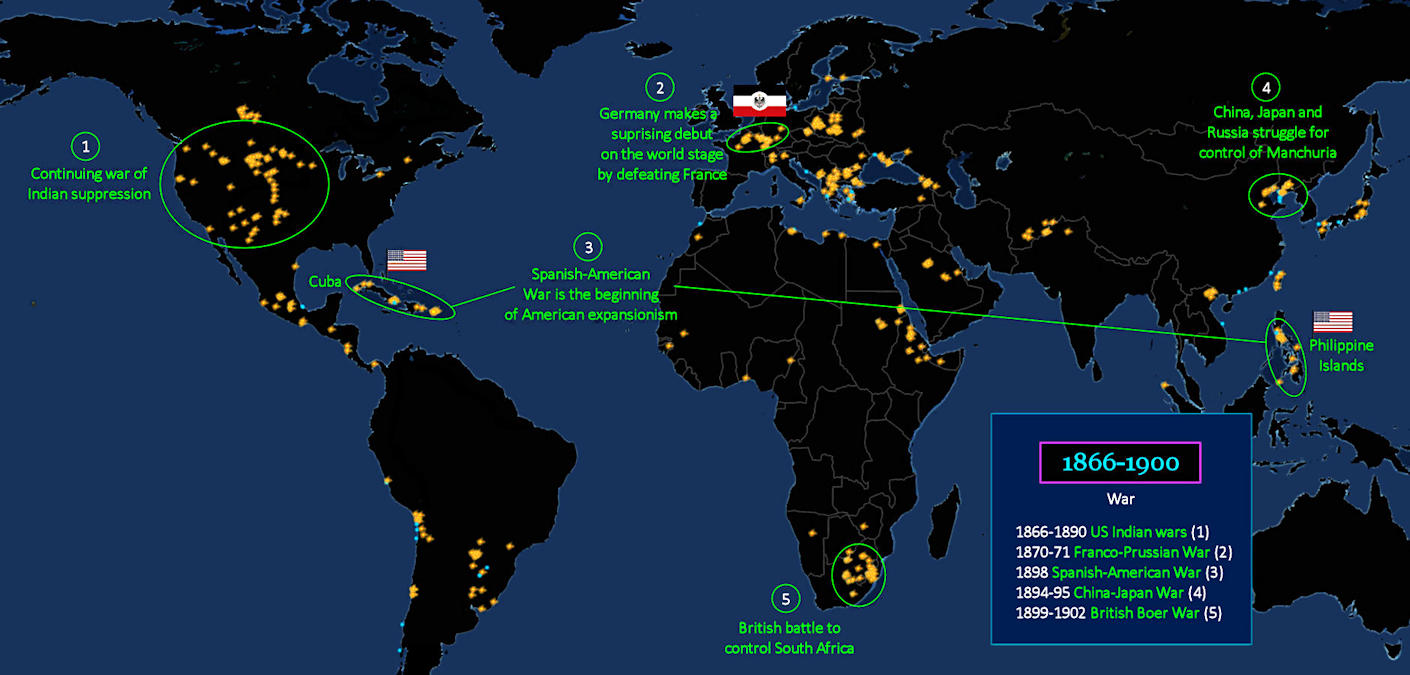
Conflict Heating Up The entire period between the Civil War and World War One is dominated by European powers struggling amongst themselves for control of the world. Britain has the upper hand, but Germany is a promising new upstart, after its surprising 1871 defeat of the French, in the Franco-Prussian War (2). Japan is also beginning to flex its muscles (4). Often unnoticed in the wide-ranging conflict shown above are the battles in America to subdue Indian resistance (1), and the battles of the Spanish-American War (3). | |||||||||