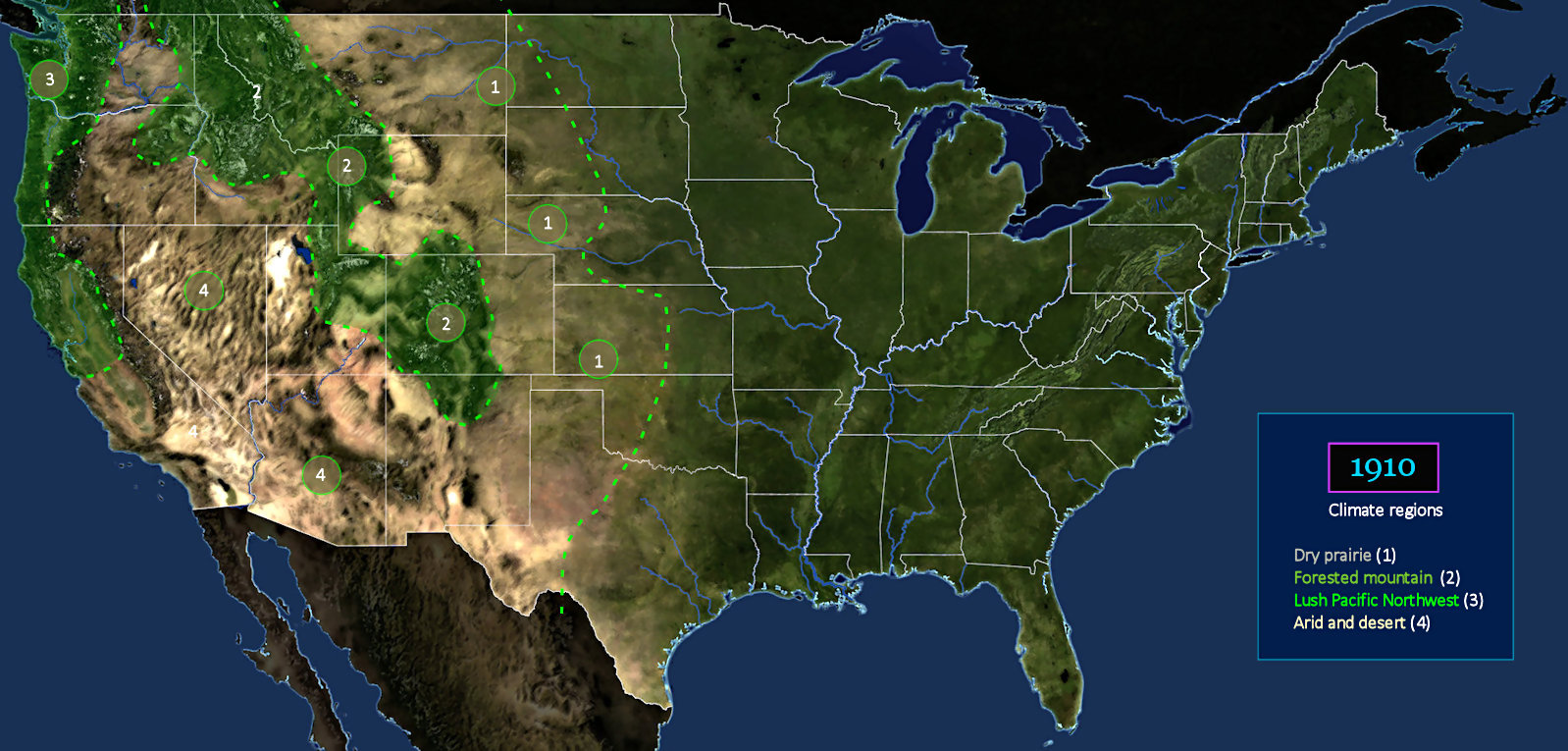
CropsClimate zones Corn Hay, tobacco, cotton, rice Cattle Irrigation, urban centers |
| ||||||||||||||||
| |||||||||
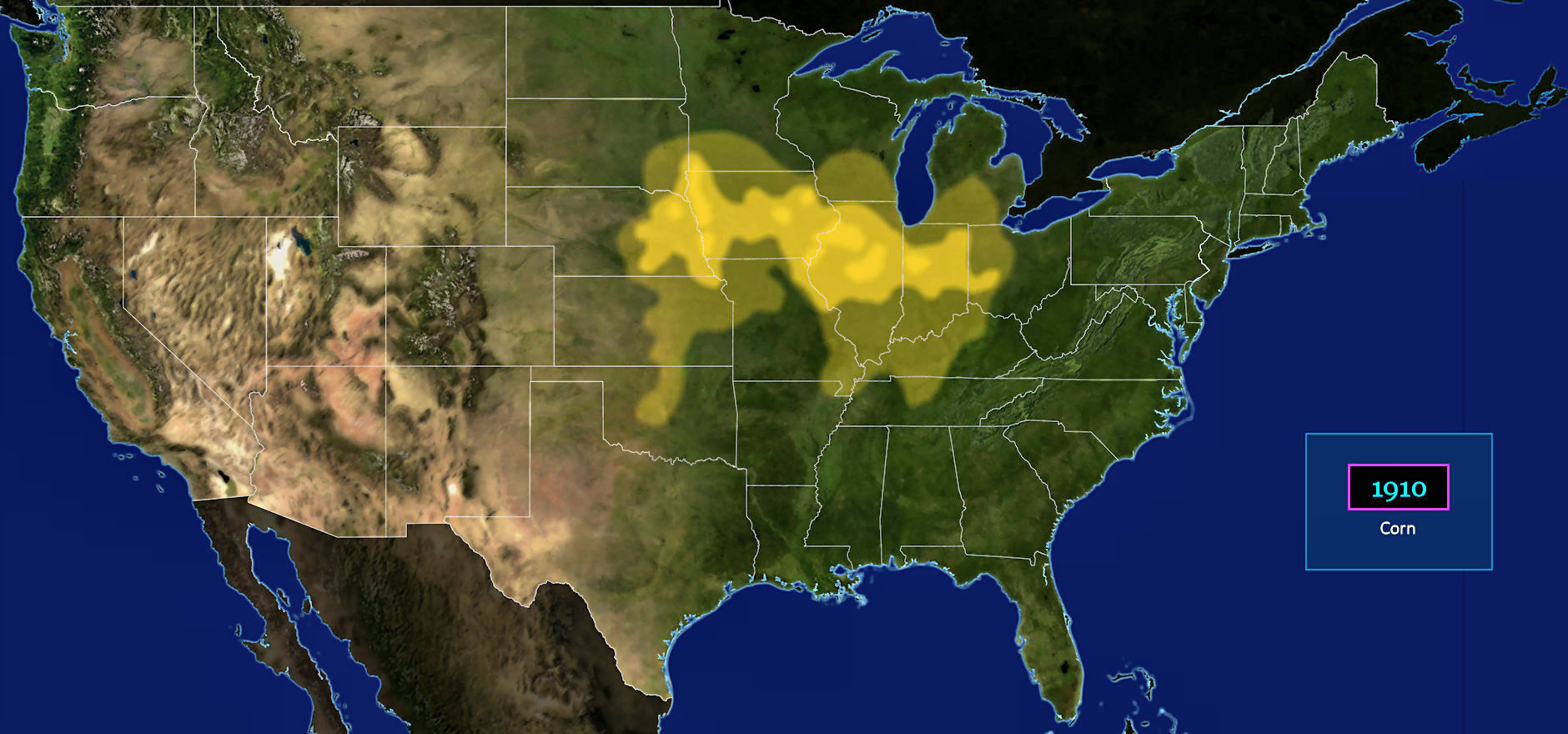
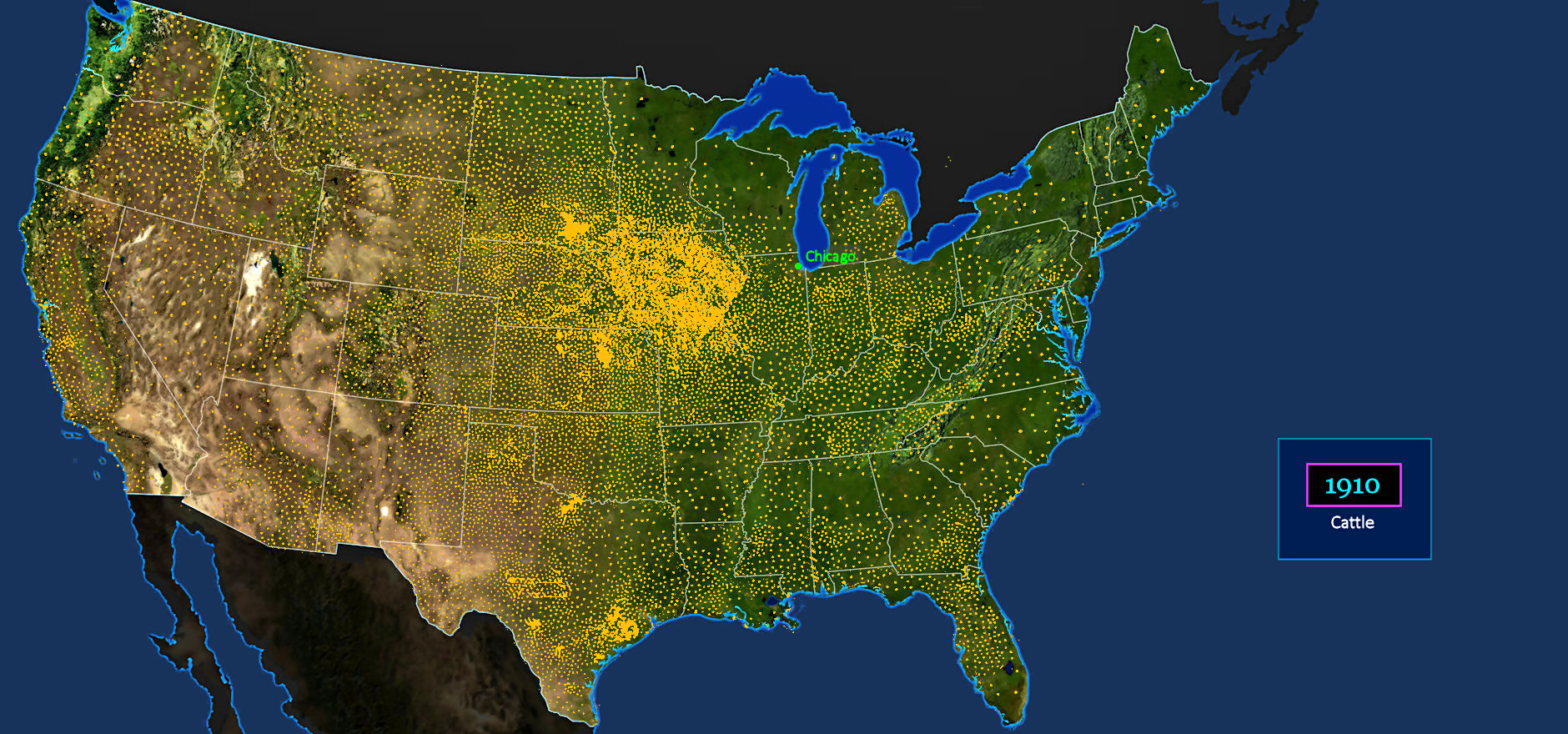
Corn Still #1 Farming families generally survive on what they grow, as there are few opportunities to generate much income. Corporations control the grain elevators and railroad shipments, leaving farmers forced to accept prices they are given. Corn is the biggest cash crop, as it has the highest yield per acre, and is in constant demand from livestock operators, as feed. The corn belt shown above coincides nicely with the center of the livestock and meat-packing industry. | |||||||||
| |||||||||
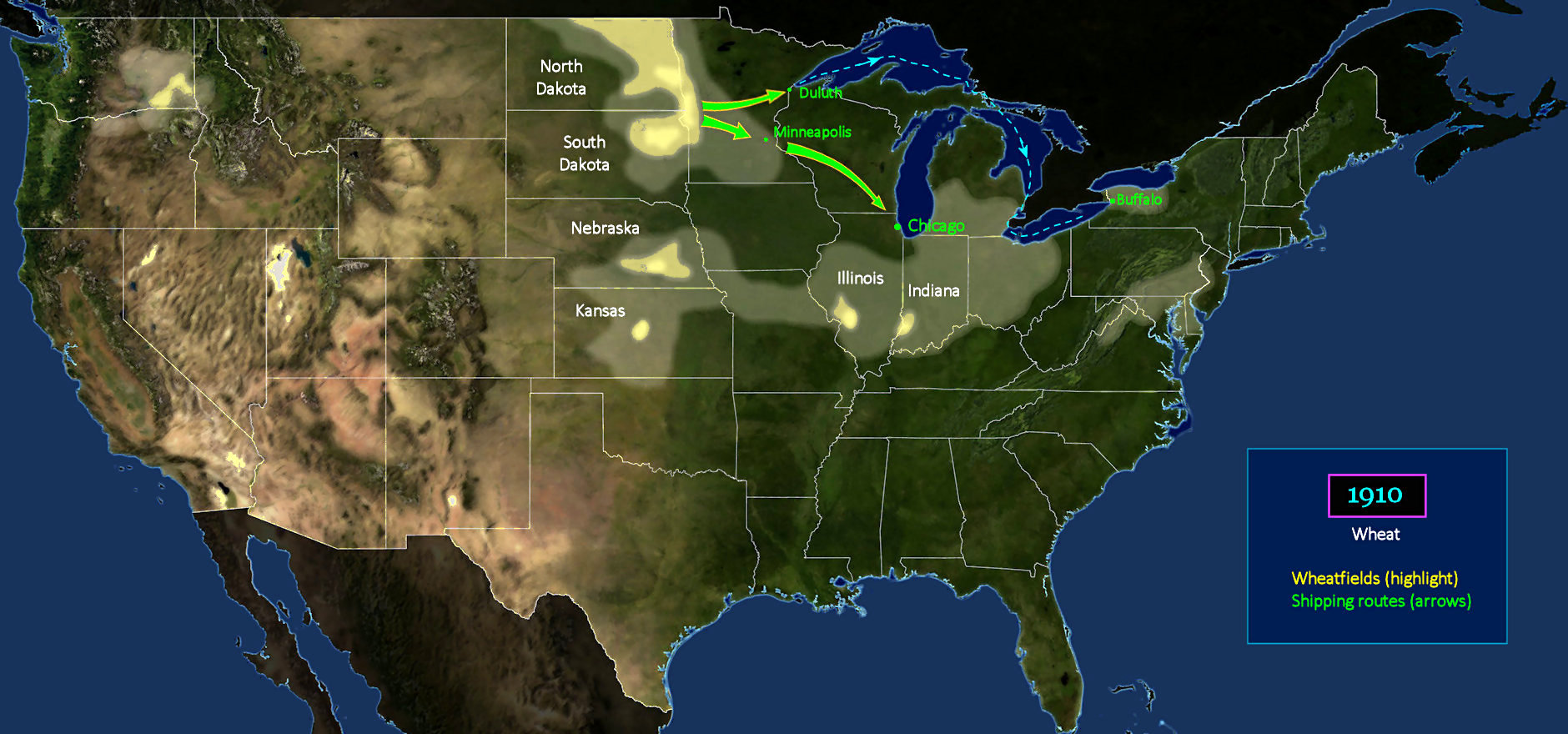
Wheat Still #2 Wheat grows well in cooler regions, including all the Northeast and Midwest, but is grown in bulk only on larger farms, with lots of equipment to harvest huge fields. Wheat farmers in the Dakotas have the easiest access to the great flour-grinding center in Minneapolis, home of America's most commercially productive waterfalls, with a 50-foot drop. Minneapolis mills grind enough flour to bake 12 million loaves of bread. Every day. Great Lakes steamers transport much of this east, to Buffalo. | |||||||||
| |||||||||
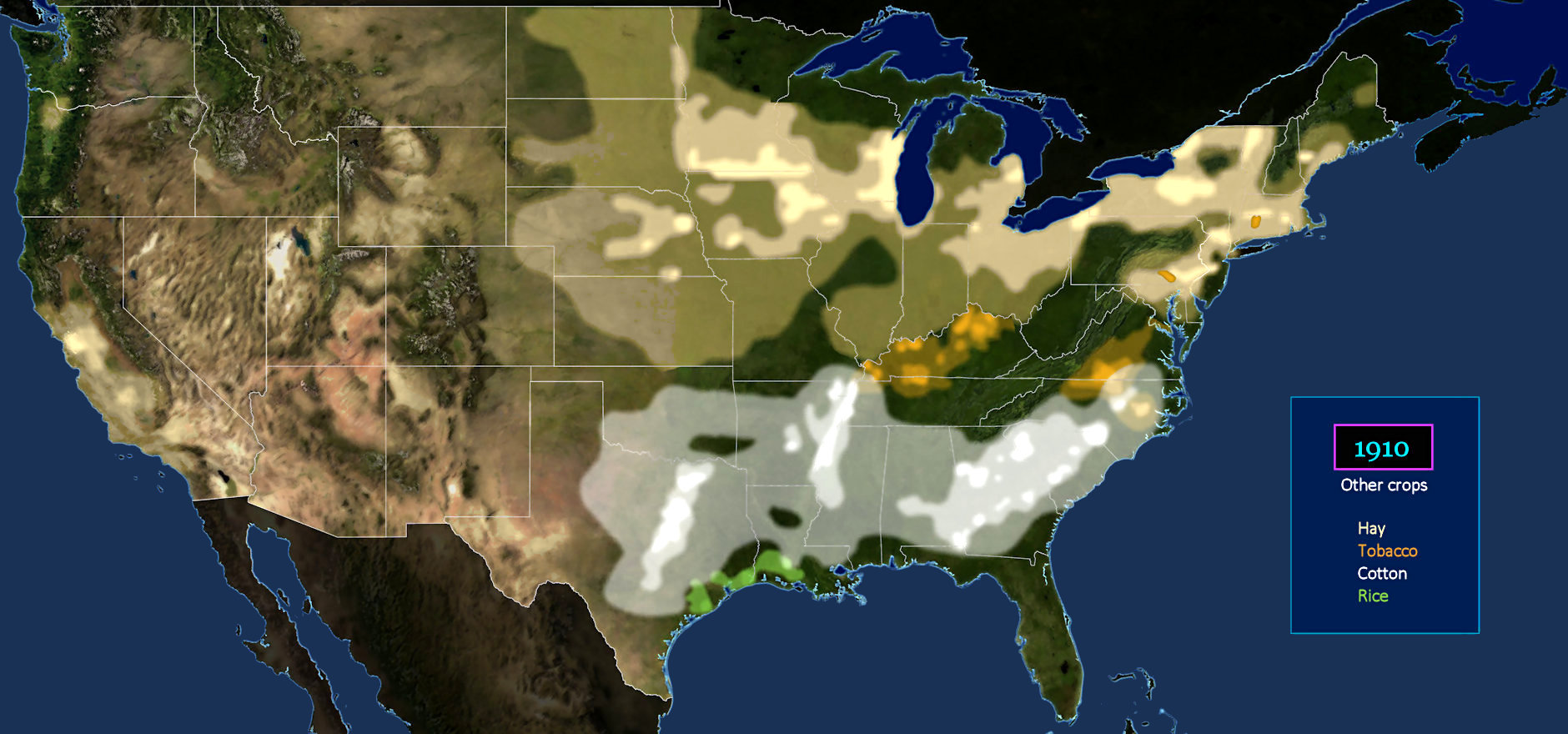
Lesser Crops America's other major crops are displayed above. Northerners grow hay to feed horses and livestock, while Southerners still favor the production of cotton, tobacco and rice. Each has a fairly distinct region. | |||||||||
| |||||||||
Livestock as Side Hustle Every farm keeps at least a few horses, cows, pigs and chickens, which help work the farm and feed the family. As traditional farming grows more difficult, however, many farms are now devoting increasing energy to raising livestock for sale. Beef cattle are grown everywhere, but particularly in the corn belt that surrounds the vast Chicago stockyards and meat-packing plants, which employ 40,000 workers. Combined, these operations process nine million animals. Per year. | |||||||||
| |||||||||
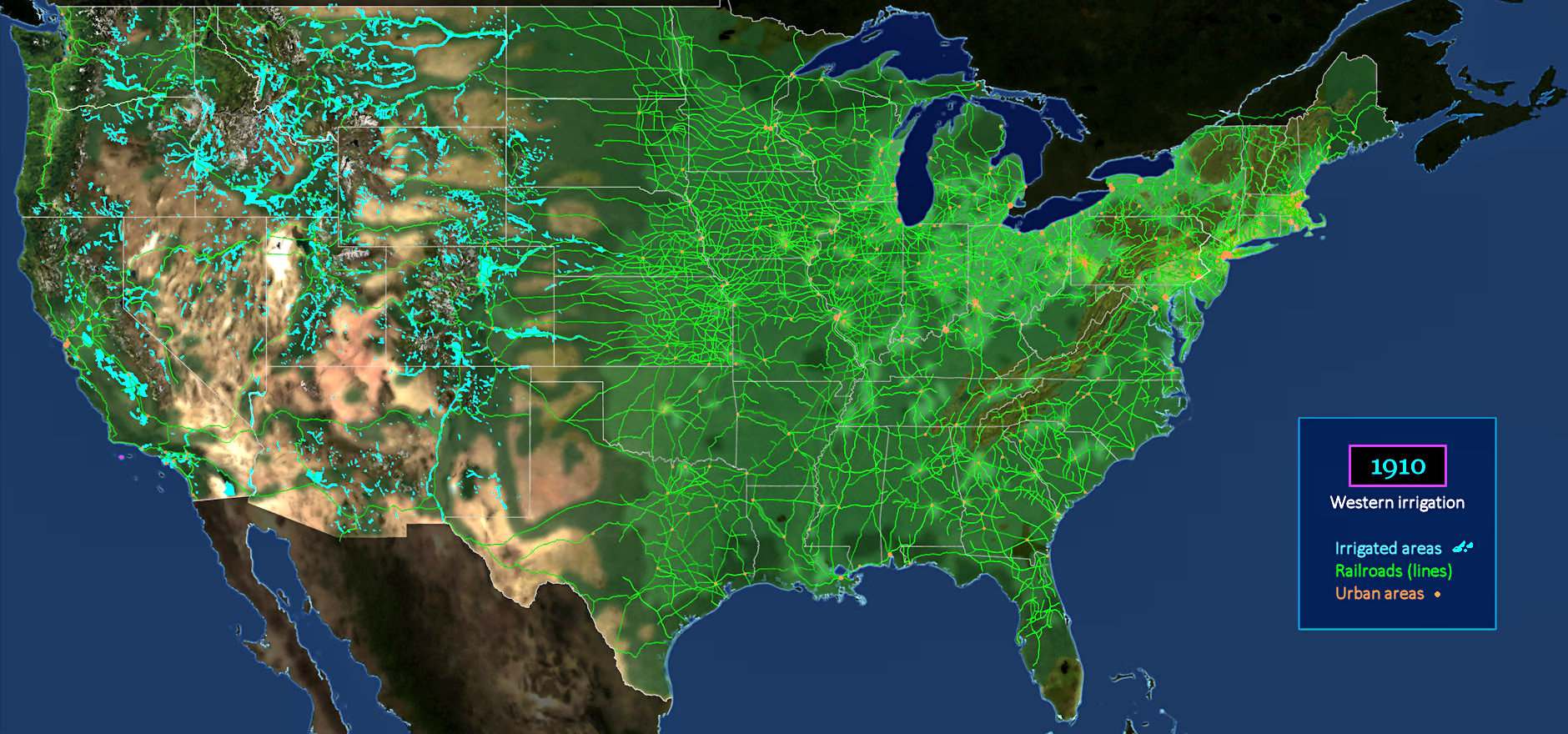
East and West Here we see the way steam power is fueling growth in two completely different ways. In the West, the BLUE areas are being irrigated with water supplied by steam-driven pumps. There are a few tiny ORANGE dots in this area, indicating locations with manufacturing or mining facilities. The much more generous sprinkling of ORANGE dots in the East indicates manufacturing centers, which are also urban rail centers. | |||||||||