| |
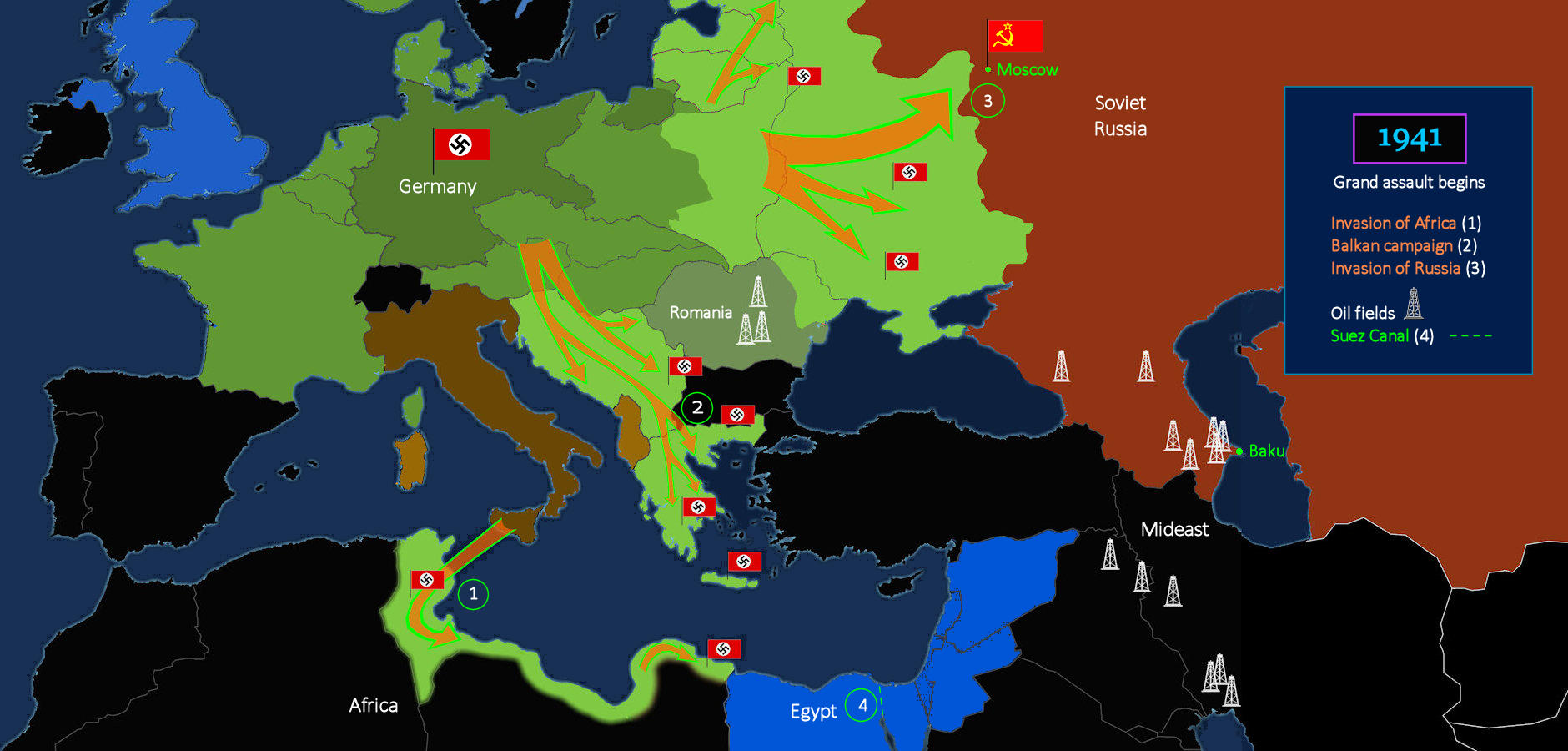
Contest of Wills Hitler's Balkan campaign takes a bit longer than planned, but he doesn't believe the Soviets will last long. He keeps his eye on the oilfields in the Middle East, which would provide all the fuel he could even want. Hitler begins by attacking down into Africa from Italy, to make a separate approach to the oilfields. Meanwhile the Soviets are reeling. The Germans encircle and wipe out five Soviet armies on their way to Moscow. |
| |||||||||
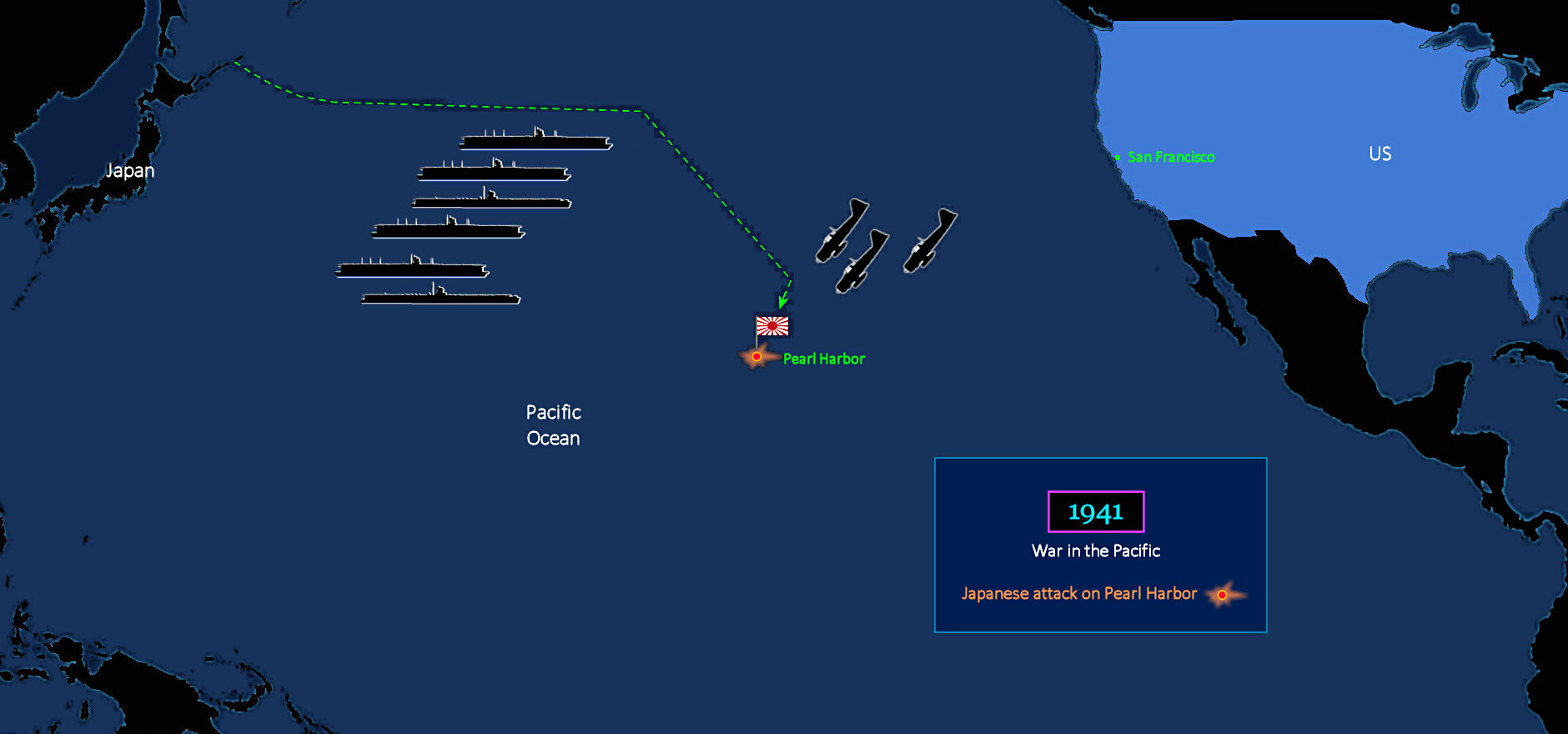
Pearl Harbor With The Soviets teetering on the brink, just outside of Moscow, the Japanese seize the moment to launch a surprise attack on the US naval base at Pearl Harbor, in the Hawaiian Islands. If Japan can take the US fleet out of action, it will be free to complete its conquest of Southeast Asia. The attack is a complete surprise, and succeeds in disabling most of America's battleships. By a lucky chance, however, all three of America's big aircraft carriers are out on missions at the time, and thus escape destruction. | |||||||||
| |||||||||
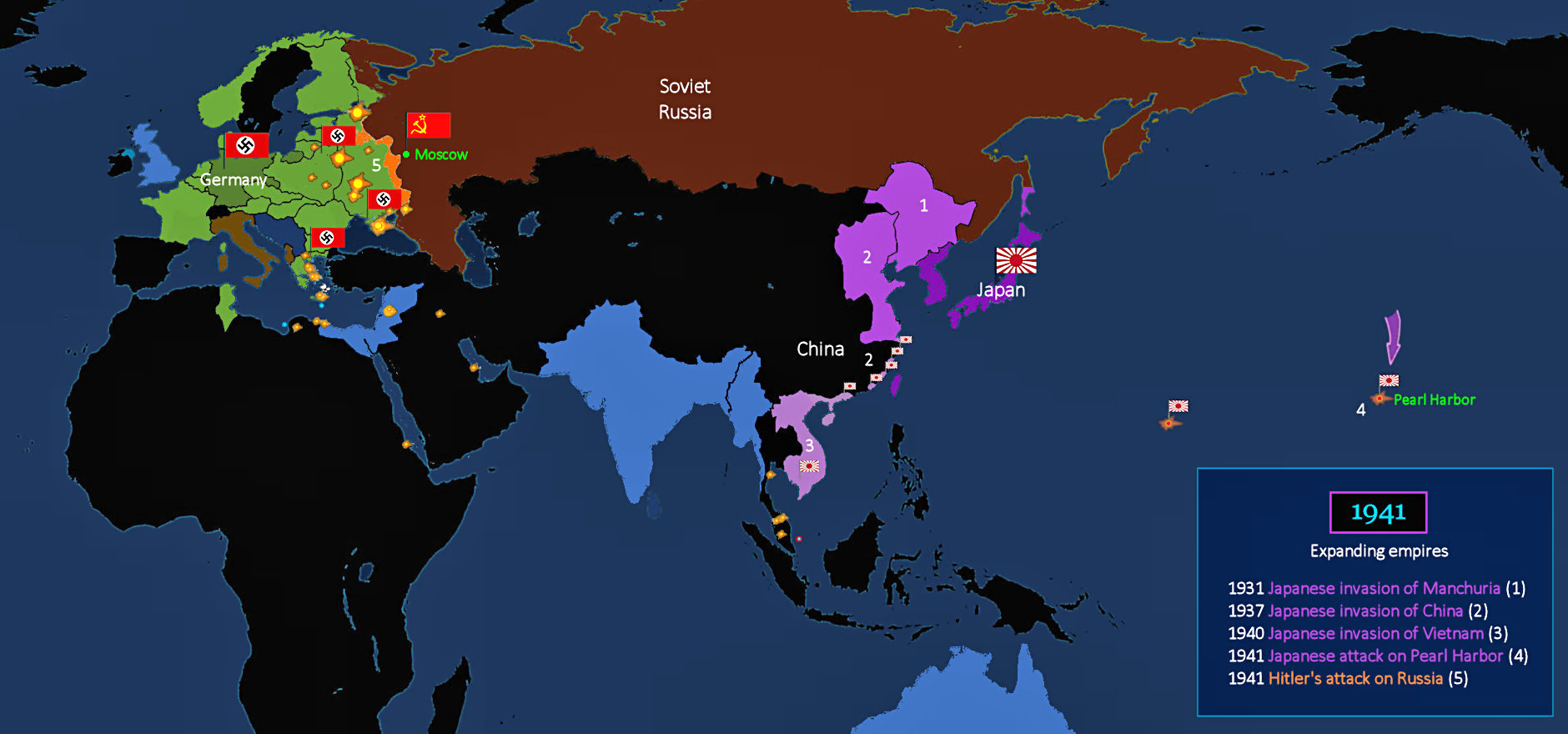
Darkest Hour Pearl Harbor comes as a harsh wake-up call for America, which has been trying to ignore a war that has already been raging for two solid years. Congress promptly declares war on Japan. But just four days later, Hitler seizes the moment to declare war on America, allowing him to move his subs to positions off the American coast. The war is now very real for a country which has made few preparations. With almost no army, and a navy in ruin, America must now attempt to expel Japan from the Pacific. | |||||||||
| |||||||||
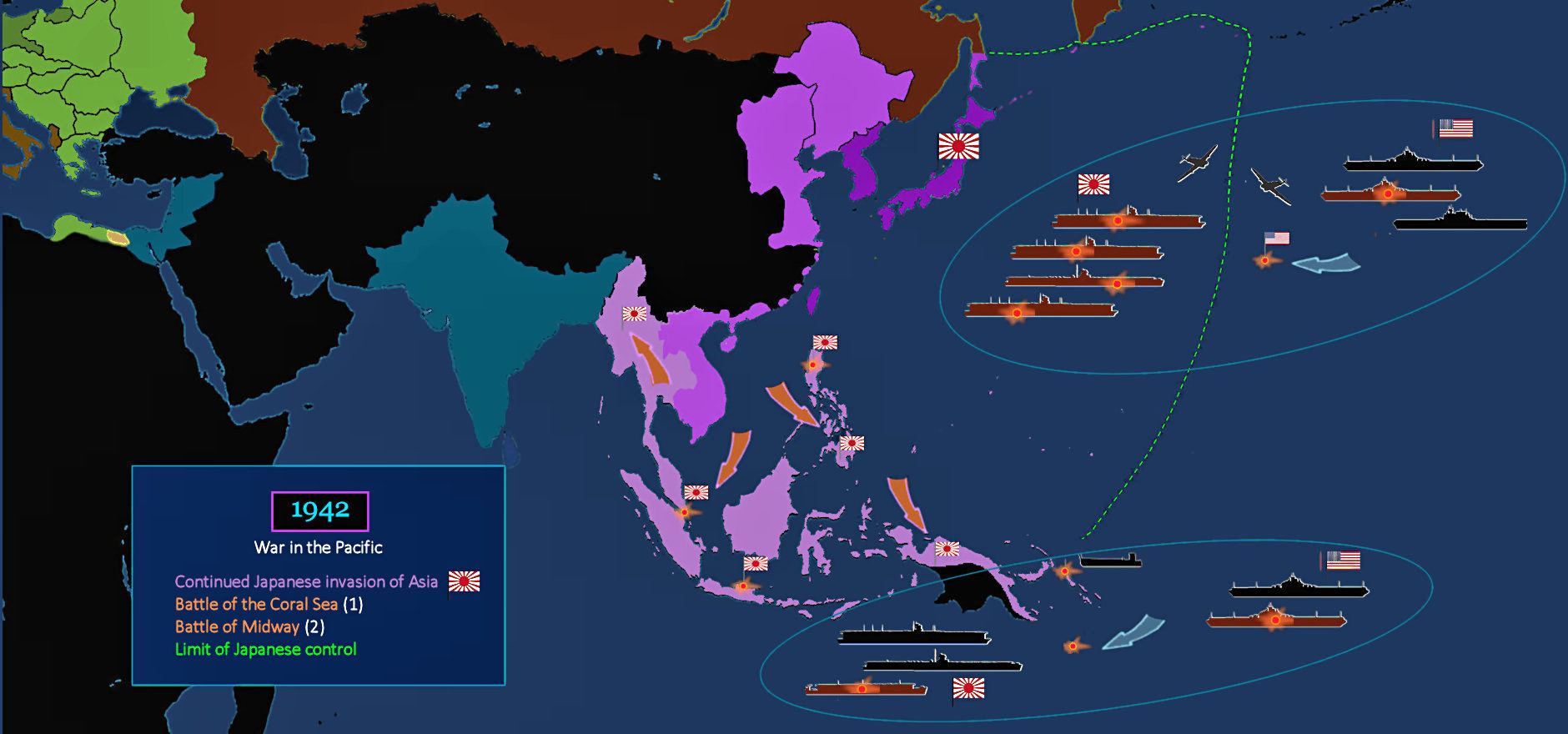
Pacific War Begins By the following spring, America is ready to begin an offensive. The initial Battle of the Coral Sea is inconclusive, with each side losing one aircraft carrier. Just a month later, however, a major encounter between the main carrier fleets in the waters off Midway Island is a crushing defeat for Japan. It loses all its big aircraft carriers when a lucky break allows American dive bombers to catch them refueling their aircraft, between runs. Japan will never recover the initiative. | |||||||||
| |||||||||
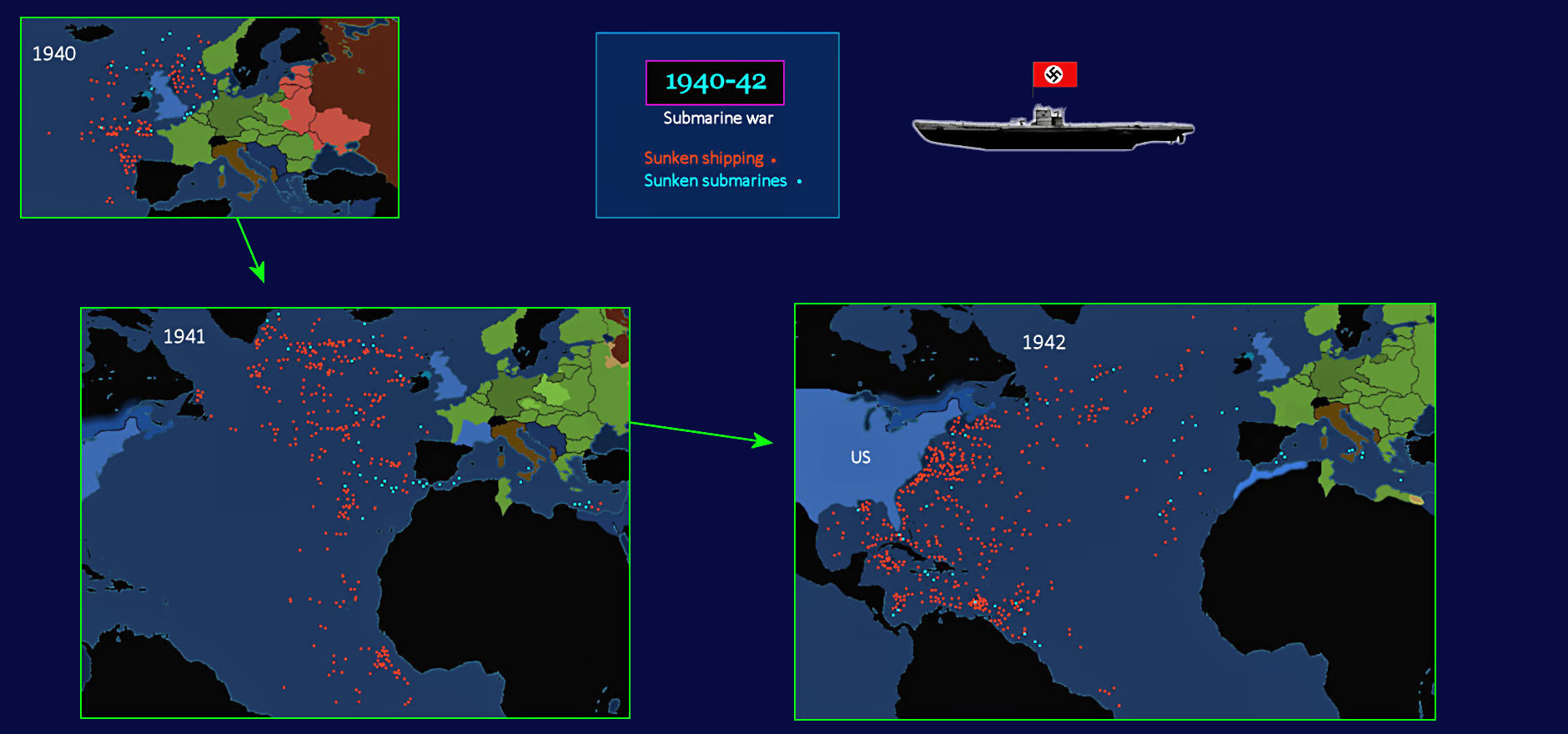
Shifting Submarine Menace Germany begins the war by blockading Britain with its entire sub fleet (top left). The following year, an enlarged submarine fleet floods the entire North Atlantic with attacks (lower left), from Greenland all the way down to Africa. Loses to Allied shipping are staggering, as Germans attack in groups of subs known as Wolf Packs. After Pearl Harbor, German subs move to the coast of America (lower right), sinking many tankers right off the Gulf Coast. U-boat commanders call this the 'happy time.' | |||||||||
| |||||||||
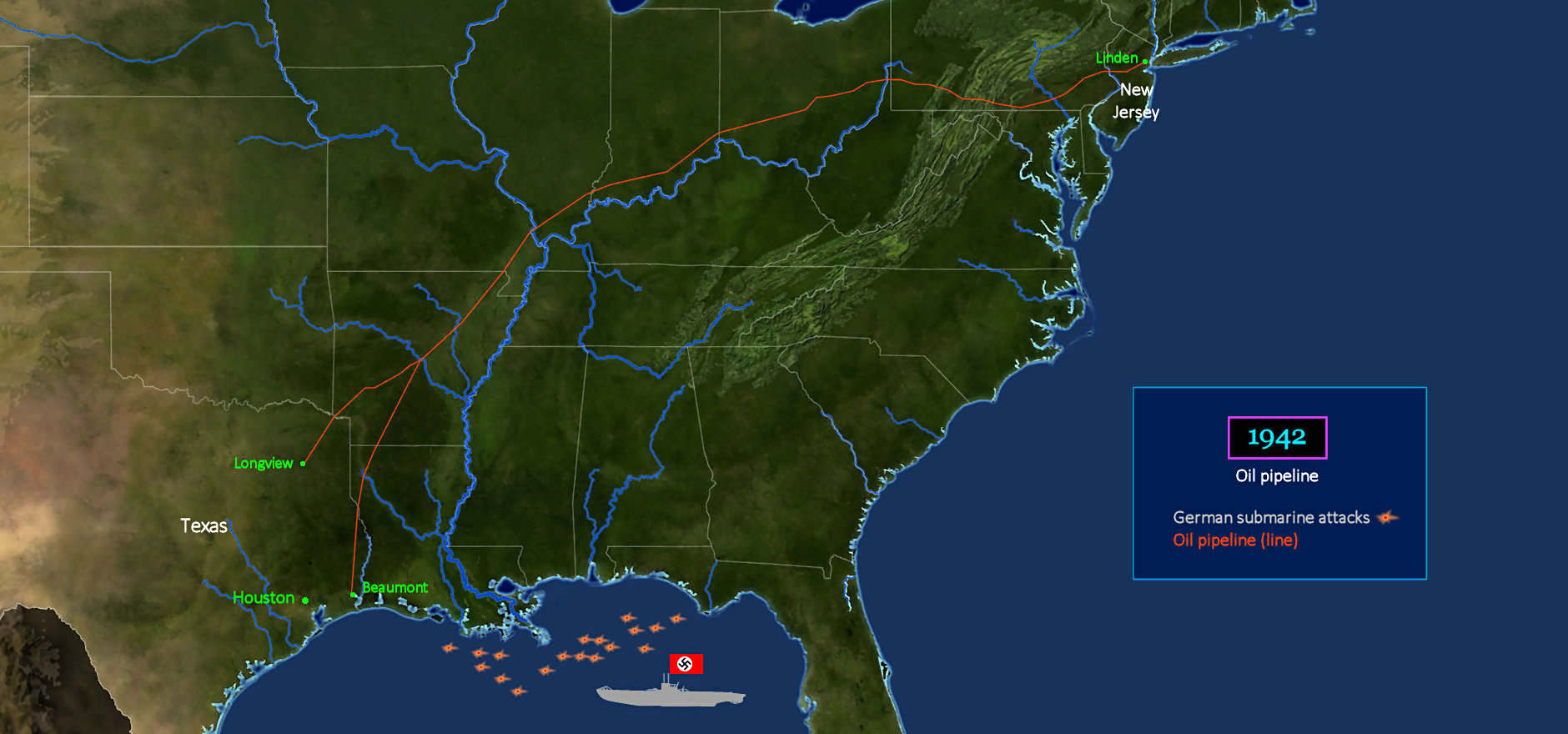
Avoiding the Subs During early 1942, close to 100 vessels are sunk by U-boats concentrating on oil tankers departing Texas ports. Torpedoes are not needed, as subs can surface briefly to destroy helpless vessels with their deck guns. The Americans respond quickly by beginning construction of a pipeline to New Jersey that avoids the menace. It's the first 24-inch pipeline in America, dwarfing the usual 8-inch lines, and runs underground. This involves crossing 30 rivers, 300 rail lines and 600 highways. | |||||||||