| |
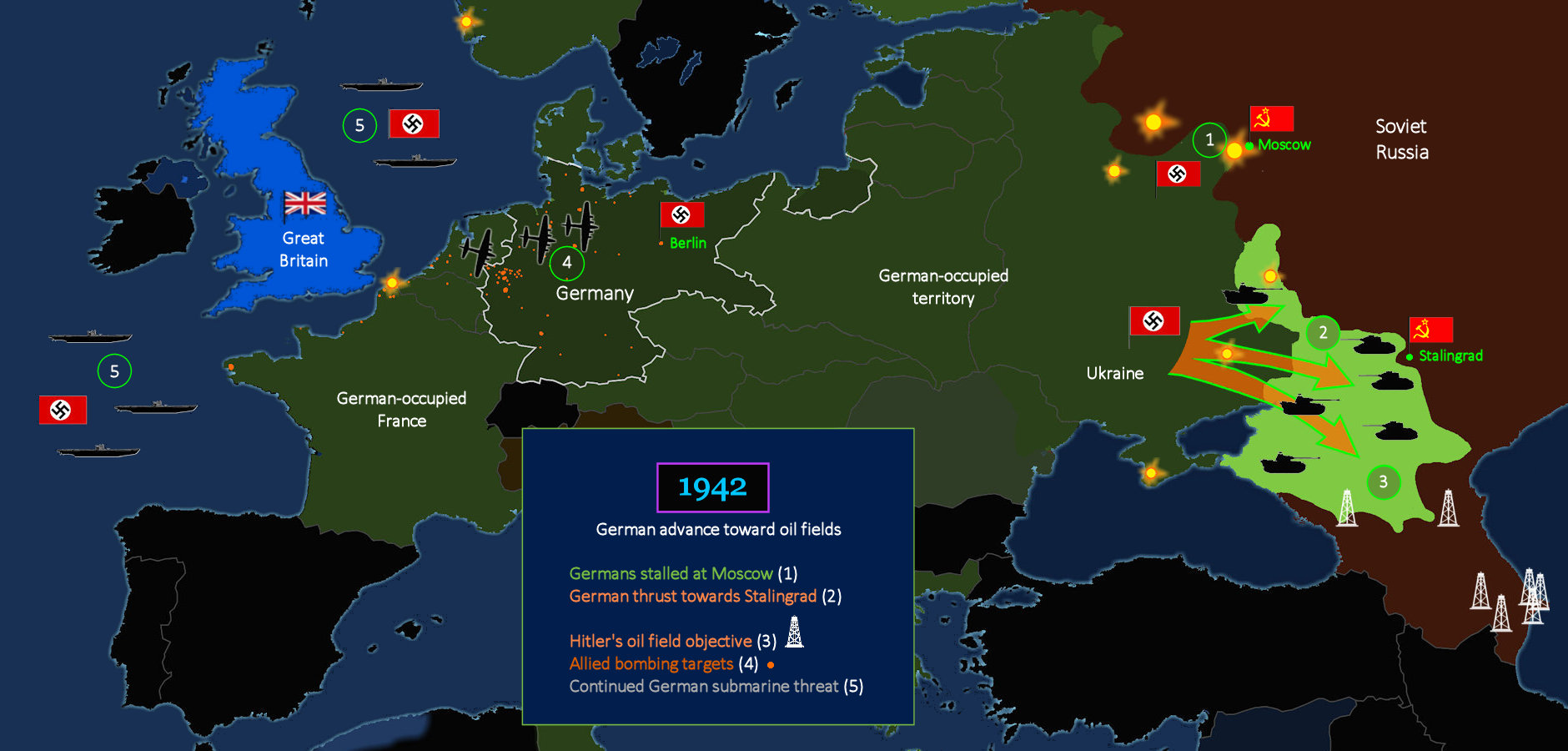
Hitler Checked at Moscow Just as the future appears most bleak, something unusual is happening in Russia. The unstoppable German war machine has ground to a halt outside Moscow, with mud and unusually cold weather disabling many vehicles. Expecting an early victory, the Germans are unprepared for winter combat. Hitler grows concerned about fuel, and takes the risky move of diverting much of his force to the south, towards the oilfields. |
| |||||||||
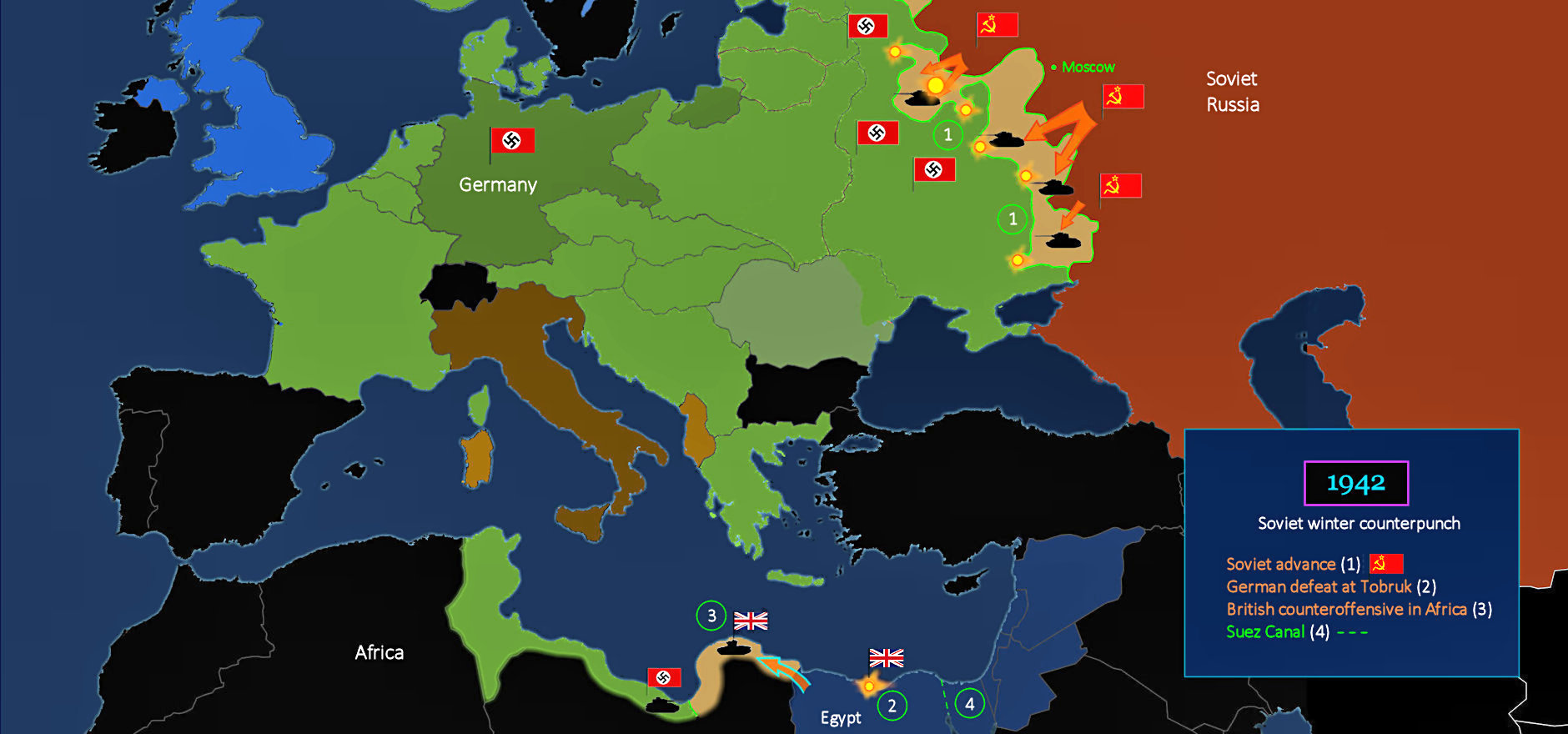
Germans Freezing The Germans are now in a precarious position. Exhausted by the weather and stubborn Soviet resistance, and reduced by the diversion of troops to the south, they now face fresh troops and equipment. These forces were previously positioned far to the east, as a precaution against Japanese aggression which never materialized. Arriving in Moscow with the winter snow, the Soviets begin a counter-offensive that begins pushing the Germans back. The Germans are also turned back in Egypt, beginning a long retreat. | |||||||||
| |||||||||
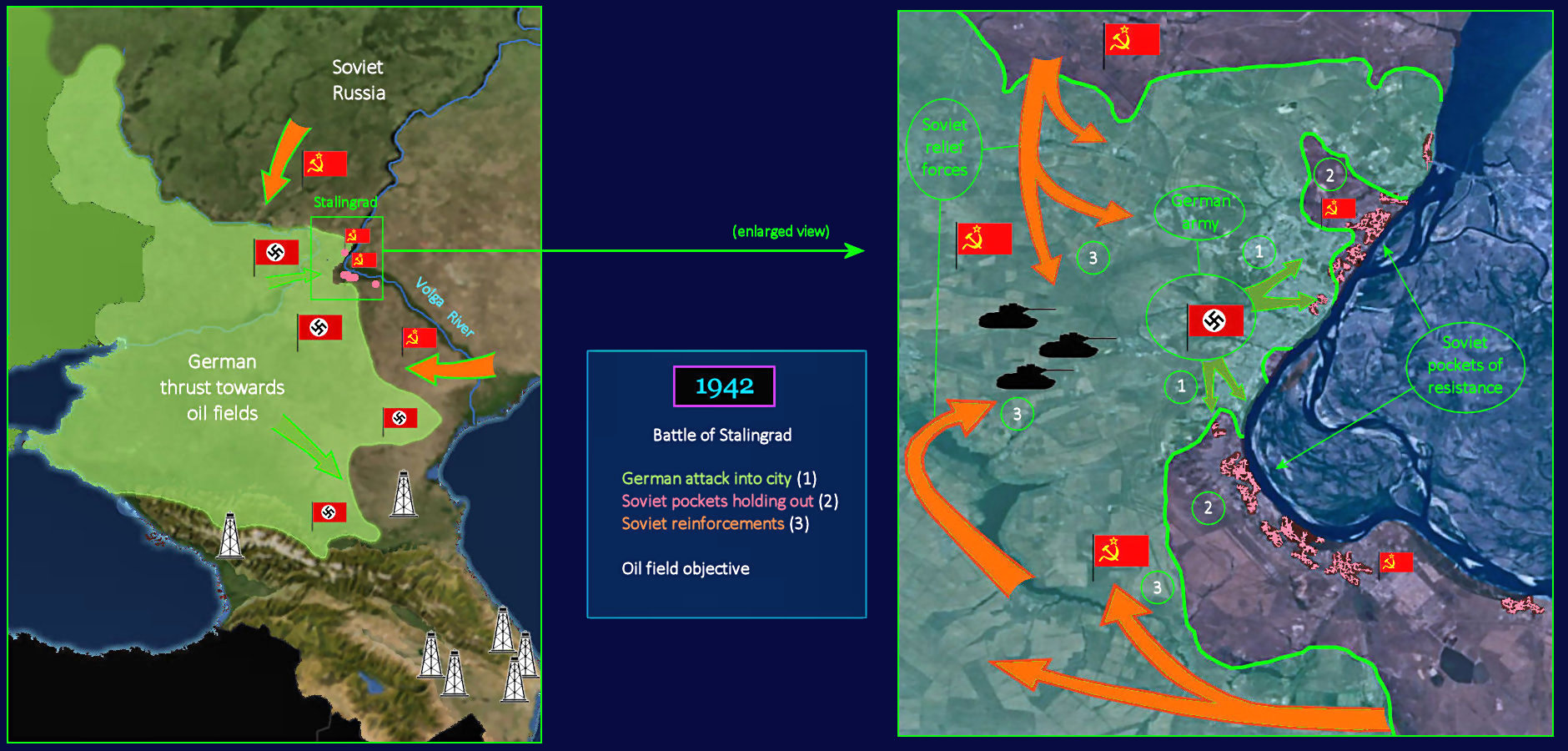
German Surrender at Stalingrad As the German drive south toward the oilfields, they pause to take Stalingrad, which would threaten their supply lines. The Soviets are pinned against the river, but don't budge. Instead, they force the Germans into a costly attempt to take the city block by block, building by building. Meanwhile, Soviet reinforcements are approaching from both sides. When Hitler forbids a retreat, however, the Germans themselves are surrounded and trapped, and the entire German army surrenders. | |||||||||
| |||||||||
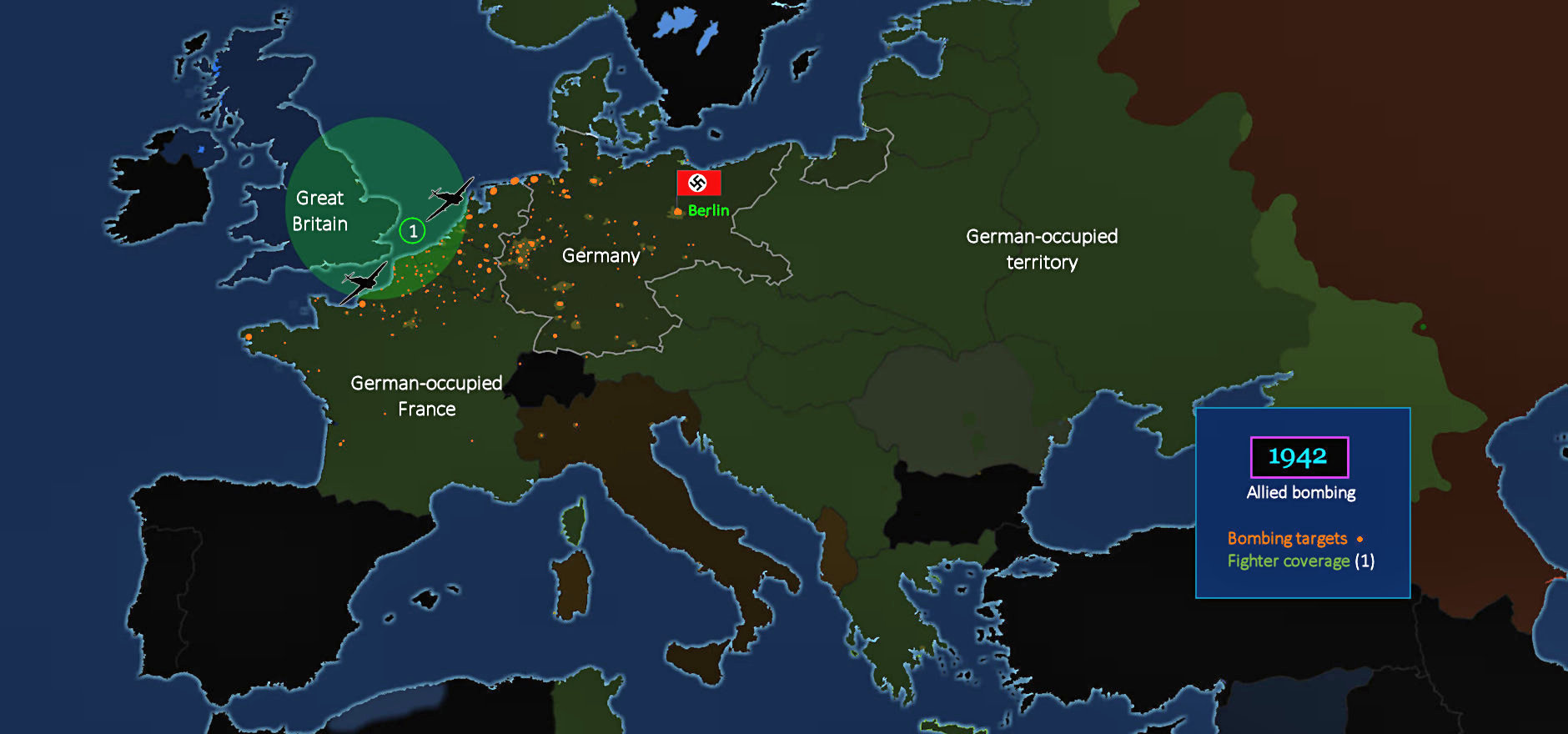
Relentless Bombing, Staggering Losses Back in Europe, the Allies are staging nightly bombing raids against German industrial targets (the Americans by day, and the British at night). A sophisticated German radar system tracks incoming flights, and transfers the information to individual gun positions, with lethal effect. Losses of Allied bombers are staggering, ranging between 20% and 40% of total aircraft each month. The Allies eventually learn to overwhelm the German radar by launching massed attacks. The biggest raid involves 1,000 bombers. | |||||||||
| |||||||||
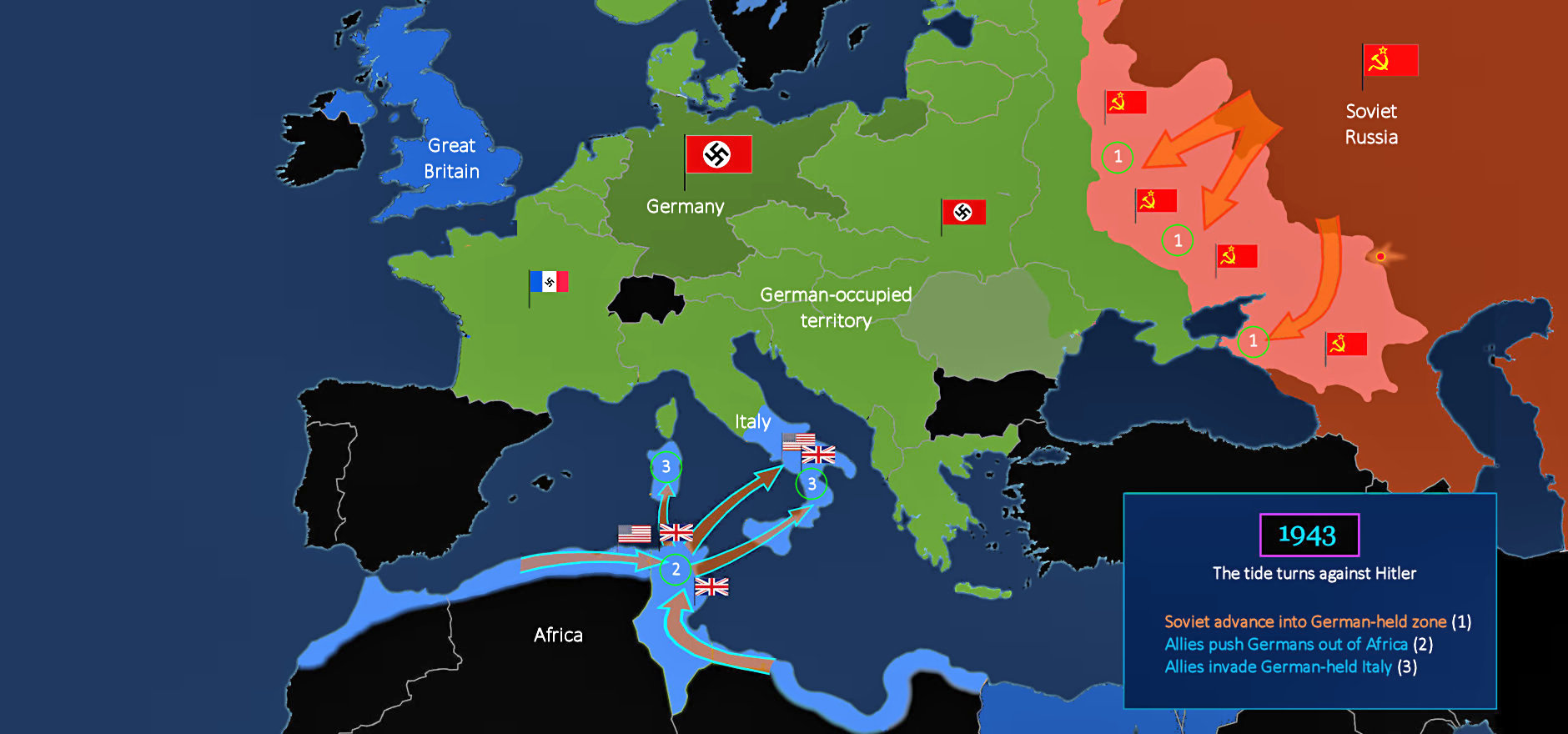
Thrust from Below The Soviets continue to pursue demoralized German forces that have, by now, lost much of their equipment (1). Meanwhile, the Allies launch a new campaign to approach Germany from the south. British and American troops first push the Germans out of Africa (2), and then pursue them up into Italy (3), which they hope will expose Germany's 'soft underbelly.' This turns out to be more difficult than imagined. The attack bogs down for months, facing determined German resistance in difficult mountain terrain. | |||||||||
| |||||||||
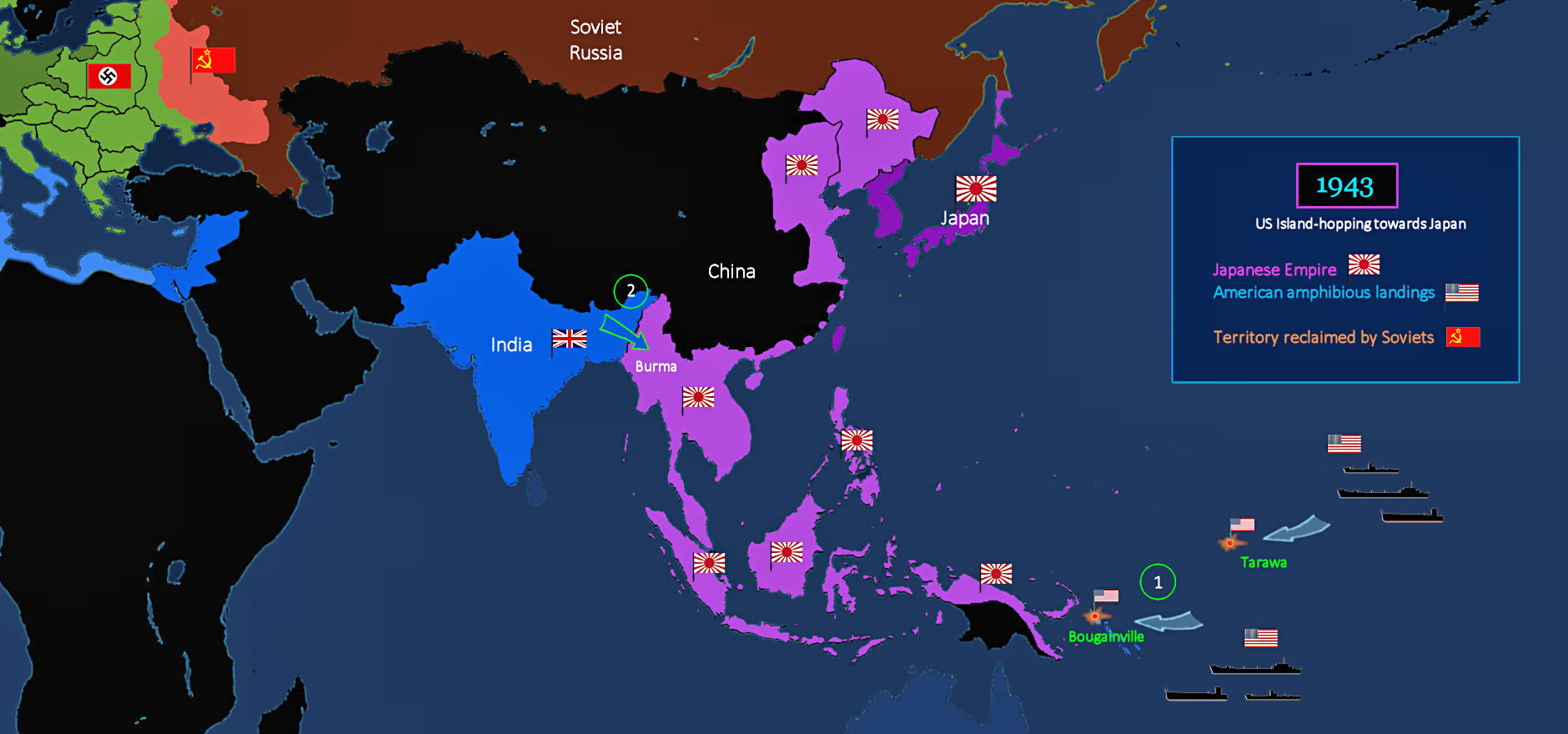
Island-hopping in the Pacific By now, the Japanese are also being pushed back. The US continues a grueling series of amphibious attacks on remote islands, where the Japanese dig in and fight to the death (1). It's very slow going, especially at first. But without aircraft carriers to provide air cover, Japan is helpless to oppose the advance. Meanwhile, British forces in India begin a long process of pushing back the Japanese in what is then called Burma (2). | |||||||||