| |
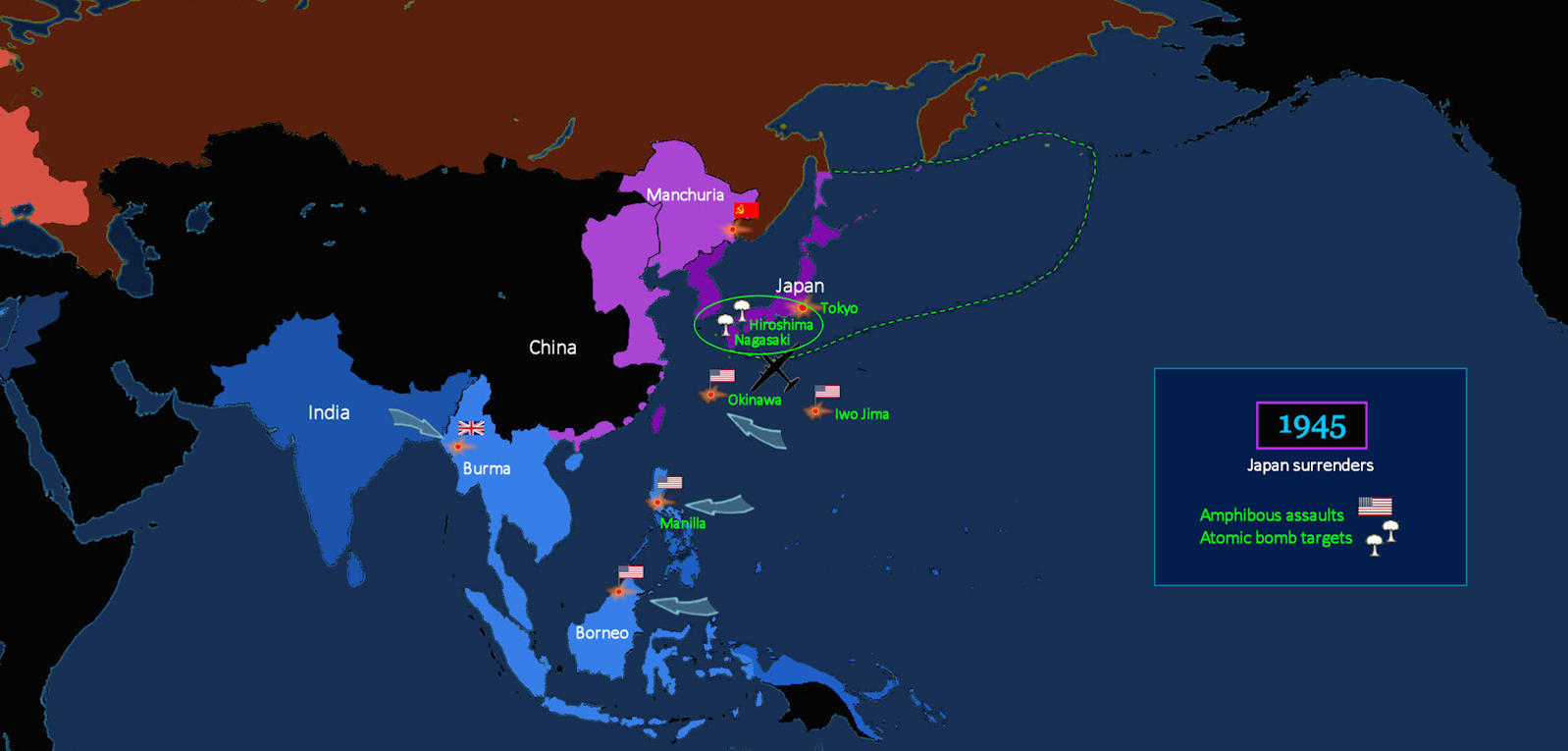
Dropping the Big One Even after the Germans surrender, the Japanese fight on for another four months. Tokyo has been fire-bombed into ashes, and Americans are assaulting the 'home' islands just south of Japan. All the planes are gone, and pilots dead. Yet Emperor Hirohito, like Hitler, cannot accept defeat. In the end, it takes two atomic bombs, wiping out two entire cities, before the final Japanese surrender is received. |
| |||||||||
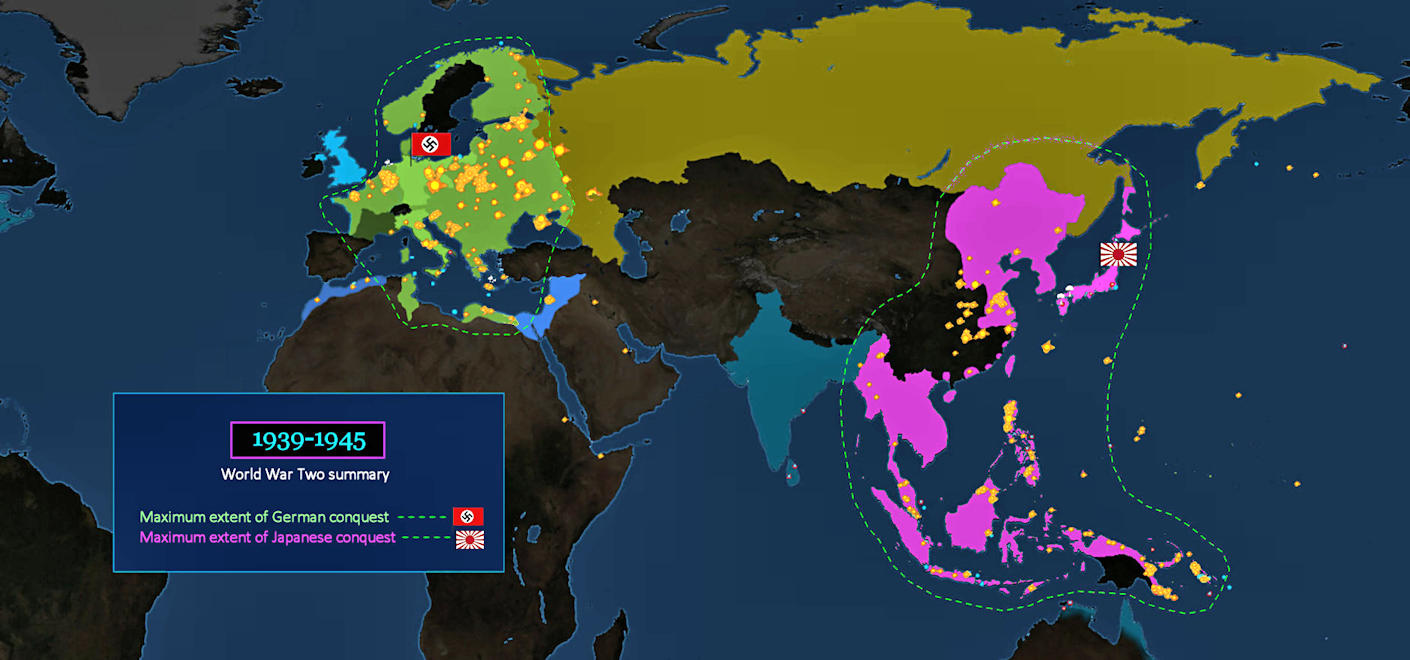
High-Water Marks The map above shows the maximum extent of the two empires that attempted to conquer the world. In the process, each was destroyed to an extent seldom witnessed in all of history, yet both now rank in the top tier of world economies. | |||||||||
| |||||||||
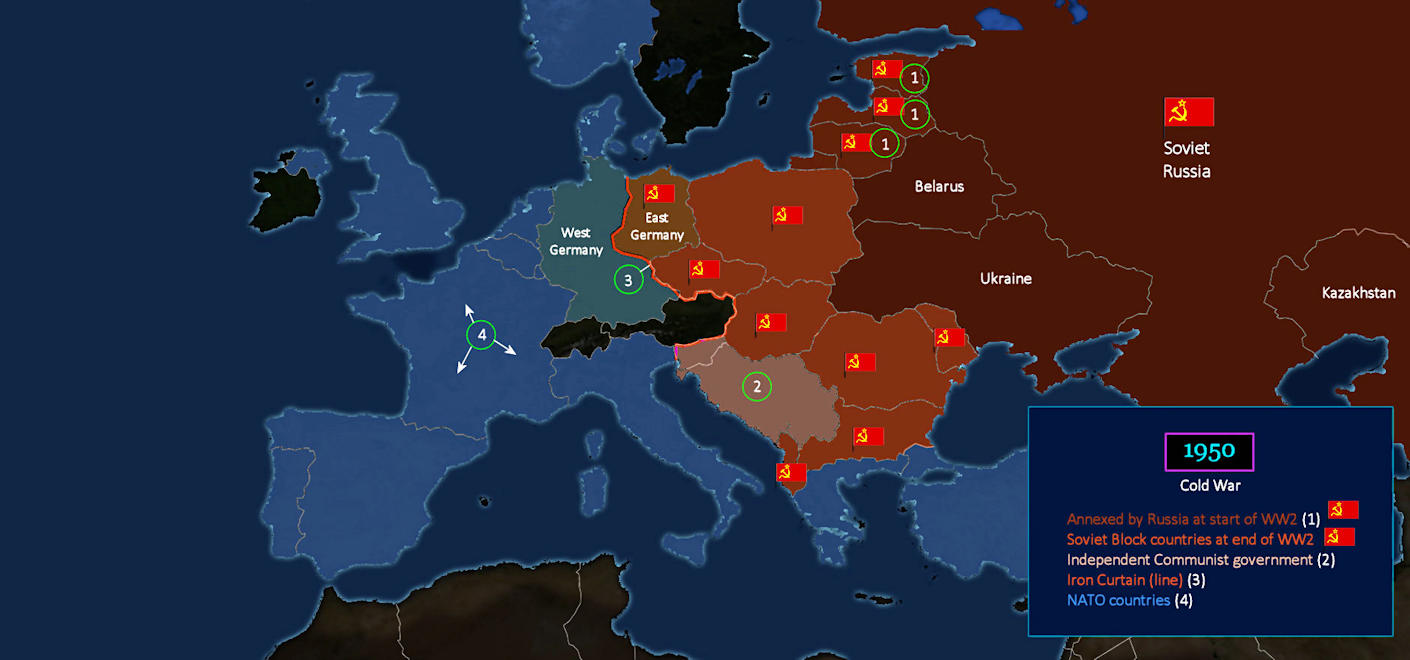
Former Allies Become Foes The alliance that topples Hitler is led by the Americans and the British, but powered ultimately by the Soviets. It's directed against a common foe, too powerful to challenge individually, and evaporates the instant the danger has passed. As many privately suspected, it was a marriage of convenience. When the smoke clears, the Soviets have not retreated back to previous borders. Instead, they have created a new, impenetrable boundary, called the Iron Curtain (#3 above). The Cold War has begun. | |||||||||
| |||||||||
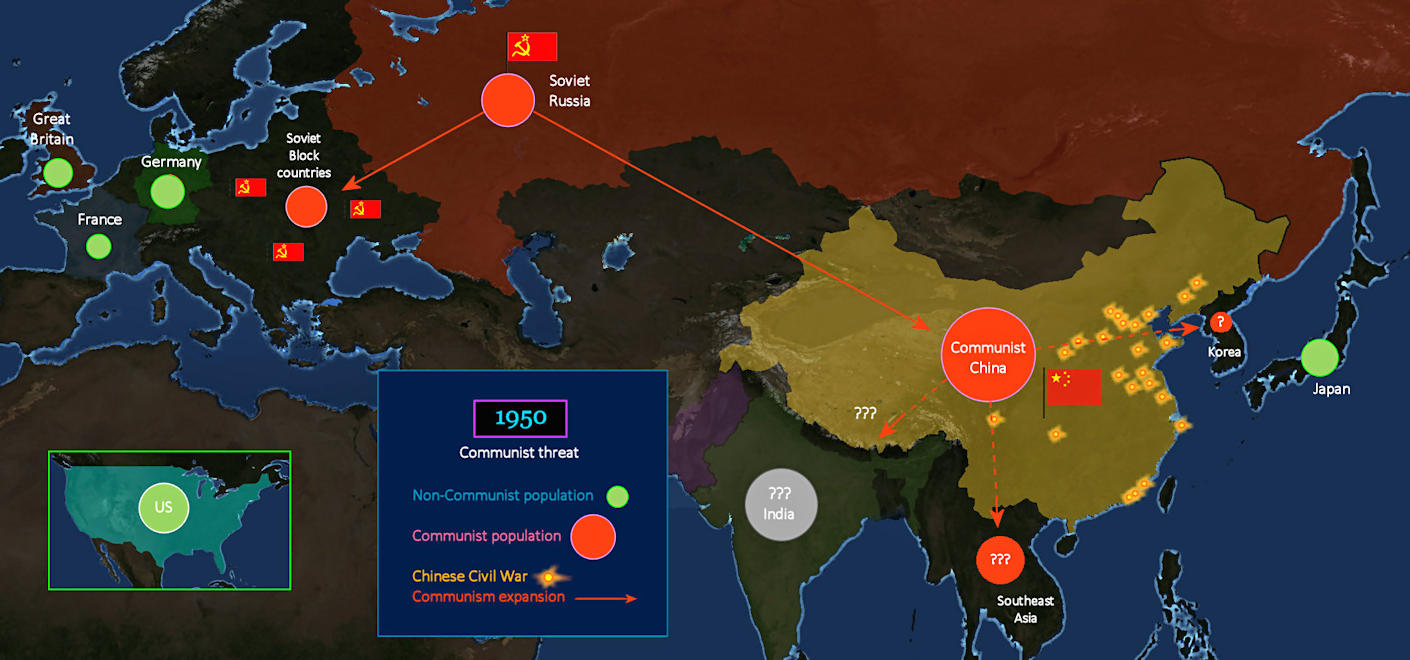
Communist Menace The Cold War is primarily a contest of ideologies. From the American and British standpoint, communism is in direct competition with capitalism, as a means of organizing society. Outside Soviet Russia, communists are more likely consider it a struggle against imperialism. This might be manageable, were it not for the map. When you look at the size of the RED circles representing population (above), especially the Chinese circle, and then look at associated land areas, you might be inclined to panic. | |||||||||
| |||||||||
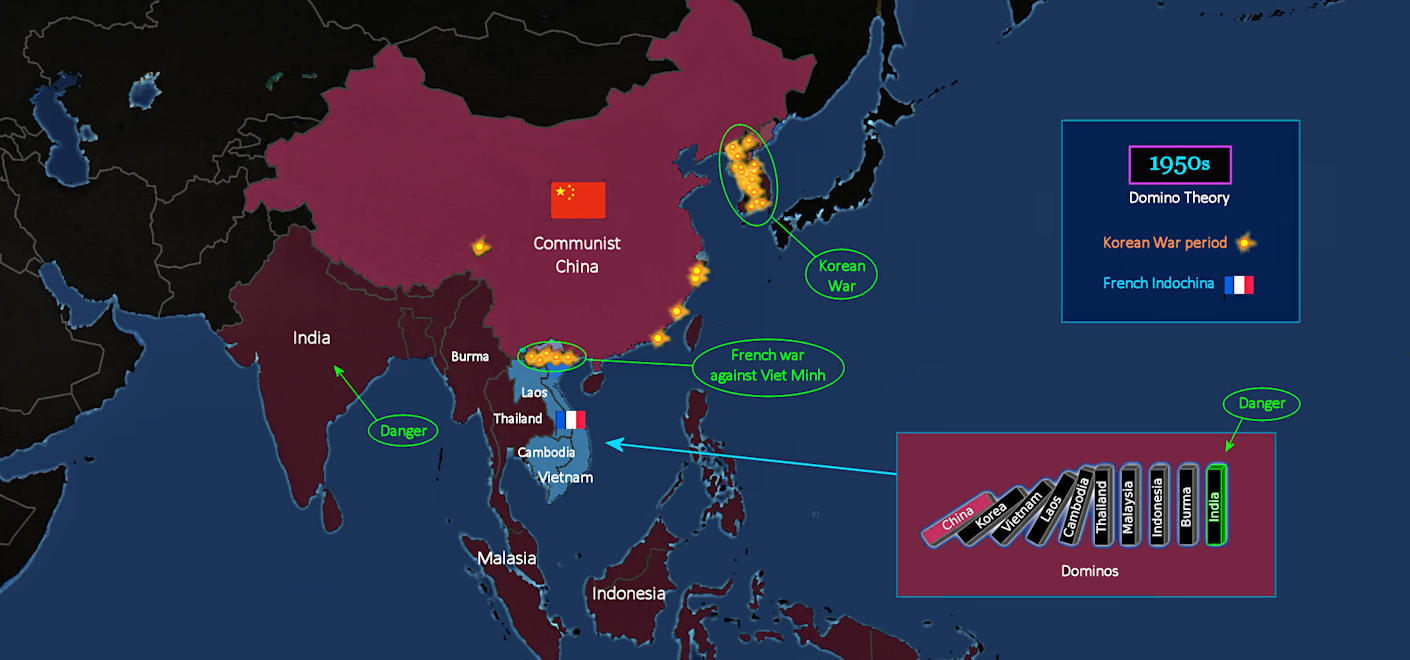
Terrifying Possibility The situation is, indeed, manageable until the 20-year-long Chinese revolution finally concludes, shortly after World War Two. China is instantly a huge issue in America, because the communists have completely overpowered democracy-friendly factions. Worse yet, it appears that communism is highly contagious, spreading across most of Asia. Within six months, America is fighting to stop the advance of communists into Korea, while the French continue their 8-year war to hold back communists in Vietnam, then part of French Indochina. | |||||||||
| |||||||||
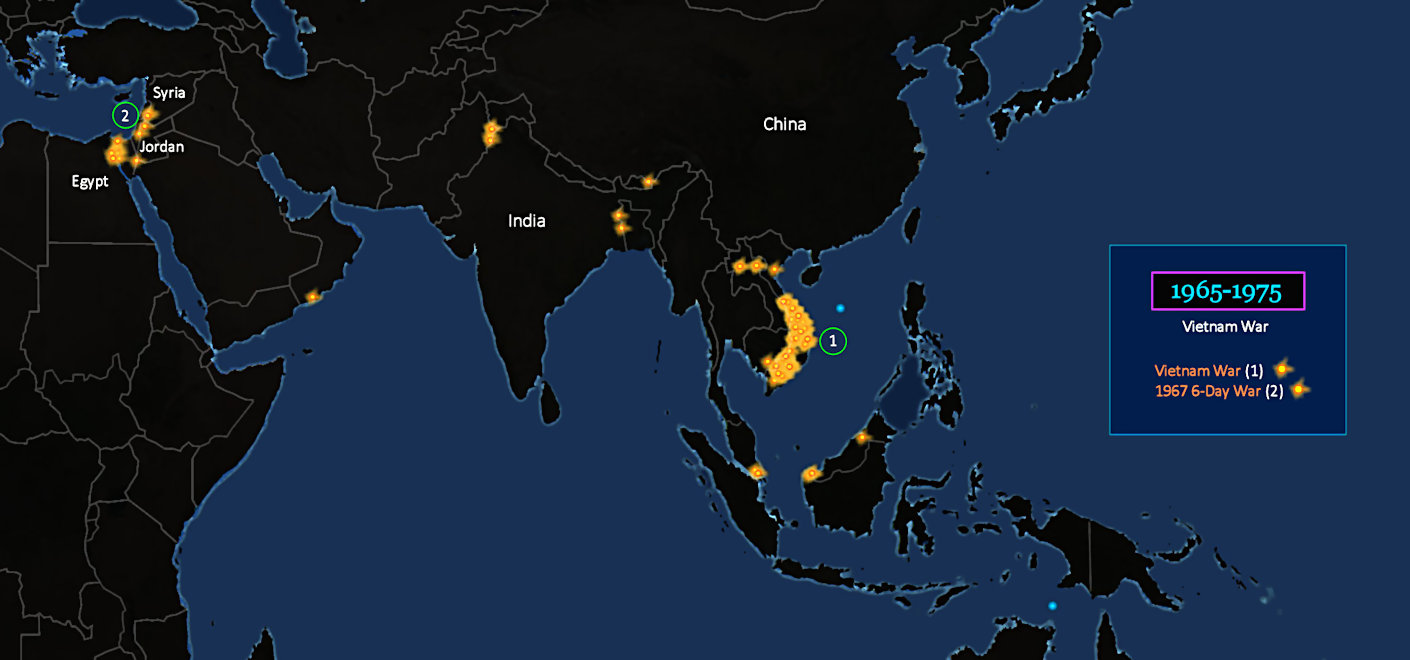
And Now, Vietnam America's experience in Korea is sobering. After three years of struggle, and troop levels topping 300,000, America settles for a truce which leaves the border basically unchanged from before the war. A dozen years later, America is back overseas again, still trying to stop communism. This time, it picks up the war against communist North Vietnam from the French. US troop levels top 500,000, but with a similarly unhappy result. America eventually calls it quits. | |||||||||