Soviets, Arabs, OilCuban Missile Crisis 1970s Strategic oil Chinese Civil War First Oil Crisis 1980s Iran-Iraq War Second Oil Crisis |
| ||||||||||||||||
| |||||||||
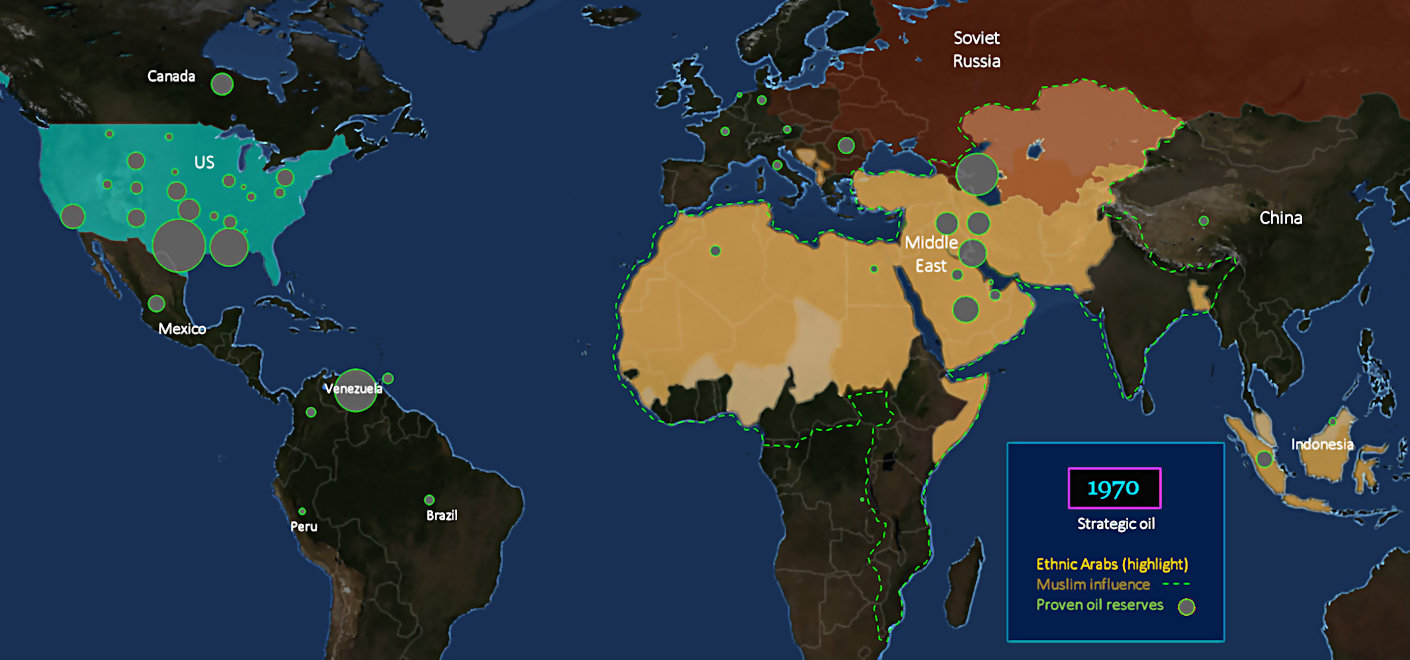
Arabs and Oil The large GRAY circles indicate the size of proven oil reserves, which are mostly clustered in just two places. The US and the Middle East. The YELLOW highlight indicates countries that are Muslim-majority, and also ethnically Arab. The GREEN dashed line indicates the limits of a large region with at least 10% Muslim population. Thus, half the world's oil is located in the Muslim (mostly Arab) world. This region has virtually no source of income other than oil, which sets up a very powerful dynamic. | |||||||||
| |||||||||
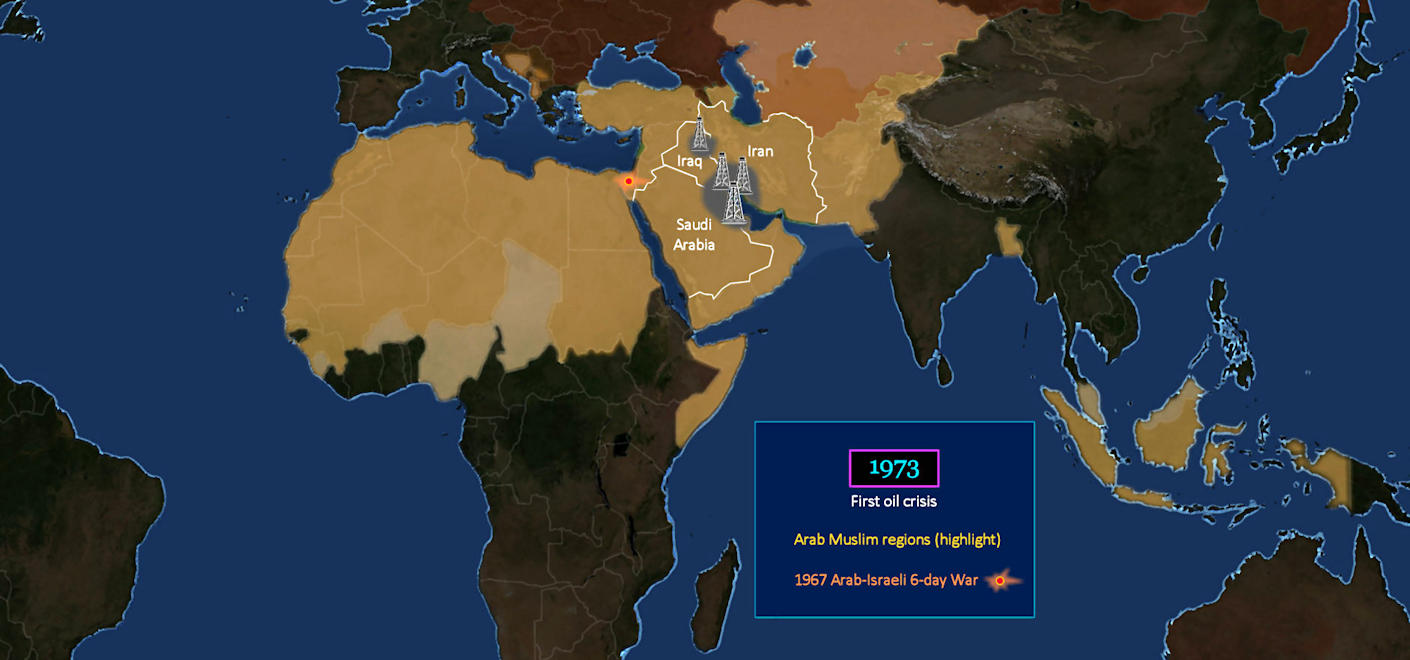
Oil Leverage Prior to 1970, almost all oil wells and refineries in the Middle East are operated by European (mostly British) oil companies, who tend the equipment and manage export of the finished product. Arabs in the region derive little benefit. In 1973, however, the Saudis decide to limit access to their oil, to obtain leverage. During the Arab Oil Embargo, they deny oil to any country that supported Israel in the Arab-Israeli war, six years previously, which is mainly the US. Score: Arabs 1, Imperialists 0. | |||||||||
| |||||||||
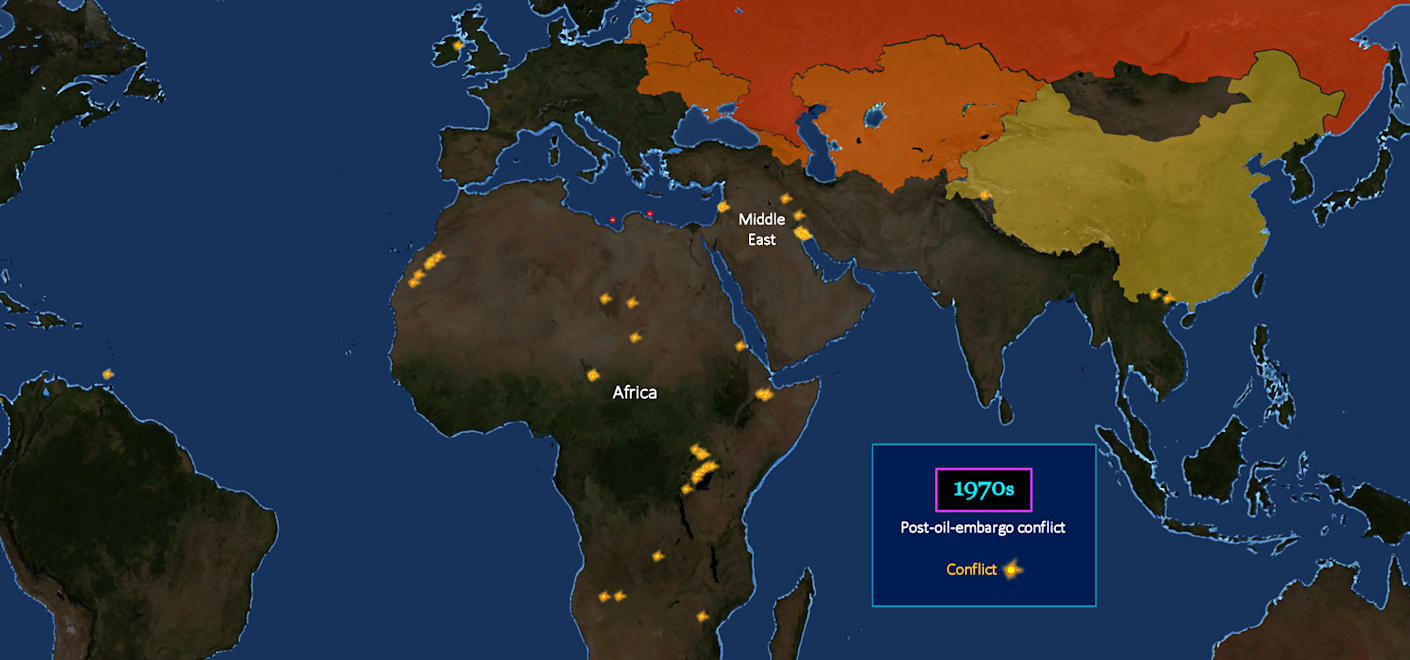
Rest Period During the five-month 1973 Arab Oil Embargo (also known as the First Oil Crisis), the global price of oil triples. In the US, it nearly quadruples, causing long lines at gasoline pumps and lots of anxiety in Washington. It triggers a deep recession in the US, with persistent 'stagflation' (economic stagnation, plus inflation), which is unusual. Prices usually slump during a recession. Meanwhile, world conflict shifts abruptly to Africa, which will be cursed with increasing violence for the next 50 years. | |||||||||
| |||||||||
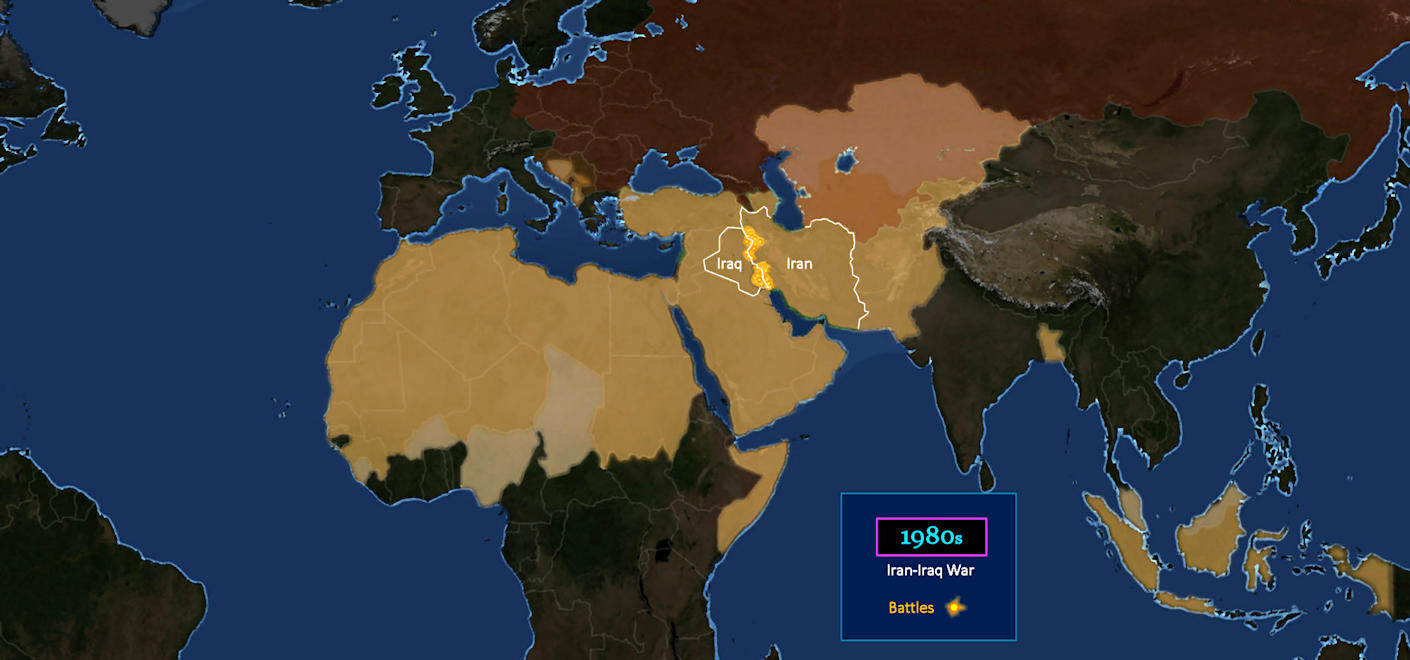
Muslim Feud The Mideast erupts in a great upheaval seven years later, in 1980. Iran is thrown into turmoil by a Muslim revolution that sweeps away the old US-backed leader. He is replaced by a stern Muslim cleric, who pledges to bring back strict Sharia law, setting the clock back a few centuries. At the same time, a young Saddam Hussein takes power in neighboring Iraq, and almost immediately takes advantage of the chaos in Iran to attack. The war lasts ten years, confined almost entirely to the oil-rich border region. | |||||||||
| |||||||||
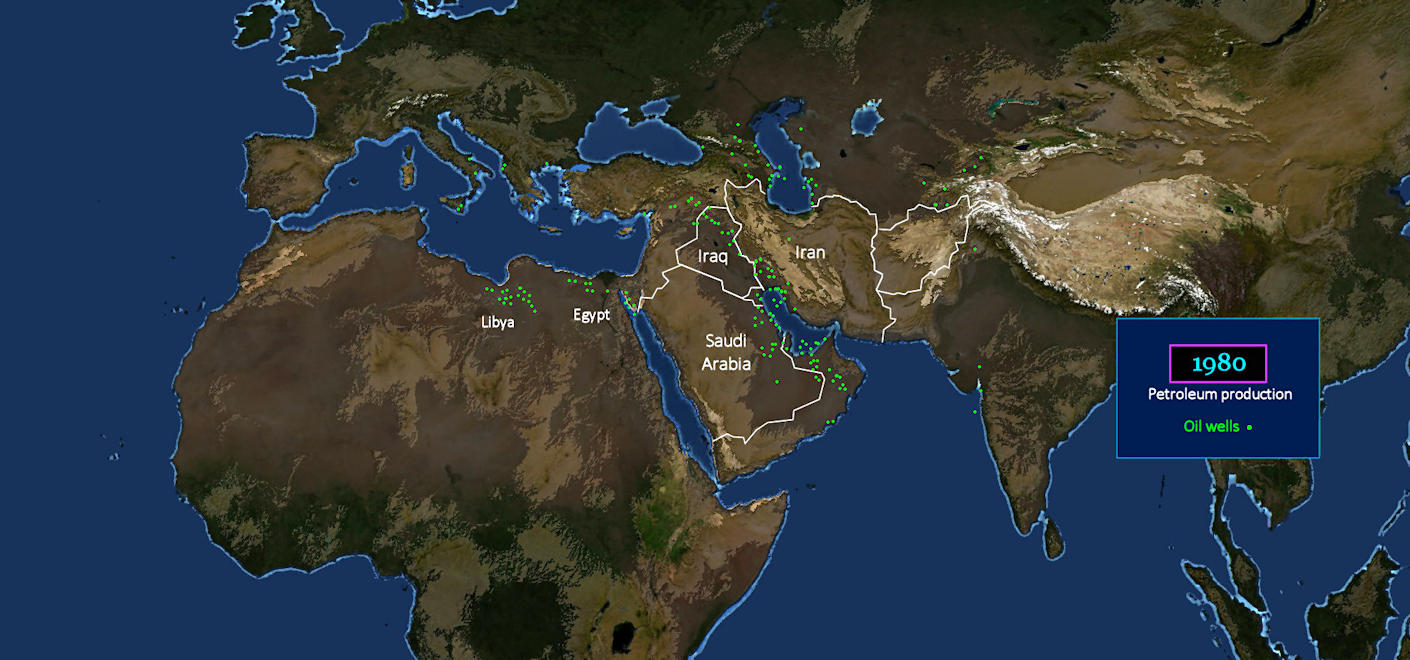
Second Oil Crisis The Iranian Revolution disrupts oil production so badly that it causes a second, and more serious oil crisis. The entire world is thrown into recession, including the US under President Carter. This comes right before Iranian fundamentalist students storm the US embassy in the Iranian capital, taking hostages in belated punishment for long-time US backing of the repressive Shah. Carter is powerless to diffuse the crisis, and is defeated by Ronald Reagan. Score: Arabs 2, imperialists 0. | |||||||||