| |
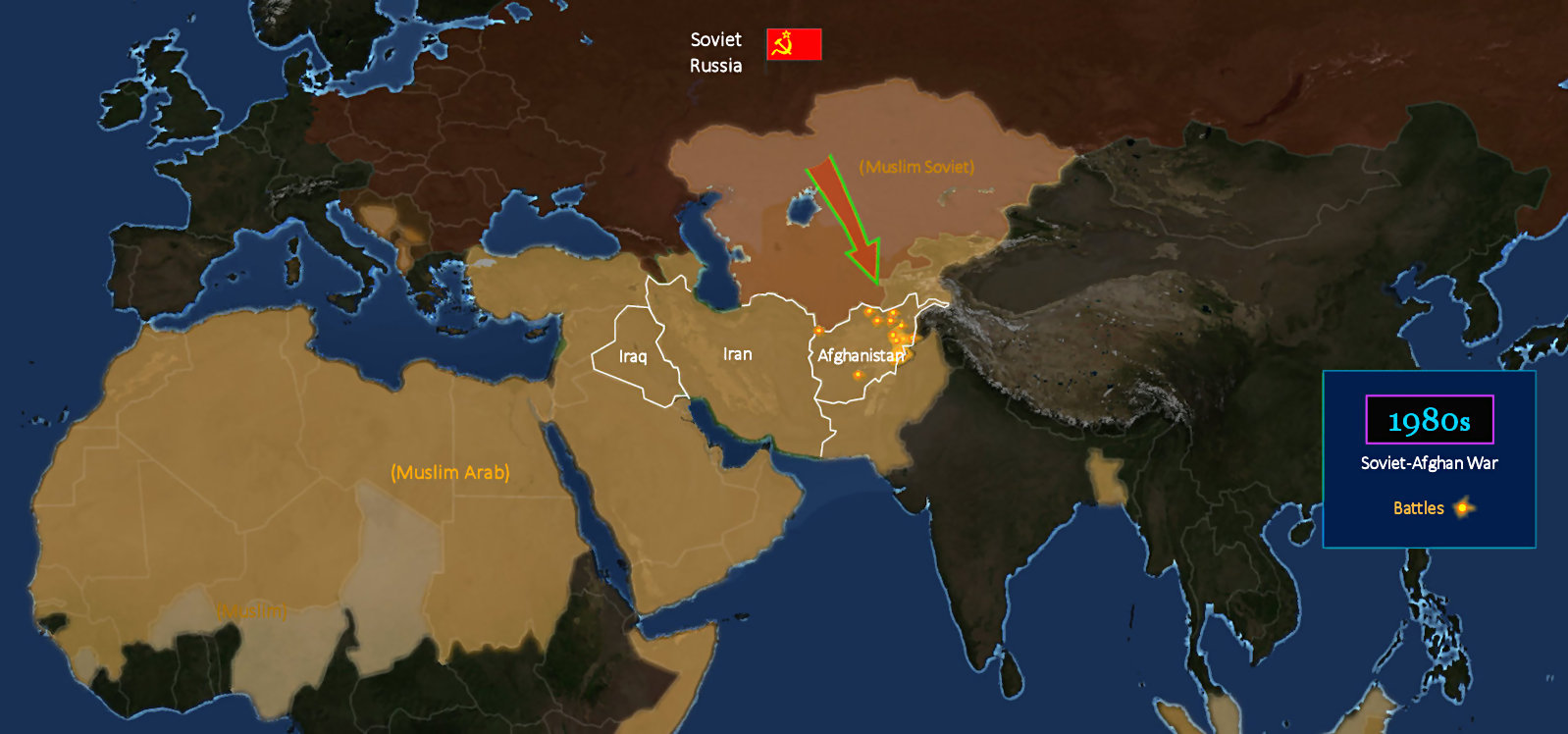
Increasing Turmoil The situation in the Middle East gets more chaotic when a new reformist regime in Afghanistan asks the Soviets for help. The Soviet military intervention is only expected to last six months, but continues for 10 years. Its goal is to quell domestic turmoil caused by fundamentalist Muslim rebels, known as the Mujahideen, who are covertly supported by US arms. Unable to quell the violence, the Soviets finally leave. |
| |||||||||
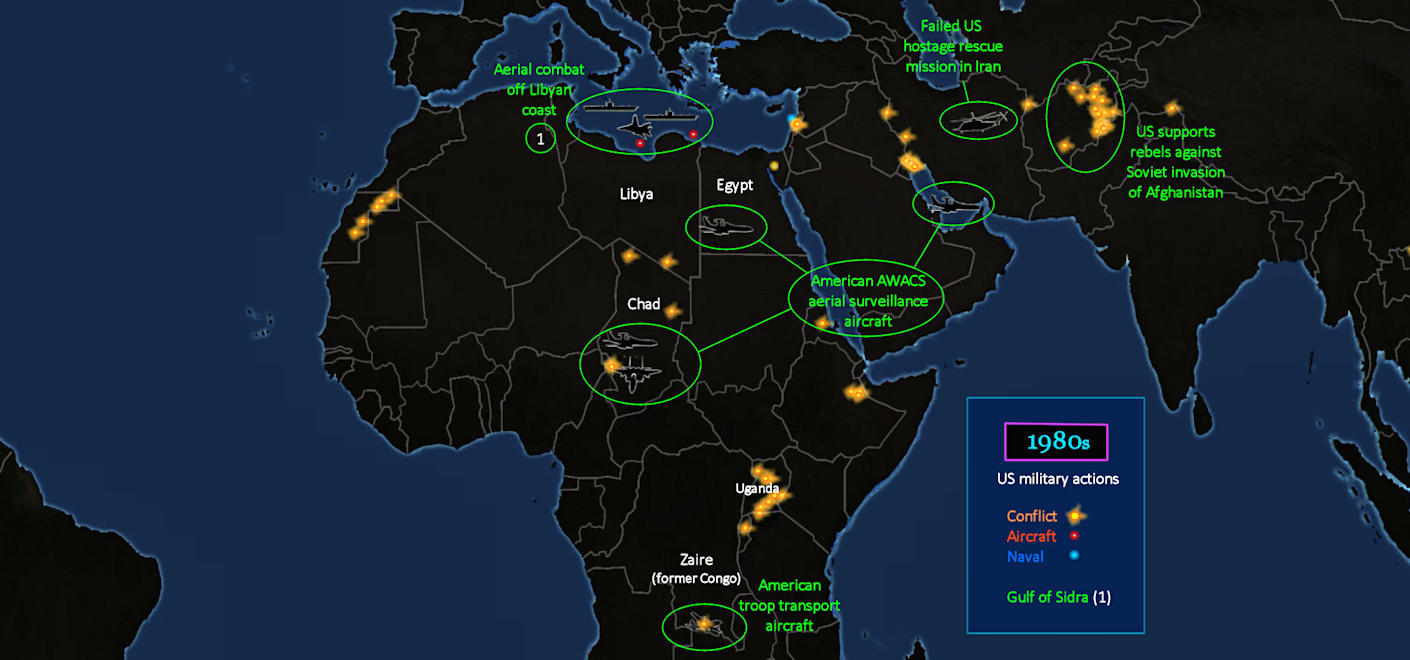
US on the Sidelines During the 1980s under President Reagan, America tries to avoid direct involvement by US forces. Instead, the US supplies support in the form of aerial surveillance and troop transport aircraft. In 1981, Reagan sends a pair of aircraft carriers to the Mediterranean, to help fend off another Arab-Israeli war. Libya's Gaddafi claims the US has violated his territorial waters, and sends in a pair of Soviet-supplied fighters. American pilots scramble and shoot them down, in the Gulf of Sidra Incident. | |||||||||
| |||||||||
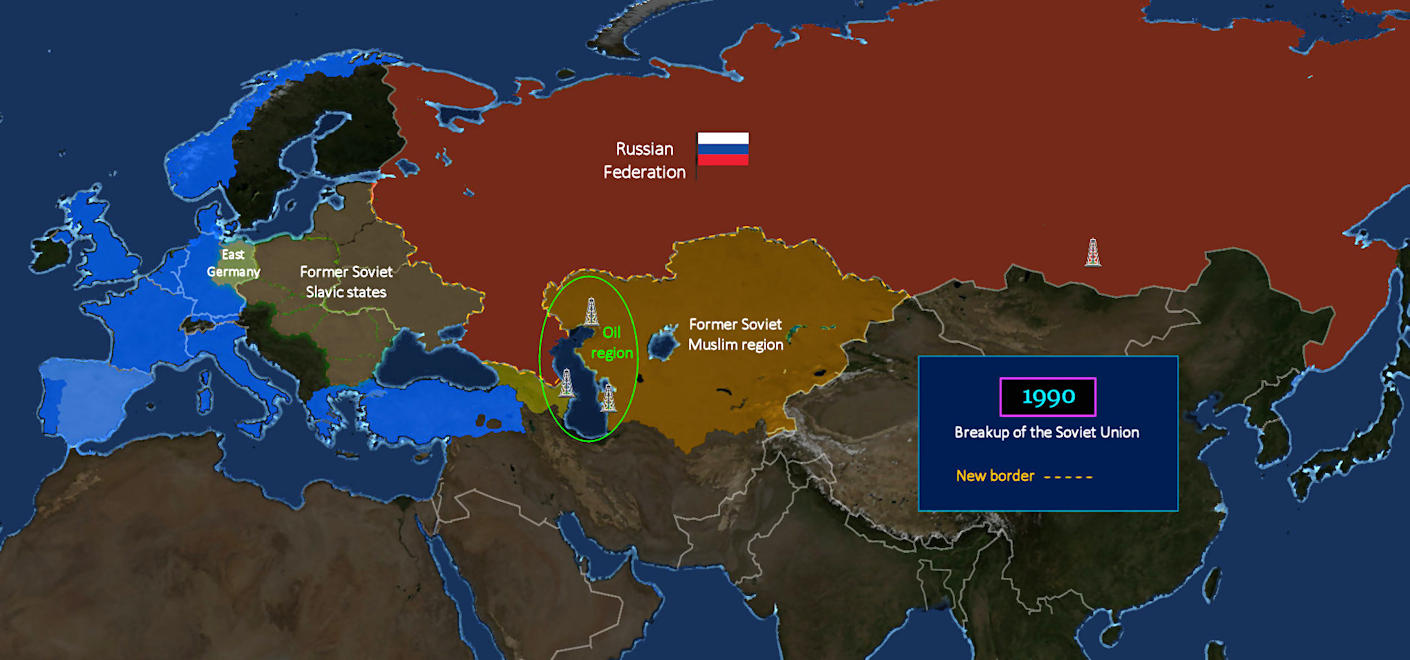
Soviet Union Gone Few events in history have been more surprising than the sudden implosion of the mighty Soviet Union, beginning in 1989. Within two years, and without any prodding from outside forces, it simply ceases to exist. Although it had scarcely been noticed previously, the Soviet Union was little more than a voluntary pact between Russia and a collection of 15 other previously-autonomous countries, which were attracted to communist mythology in its early days. These countries have now walked away. | |||||||||
| |||||||||
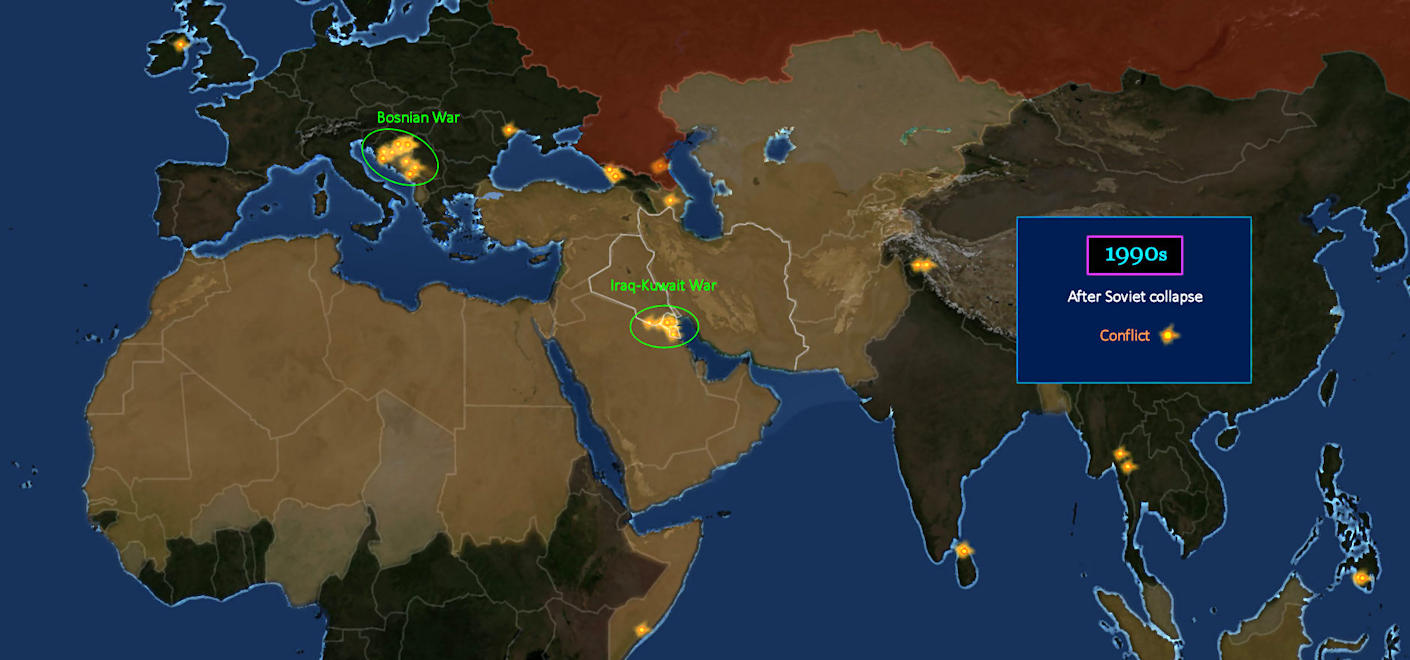
Soviet Support Gone, Too The collapse of the Soviet Union has side-effects. Iraq has relied heavily on Soviet aid during its 10-year war with neighboring Iran, but now, without such support, it's effectively broke. This prompts Iraq to suddenly invade Kuwait, a tiny kingdom just to the south, which has proven oil reserves second only to Saudi Arabia. Unwilling to allow Iraq so much power, the US steps in to expel it from Kuwait, with wide international support. The six-week war is called Desert Storm, and is a marvel of efficiency. | |||||||||
| |||||||||
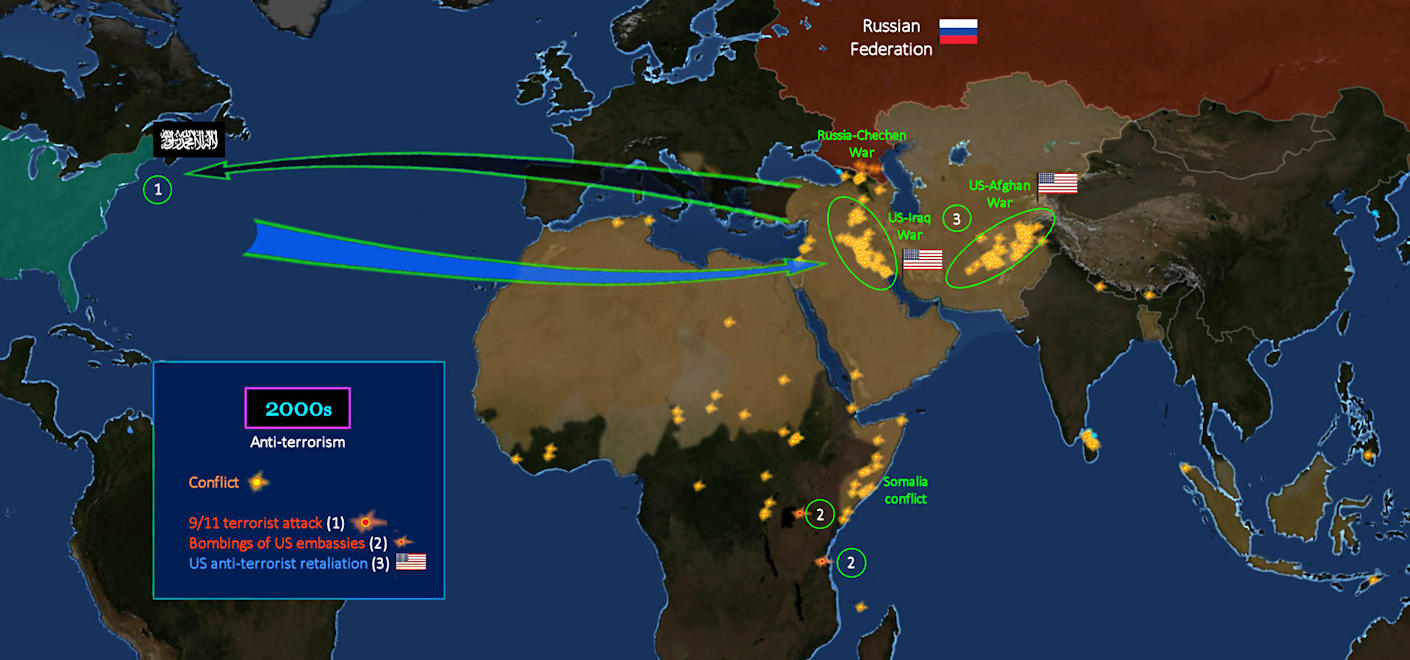
Terrorists Target America All this sets the stage for the infamous '9/11' suicide terrorist strike on the World Trade towers, in New York. The mesmerizing TV footage of the event plays endlessly, building a mighty wave of righteous anger in America, which results in a decade of US military involvement in Iraq and Afghanistan. President Bush invades Iraq, which he wrongly accuses of being responsible for the attack, while subsequent operations in Afghanistan are intended to wipe terrorists off the global map for good. This fails spectacularly. | |||||||||
| |||||||||
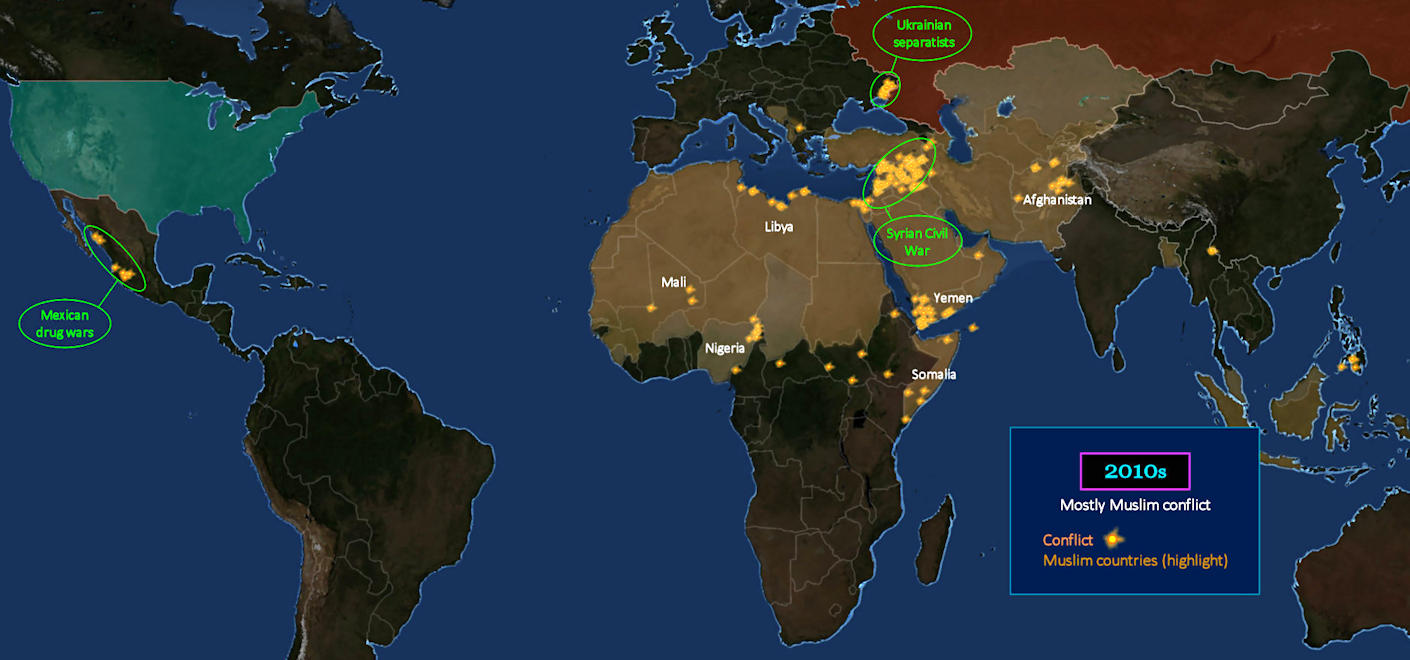
Terrorism on the Rampage Instead of eradicating terrorism, the US actions instead fuel a mighty counter-wave of anger and resentment against the entire imperialist world order, which is seen as engaged in a war not against terrorism, but against Islam. Muslims retaliate in a fragmented Jihadist war involving regimes all over Africa and the Middle East, which are seen as inadequately reflecting fundamentalist Muslim ideals and practices. Other conflicts include the Mexican drug wars, and Russian support of Ukrainian separatists. | |||||||||