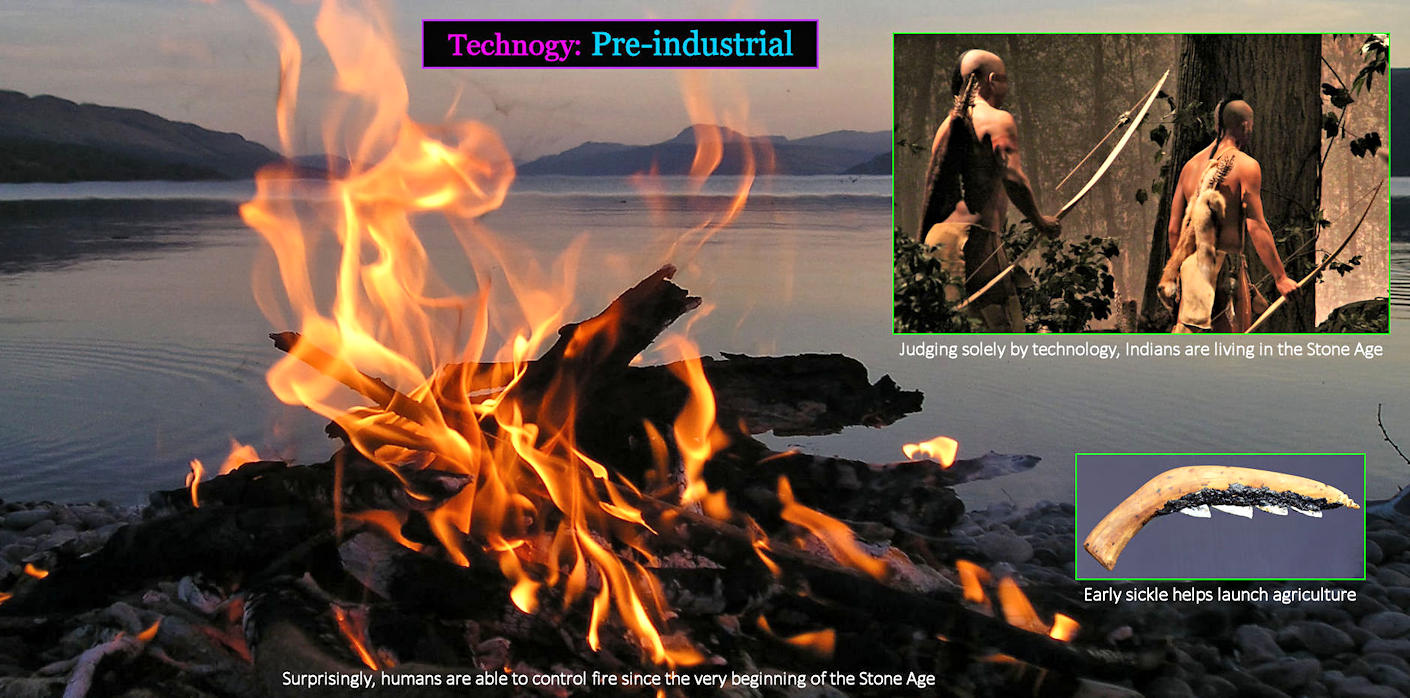
Ancient HumansHumans make it through the Stone Age with basically no technology at all, beyond the crucial ability to control fire. The few tools they own are mostly picked up off the ground, chosen for their especially useful shapes. The first big breakthrough is the bow and arrow, which emerges about 10,000 years ago. The rise of agriculture occurs at roughly the same time, aided by the development of primitive sickles, to harvest wheat. The first really huge breakthrough is the discovery of bronze, the first metal hard enough to be useful for tools and weapons. Bronze axe heads and sword blades enable the rise of both civilization and warfare. |
| ||||||||||||||||
| |||||||||
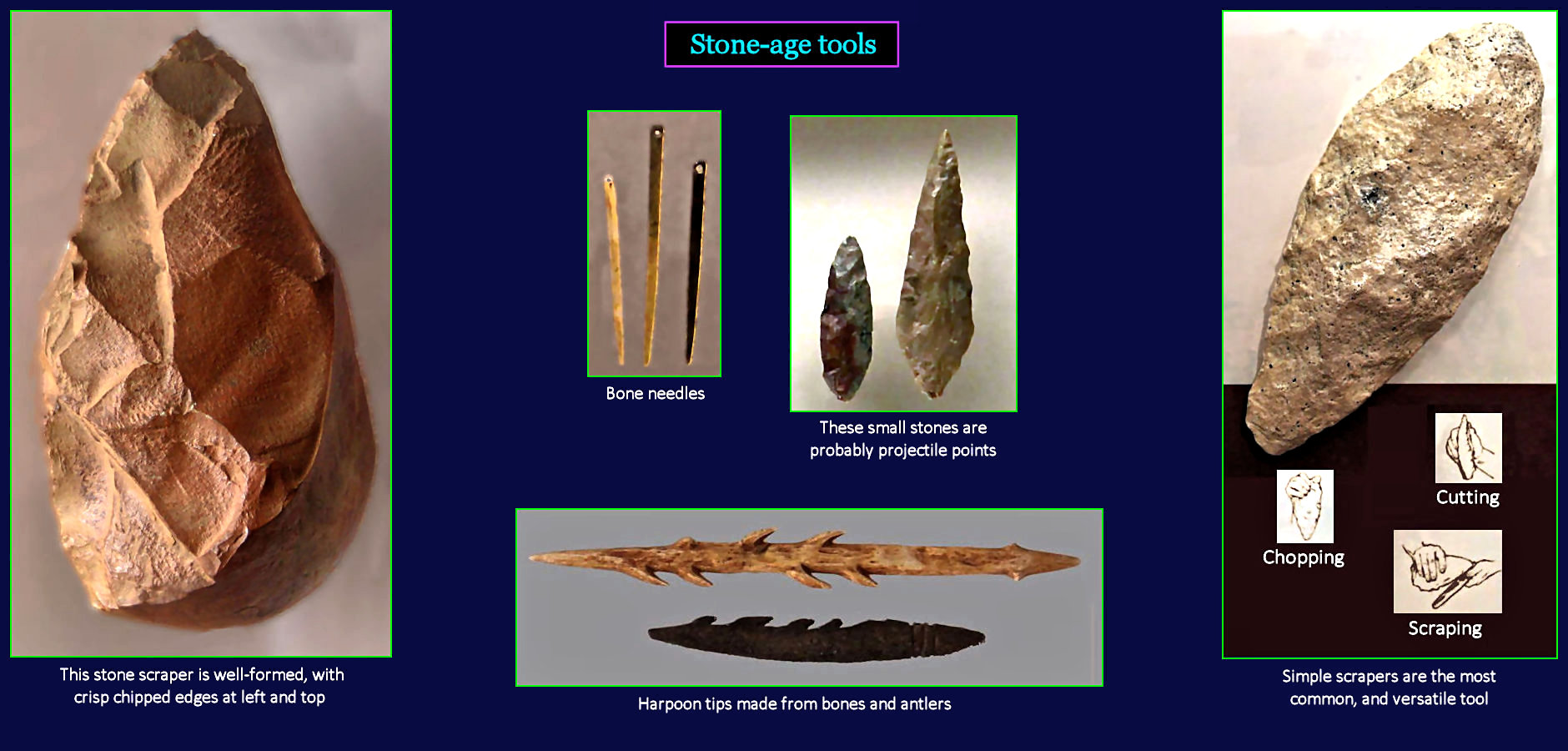
Re-shaped Objects Stones with a naturally sharp edge are the most useful, and can sometimes be further sharpened by carefully chipping away at the edges. Stones are useful mainly for digging, chopping, and skinning animals. Flat stones with a good edge are essential for scrapping away the tissue that clings to the inside of animal skins, allowing clothing to be made from the hide. | |||||||||
| |||||||||
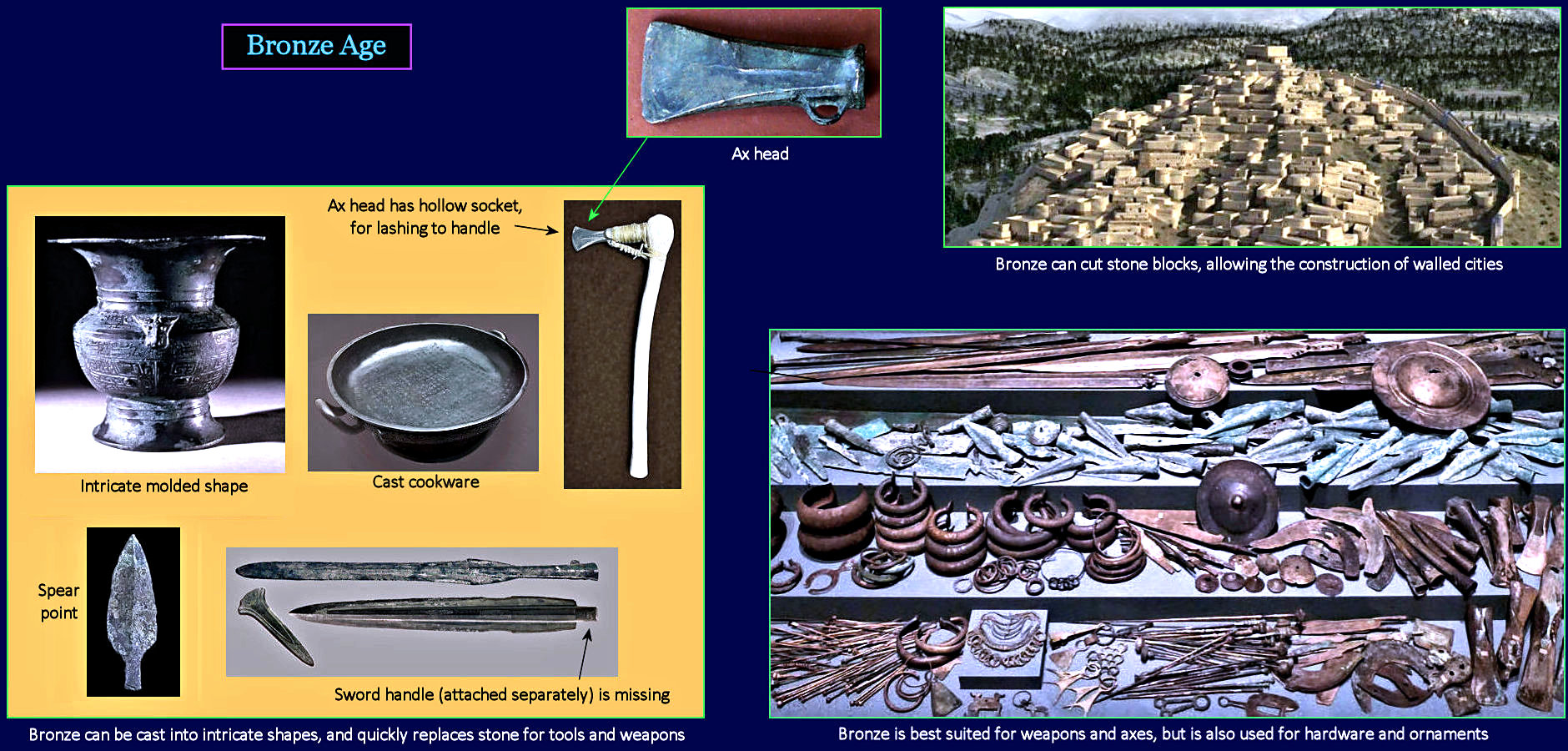
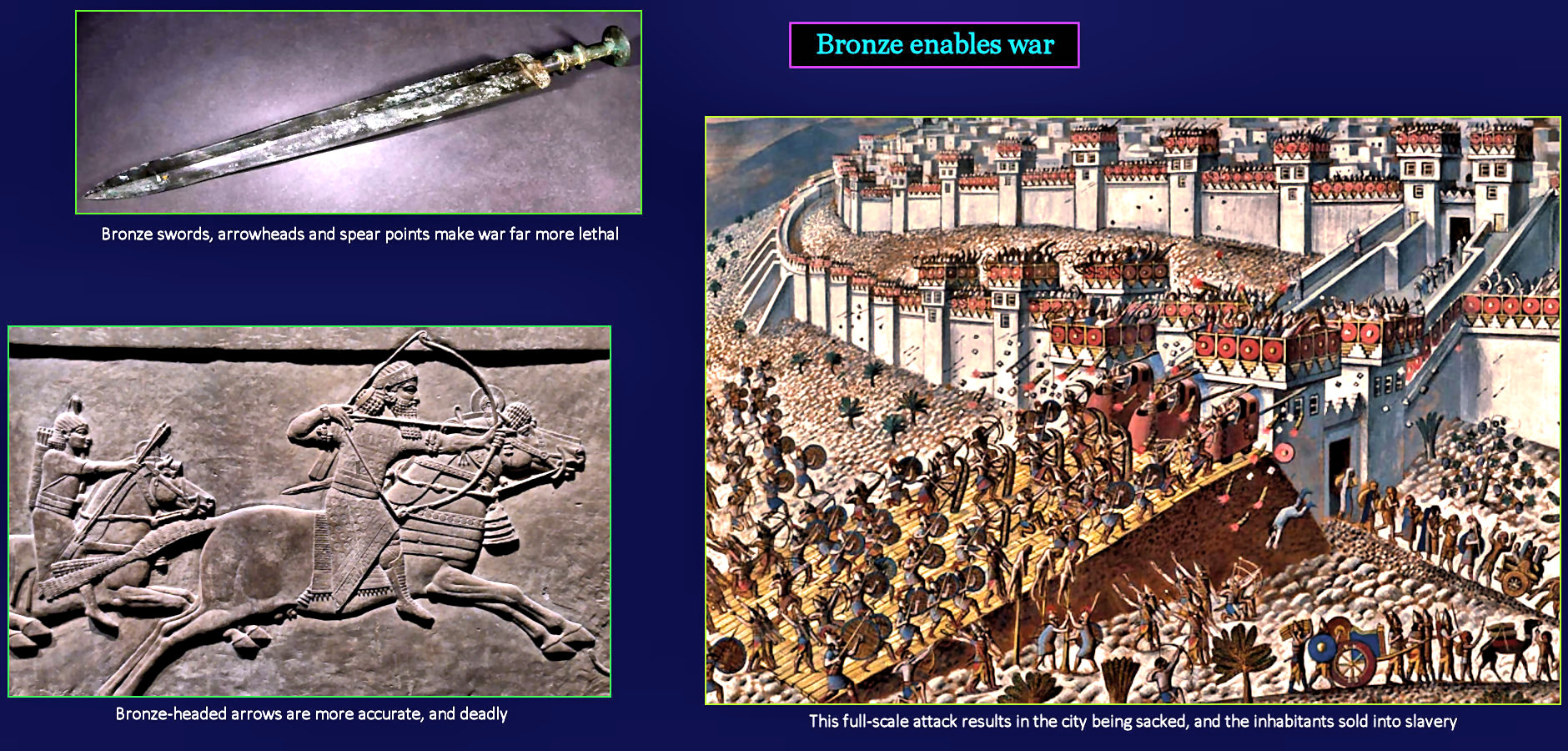
Amazing New Objects Tin is discovered just 4,000 years ago, and changes everything. Tin is soft, but combining it with copper magically transforms the resulting alloy, called bronze, into something much harder than either of its ingredients. Bronze is hard enough to be formed into tools that retain a sharp edge, and can be molded into special shapes, like sword blades. Bronze weapons turn simple conflicts into brutal battles. Meanwhile, bronze axe heads suddenly allow man to cut down timber, and shape stones into building blocks. | |||||||||
| |||||||||
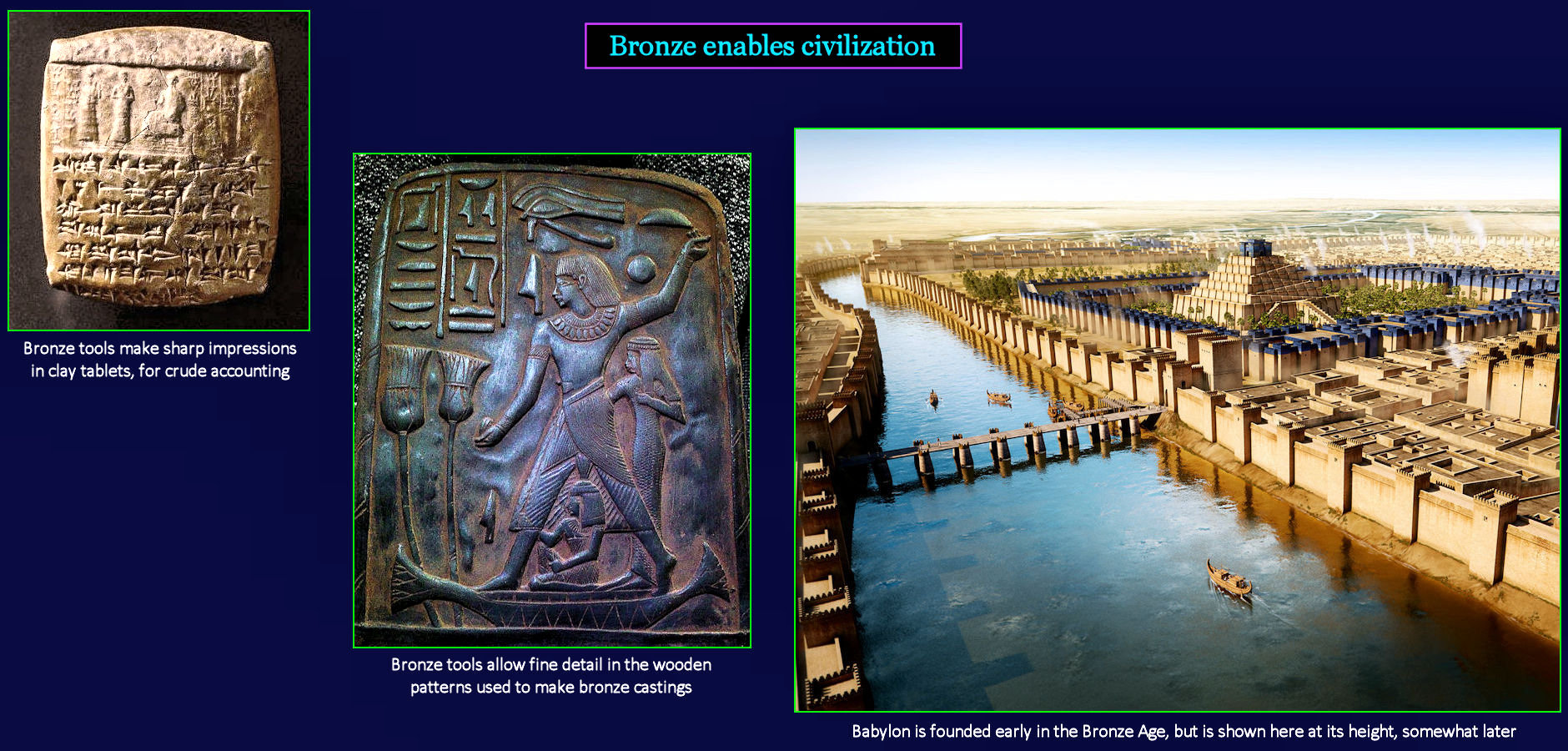
Building with Bronze Once you can cut stone into building blocks, and timber into roof supports, you have all the makings for a city. During the 2,000 years of the Bronze Age, some 50 city-states are established, almost all of them in and around the Middle East. By the end of the period, there are five cities with a population of at least 20,000, though none are nearly as grand as Babylon during its heyday, some 500 years later (as depicted above). None had existed before the discovery of bronze. | |||||||||
| |||||||||
Collateral Damage While bronze tools enable the rise of civilization, bronze weapons promote the spread of war. History has no record of battles before the discovery of bronze, but over 30 are fought during the Bronze Age. A third of these are sieges of fortified cities, including the famous siege that ended the Trojan War. This establishes a pattern of frequent, recurring sieges that will continue well into modern times. Then as now, cities are the repository of wealth, and thus make attractive targets. | |||||||||
| |||||||||
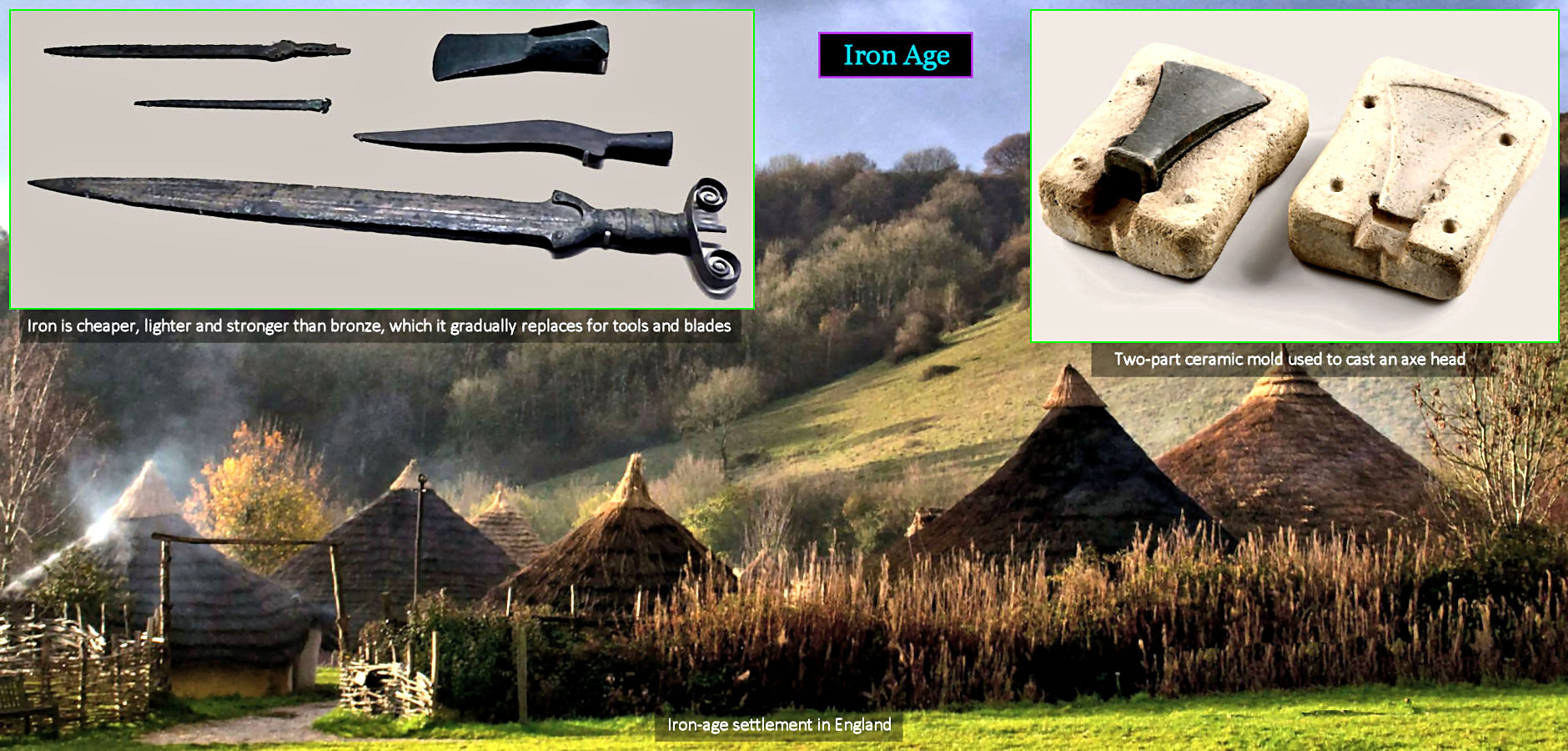
Iron Replaces Bronze Iron is a relatively common metal, and doesn't require the addition of tin, which is relatively scarce. It has slightly improved properties, compared to bronze, but cannot be melted in a fire fueled by wood, which isn't hot enough. For centuries it's made in small batches, using a process that can soften, but not actually melt the iron. It isn't suitable for making weapons, however, until impurities are removed by repeated beating while still in a semi-molten state. When man learns this trick, the Iron Age begins. | |||||||||