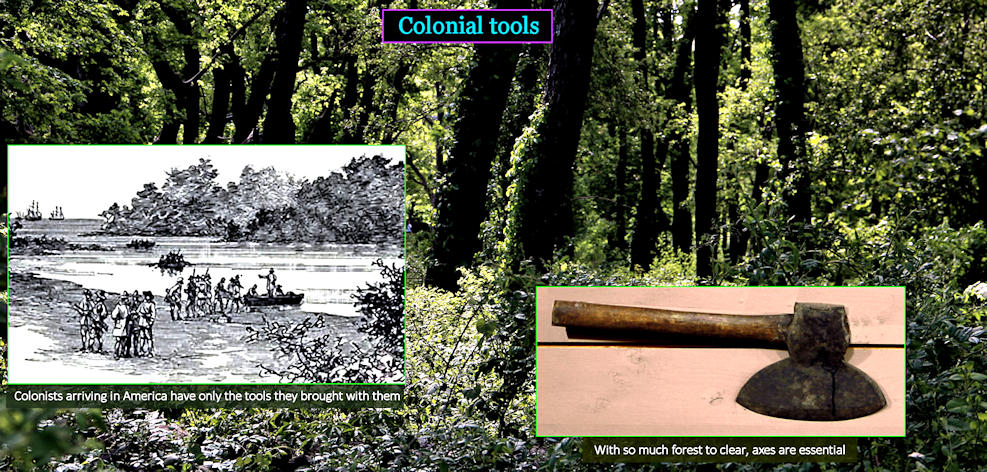
Colonial PeriodEarly settlers who brave the dangerous voyage to America come for one of two reasons. In Massachusetts, they seek religious freedom, while Virginia colonists are eager to get rich by simply growing tobacco. Whatever the motivation for coming, early settlers face a stark reality. They have left behind all the commercial vitality of medieval Europe, trading it instead for a land where tools are few, and imports costly. |
| ||||||||||||||||
| |||||||||
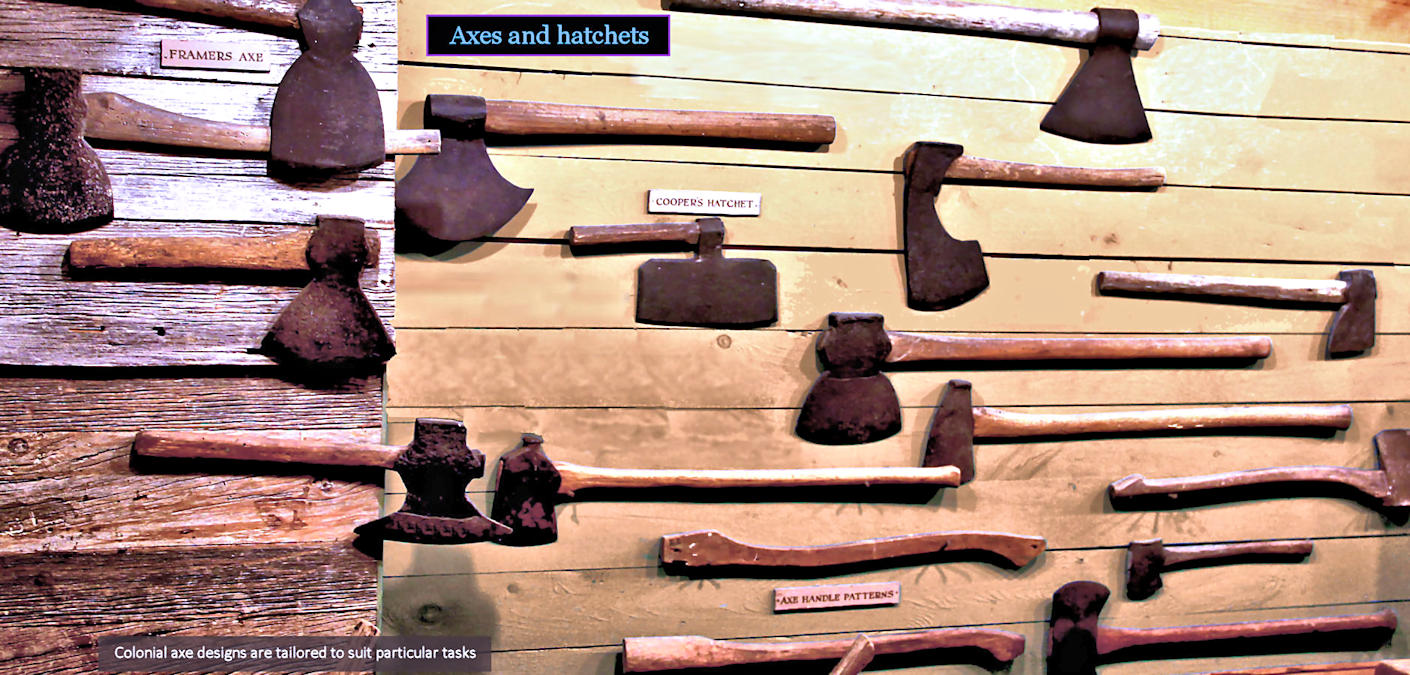
The Work Starts Here The first task for colonial settlers is clearing the land to start a homestead. The next is constructing a simple home, and keeping it warm. With a little skill and a lot of sweat, all this can be accomplished with just an axe. | |||||||||
| |||||||||
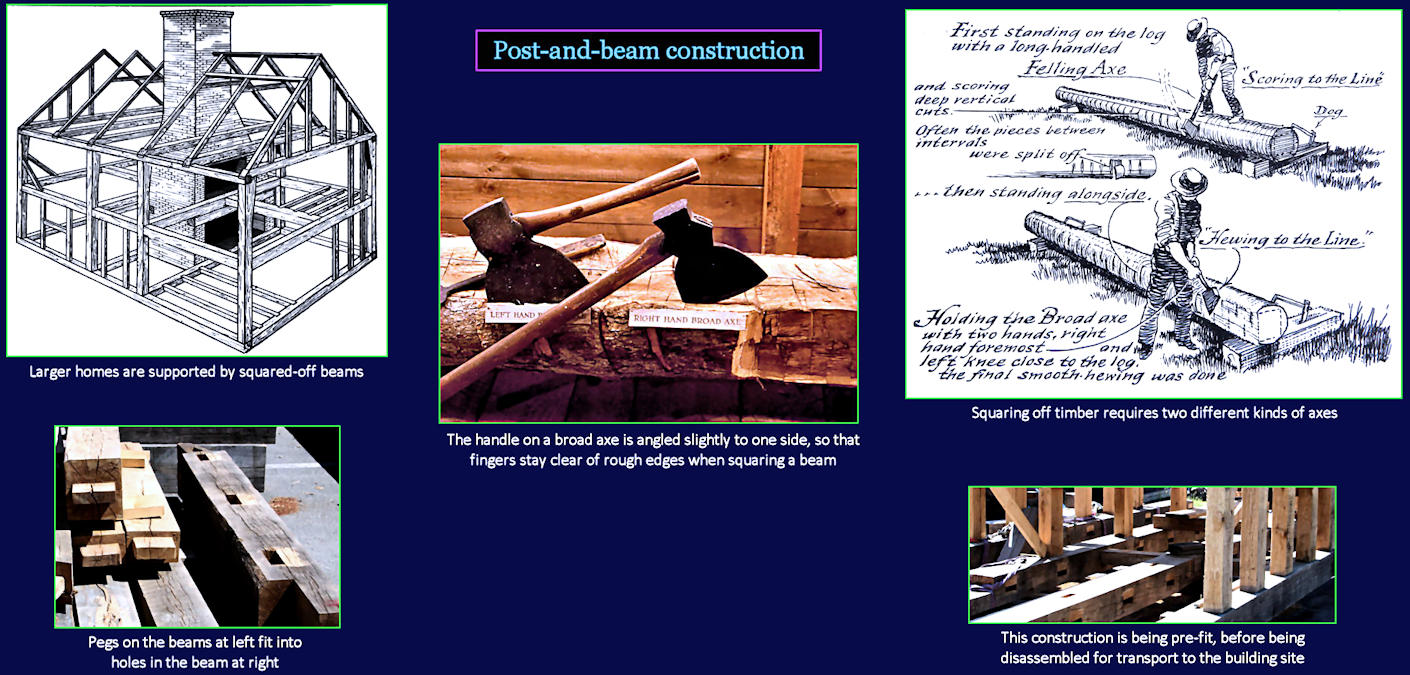
Bending the Handle To square off a log, a regular felling axe is used to score the edge being worked. Then, a so-called broad axe is used to chip off the wood between the score marks. The handle of the broad axe is angled slightly off the centerline (center), to allow swinging the axe head at the optimum angle, while keeping the hands away from rough bark. This step demands extra concentration, to avoid cutting the leg. | |||||||||
| |||||||||
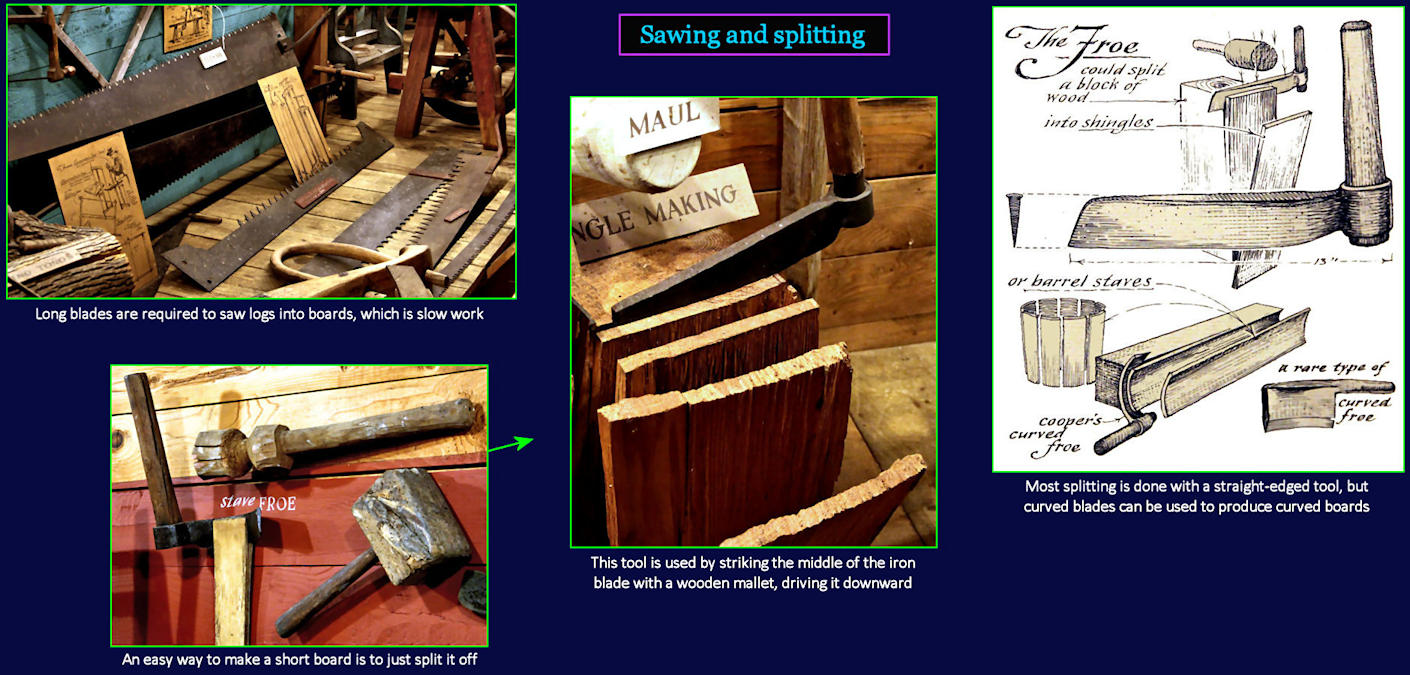
Making Boards Because sawing wood along the grain is so much slower and more tiring than crosscutting, wooden boards are usually obtained from a local sawmill, driven by a waterwheel. Blocks of wood, or logs shorter than shoulder height (standing on end) are a different matter. It's far easier to simply split them into thinner pieces using a wooden mallet, and an unusual iron splitting tool called a froe. The froe is almost unknown today, but was common on colonial farms. | |||||||||
| |||||||||
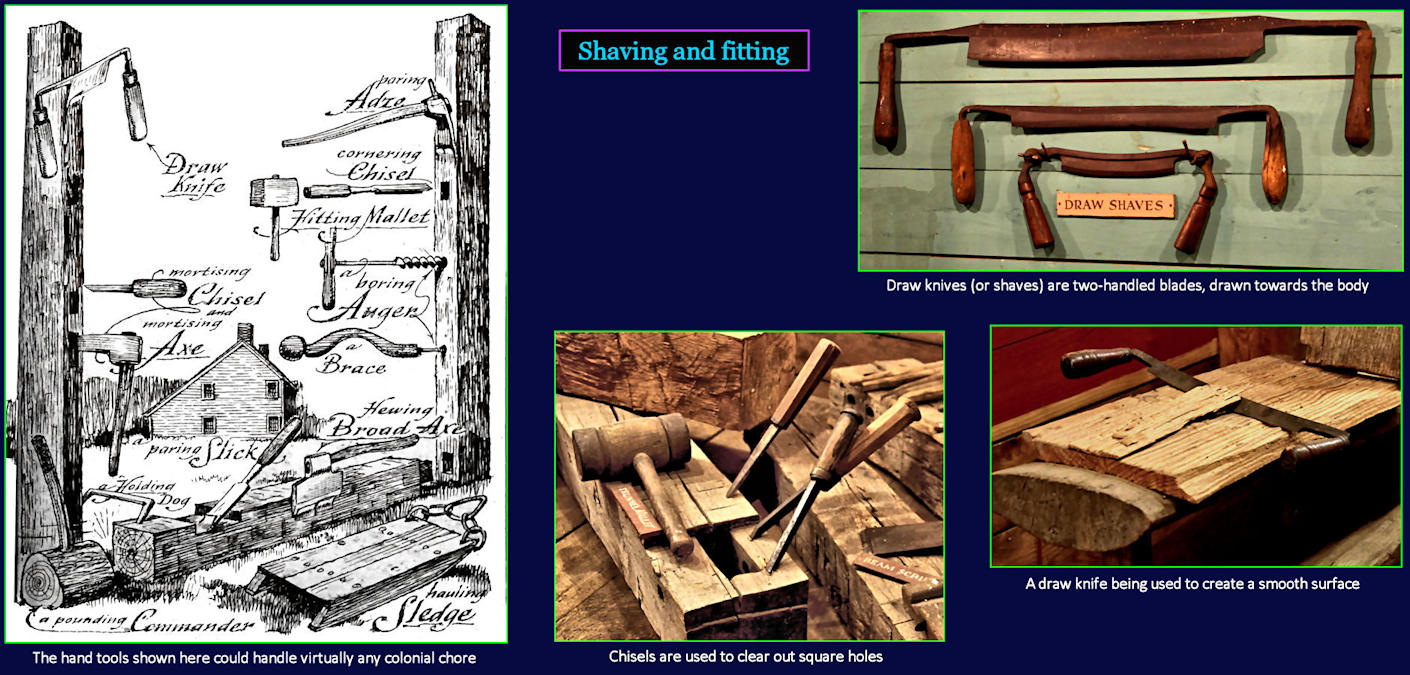
Shaping Tools Woodworking operations almost always involve a shaving motion, which removes material in thin layers. Chisels are sometimes hit with a mallet for plunge-cutting, but are more often used horizontally, guiding the cutting edge along a surface to remove thin shavings, like a block plane. Finer work requires finer shavings. Draw knives remove material when pulled towards the body, to smooth or shape a surface. Augers and drills use the sharpened tip to create spiral shavings, as they cut downward. | |||||||||
| |||||||||
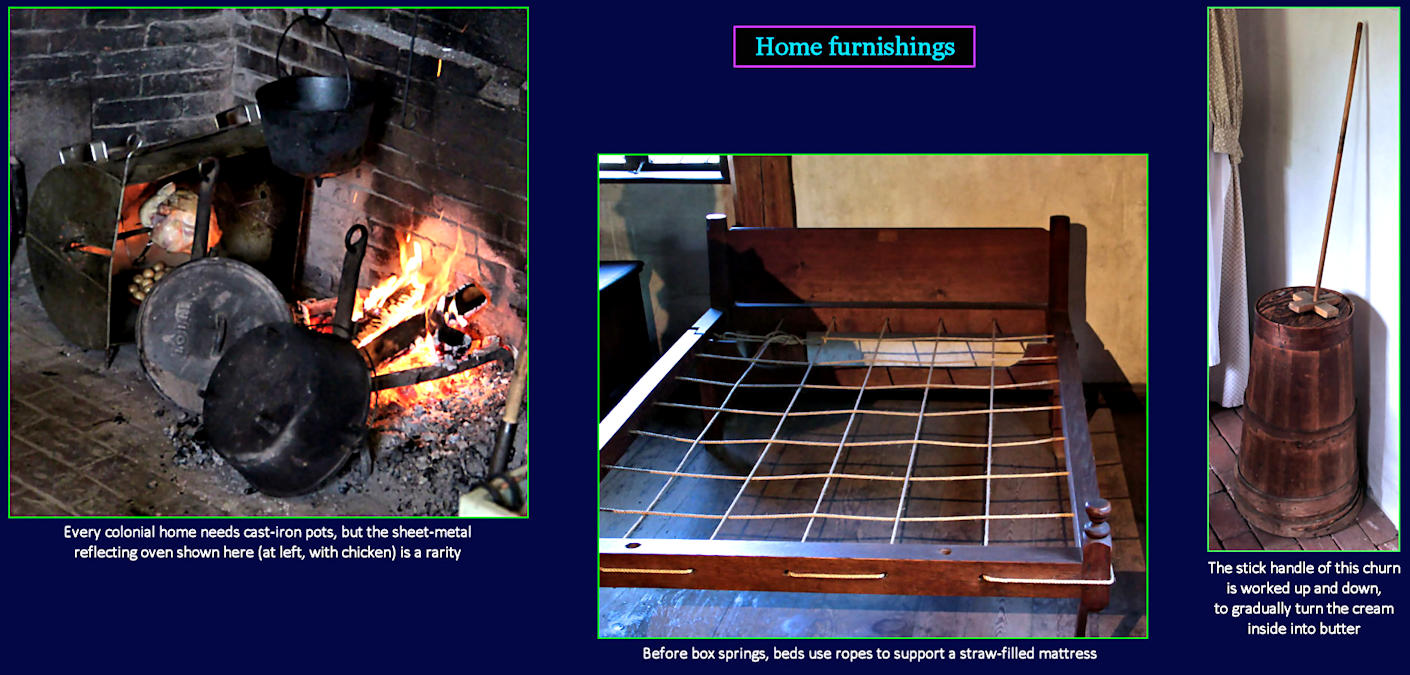
Cast Iron and Wood Colonial homes contain basically two types of items, those made from iron and those from wood. Iron-making facilities in the colonies are few, if they exist at all, so most metal items have to be imported all the way from England. Everything else in a home is wooden, and built locally, which results in a simplicity of style and function. | |||||||||