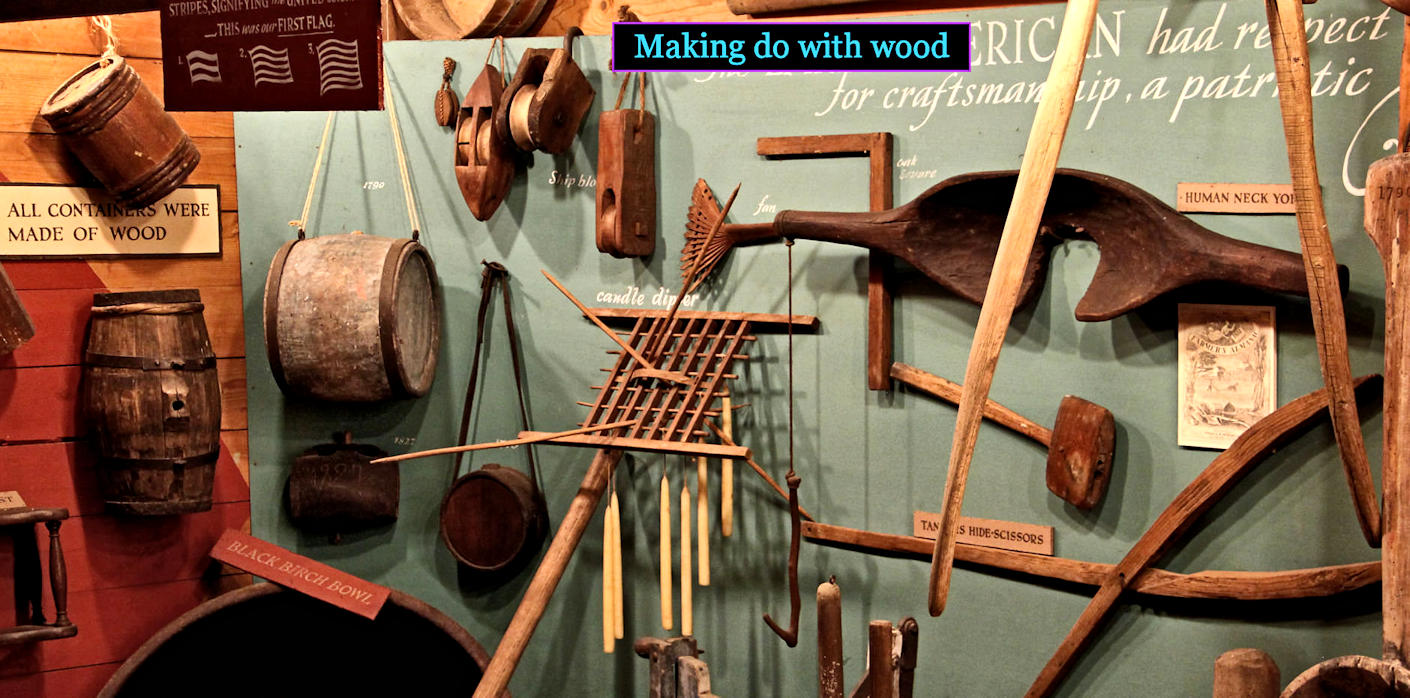
Farm and FieldThe first 150 years of life in the American colonies is largely a matter of simple survival. Over that time, however, families are able to expand upon the collection of conveniences constructed by parents and grandparents. Successive generations often stay put on the original family farm, making gradual improvements. Home furnishings, some of which are surprisingly ingenious, are mostly made in a shed out back, from wood. |
| ||||||||||||||||
| |||||||||
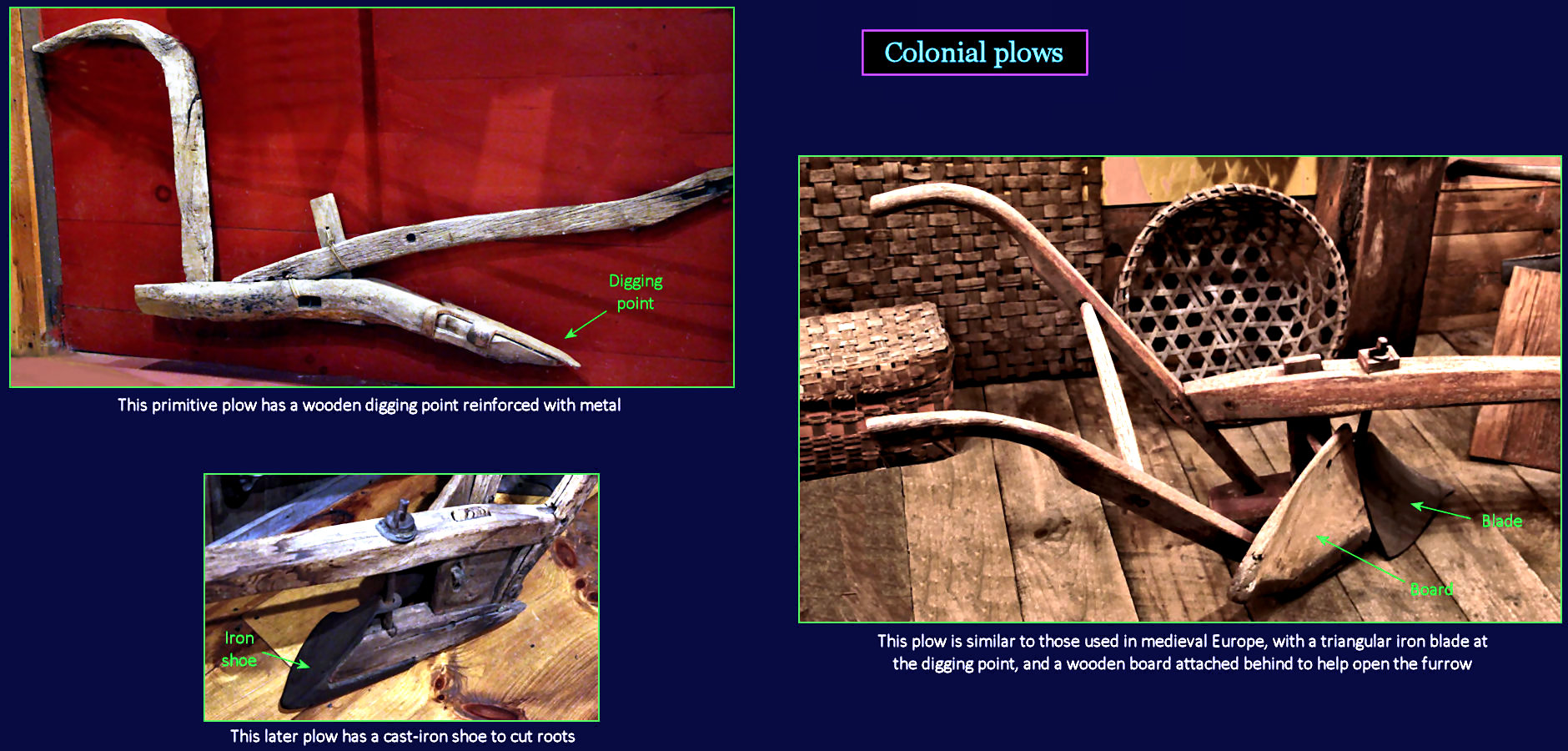
Mostly-wooden Plows Iron is used on farming plows only for the cutting tip. The plow at right has a wooden board to help push the sod to the side, after the blade has severed the roots. This was the norm for the first 250 years of American farming, until a single curving steel blade replaced both the iron cutting tip and wooden push-board. | |||||||||
| |||||||||
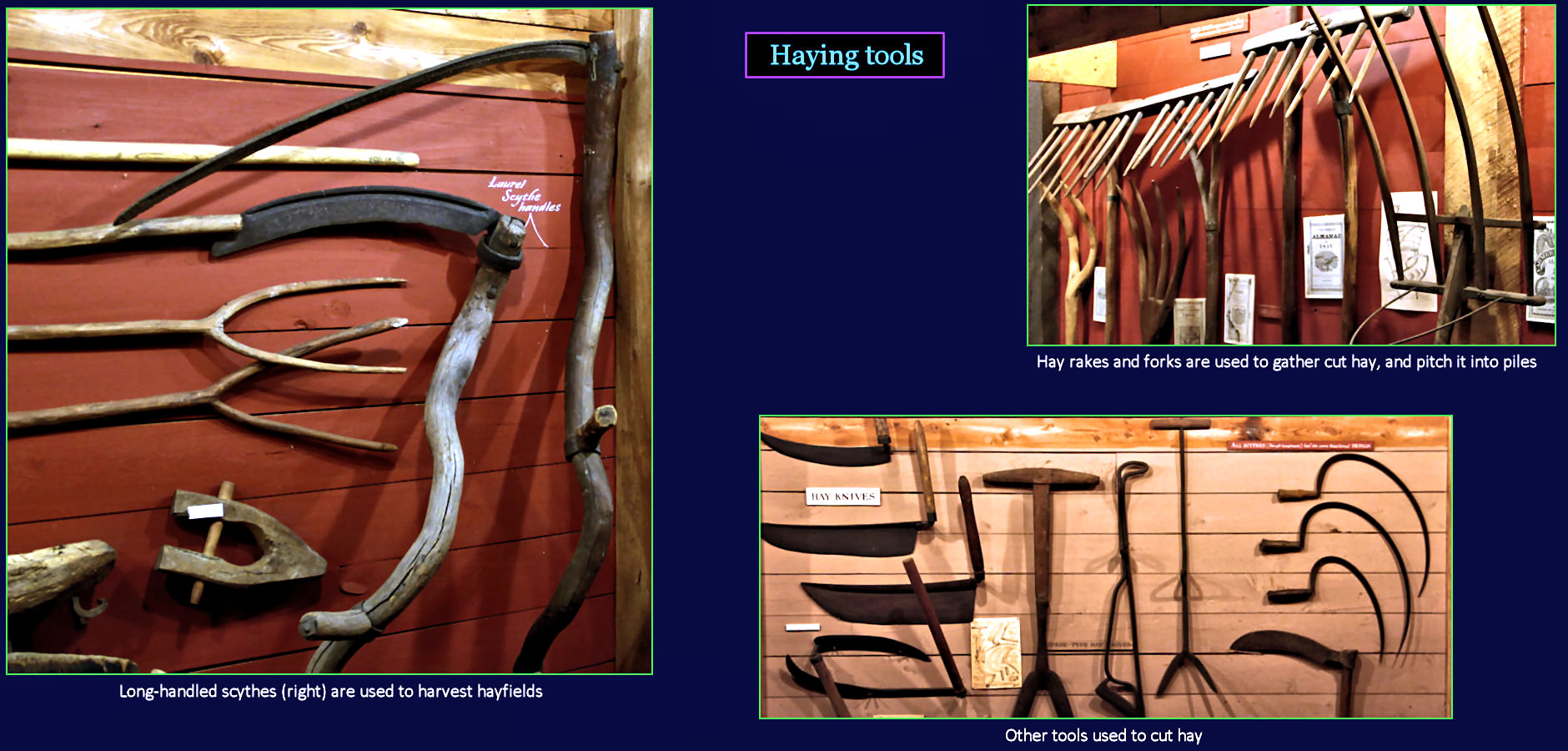
Scythes and Rakes Cutting a hayfield is a big deal. Hay sometimes stands waist- or chest-high, and can only be cut by swinging a scythe in a low, wide arc, using the long blade to cut close to the ground. This requires twisting the upper body from right to left, over and over, for hours. The cut hay is gathered using wooden rakes with wooden teeth, and is sometimes tied up in small bundles. It might be pitched up into a hay wagon, but few farms have one. | |||||||||
| |||||||||
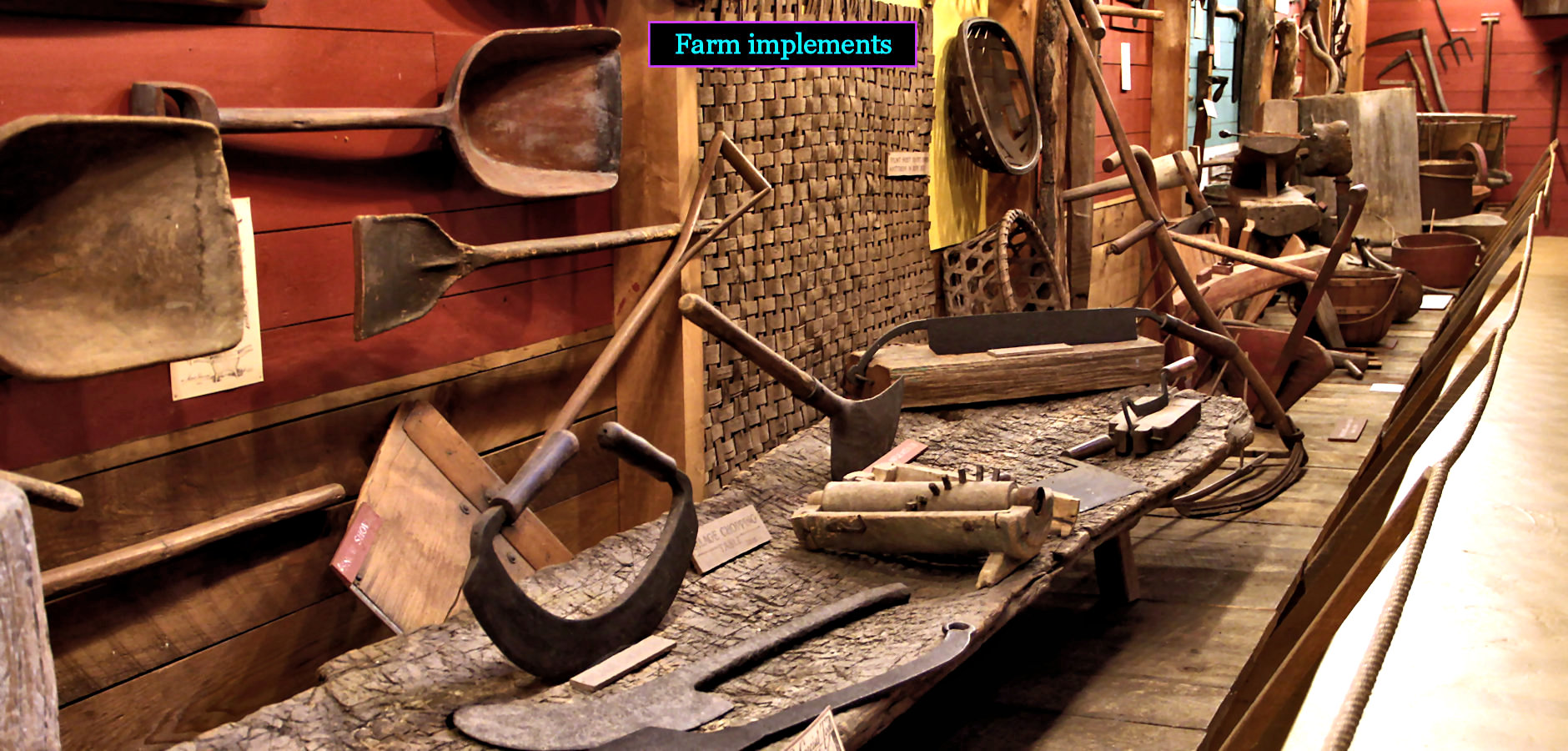
Tools for the Job Plowing and haying are just the two most labor-intensive farm jobs. There are plenty of other chores, like spreading seeds, weeding between rows, disposing of husks and stalks, churning butter, shoveling manure and generally tending the animals. When harvest season is done, there's firewood to cut, haul and split. Fences probably need mending, and there might be another baby on the way. Most chores are made easier with some kind of tool, usually made of wood. | |||||||||
| |||||||||
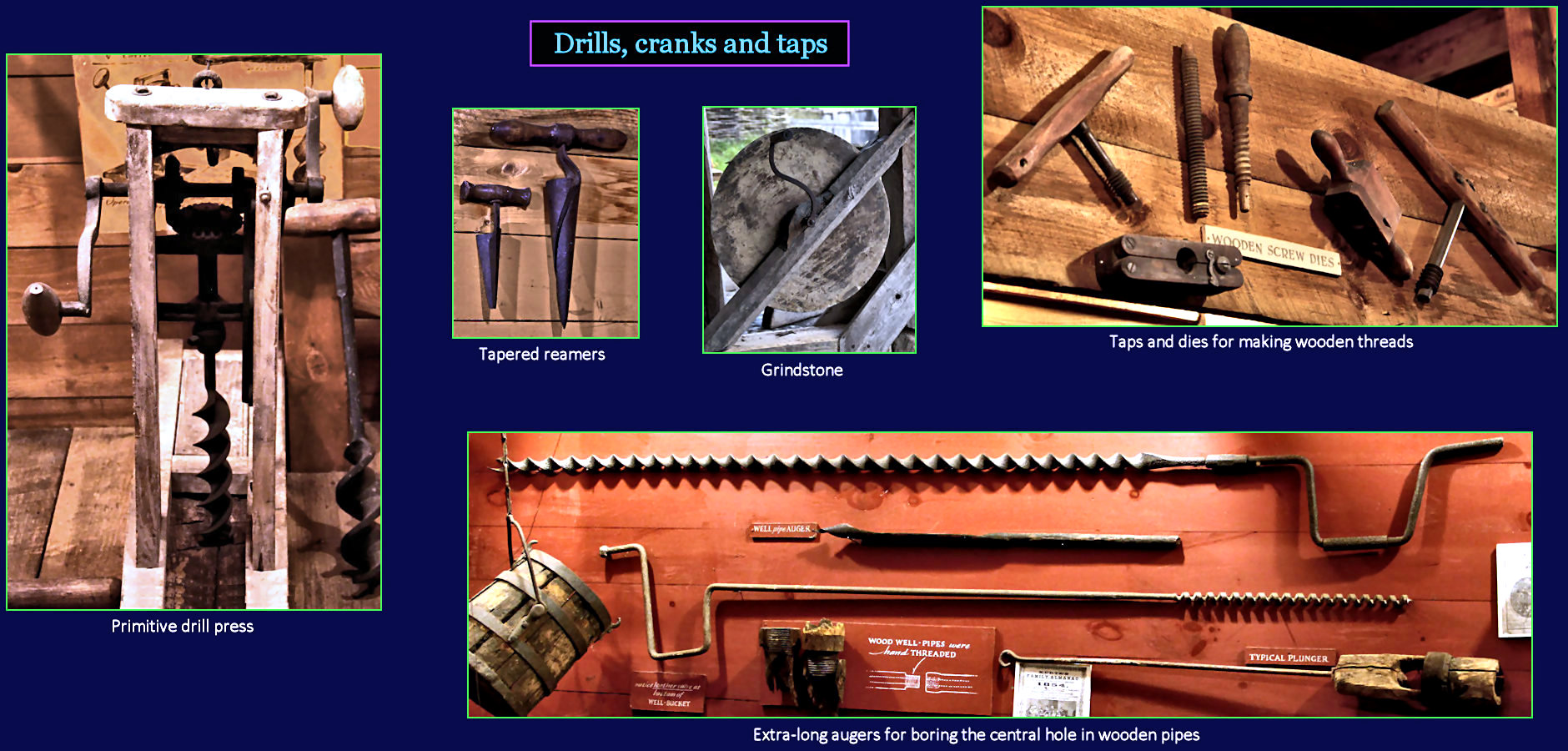
Gears and Cranks The drill press at upper left uses a rare pair of cast-iron bevel gears. Augers use a crank-shaped handle (lower right), while almost anything else that needs to spin, like a grinding wheel, uses some kind of crank handle. | |||||||||
| |||||||||
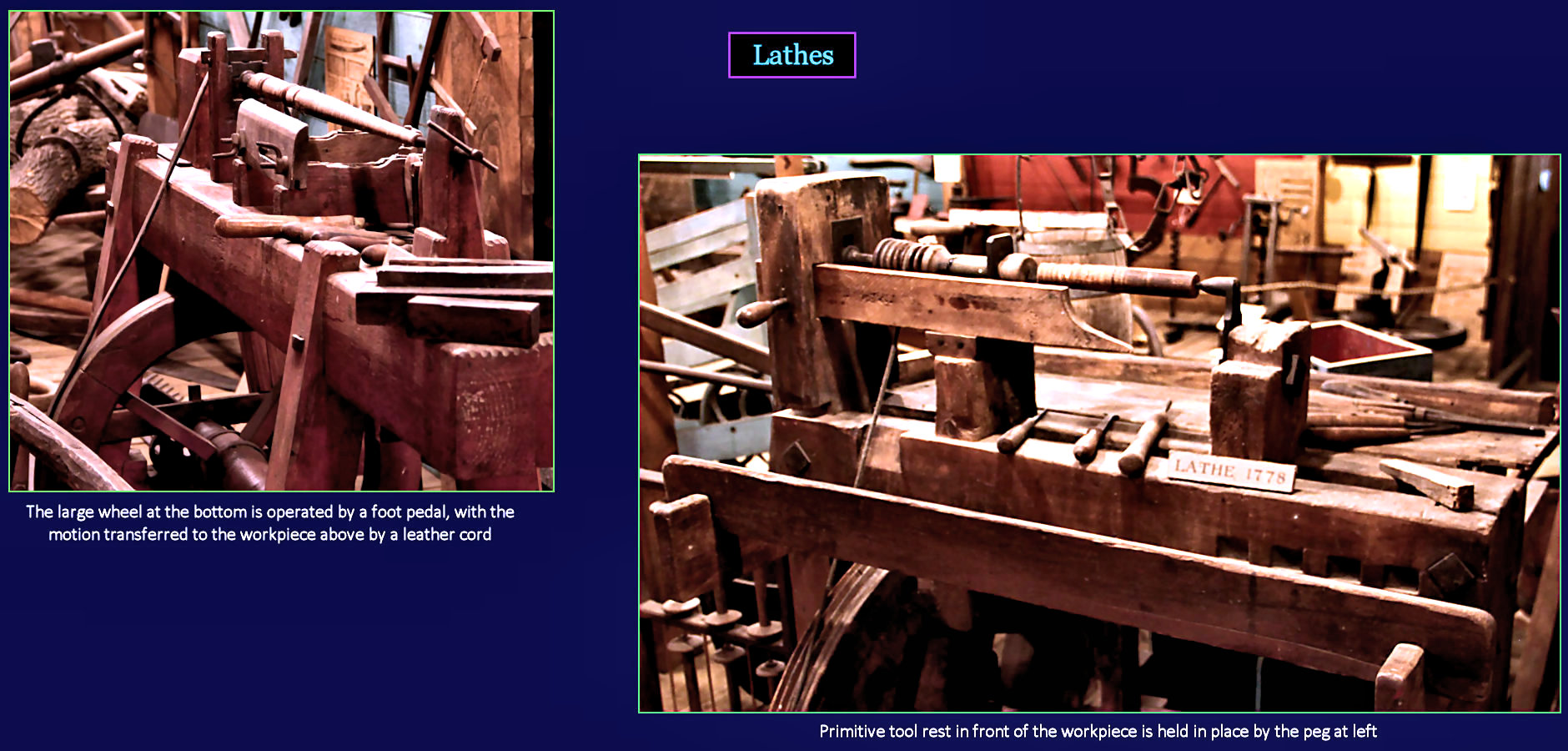
Early machine The only real piece of woodworking equipment in colonial America is the foot-powered lathe, used only by the few craftsmen that service wealthy landowners. No one else needs rounded legs on tables or chairs. | |||||||||