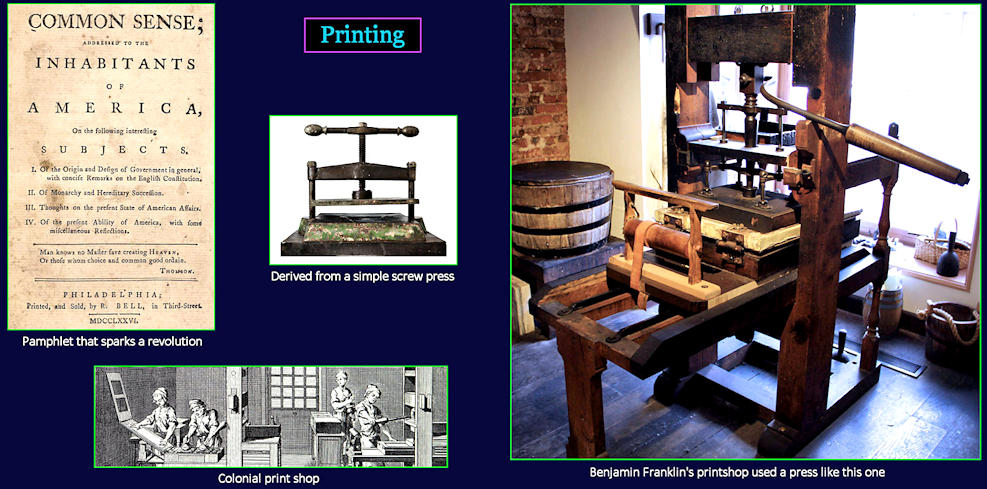
Printing PressThe printing press is one of the very few complex devices used in colonial America. There are plenty of simpler devices, for simpler tasks, but the printing press is more complicated, requiring special metal parts. By the time that America finally wins its independence from Britain, every town of any size has its own printshop, and its own local single-sheet newspaper. Benjamin Franklin makes his fortune running a printshop. |
| ||||||||||||||||
| |||||||||
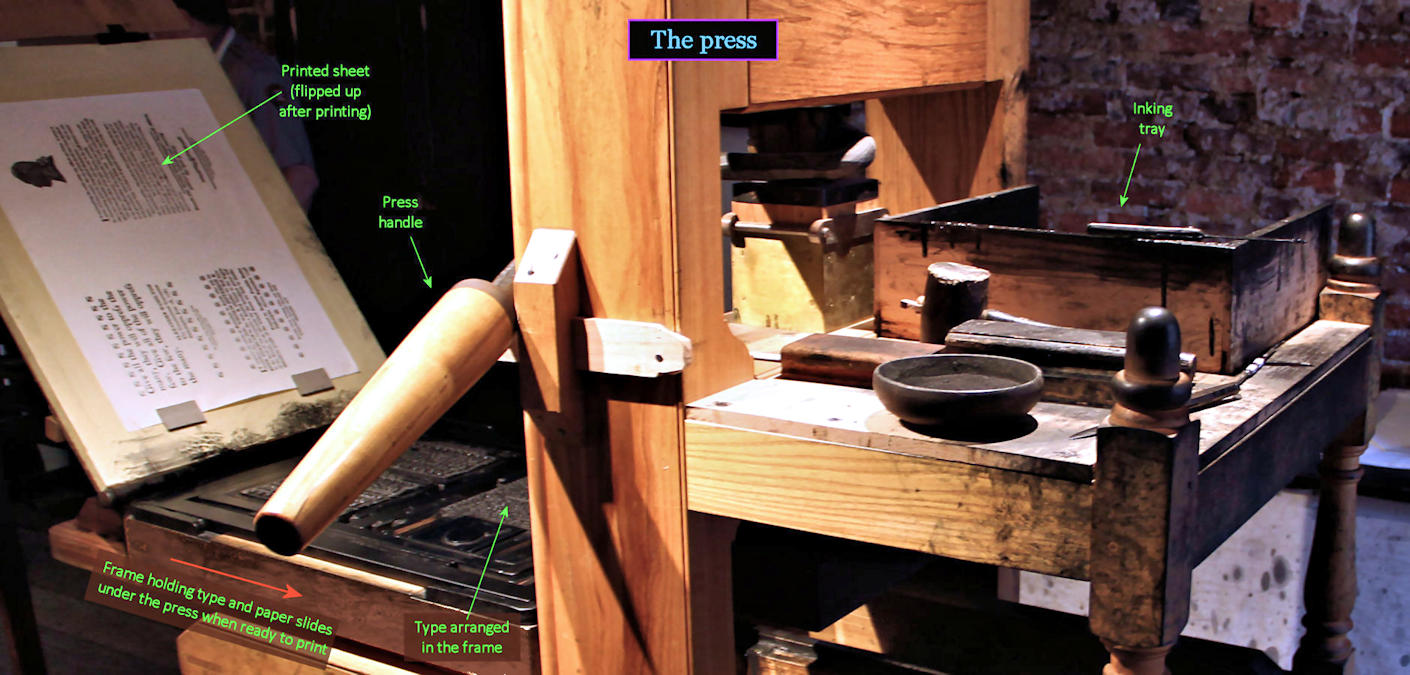
Single-sheet Printing This photo shows the press, just after printing the page at left. | |||||||||
| |||||||||
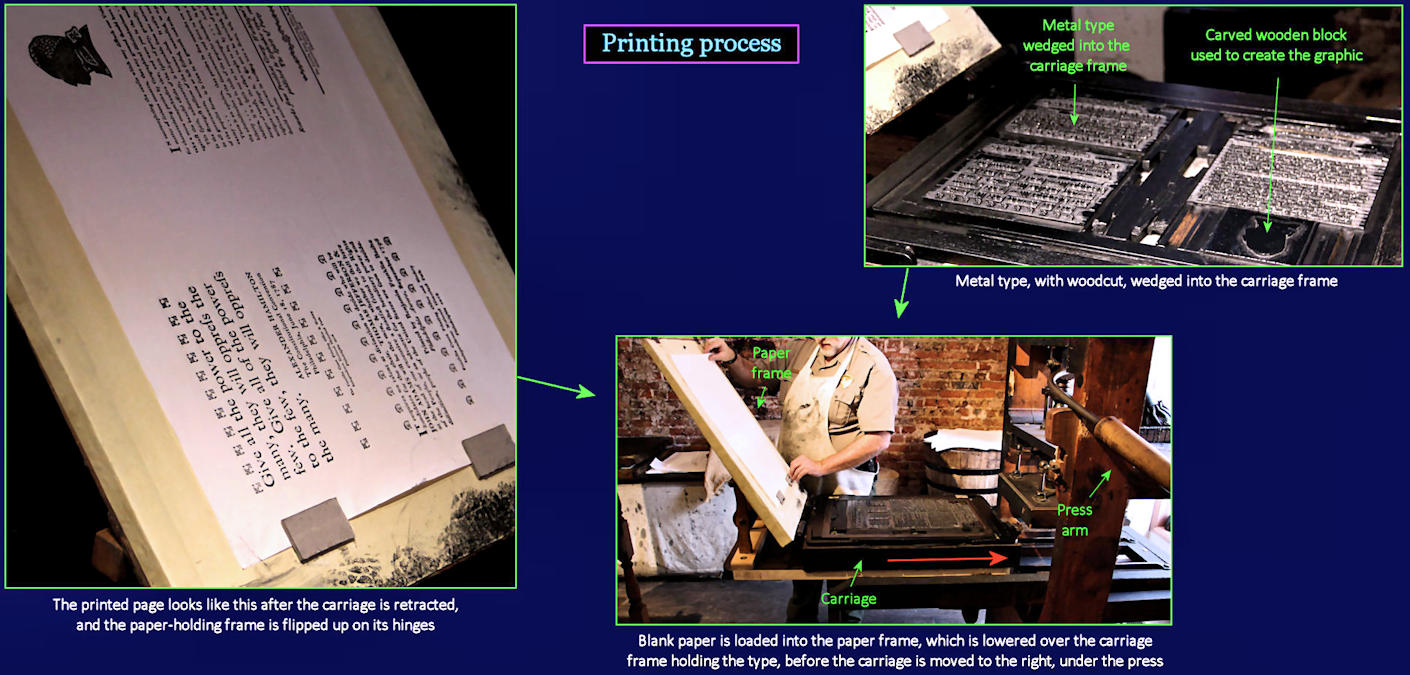
Sliding Carriage A sturdy carriage frame is used to hold the type in position (upper right), while ink is applied to the upper surface, using leather inking balls. A freshly-moistened sheet of paper is placed in the paper frame, which is then lowered over the top, and the entire carriage is cranked to the right, under the press. A strong pull on the press arm turns a screw mechanism to drive a metal plate down against the paper. This presses the paper hard against the type, which transfers the ink to the paper. | |||||||||
| |||||||||
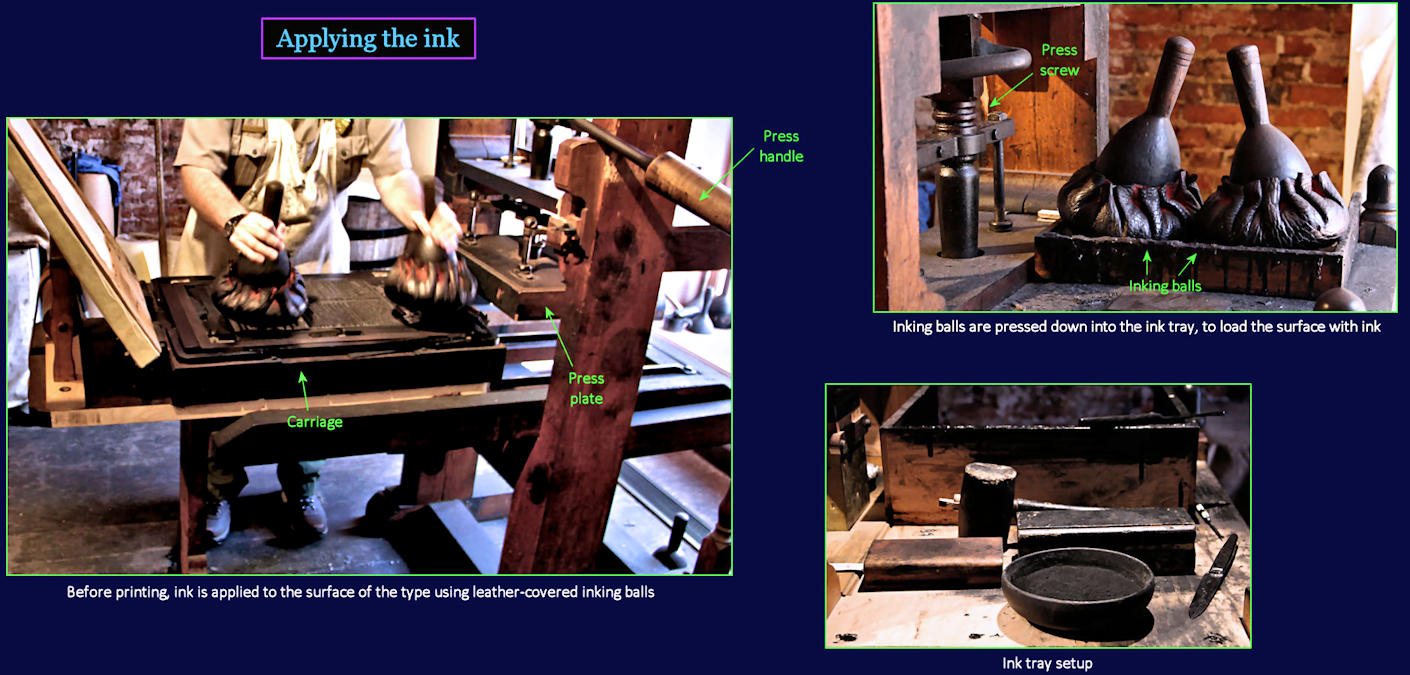
Sticky Process The photo at left shows sticky black ink being applied to the top of the type. The surface of the inking balls is loaded with fresh ink by being smushed around in a separate inking tray (top right). Printers make their own ink, starting with a black powder derived from growths that appear on oak trees, made by insects. A sticky gum is mixed in, with iron oxide (from rust) to turn it darker. | |||||||||
| |||||||||
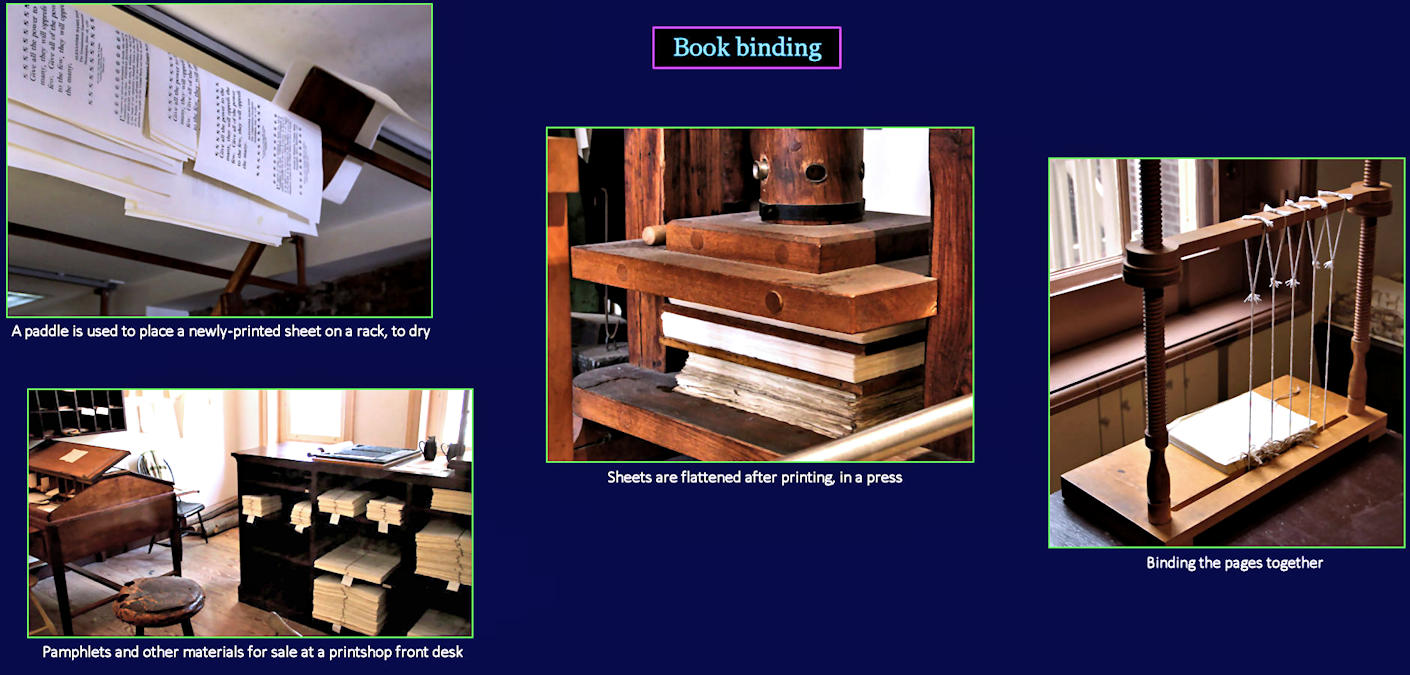
Sheet by Sheet Partly because of the paper shortage, newspapers are normally just single sheets, printed one at a time and hung over a ceiling-mounted bar, to allow the paper and ink to dry (top left). Pamphlets and books are also printed and dried one sheet at a time, and then left in a press to flatten the pages (center). String is used to bind pages together as a book (right). | |||||||||
| |||||||||
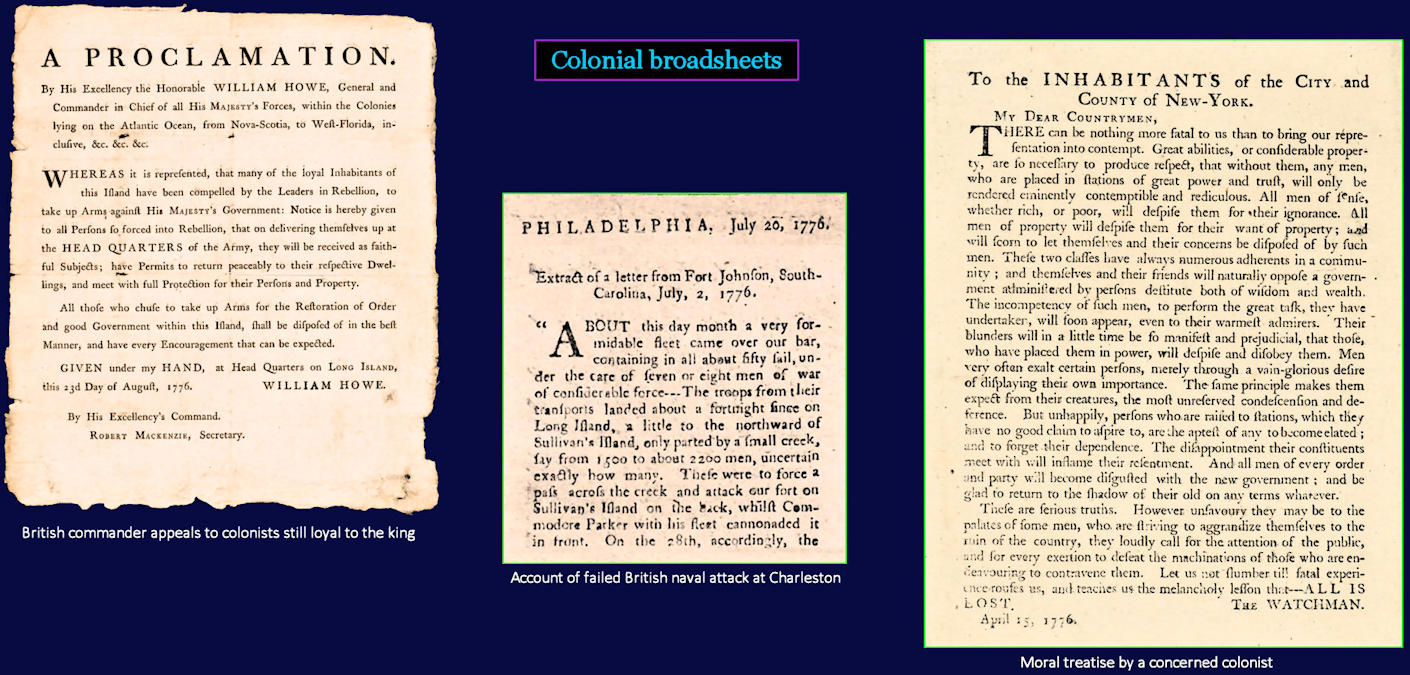
Single-sheet Newspapers The so-called colonial 'broadsheet' is the most commonly printed item, containing a mix of news, opinion, announcements and advertisements. Customers might also pay to print their own single-page flyers, for public posting. Oddly, during colonial times the lower-case 'f' often appears where we would expect an 's', but not always. | |||||||||