| |
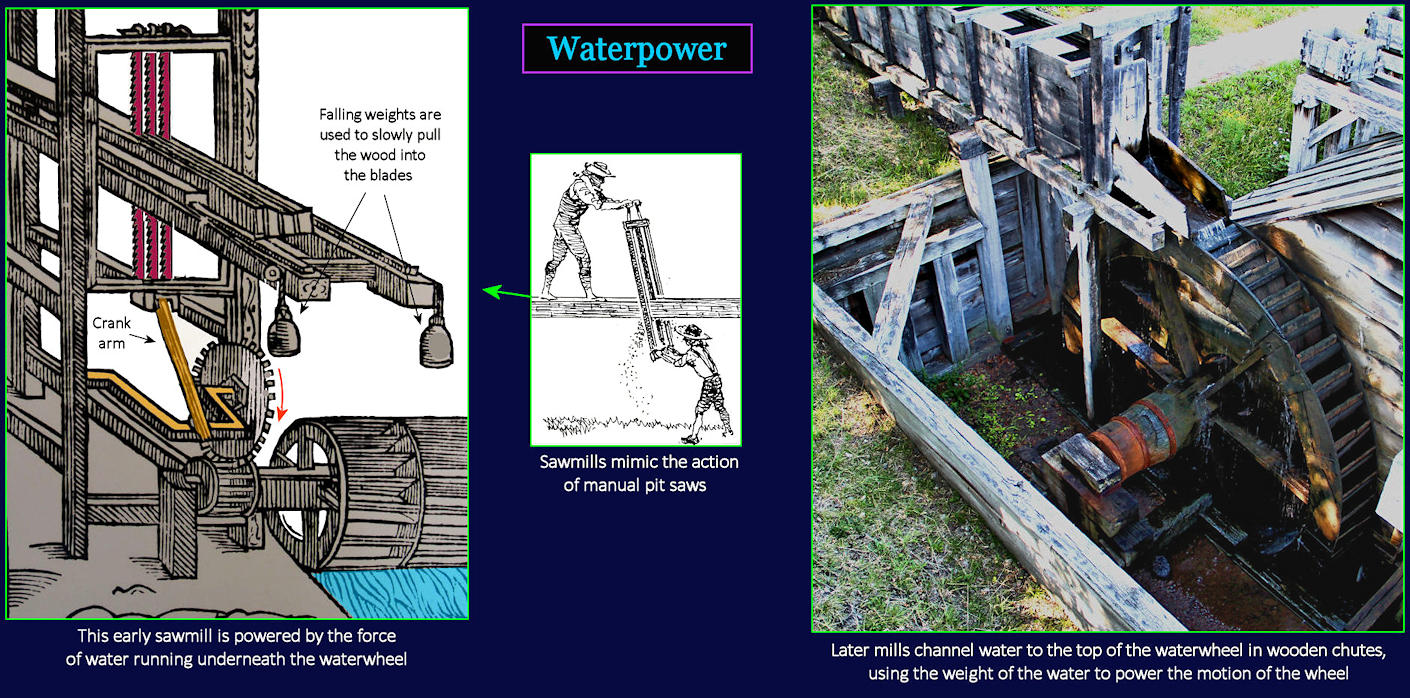
The Only Game in Town Waterwheels are by far the most common source of power used to operate equipment during colonial times. Windmills are tried in a few places, but are impractical in most locations. |
| |||||||||
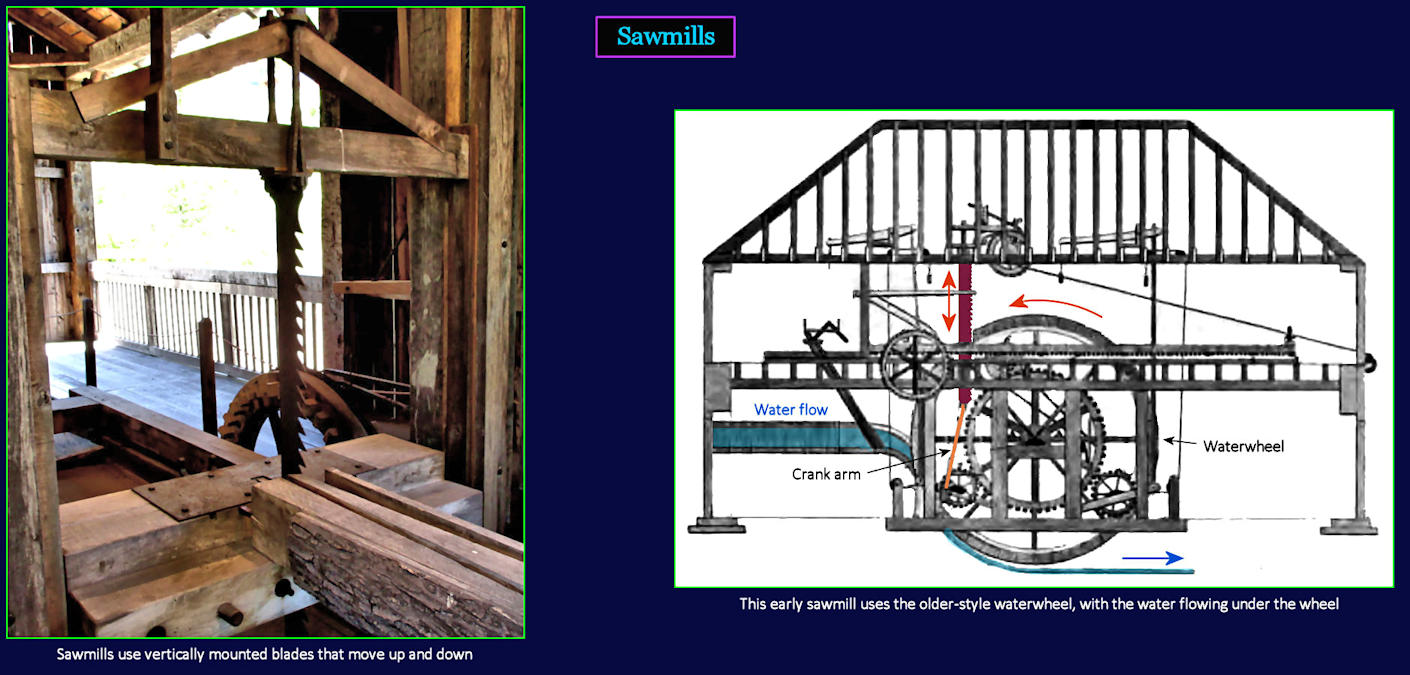
Vertical Blades Sawmills are the most common, being vital to the growth of any region. Settlers can fell their own trees to make log huts, but sawing wood into boards is so tiring that logs of any size are typically sent off to a sawmill, driven by a waterwheel. The blade is attached to a large rectangular frame, which is carried up and down inside wooden slots. | |||||||||
| |||||||||
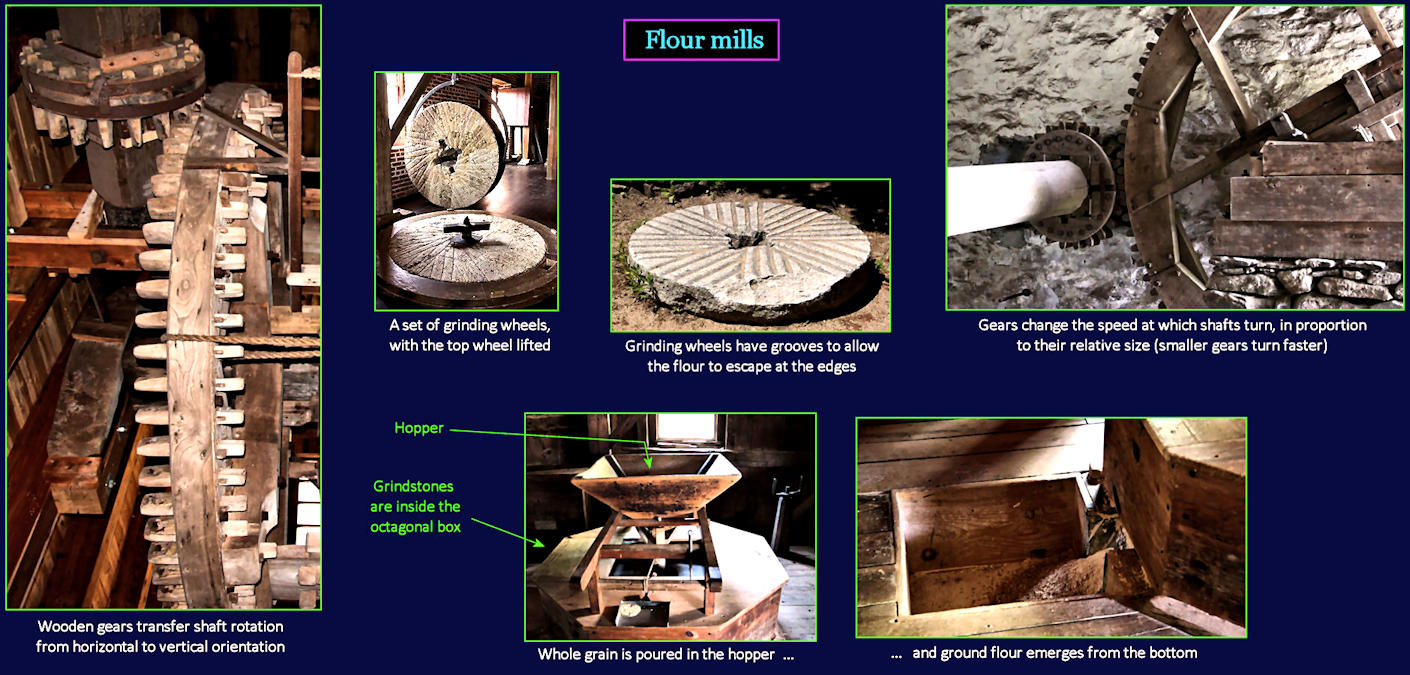
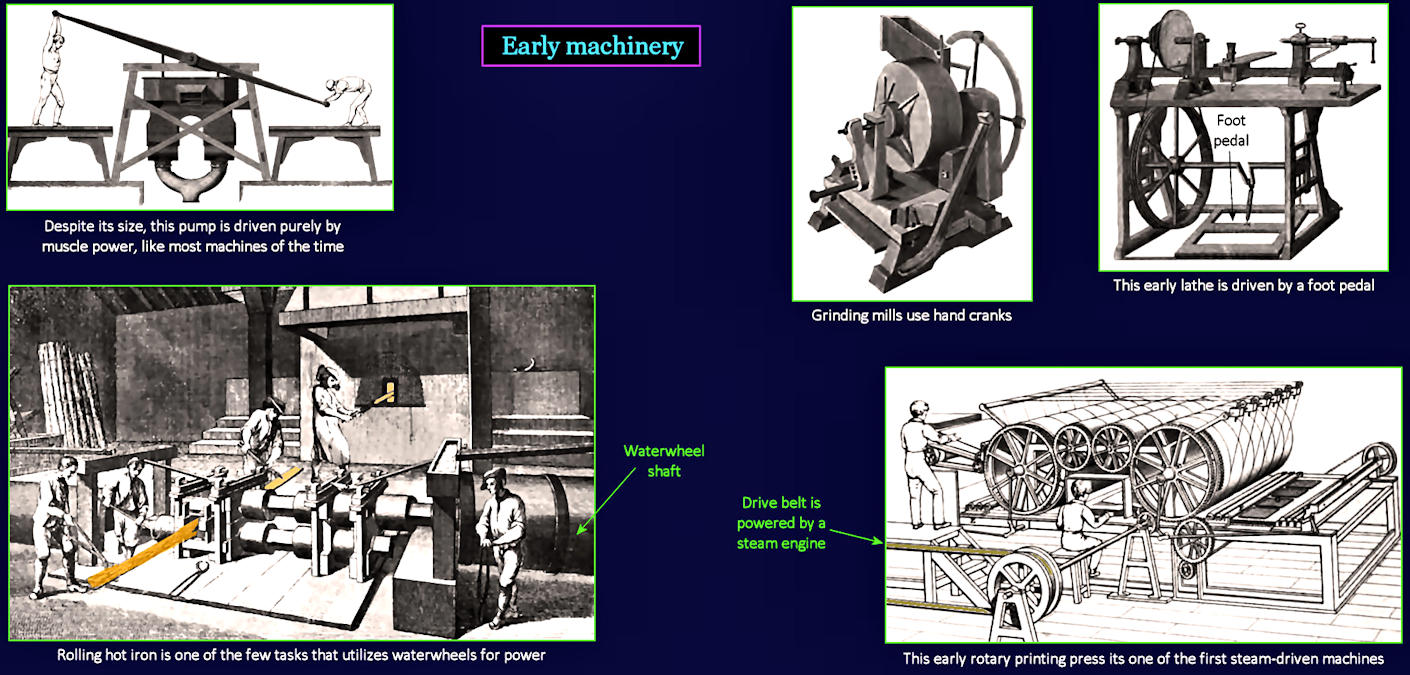
Grist Mill Another common water-powered mill is the grist mill, used to grind grain into flour suitable for baking. Grinding is also often performed by hand, using a hand- or foot-cranked grinding wheel, but gristmill grinding is far easier. Wheat and corn flour are the most common products, but grains like oats and rye can also be ground. Typically, the miller doesn't charge for his service, but instead retains a small portion of the flour from each batch, in lieu of payment. | |||||||||
| |||||||||
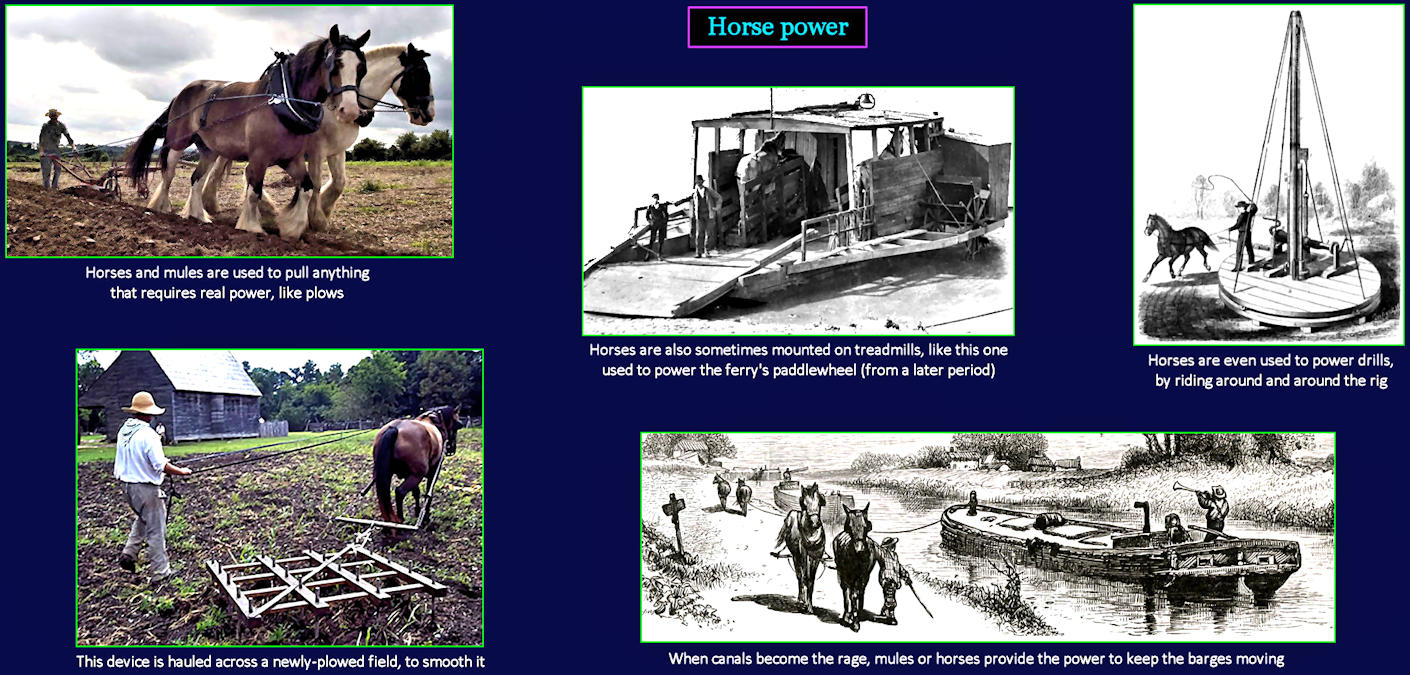
Simple and Available Anything too heavy or difficult to move by hand is generally pulled by horses or mules. They sometimes haul wagons to and from town, but mostly just plow or smooth fields. Occasionally, animals might be used to power a treadmill (center) or be driven in circles around some kind of rotating device (right), but this is rare. Mules become more important for commerce when canals begin to appear, being commonly used to pull canal barges. | |||||||||
| |||||||||
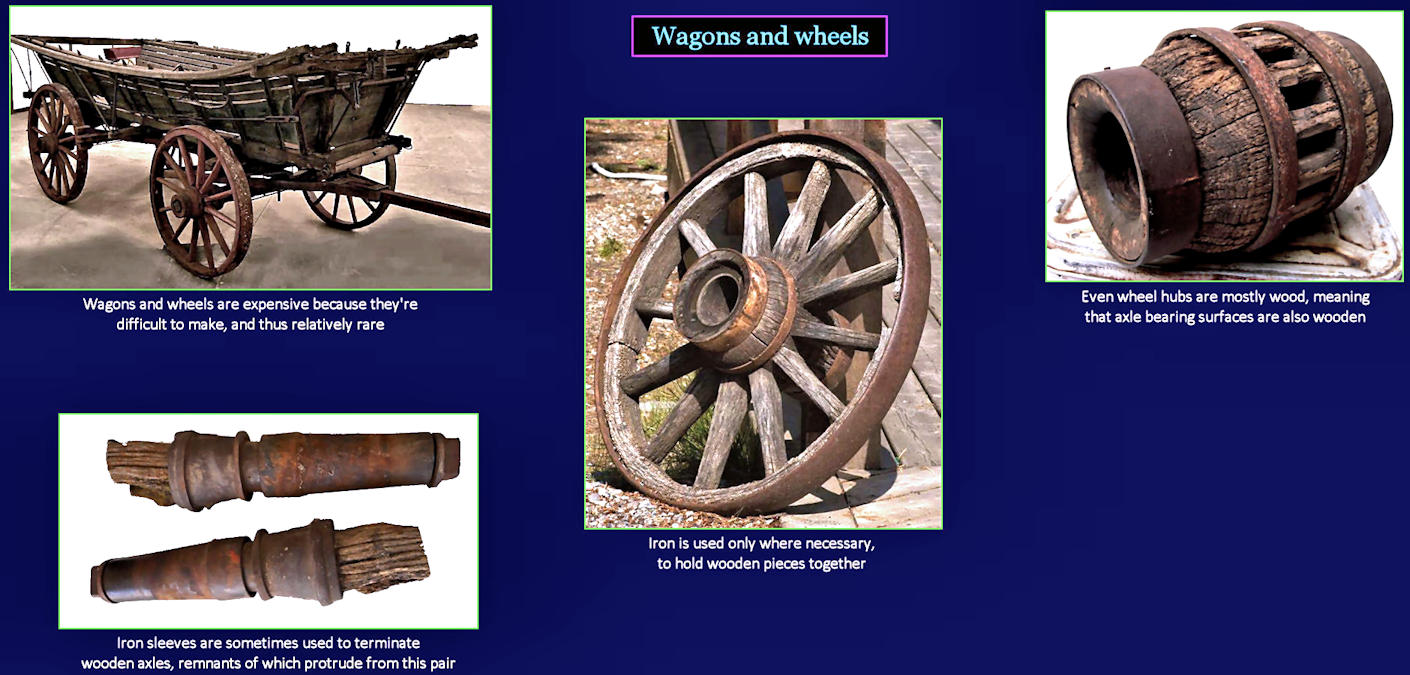
Complicated Construction Wagon wheels require the skills and special tooling of a trained wheelwright. Wheels need iron rims to resist road wear, but also to keep the rest of the wheel bound tightly together. The iron hoop is formed slightly undersized, heated to make it expand, and then driven into place around the wooden parts of the rim. It shrinks as it cools, producing a tight compression fit. The same applies to the hoops holding wooden hubs together. Wagon undercarriages are also surprisingly complex constructions. | |||||||||
| |||||||||
Long Time Coming Throughout the colonial period, equipment of any kind is generally driven by muscle power. Waterwheels are used for a few selected jobs, but can only be located very close to a reliable source of falling water. Steam power is just beginning to be developed, but is still far too clumsy and inefficient for general use. | |||||||||