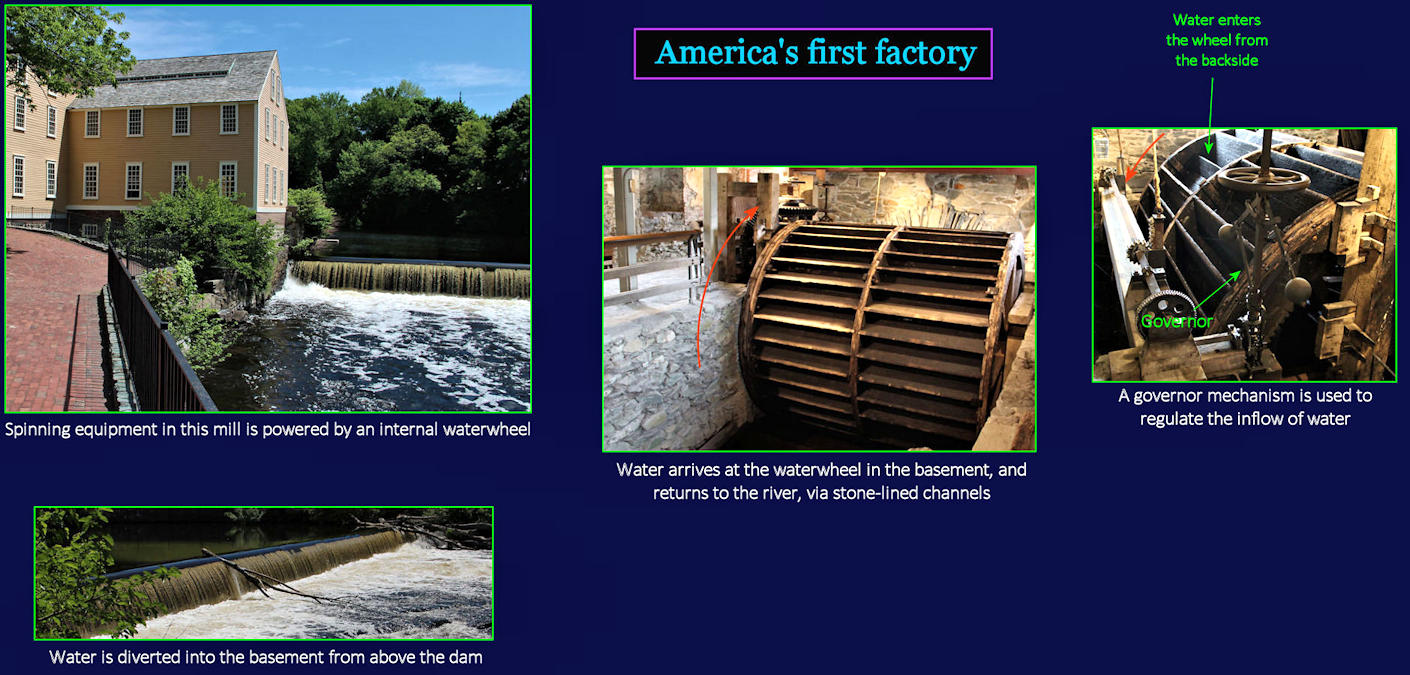
Spinning MillsAmerica's first experiment with factory-style production comes in Rhode Island, just 10 after the United States finally gains independence from Britain. The first mills are only capable of spinning wool into yarn, but it's a start. The machinery for the mills is secretly copied from designs developed in Britain, but it takes time to work out the kinks. Within 25 years, there are spinning mills operating all over New England. Before the textile industry can really take off, however, better machines are needed to comb raw fibers prior to spinning. Soon afterwards, power looms are developed to finally automate the function of the weaving. |
| ||||||||||||||||
| |||||||||
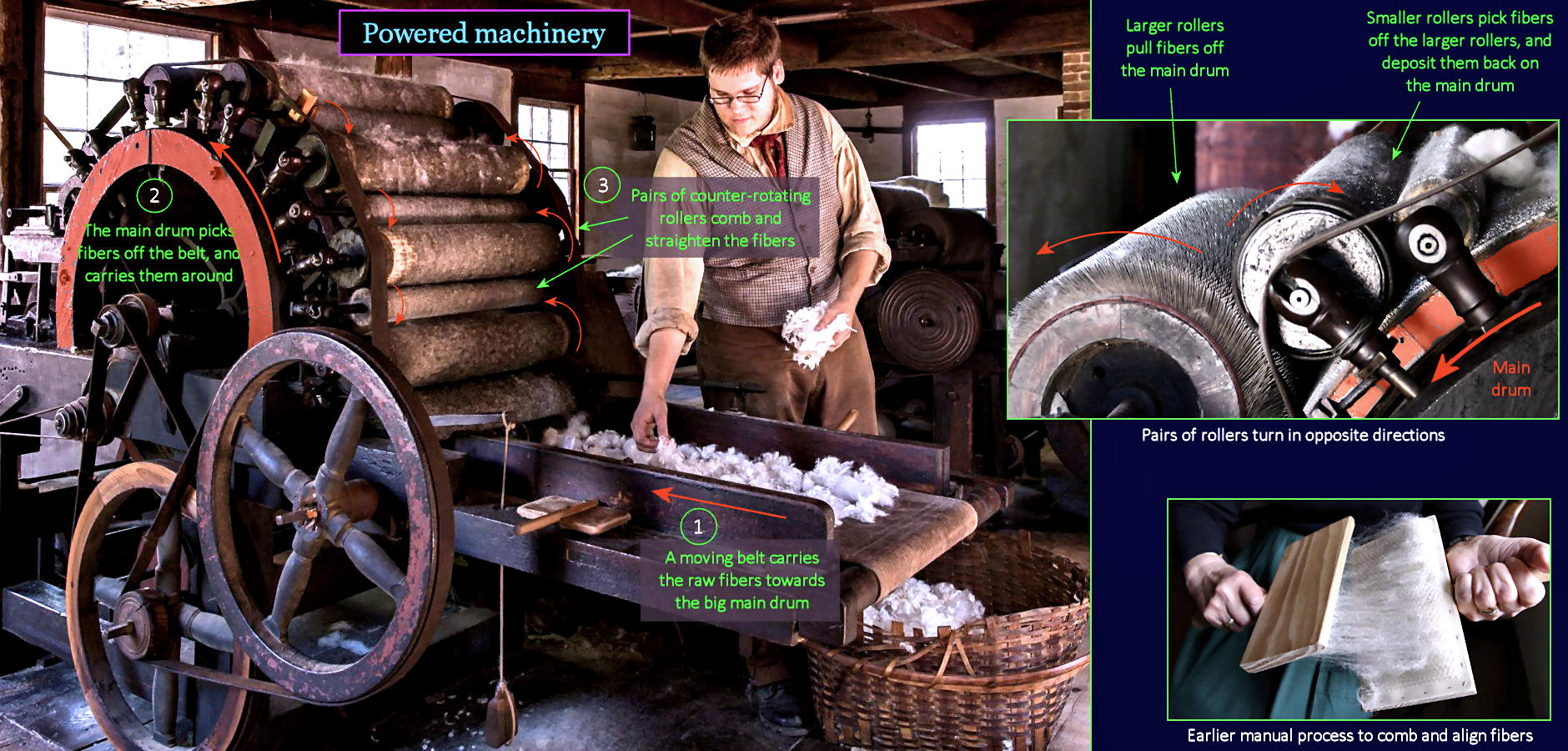
Combing the Fiber The unwieldy contraption shown above performs the vital task of combing the fibers into relatively straight alignment, before spinning. Arrays of tiny wires line the surface of the main drum, and also its many smaller rollers, which grab and gently tug the fibers into rough alignment before handing them to the next set of rollers. This mimics the action of the manual paddles used previously (lower right). | |||||||||
| |||||||||
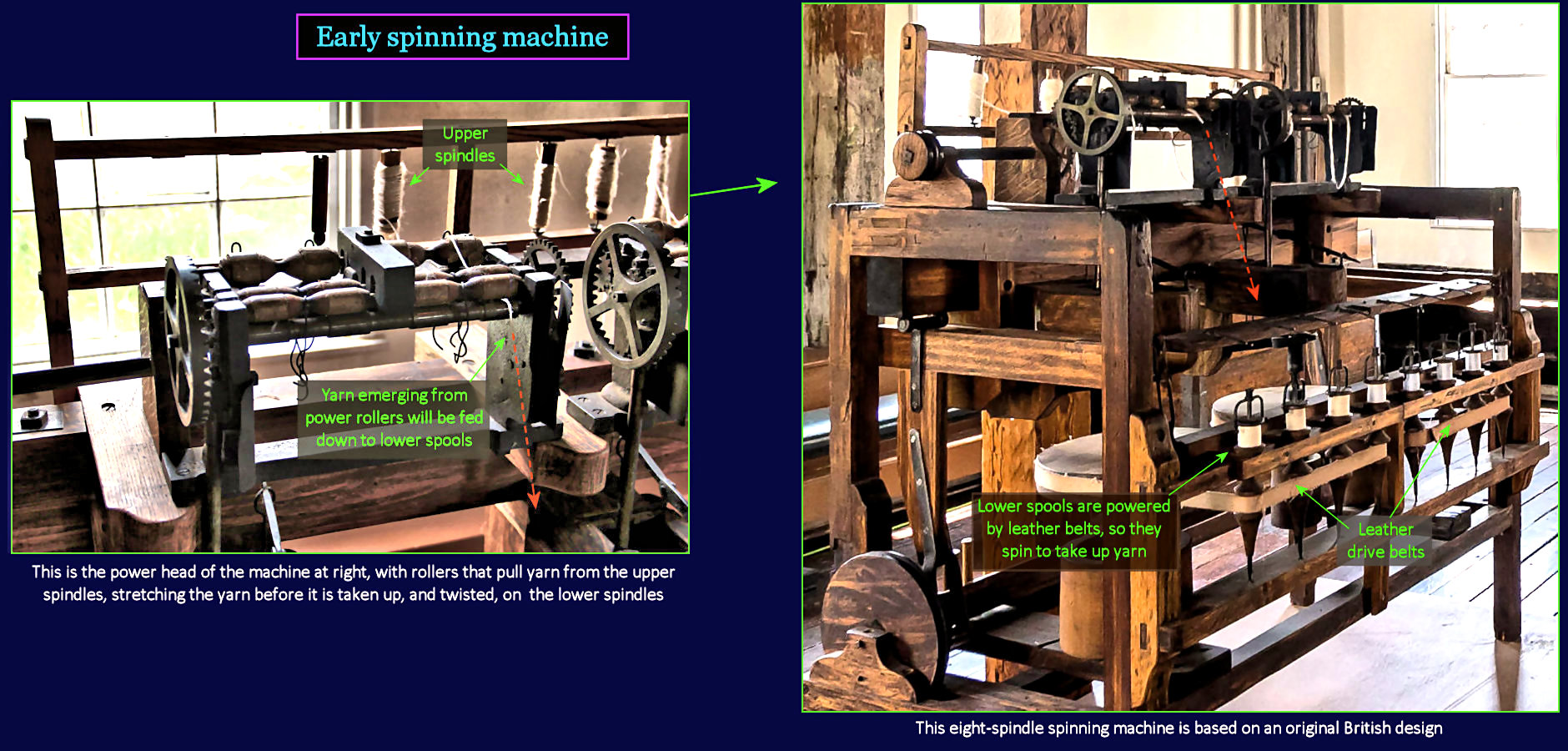
Spinning Frame This early design has spindles of loosely pre-spun yarn on the top rack. Yarn from each of these spindles is pulled through a set of closely-spaced rollers, running at slightly different speeds, to stretch it slightly before sending it to a spool on the lower rack. The lower spools use metal flyers to apply twist, in the same manner as the wooden flyers on manual spinning wheels. | |||||||||
| |||||||||
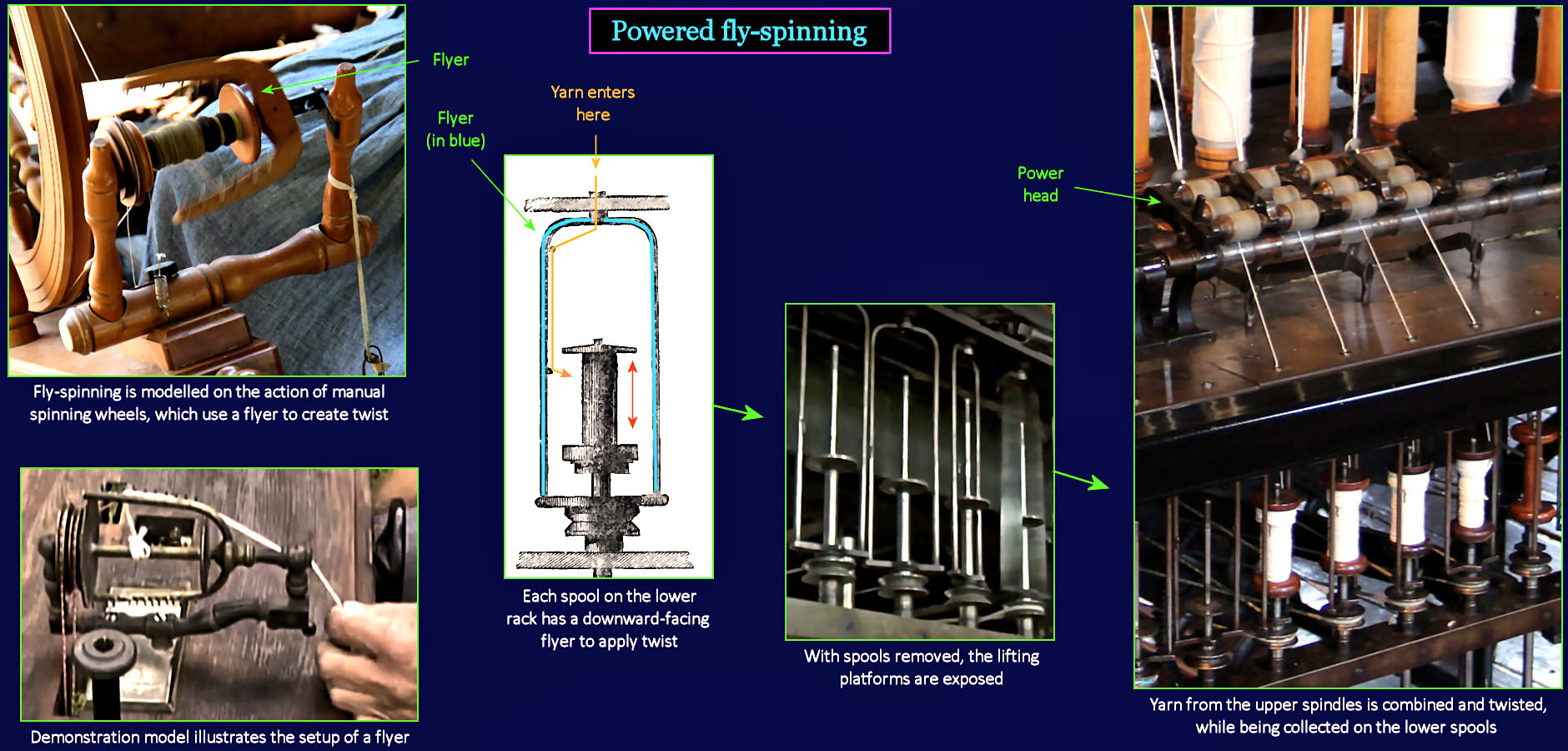
The Flyer Each set of power rollers on this later spinning frame combines the yarn from two spindles on the upper rack, before stretching. This doubles the fiber content while reducing the size. The take-up spools on the lower rack have metal flyers (oriented vertically). Yarn enters a hole in the top of each flyer, and is guided onto the spool inside (center left). Metal lifting platforms are used to slowly raise and lower the spools, to distribute yarn evenly (center right). The view at right shows the complete operation. | |||||||||
| |||||||||
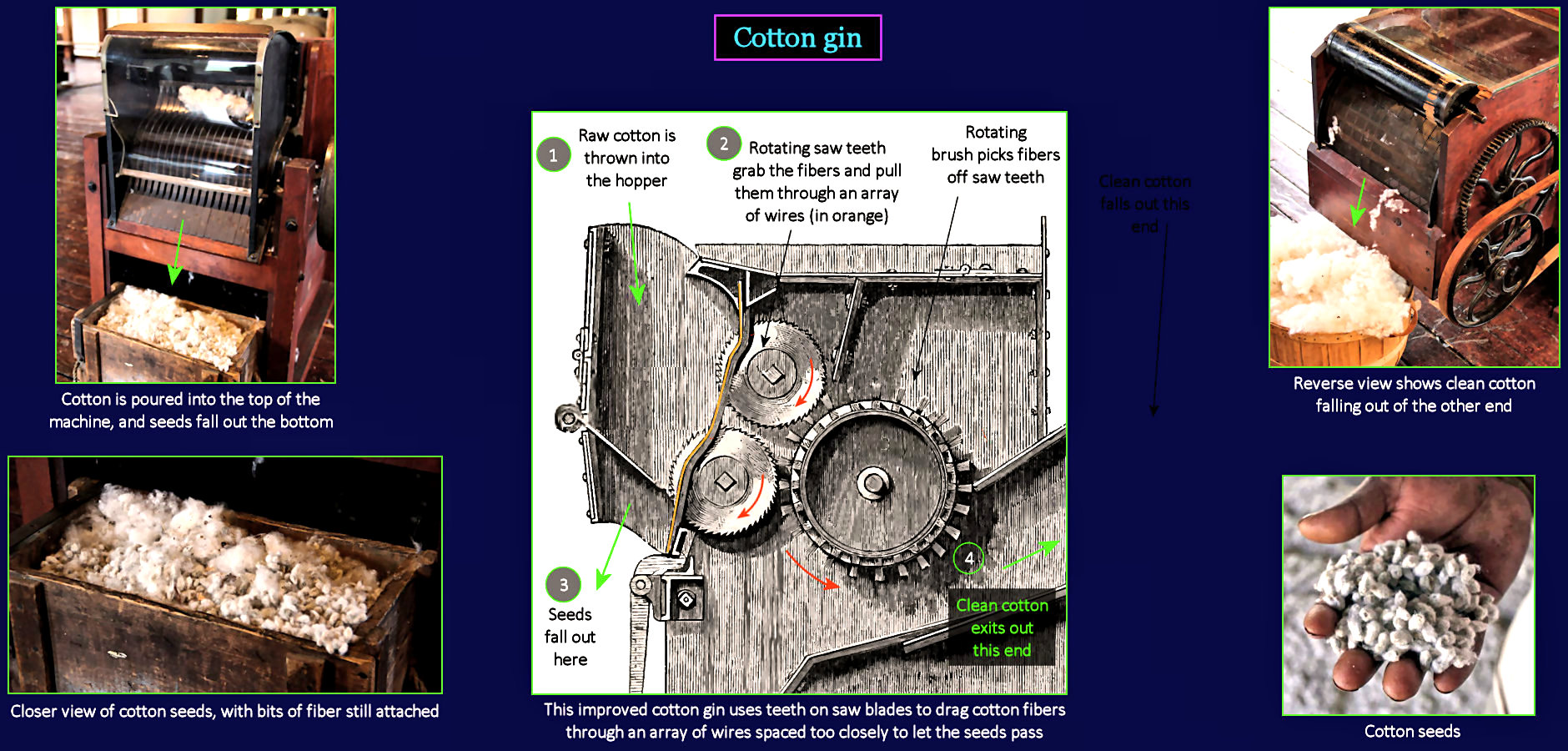
Cotton Liberated By a lucky chance, the cotton gin is developed during this same period, allowing cotton to be spun just like wool, for the first time. When harvested, cotton fibers are tightly attached to large seeds, which must be removed. This is almost impossible to do manually, but the cotton gin uses the teeth on a set of spinning saw blades to grab the fibers, and pull them through an array of stiff, closely-spaced wires. The seeds can't pass, and are torn free, to fall out one end. Cleaned cotton falls out the other. | |||||||||
| |||||||||
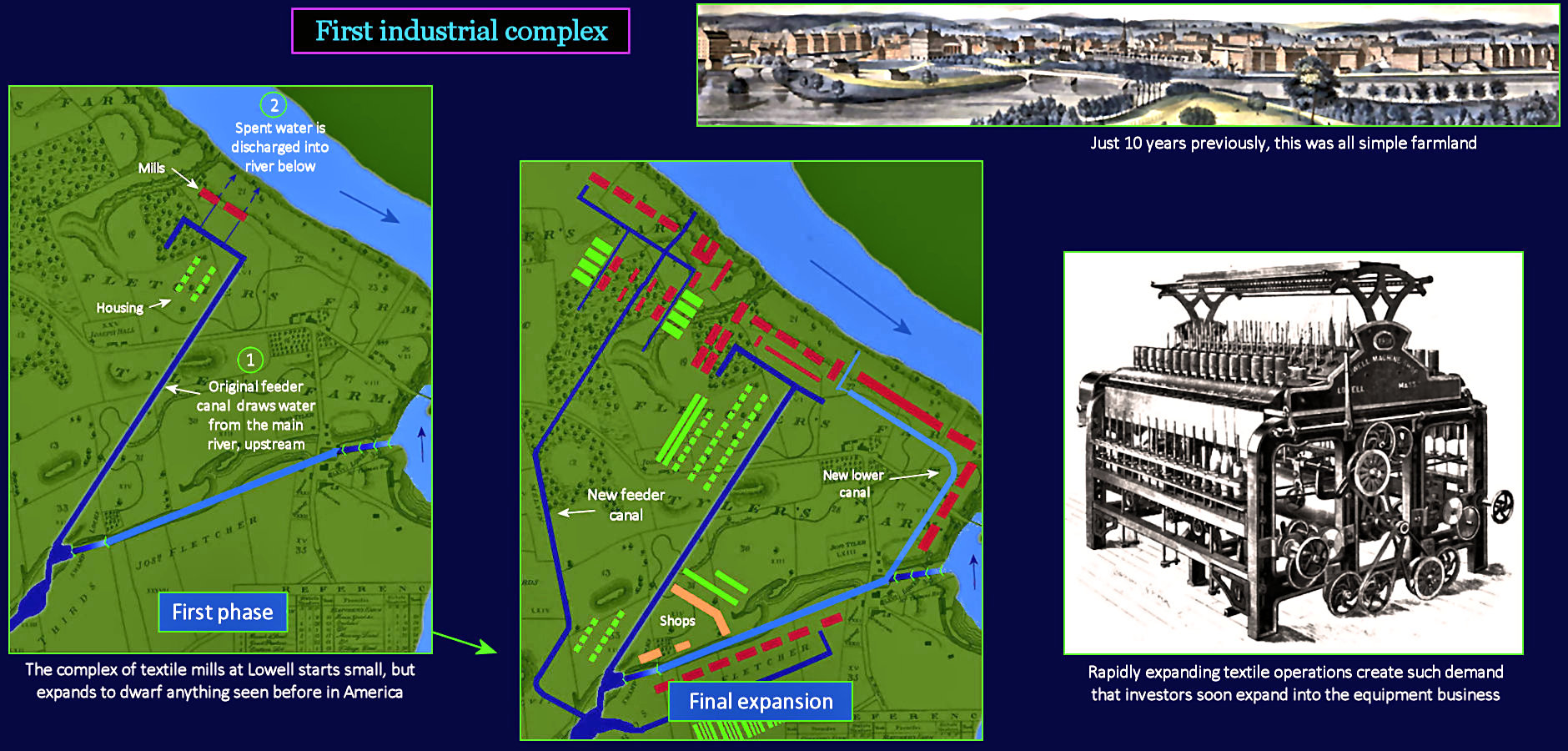
Smashing Success at Lowell The sudden availability of cotton fiber helps launch the rapid development of equipment to produce textiles, which includes any woven fabric, but also lace and carpeting. The first major textile complex, combining the spinning of yarn with the weaving of finished fabric under one roof, is located north of Boston, next to one of New England's largest rivers (left). It's initially powered by waterwheels that eventually harness the entire flow of the river, creating America's first major business success story. | |||||||||