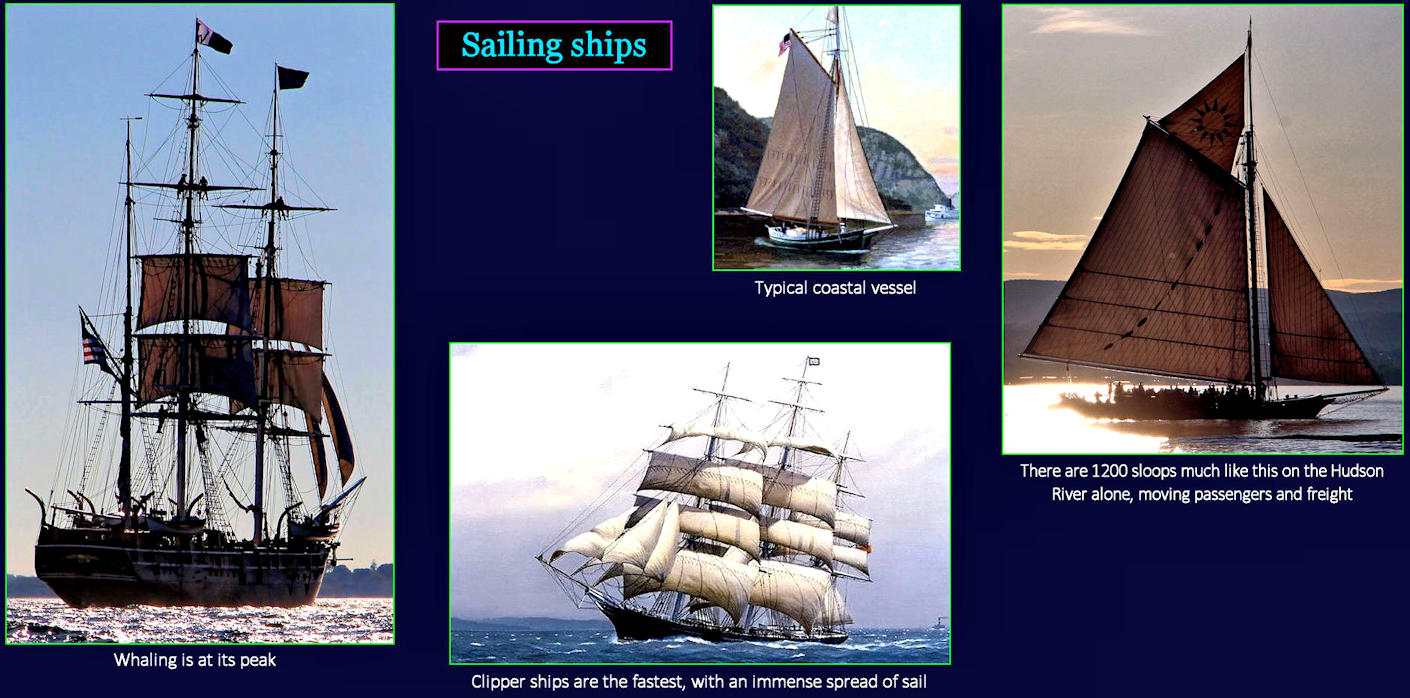
A Passing EraEven as steamships become larger and more powerful, sailing ships remain dominant for years. Single and double-masted coastal vessels are still the cheapest way to move bulky cargo, and are widely used. Larger vessels are the standard for oceanic transport, and are also used to hunt down whales all over the globe. There are over 300 whaleships operating under the American flag, many off the coast of Alaska. Meanwhile, prospectors heading to California for the Gold Rush sometimes book passage on one of the great new clipper ships, which favor speed over cargo capacity. Sadly, their days are numbered. |
| ||||||||||||||||
| |||||||||
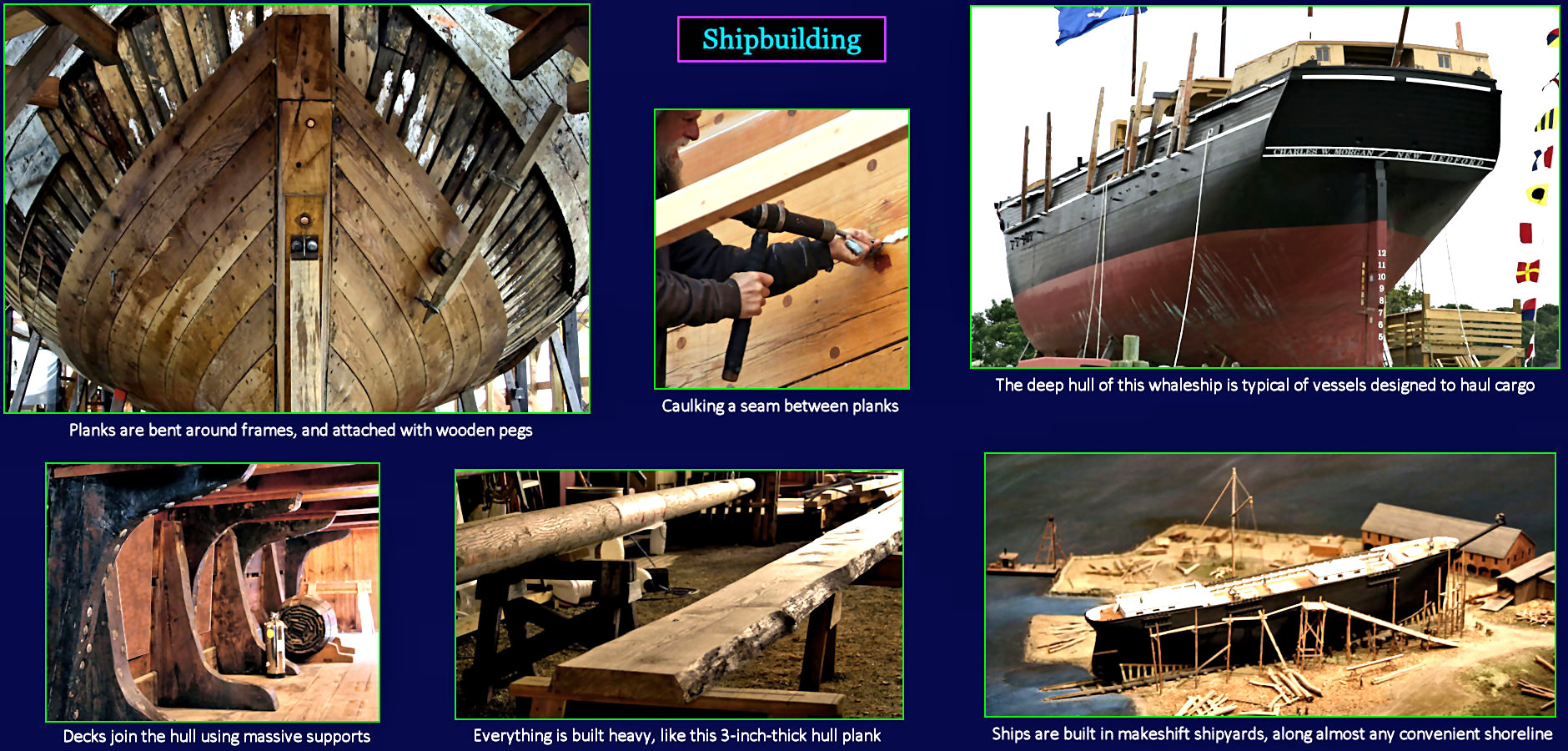
State-of-the-art Large vessels are far and away the most complicated things being constructed in America. A steam locomotive is almost simple, by comparison. Vessels are masterful examples of wood-working art, composed almost entirely of curved shapes. The larger frames are sawn and hewn from whole tree trunks, and all the joinery needs to be made watertight. Rigging is equally complex. | |||||||||
| |||||||||
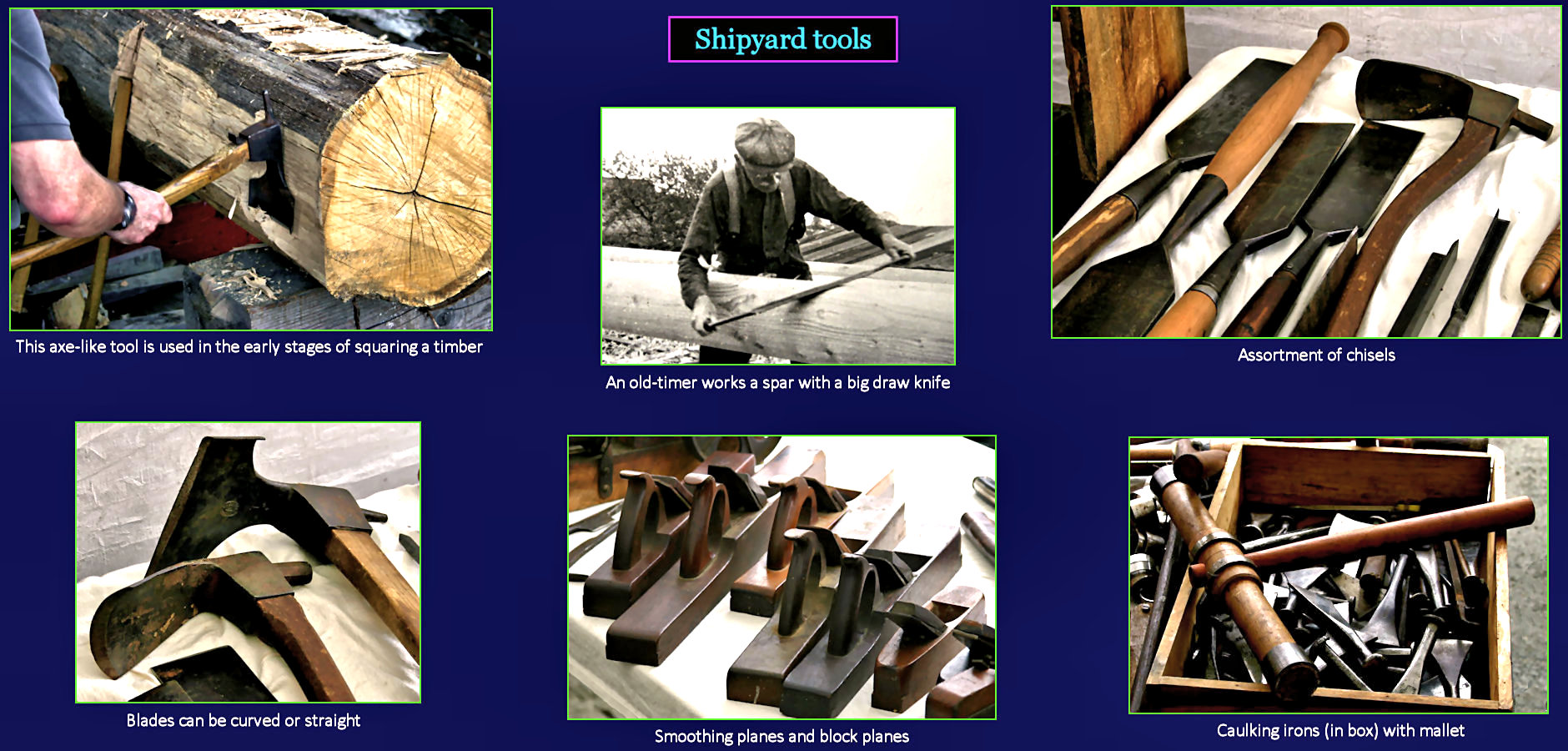
Working Big Wood The tools used to construct ship's hulls are similar to normal carpenter's tools, but scaled up to work on massive timbers. Everything is powered by muscle, except the saws used to cut the big wood into usable pieces. | |||||||||
| |||||||||
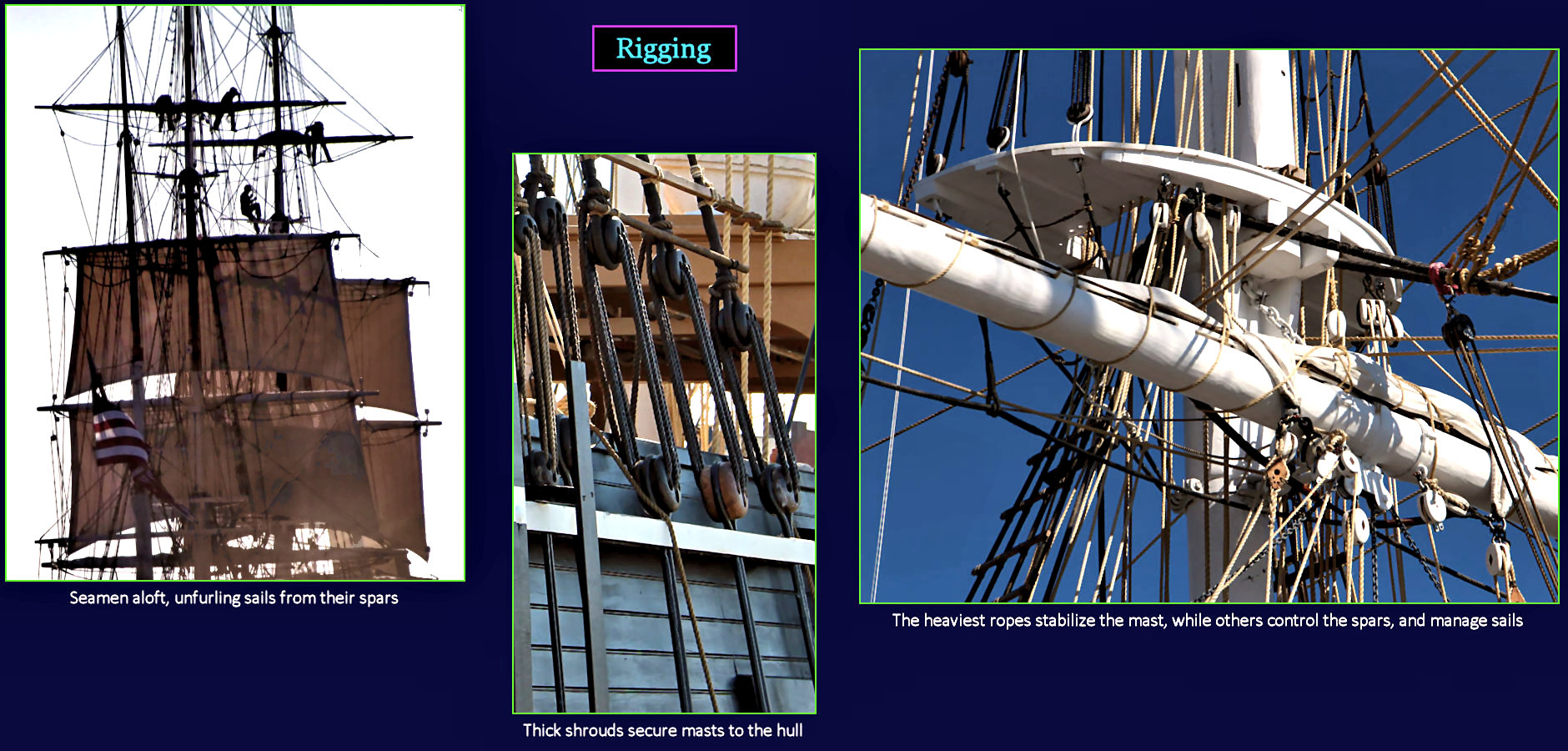
Organized Chaos The rigging is just as complex as the carpentry, beginning with heavy shrouds that support the base of the masts. The two forward masts are constructed in three separate vertical sections, with overlapping joints that each contain a horizontal platform, where more shrouds are secured for the section above. Every sail is attached to a yardarm, which has to be raised, lowered, and angled. Sails themselves have additional control lines, and sailors need yet more lines to stand on when furling or unfurling. | |||||||||
| |||||||||
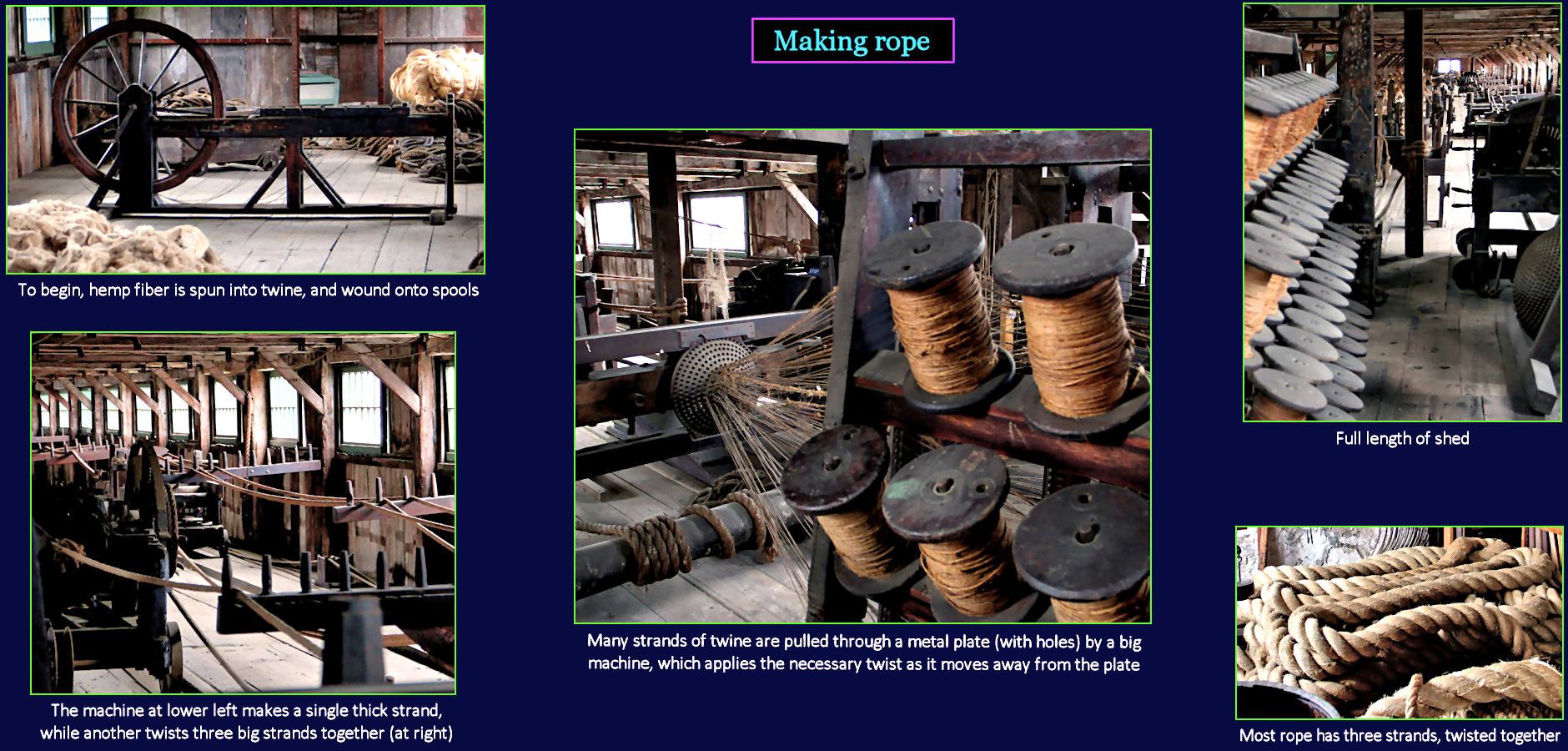
Spinning and Twisting To make rope, you start with coarse fibers made from hemp, which must be spun into twine using a spinning wheel similar to those used to spin wool into yarn. Twine from a great rack containing many spools is then twisted together to make something which looks like a rope. Rope itself is usually composed of three such strands, again twisted tightly together. All this requires a very long shed, with heavy cast-iron machines which slowly pull the strands down the length of the shed, while applying twist. | |||||||||
| |||||||||
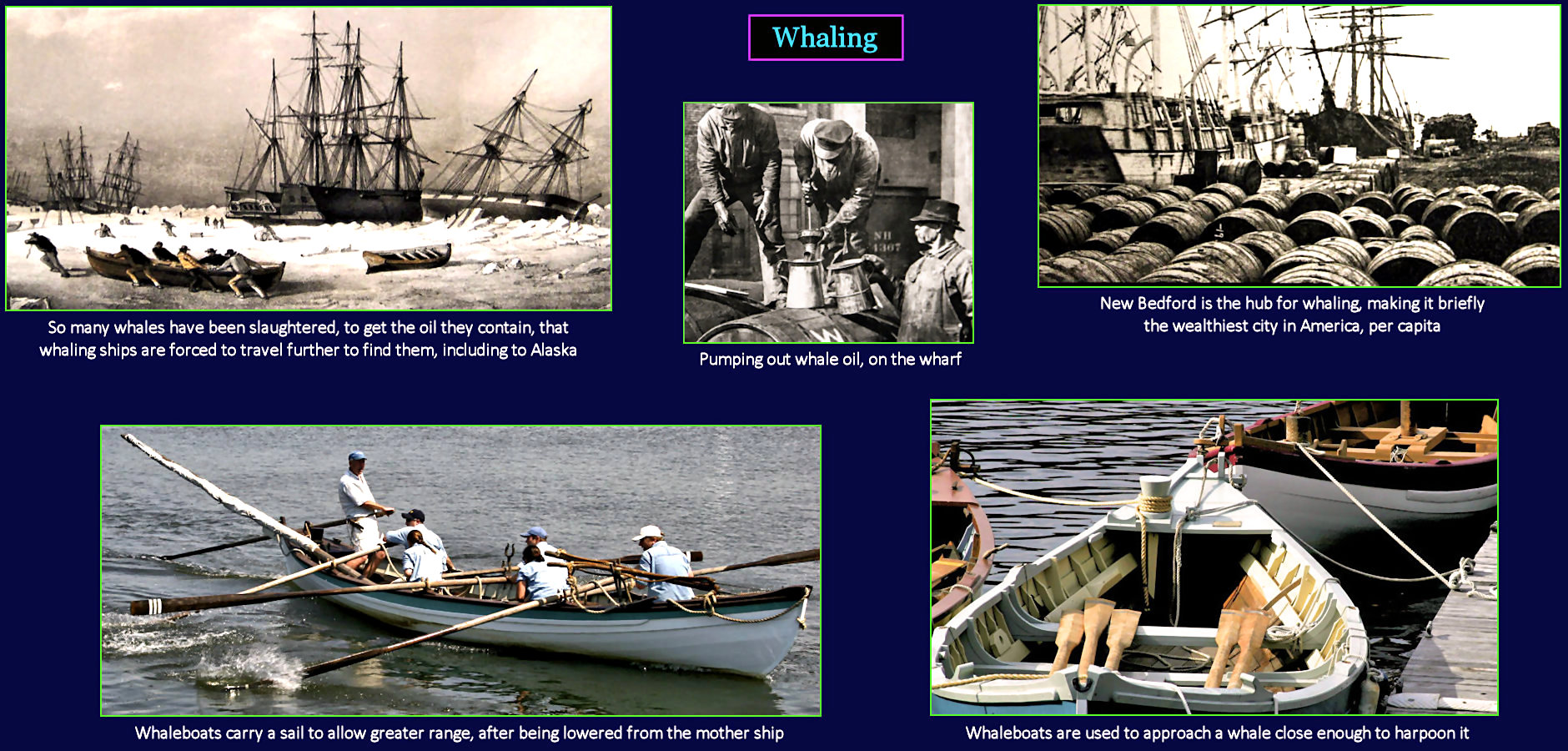
Hunting Oil Whaling is a huge industry, creating vast wealth for the owners of the whaleships. No one eats the whales, which are killed only to extract oil, by boiling chunks of whale blubber carved off the carcass. There's a secondary market for the material extracted from the mouths of certain whale species, which is used to give stiffness to women's corsets. But the real objective is oil, which is needed to fuel oil lamps and lubricate machinery. Petroleum derivatives are not yet available. | |||||||||