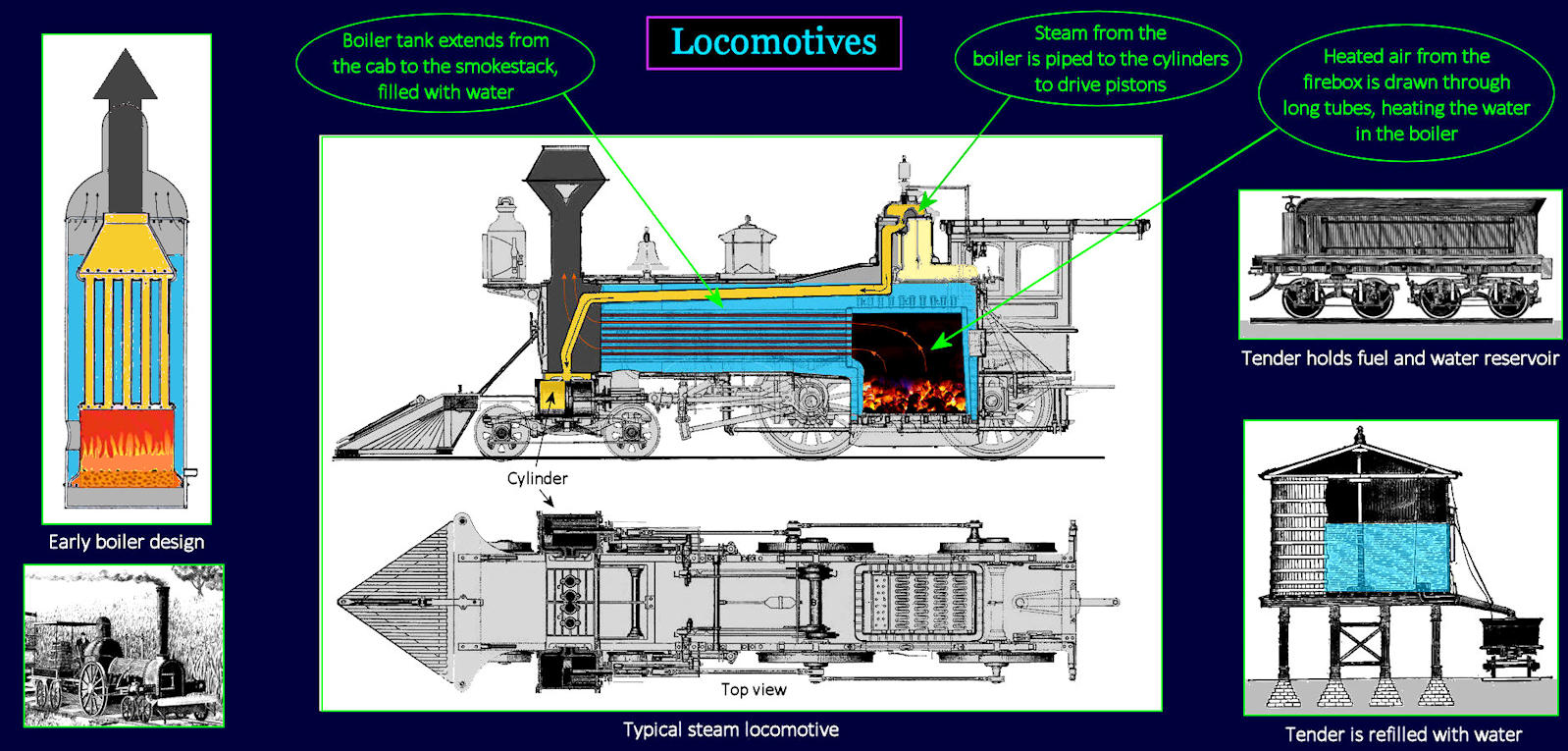
Moving the ProductThe earliest trains in America are used mainly to move just two things. Coal and people. Coal comes from remote Pennsylvania coalfields, while the big eastern cities have suddenly become accessible to business travelers. As railroads expand, they focus increasingly on moving freight. Manufacturers are shipping to customers in distant locations, while the volume of iron ore and coal being shipped to blast furnaces is beginning to explode. |
| ||||||||||||||||
| |||||||||
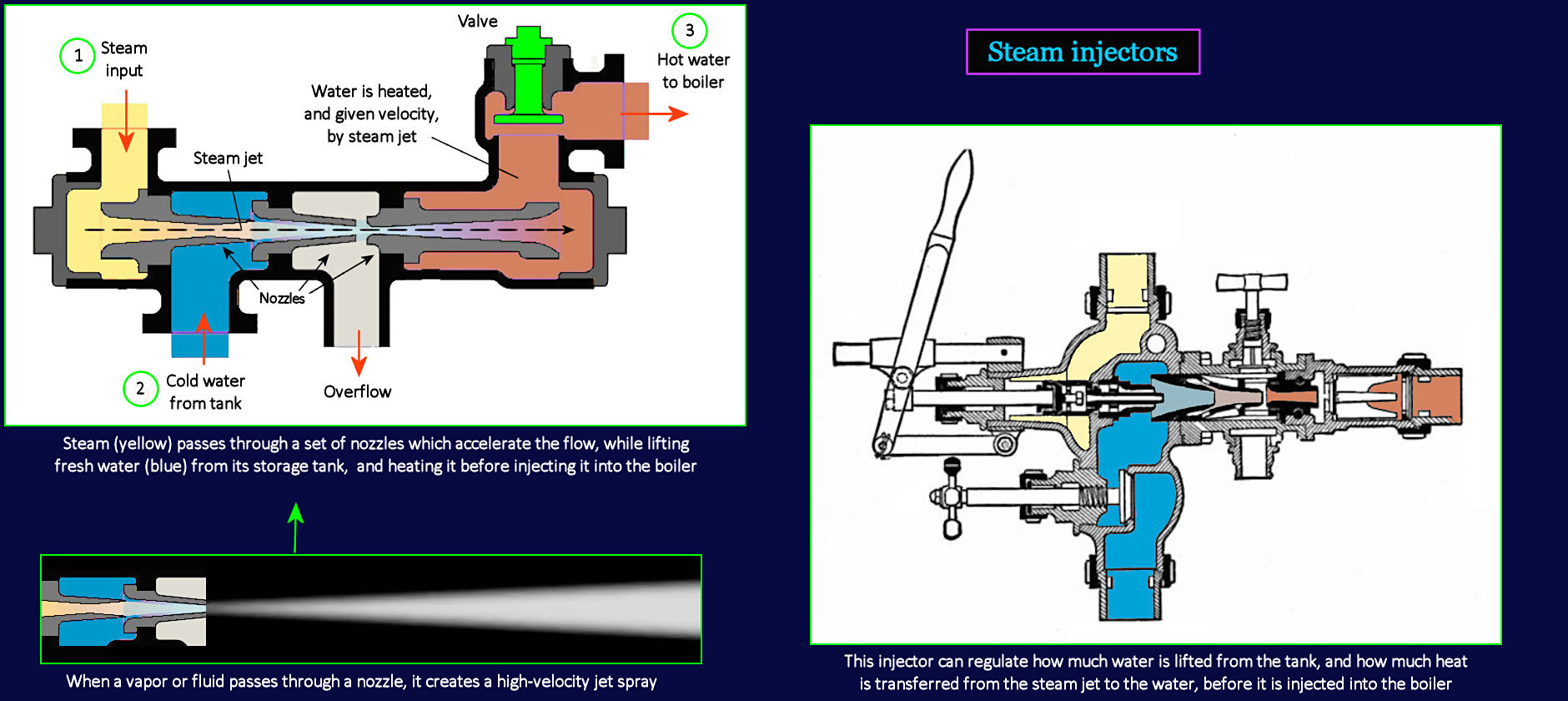
Better Performance Water in a locomotive boiler continuously boils away to create the steam which powers the train, and needs to be replaced from a tank in the tender, behind the locomotive. The new steam injector takes steam from the boiler, and forces it through a set of nozzles, creating a jet across the top of the tube that supplies replacement water. This sucks water up the tube, so no separate pump is needed, and simultaneously raises the temperature so that the water already in the boiler won't be chilled. | |||||||||
| |||||||||
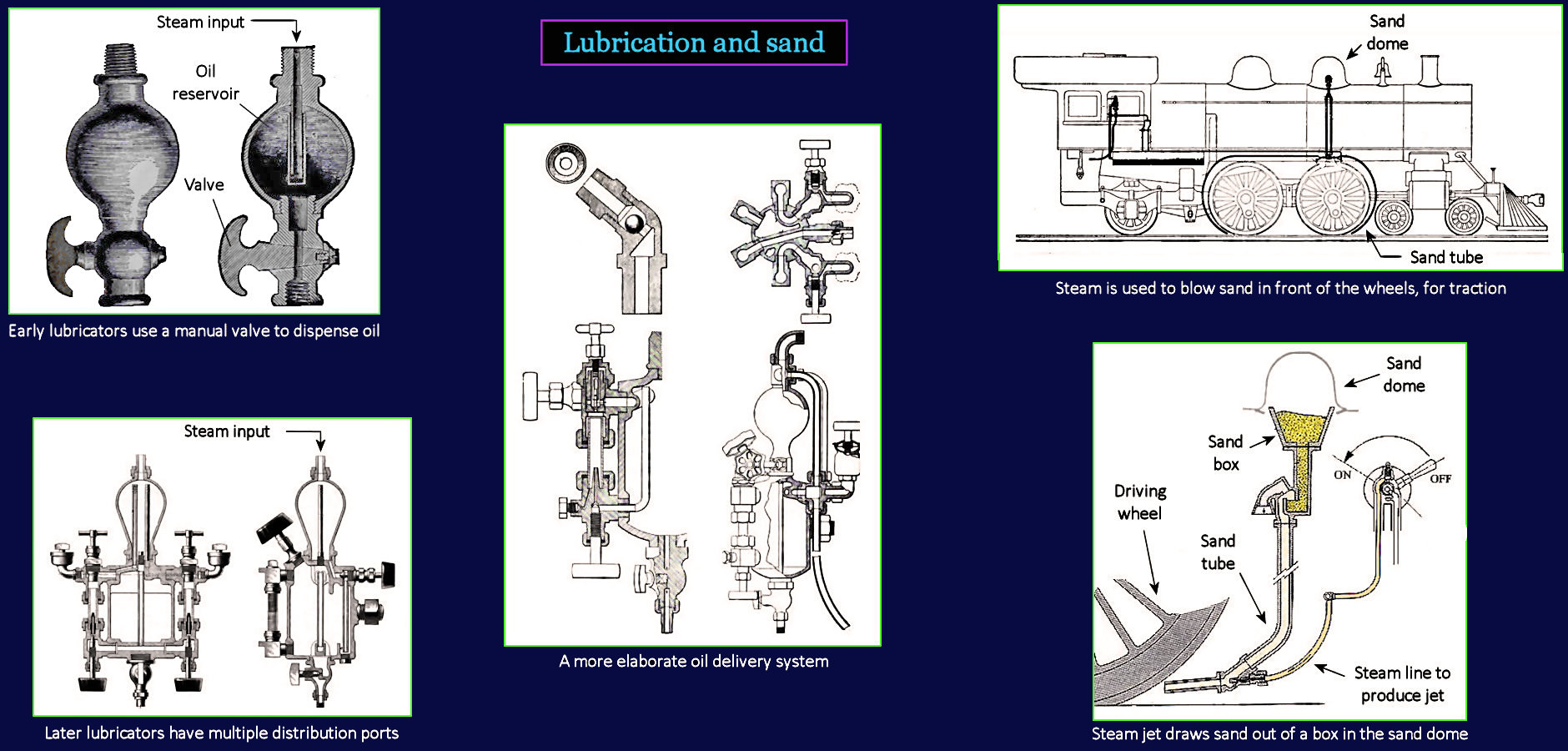
Auxiliary Systems When metal parts rub against each other, they quickly begin to wear unless oiled frequently. Various systems are developed using steam pressure to force oil from a reservoir to the many points where it's needed. These systems grow increasingly complicated, to reduce the need for attention by the engineer. A separate system blows sand in front of the driving wheels, when additional traction is needed to prevent wheels from slipping on rails. It uses a steam jet to draw sand from a reservoir on top. | |||||||||
| |||||||||
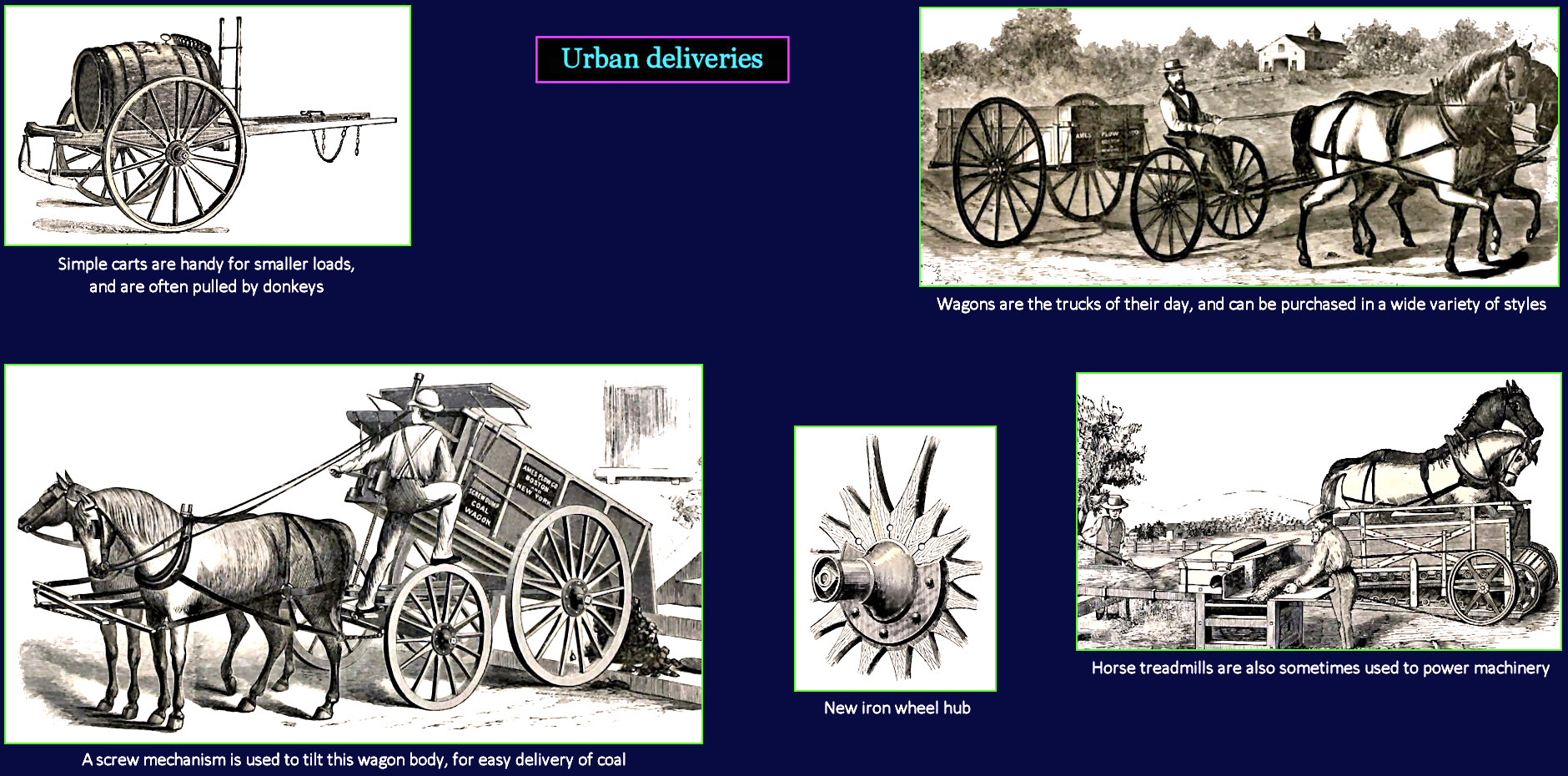
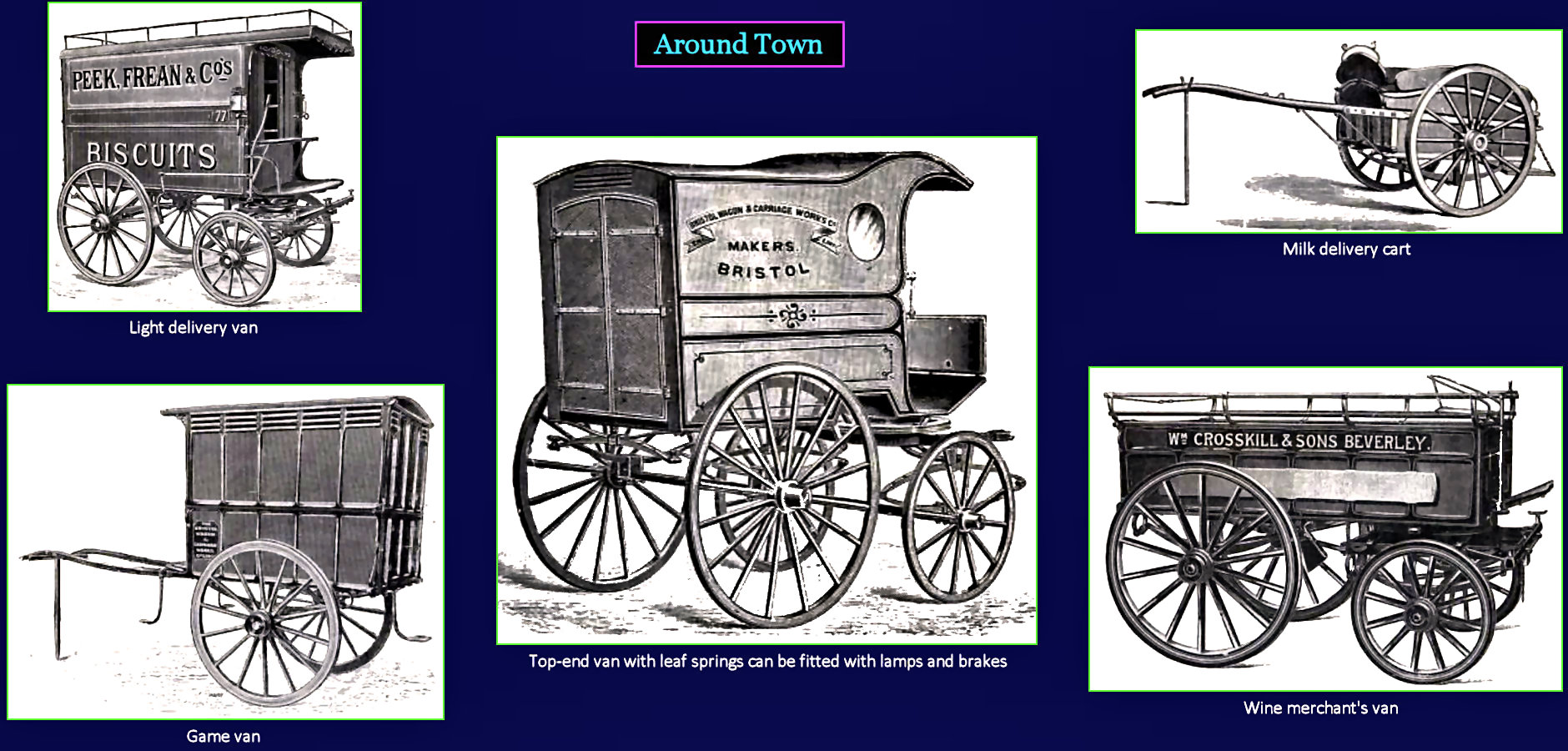
Wagons and Wheels Railroads are grabbing all the attention, but haven't yet produced the full impact they soon will. In the meantime, the urban growth they trigger is already beginning to transform downtown areas. There's an increasing need to deliver goods and services to the entire surrounding region, which results in the development of a surprising variety of delivery vans and carts, used by businessmen to deliver their products. By horse. | |||||||||
| |||||||||
Increasing Traffic As business activity in towns increases, so does the need to deliver products directly to the customer, who can't be expected to carry everything back home in a bag. Delivery vans of all types and styles begin to crowd the streets. | |||||||||
| |||||||||
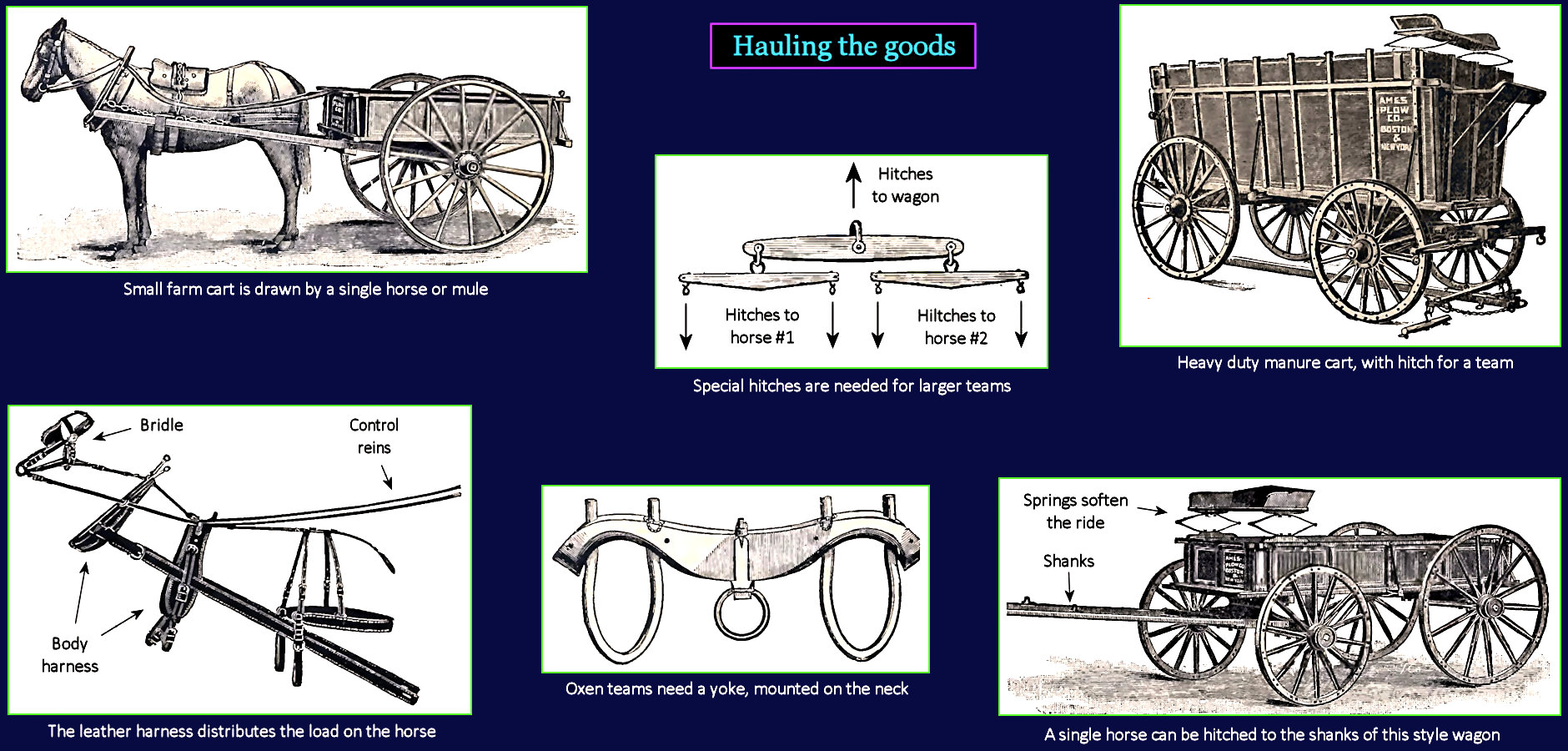
Hitching the Animals Wagons are most commonly pulled by horses, but mules, oxen and even donkeys are also used. All have to be hitched to the wagon in a way that won't put too much strain on the animal. Luckily, most animals are relatively docile, and willing to work. The large wagon at top right is used to pick up animal droppings from downtown streets, where they are starting to become a problem. | |||||||||