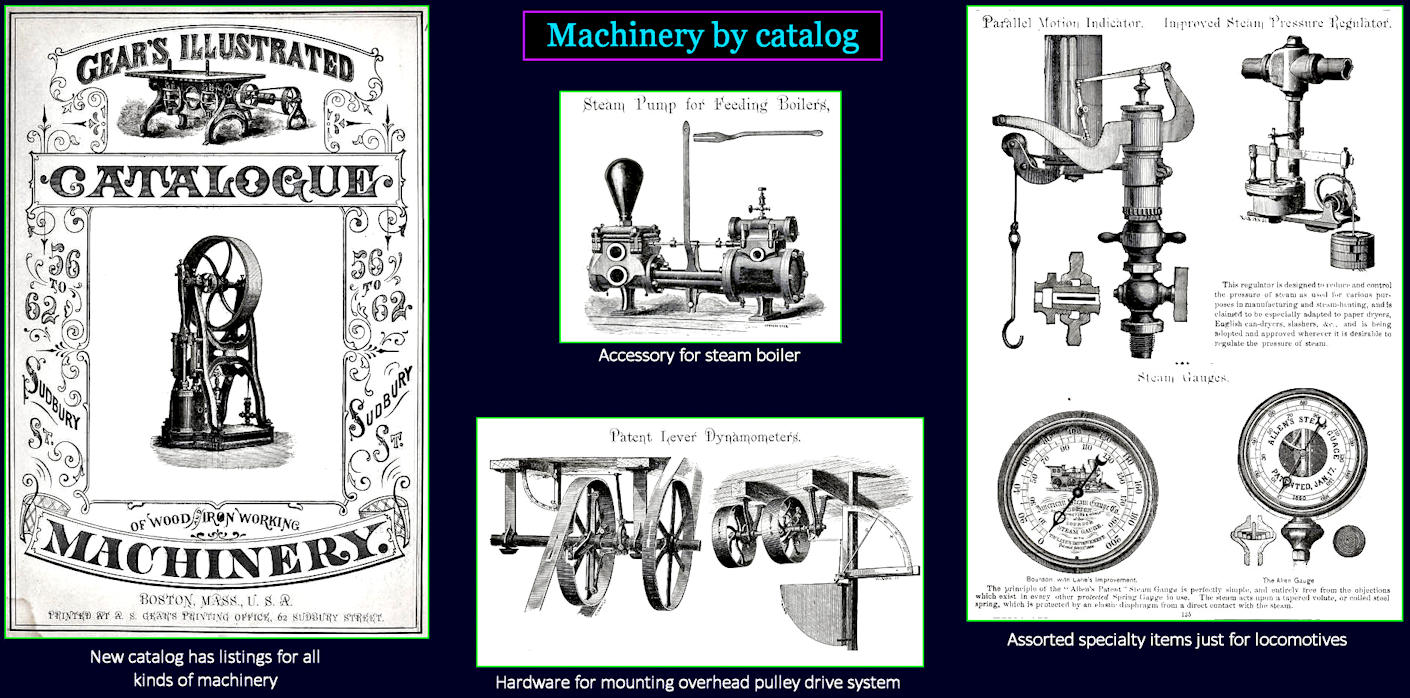
Product CatalogsAs railroads continue to connect cities, shipping products by rail becomes an attractive way to increase sales. Dealers in machinery begin offering comprehensive catalogs of equipment made by a variety of manufacturers. Catalogs list hundreds products, with technical specs and prices, and highly-detailed illustrations. They open the door to a new world of items available to anyone, anywhere. Amazon uses a similar approach, today. |
| ||||||||||||||||
| |||||||||
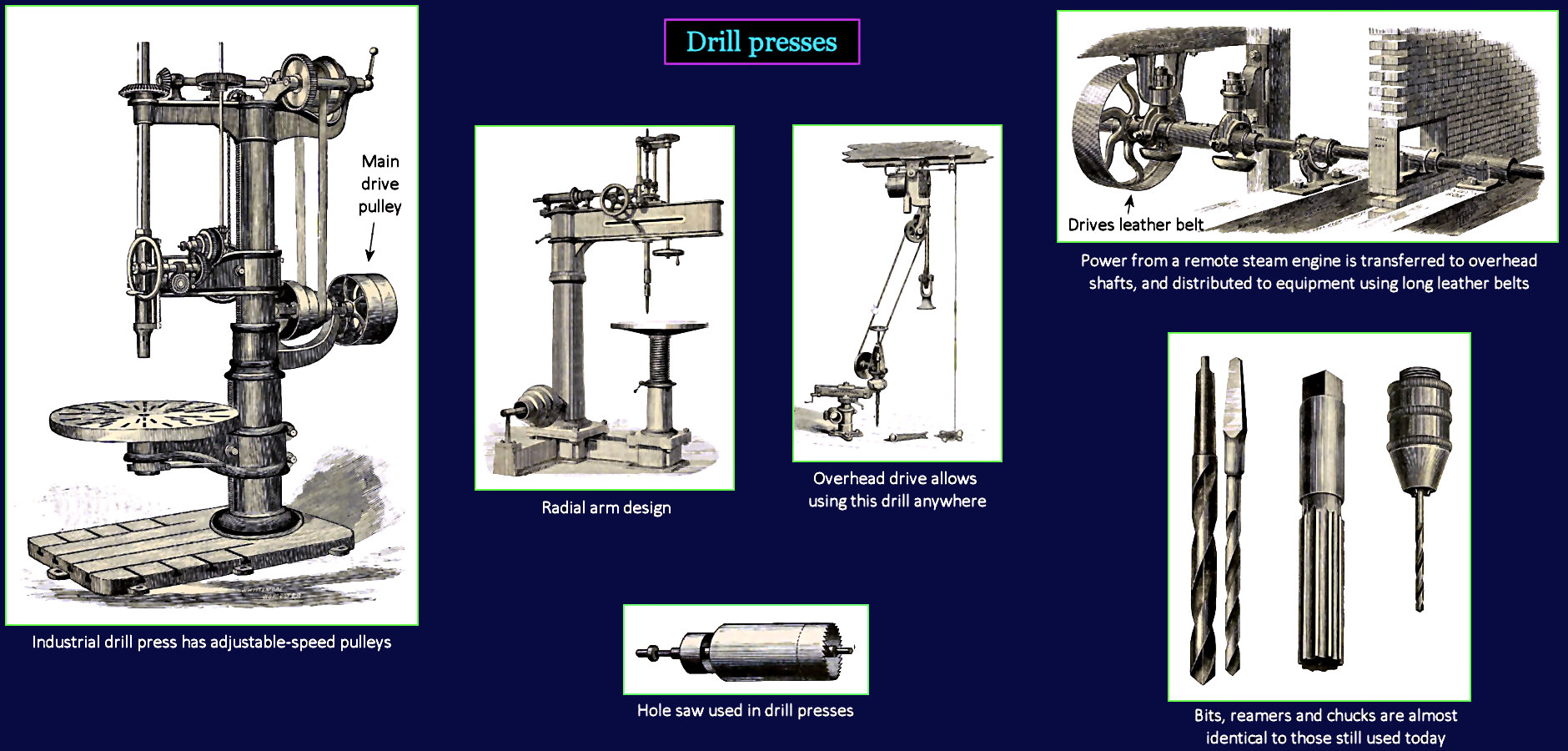
Beefy, Powered Equipment Drill presses are similar to those used for wood, but have more rigid cast-iron supports. All are designed to be driven by leather belts from overhead power shafts, which are typically mounted to ceilings on every floor. | |||||||||
| |||||||||
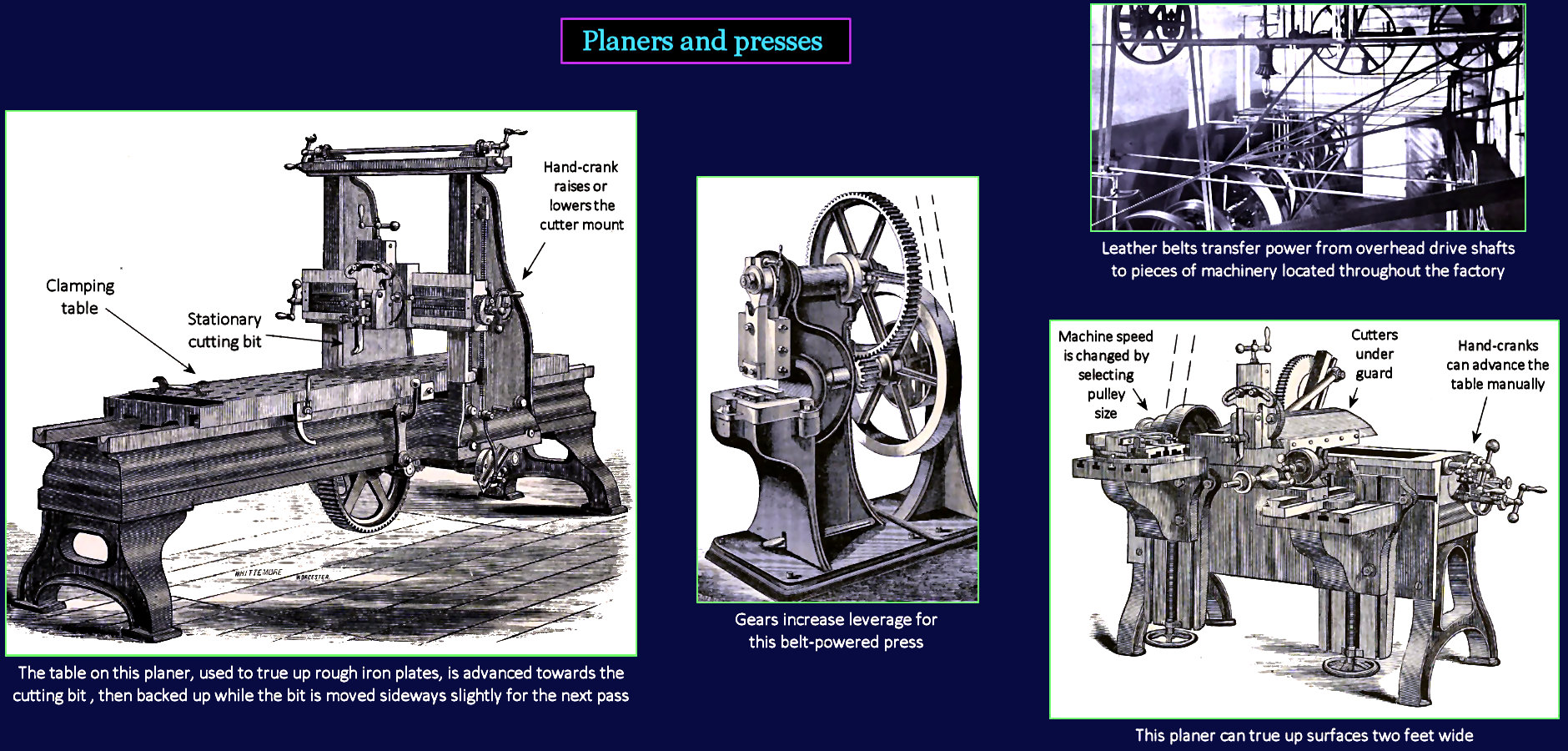
Heavier Equipment Operations that involve smoothing large metal surfaces, or pressing iron into desired shapes, require greater force and correspondingly more rigid frames. | |||||||||
| |||||||||
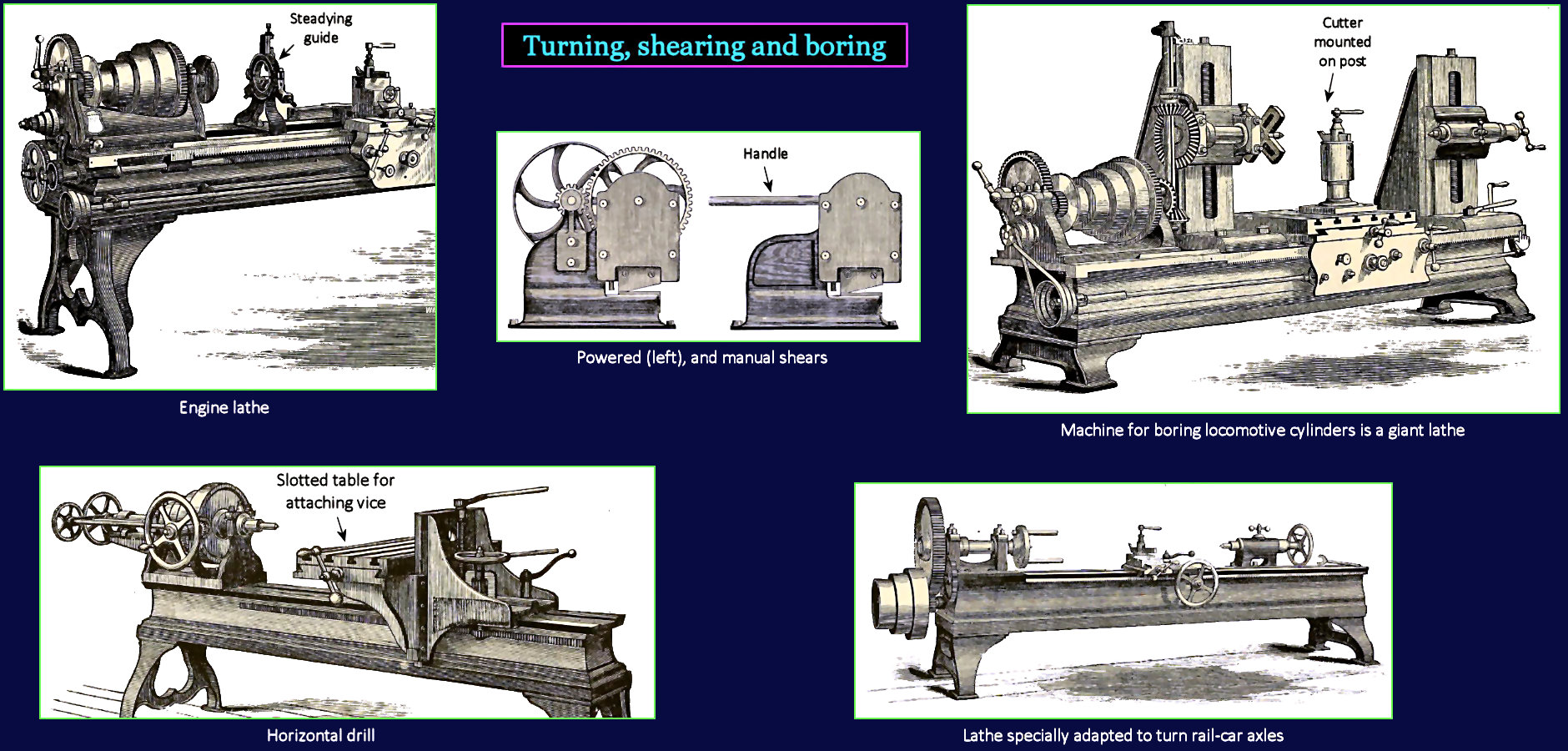
Bigger Lathes Metal-working lathes resemble earlier woodworking variants, but are scaled up for bigger jobs. They're called engine lathes because they're the first to be powered by steam engines. These machines are used primarily to true up the rough surfaces on large cast-iron parts, like rail-car axles and wheels, shaving off excess material where needed to achieve precise dimensions. | |||||||||
| |||||||||
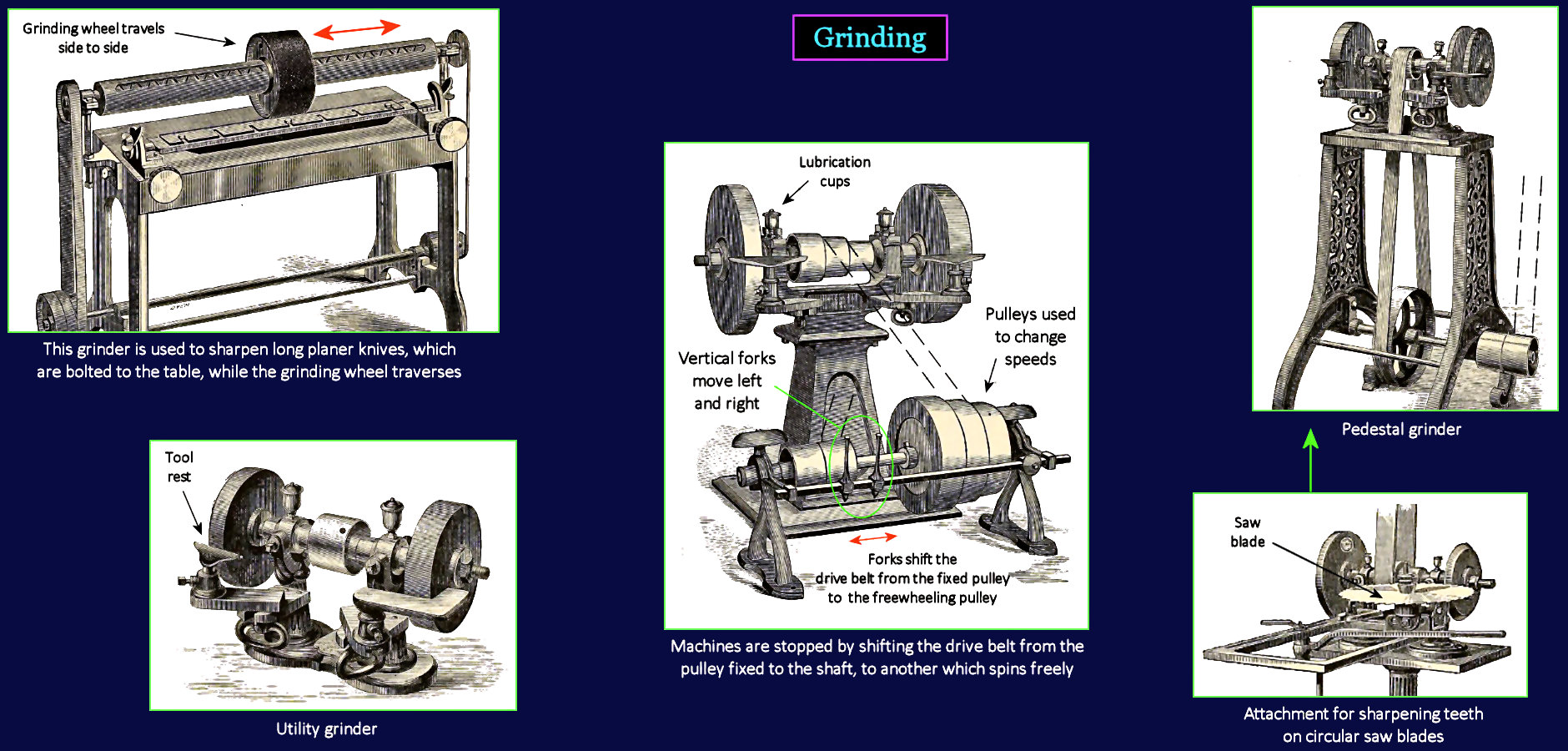
Emery Wheels Then as now, emery wheels are used for most grinding jobs. Special setups are devised to grind the individual teeth on saw blades, and the cutting edges on drills and cutters. | |||||||||
| |||||||||
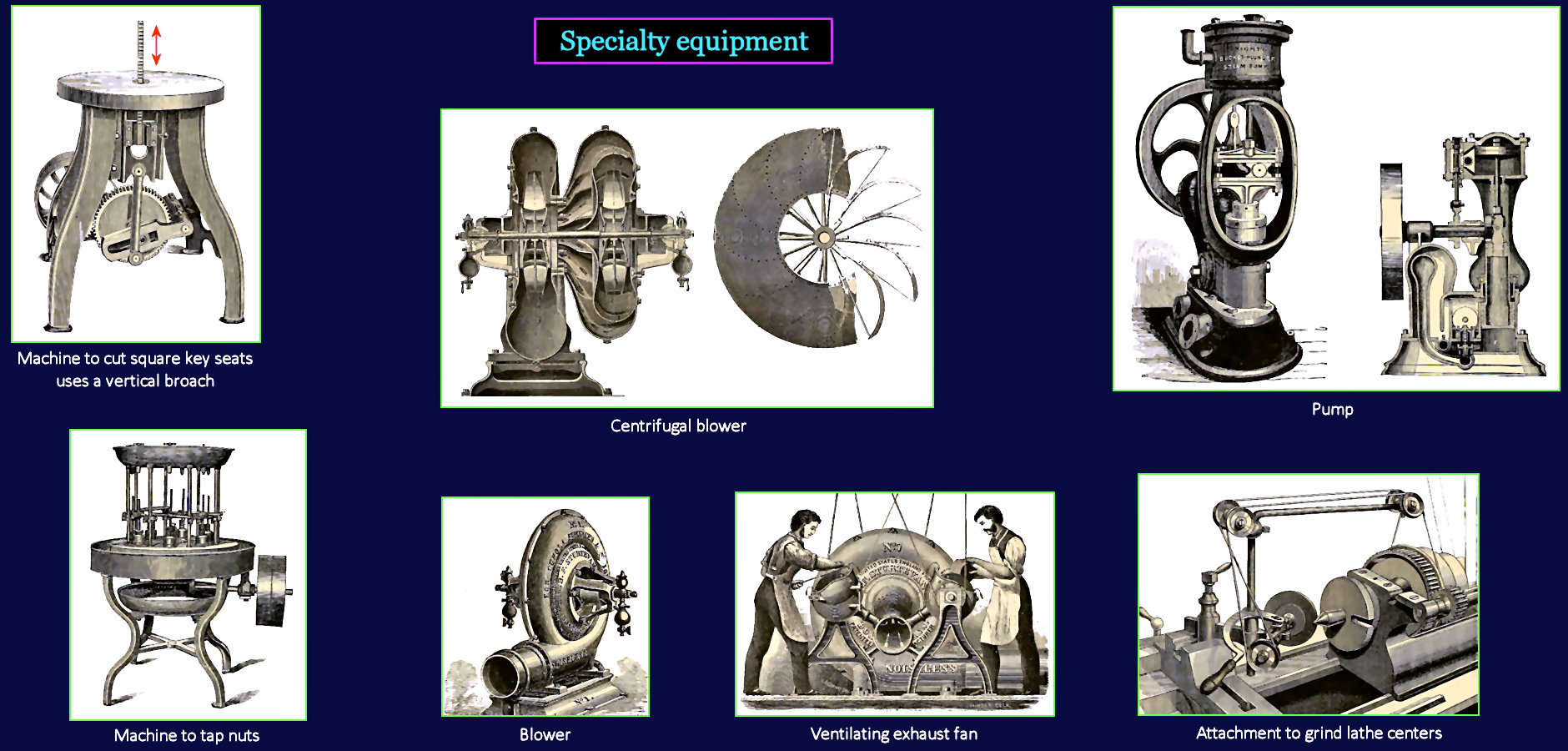
Smaller Jobs The machines shown above are designed for specific jobs. Blowers are important in many factories for ventilation, drying, or removing debris particles from the air. Some are quite large. | |||||||||