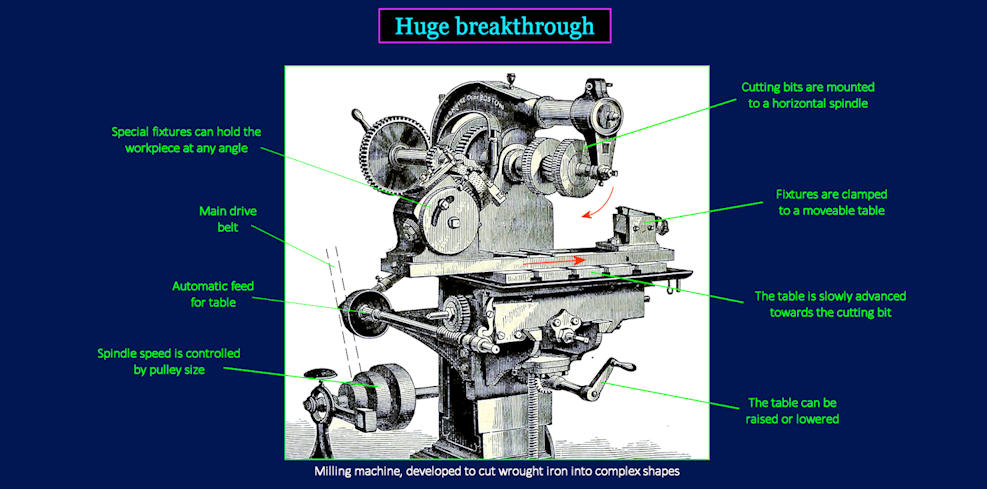
Milling machinesMost metal-working machinery performs its work by presenting the cutting bit to the workpiece, which is either clamped in place, or (in the case of a lathe) spun between centers. The drill press is a simple example. None of these match the versatility of the milling machine, which basically reverses the functions. The workpiece, rather than the cutter, is moved. The cutter is fixed to a spindle which rotates, but doesn't change position. The workpiece is held in a vice, or other special fixture, which is bolted securely to the table. The entire table, with fixtures attached, is moved as a single unit by hand-cranks, or sometimes using a geared driveshaft. The table is moved from left to right, allowing the cutter to remove material gradually as it comes into contact with the workpiece. The table can also be moved vertically, creating room to bolt on special fixtures for angular cutting. |
| ||||||||||||||||
| |||||||||
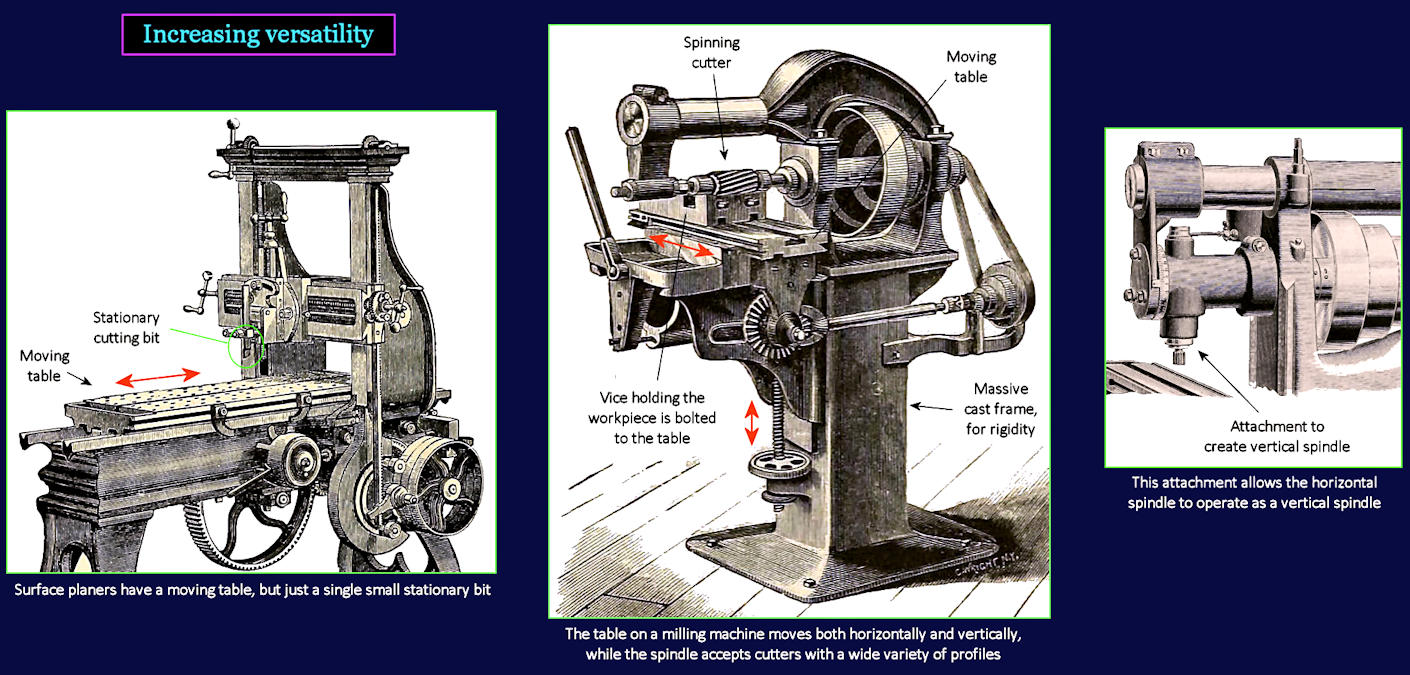
Expanded Function Derived by expanding on functions used in other machines, the milling machine introduces a multi-axis movable table, plus the ability to mount cutters with many different profiles. The one shown here is for milling a flat surface. Later milling machines will have vertically-oriented main spindles, and three-axis tables. This will allow general milling operations on surfaces that are horizontal or vertical, using an all-purpose end-mill. It will also enable vertical boring operations, with precise positioning. | |||||||||
| |||||||||
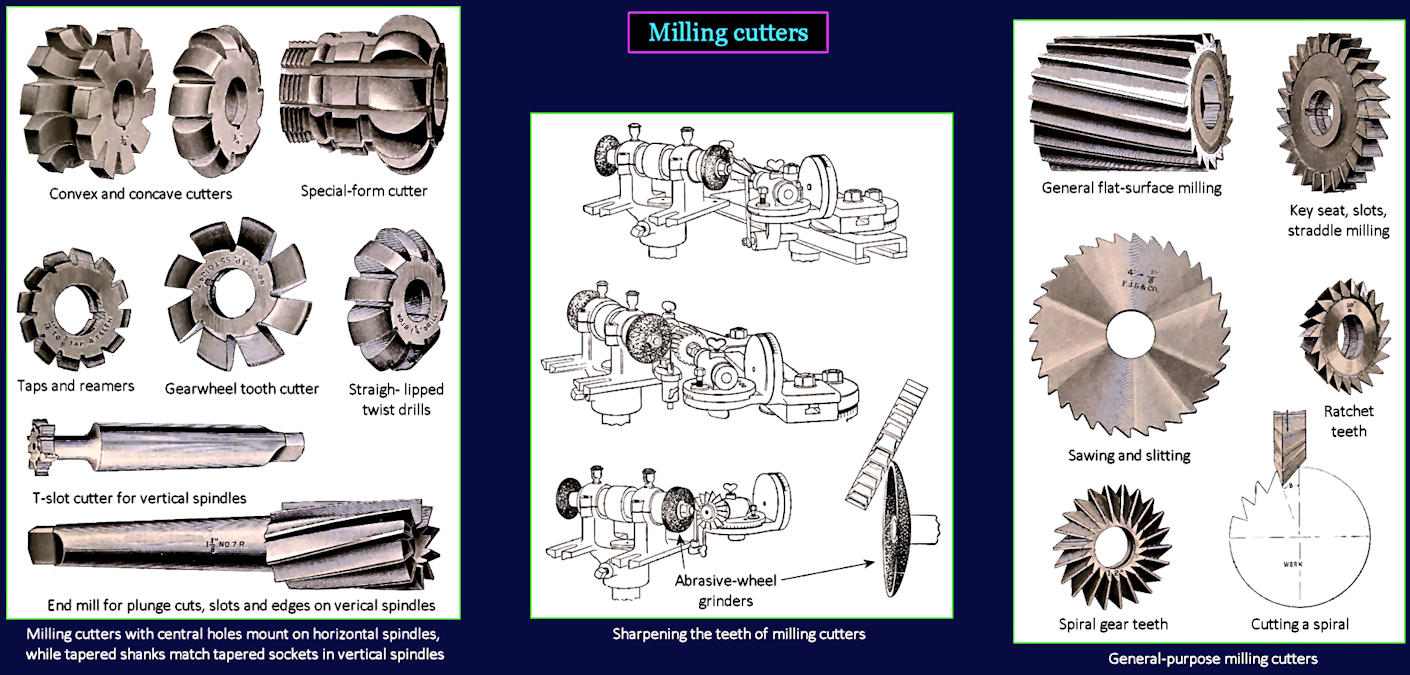
Shaped Profiles Cutters with central holes are mounted on the spindle of horizontal milling machines, and are available with many cutting profiles. Cutters for machines with vertical spindles are gripped by their tapered shanks. | |||||||||
| |||||||||
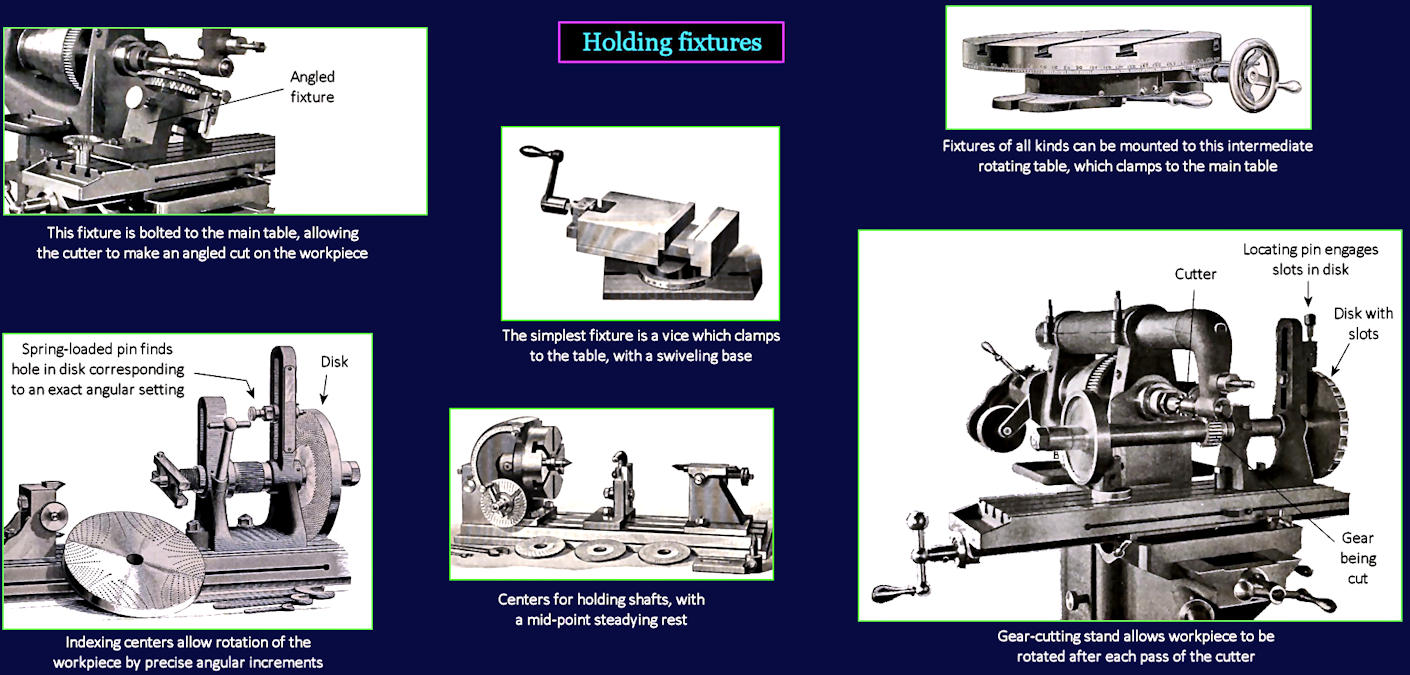
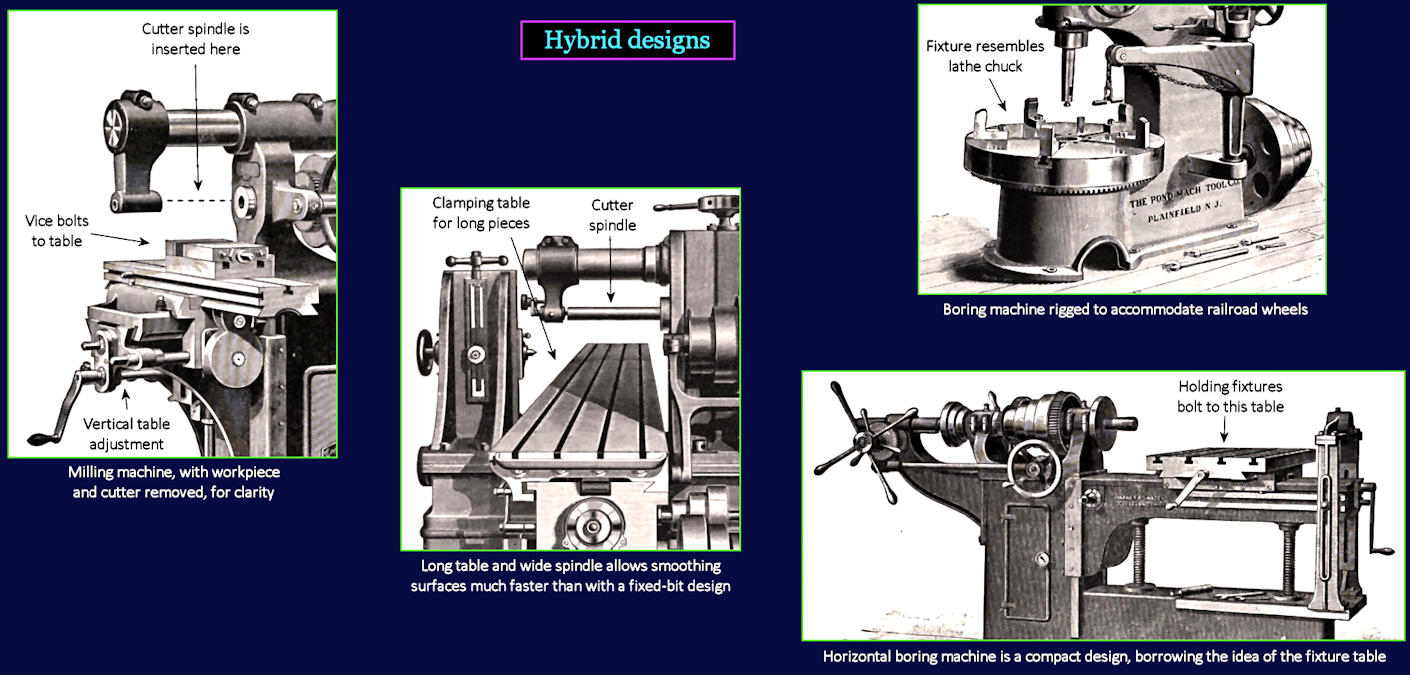
Vertical Adjustment Another key feature of the milling machine is the vertical table movement, which allows extra space between the cutter and the table, to accommodate all kinds of special holding fixtures. Some are used to orient the workpiece at compound angles. | |||||||||
| |||||||||
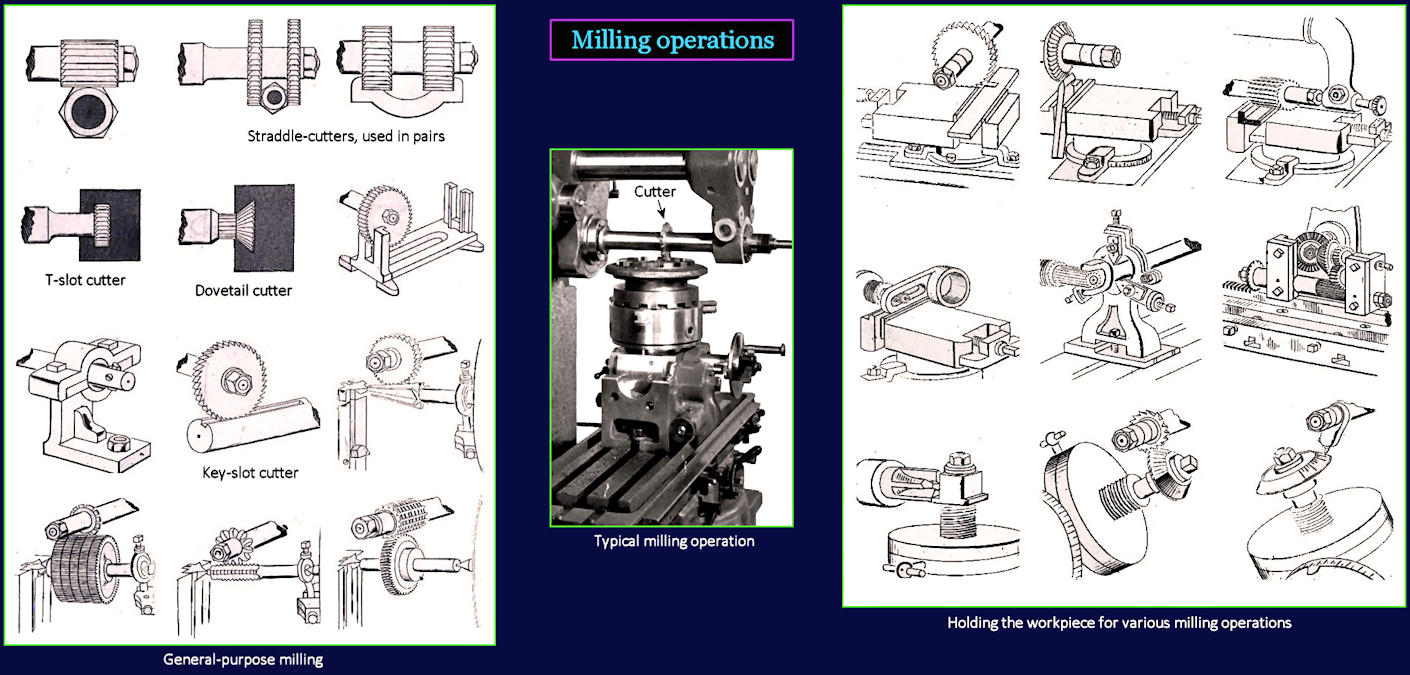
Flexible Operation These diagrams illustrate the variety of operations that can be performed on a milling machine. Most could not be performed on any other type of general-purpose machine. | |||||||||
| |||||||||
Spillover of Ideas The machinery shown above illustrates the ongoing evolution of equipment designs, as other kinds of machines are adapted to benefit from the expanded capability of milling-style cutting spindles, and bolt-on fixturing. | |||||||||