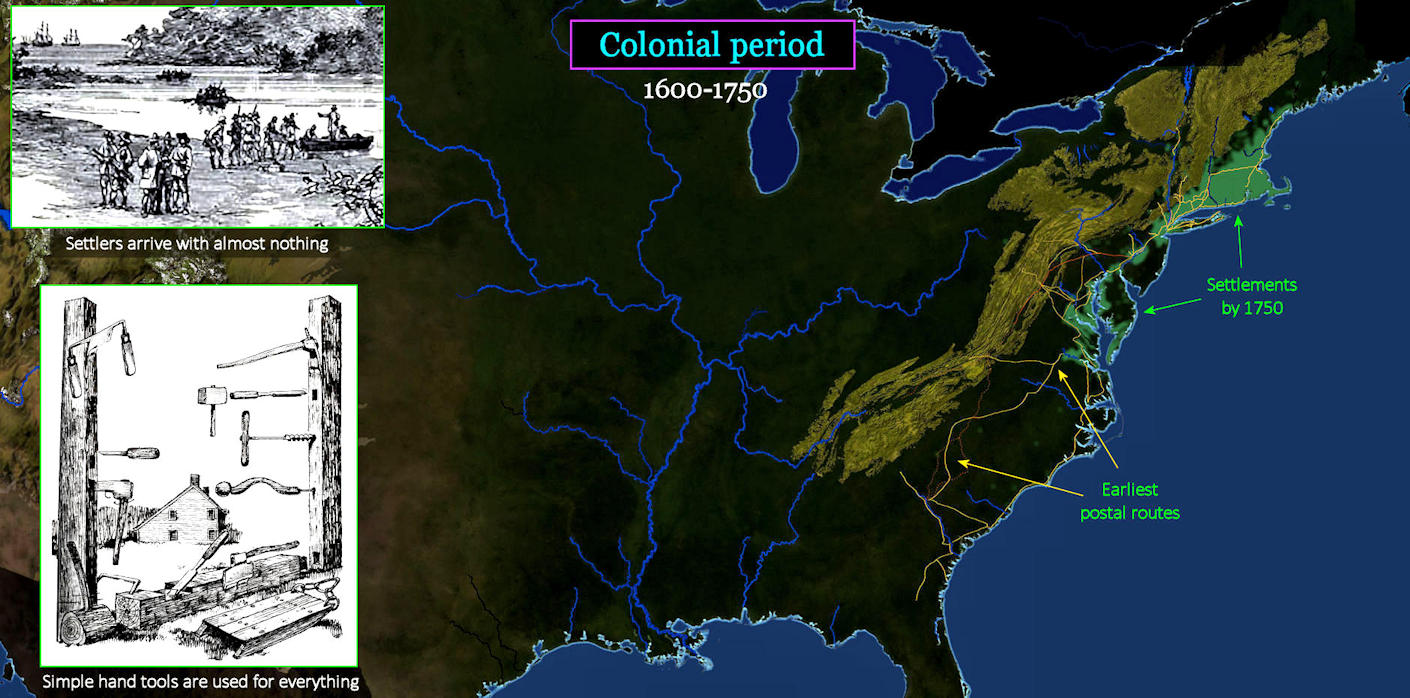
Pre-industrialColonial Period: Simple hand tools Independence: Expanded mail routes Rudimentary ironmaking 1800-1825: First steamboats Cotton gin 1825-1840: Canals Early locomotives Expanding steamship service 1840-1860: Textile mills Better locomotives 1860-1870: Steam-driven machinery |
| ||||||||||||||||
| |||||||||
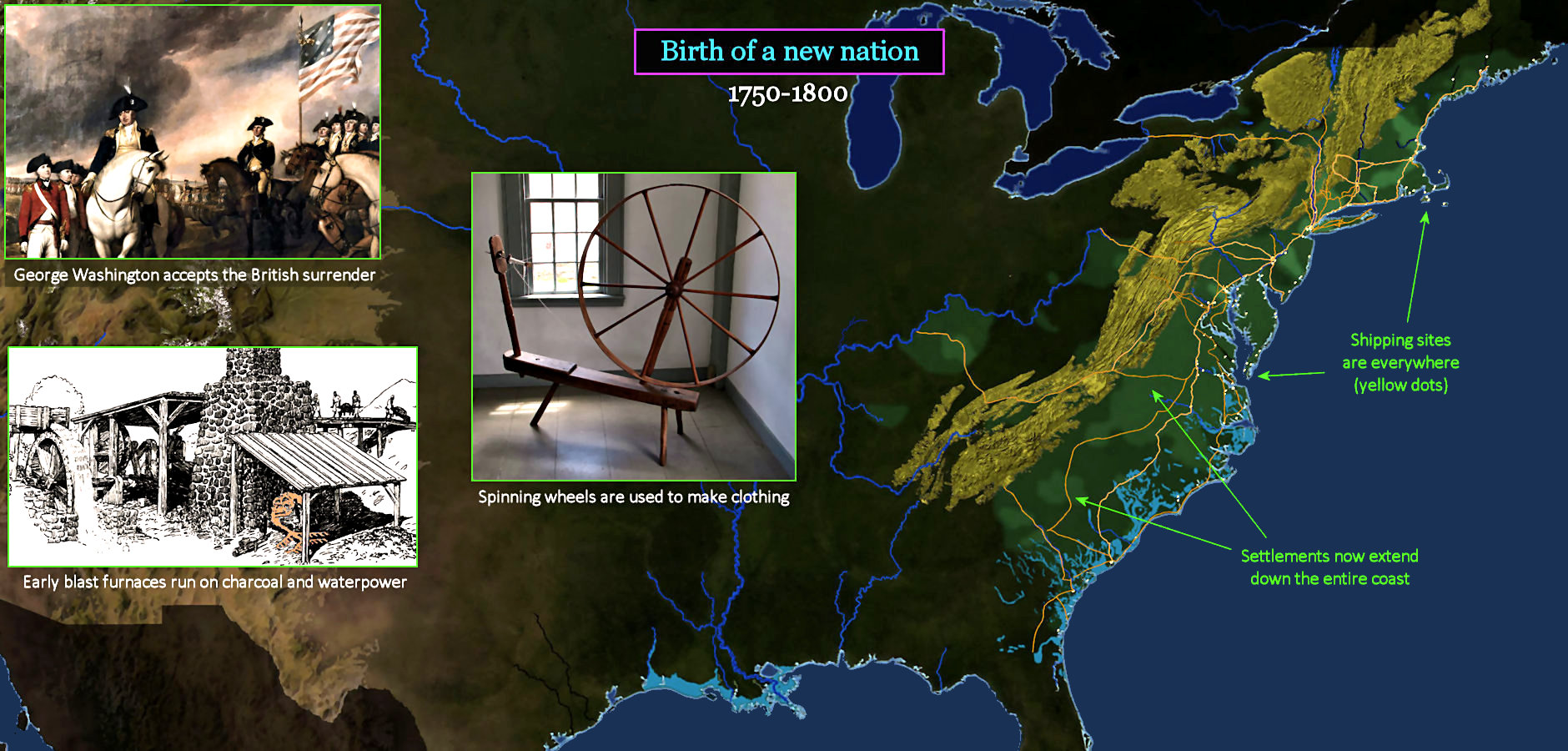
1750-1800 America wins independent from Britain. Settlements begin expanding across the mountains, but technology is still primitive. Early blast furnaces have appeared in Pennsylvania, but with few roads, shipping is one of America's few thriving businesses. Yellow dots indicate the home port for captains who trade with Europe. Most are just a dock in a cove, somewhere near a boatbuilder. | |||||||||
| |||||||||
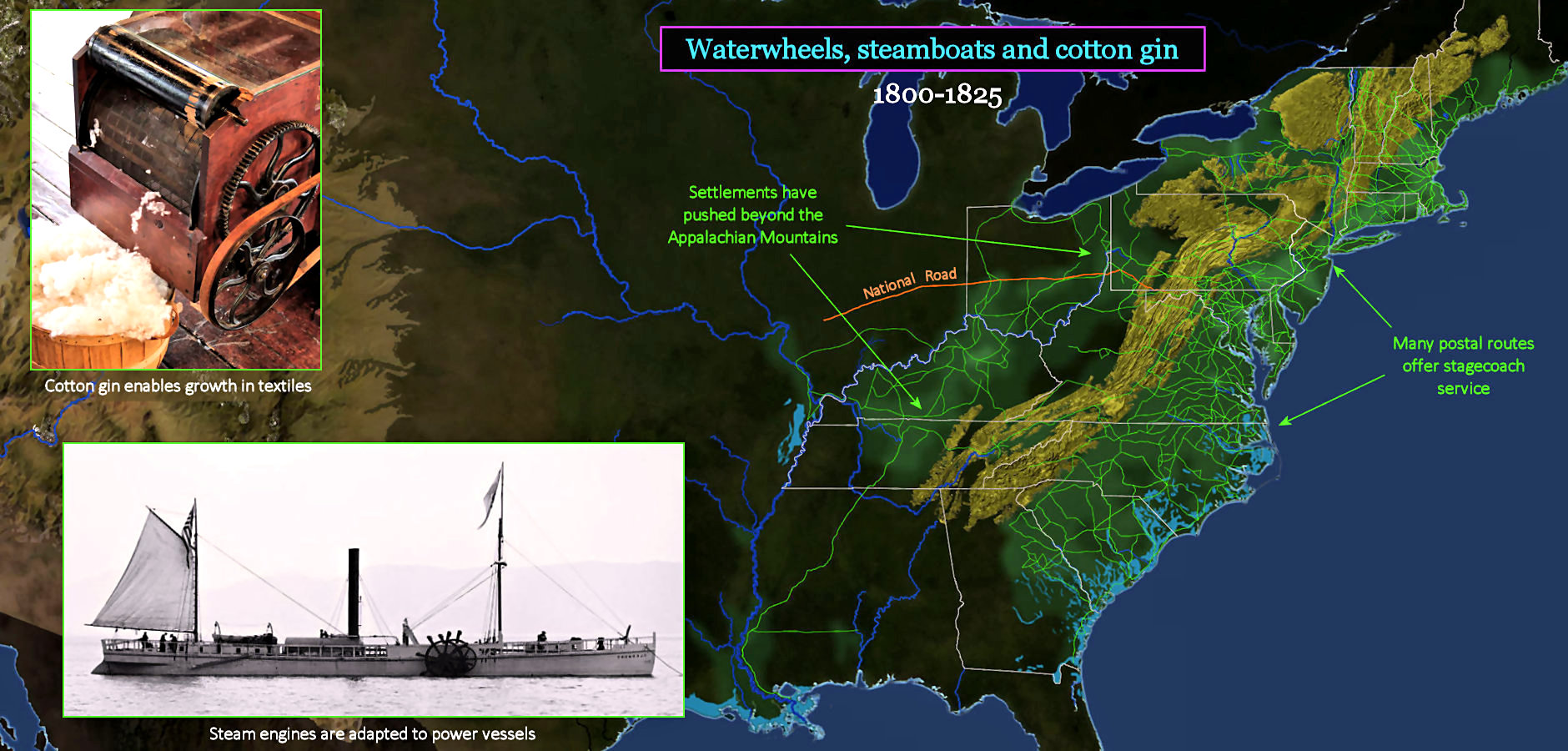
1800-1825 The cotton gin sparks the rise of textile mills, which become America's first industry. Waterwheels are still the dominant form of power, but early steam engines are now being used to power vessels. | |||||||||
| |||||||||
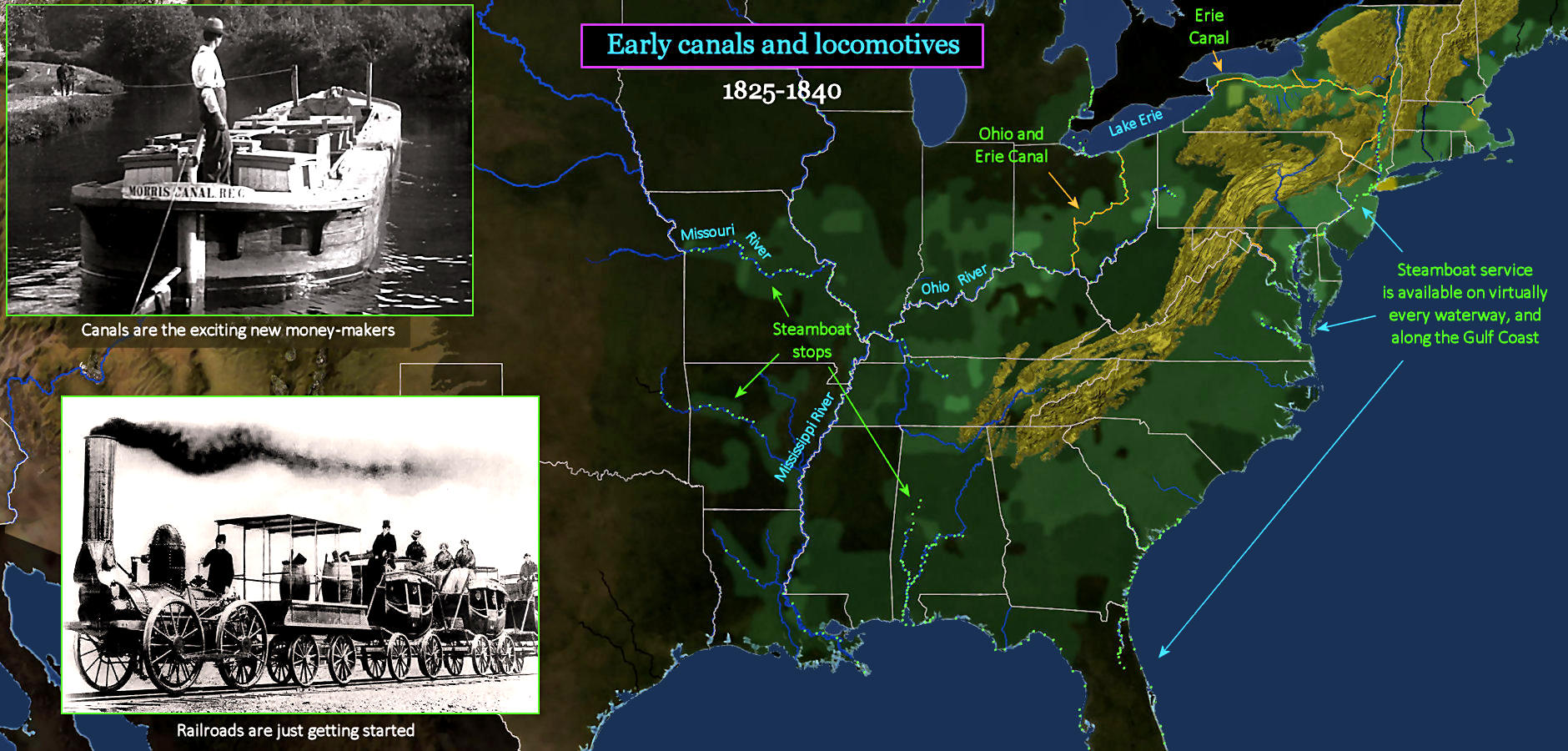
1825-1840 The success of the Erie Canal leads to a canal-building frenzy, just as railroads are making their first appearance. Steamboats now stop everywhere, including all along the southern coast. | |||||||||
| |||||||||
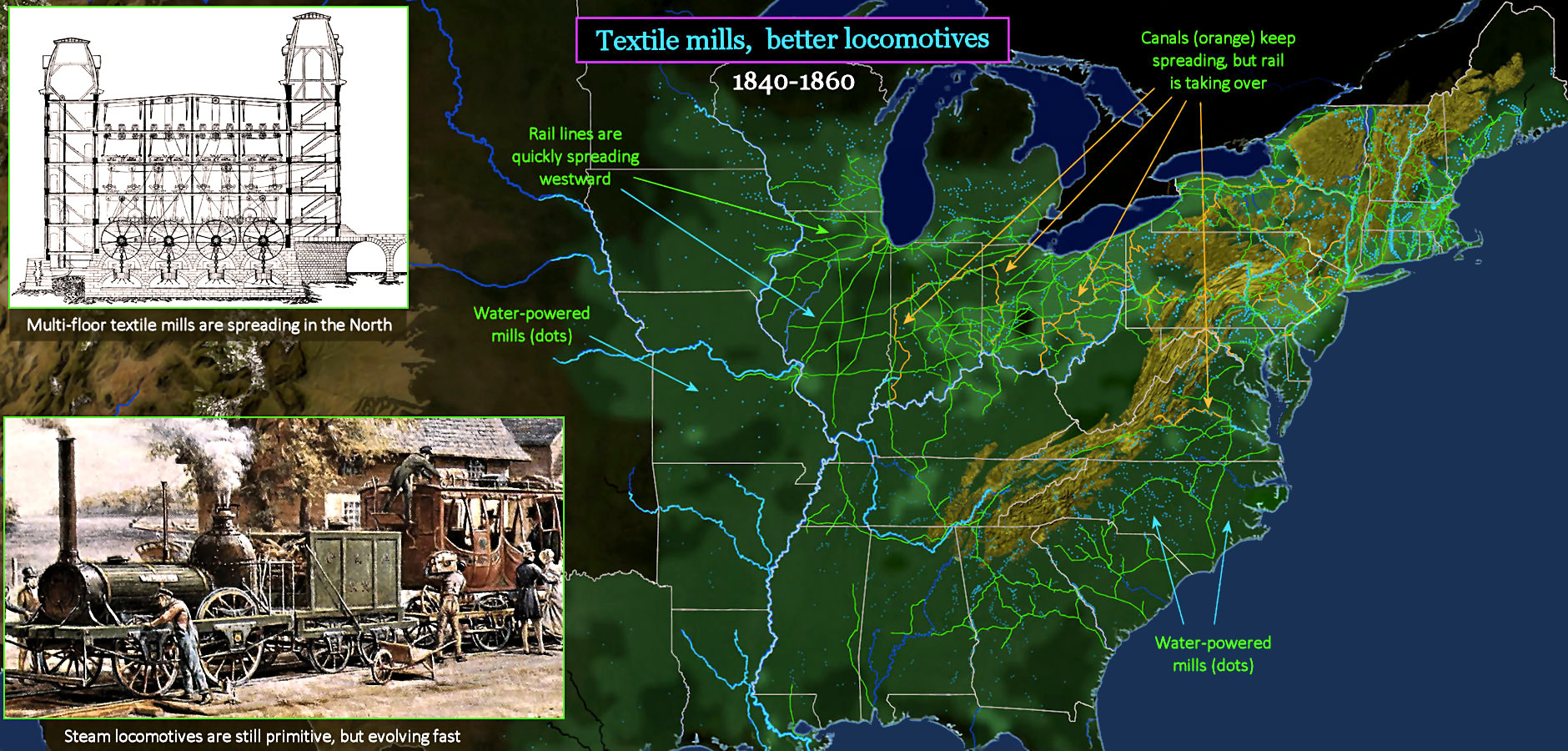
1840-1860 America is poised on the tipping point between waterpower and steam power. The tiny blue dots on the map indicate water-powered sites, almost all of which are grist mills and sawmills. Larger textile mills are beginning to pop up beside rivers in New England. | |||||||||
| |||||||||
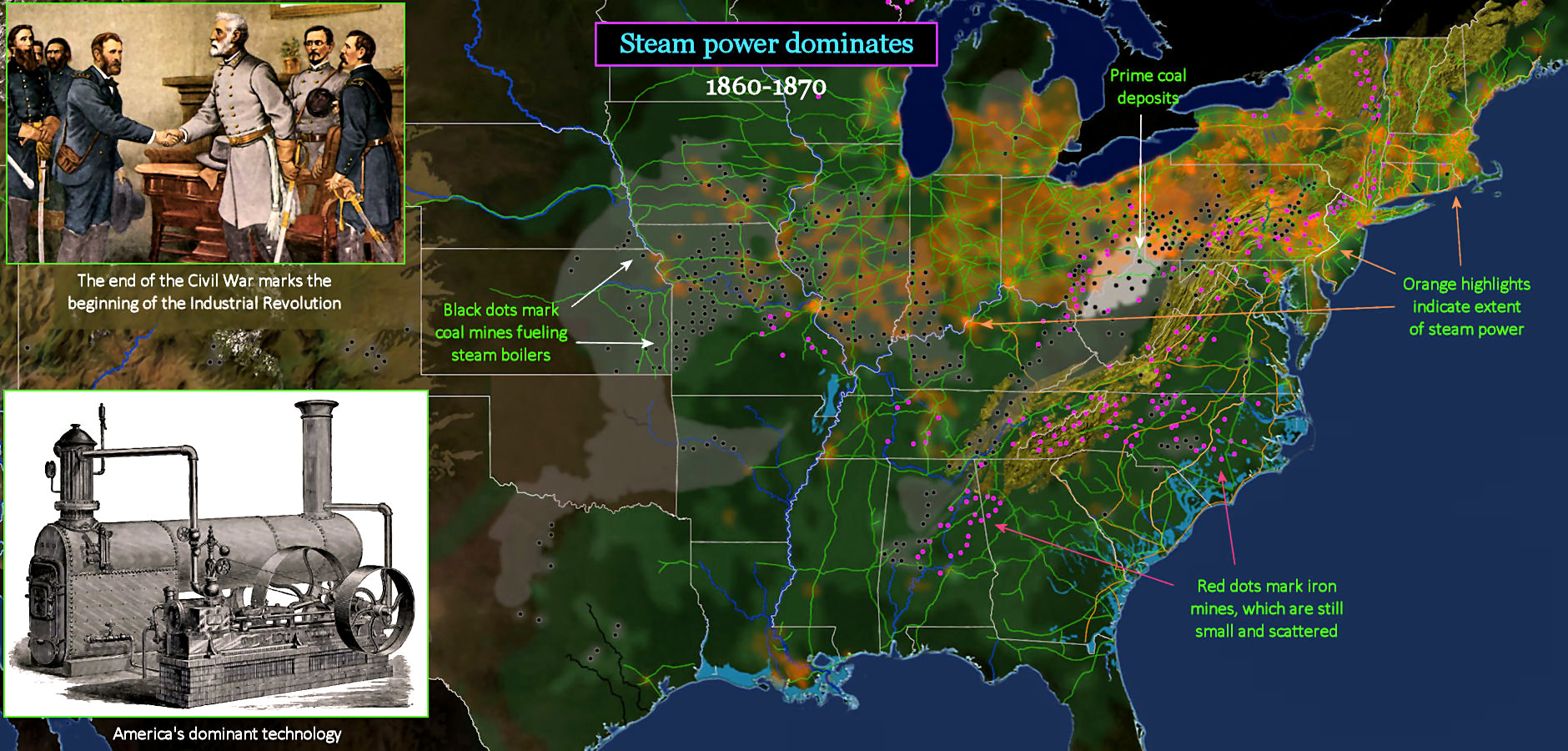
1860-1870 With the war now over, railroads are reaching further into coal fields, launching a new era based on blast furnaces, rolling mills, and steam-powered machinery. The Industrial Revolution has begun. | |||||||||