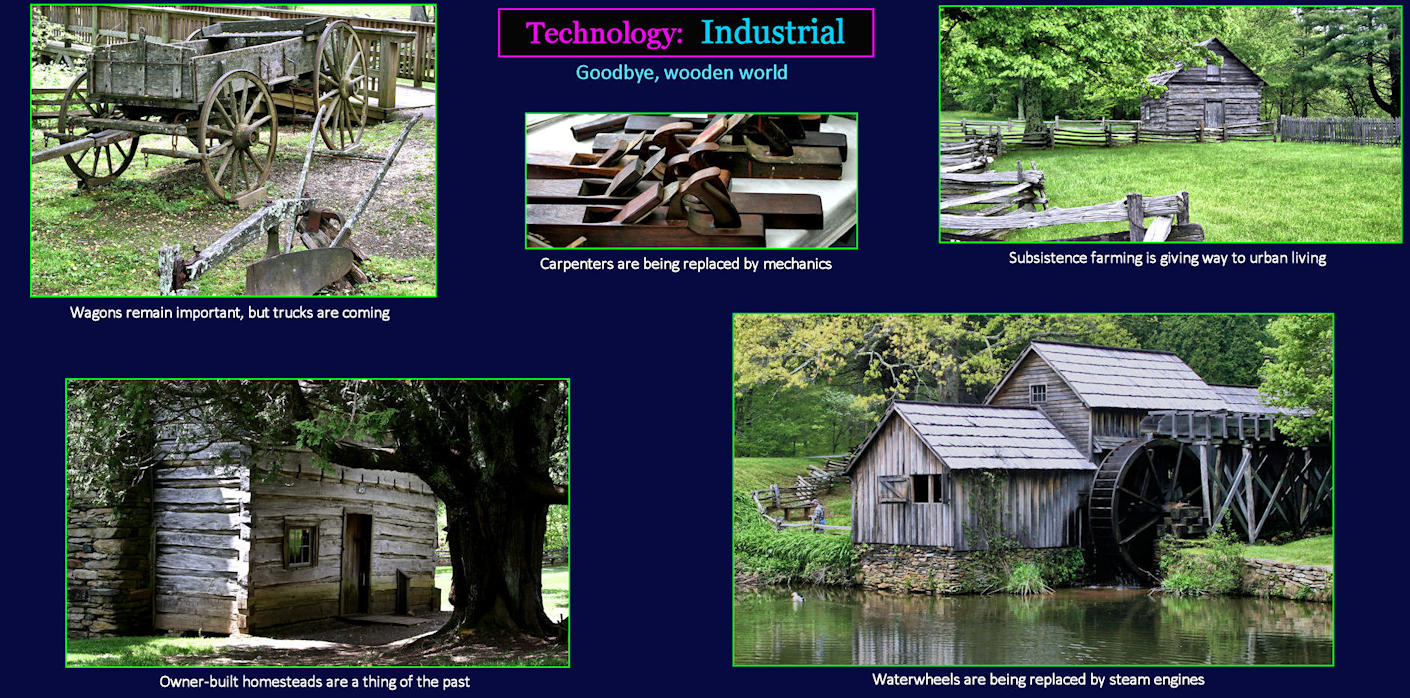
Industrial EraThere was no abrupt start to the industrial revolution, but rather a brief transition, with the Civil War obscuring the startling shift. Before the war, Americans mostly lived out on homesteads built by their grandparents. Afterwards, life was a blur of frantic activity. Before the war, almost everything was made of wood. Afterwards, it was all metal and smokestacks. |
| ||||||||||||||||
| |||||||||
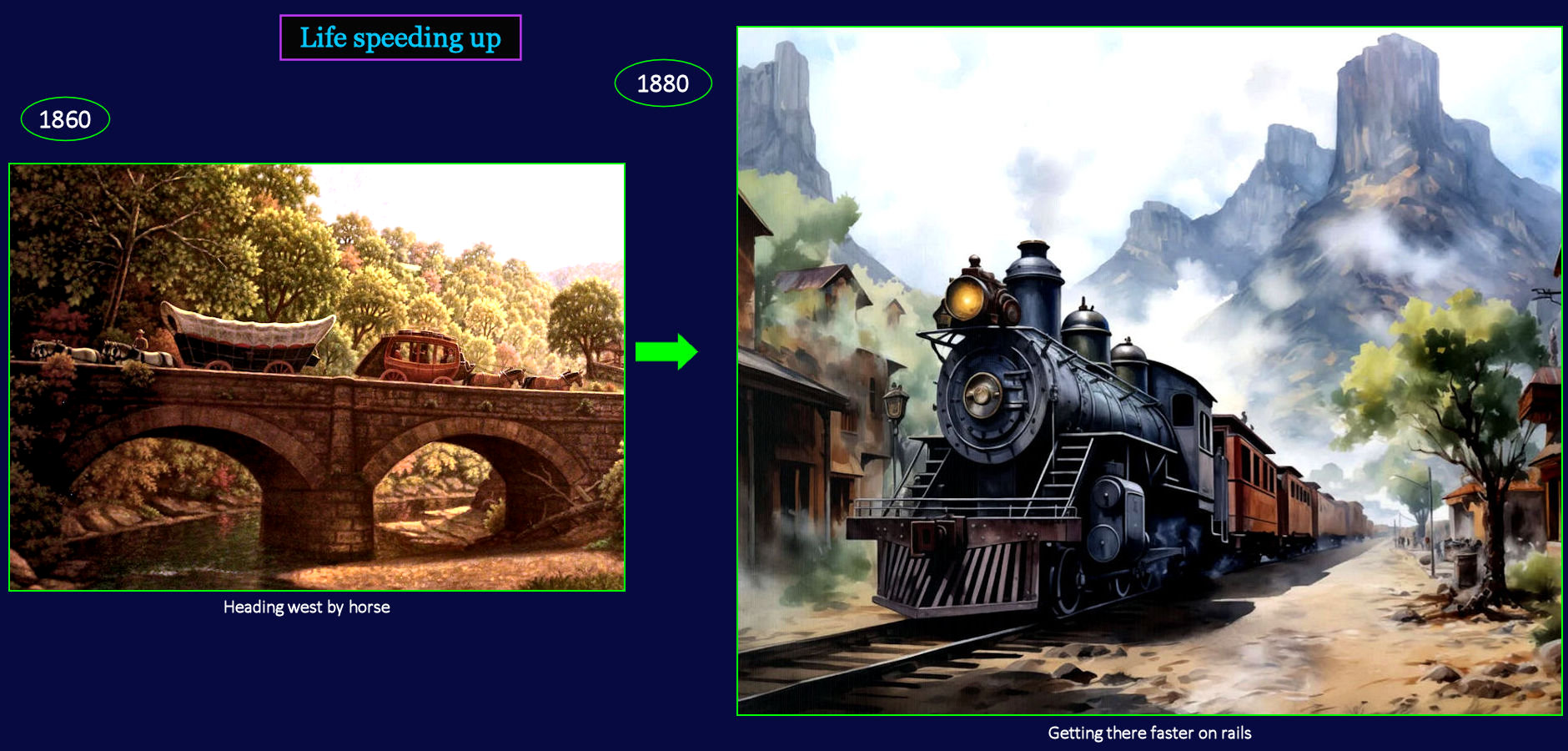
Then the War Ended By the time the smoke has cleared in 1870, it's already evident that the old predictable world is undergoing some kind of slightly bewildering transformation. Steamboats, of course, had been around for years. But it's now impossible to ignore the wild frenzy of railroad expansion occurring everywhere, all at once. Mostly, the trains just move cargo, but the arrival of steam power has already set in motion a series of linked advances in technology like nothing ever experienced. Anywhere. Ever. | |||||||||
| |||||||||
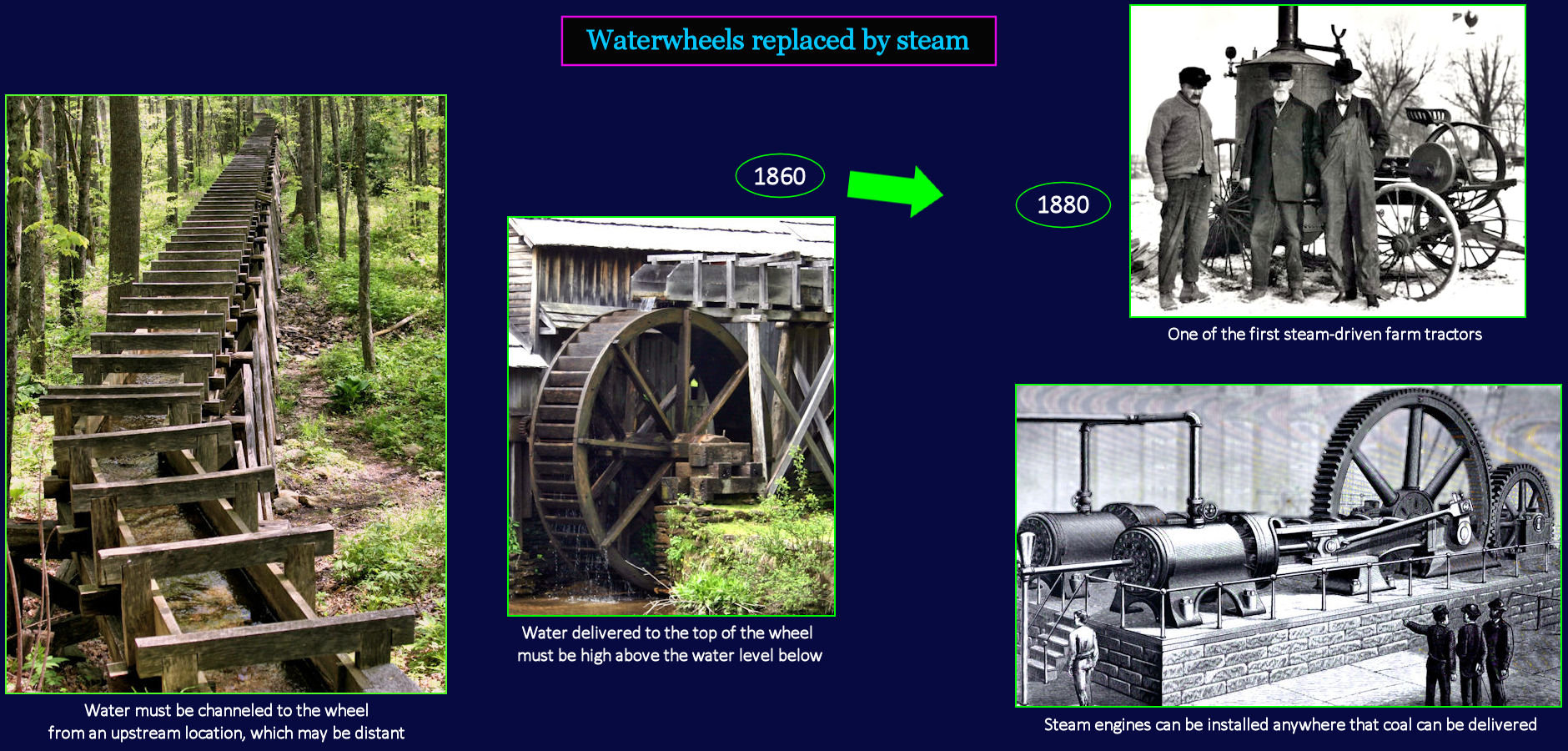
Just a novelty, at first The sheer size of the new steam-powered locomotives is a thrilling sight. The mighty huff and puff, and trailing plume of smoke, is enough to get the blood flowing in the laziest of dreamers. But few Americans yet have any notion that the same steam power that can move a train has already begun to move all of America. Never before has it been possible to make or move anything without a lot of sweat. Suddenly, all it takes is a pile of coal. | |||||||||
| |||||||||
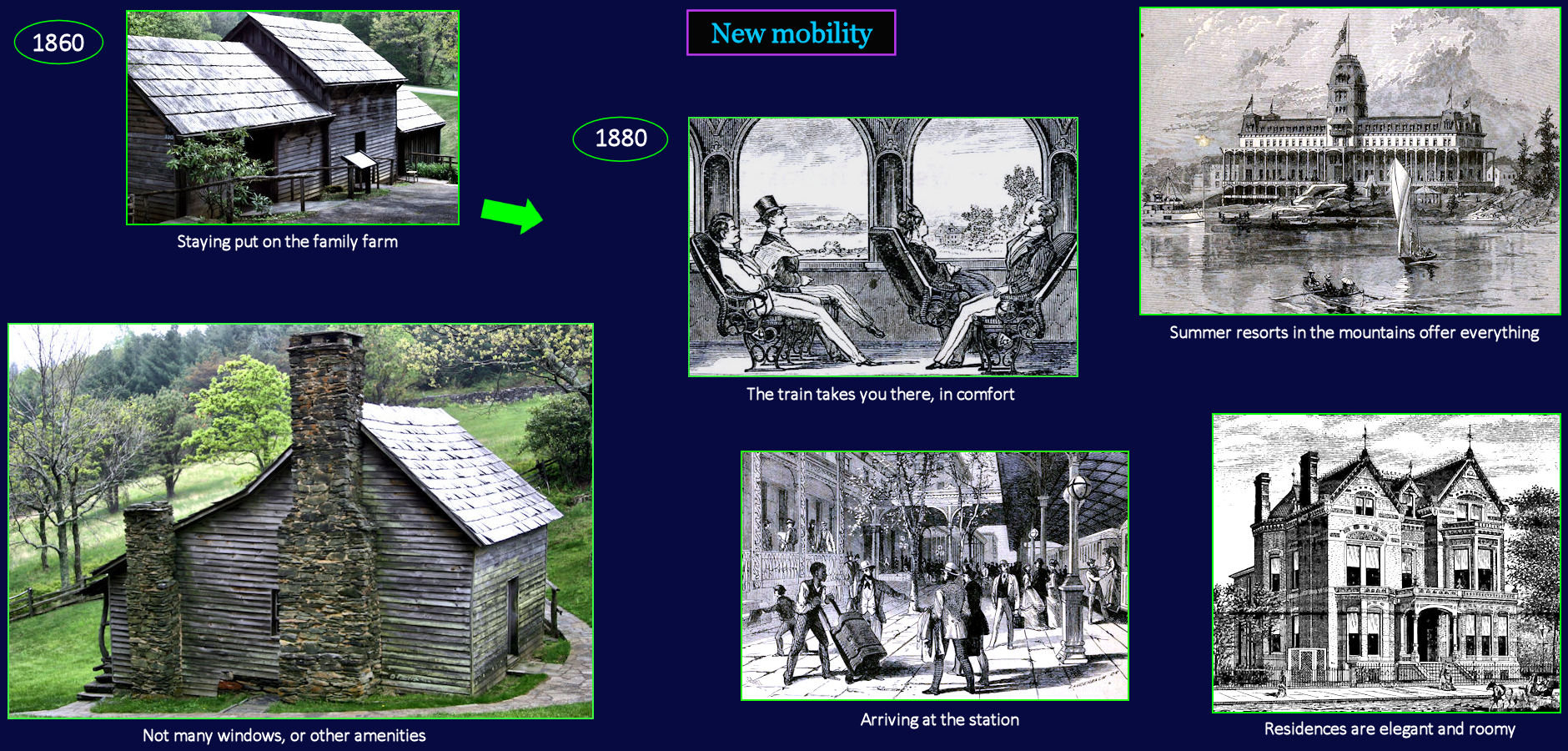
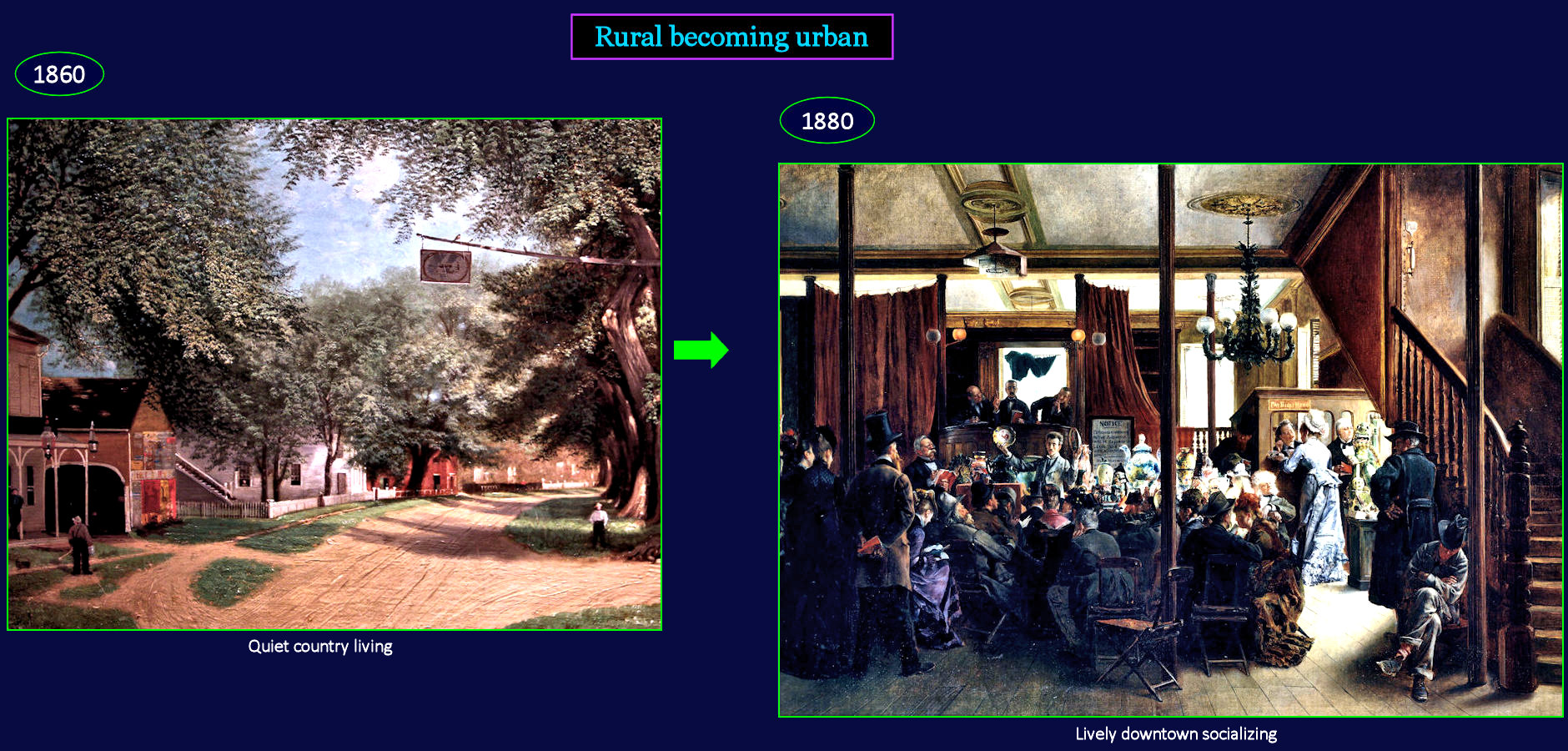
Appealing Possibilities Cities, at this time, are still largely limited to the major shipping ports, which now include those on rivers, thanks to steam-powered vessels. But the terminals at each end of railroad lines, and at route junctions, seem to have the magical ability to give birth to new urban centers, without any effort. And, thanks to the rail hookup, each of these new centers has full access to anything previously available only in the big ports. The nearest city, with all the appeal of fashionable living, suddenly isn't so far away. | |||||||||
| |||||||||
Bringing Civilization With You In the past, Americans heady west had only the items they could bring with them, in their wagons. When arriving by rail, however, the terminal acts as a a kind of stand-alone shipping port, maintaining connections to everything and everyone left behind. And with shipping comes wealth, sometimes almost immediately. The city of Chicago grew by a factor of 10 during the 20 years after the arrival of the first railroad, making it instantly the fifth largest city in America. Just like that. | |||||||||
| |||||||||
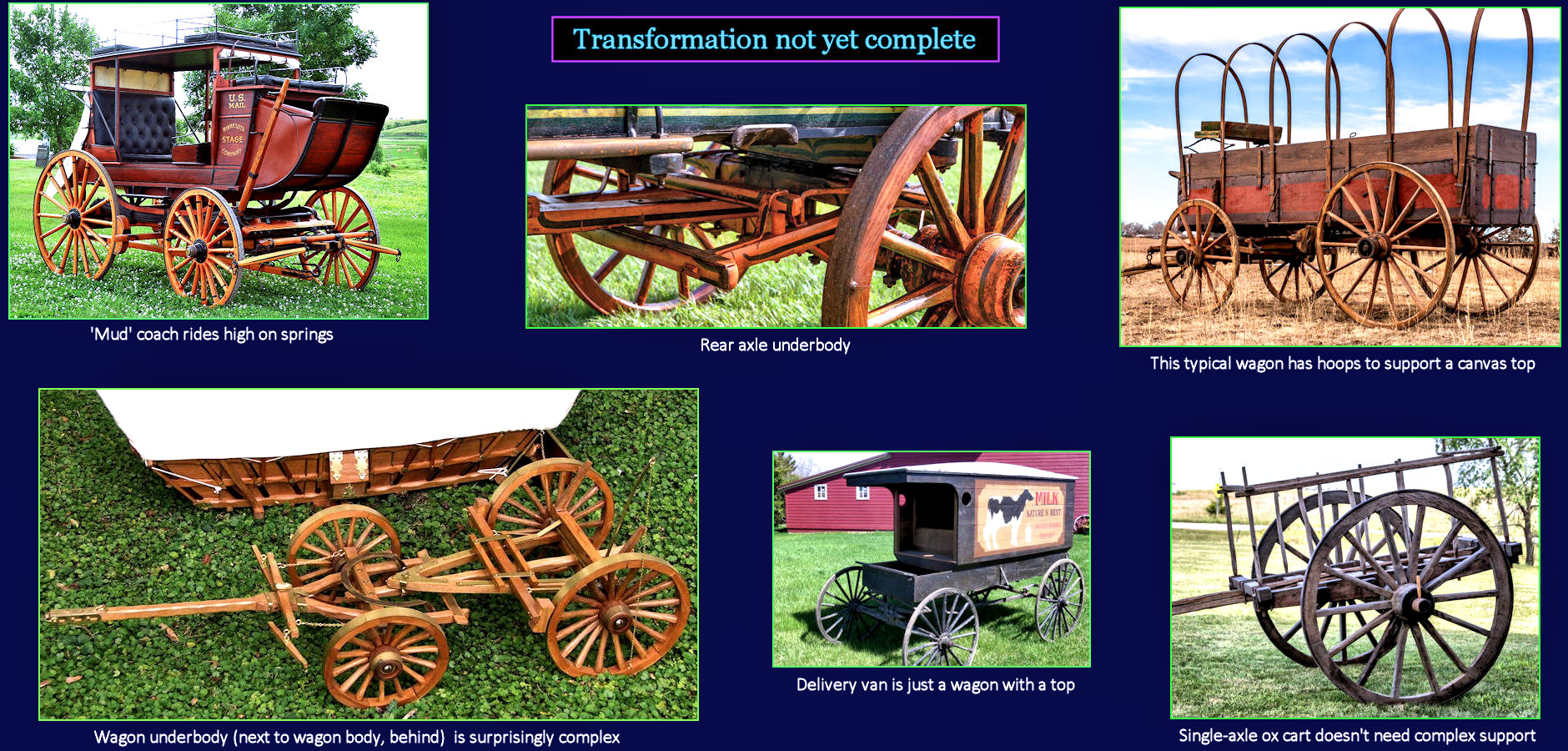
Unfinished Job Not everything has changed. Locomotives reduce great distances to just a few hours of comfortable travel, but once you step off the train, you are again living in a world where wagons do all the moving. Horses remain vital for local commerce. | |||||||||