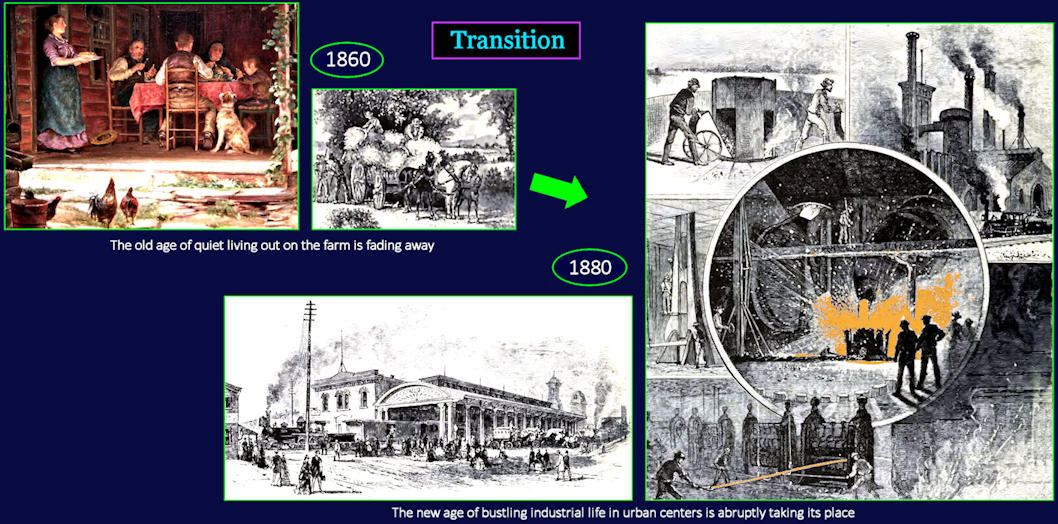
Decade of ChangeAt the start of the 1870s, big changes are already well underway. Just 10 years later, America is fully industrialized. There are already 100,000 steam engines, powering manufacturing enterprises in every city. Almost everything, it seems, is iron. |
| ||||||||||||||||
| |||||||||
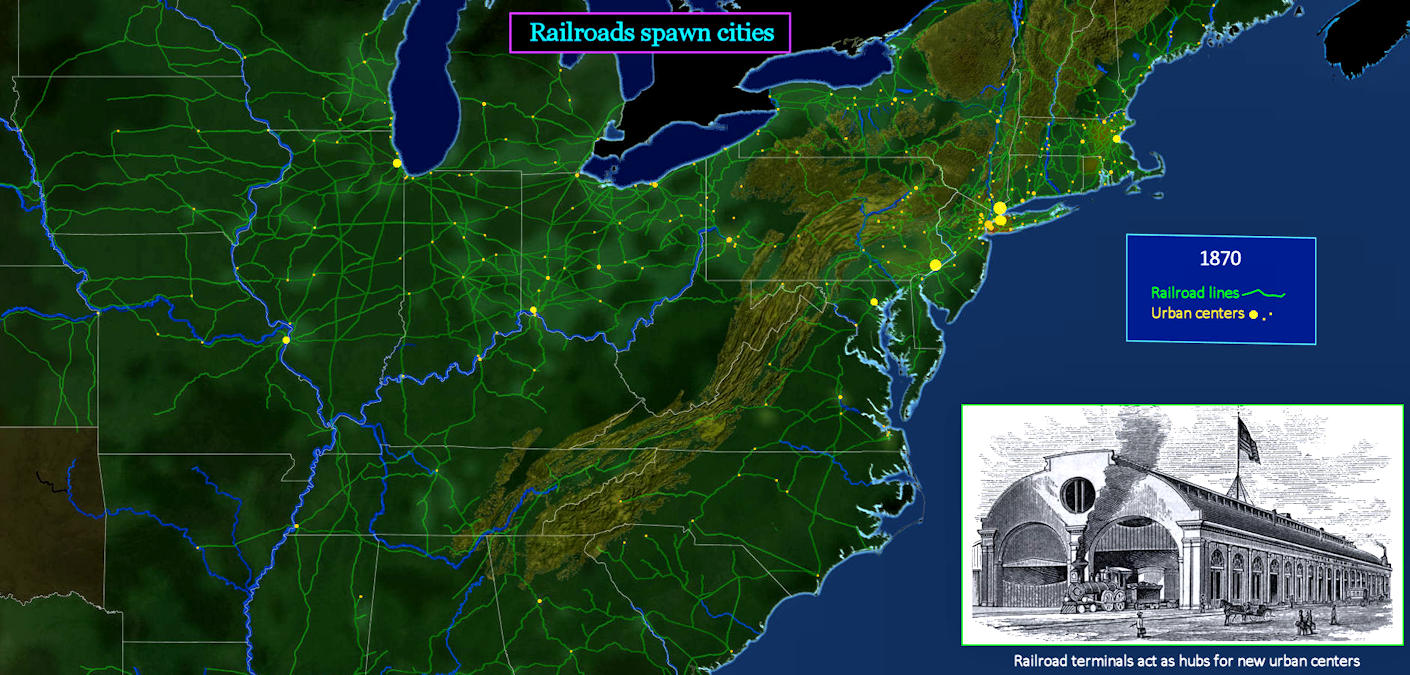
Railroads and Land Values A mind-boggling frenzy of railroad construction rapidly pushes rail service to the Mississippi River and beyond, extending all the way to San Francisco. This utterly transforms America, enabling a flood of farmers to head west to start new lives, on land now being offered by the government at virtually no cost. It also stimulates the growth of cities, which spring up magically at almost every rail terminal, and drive up land values everywhere. At the same time, railroads dramatically expand the market for manufacturers. | |||||||||
| |||||||||
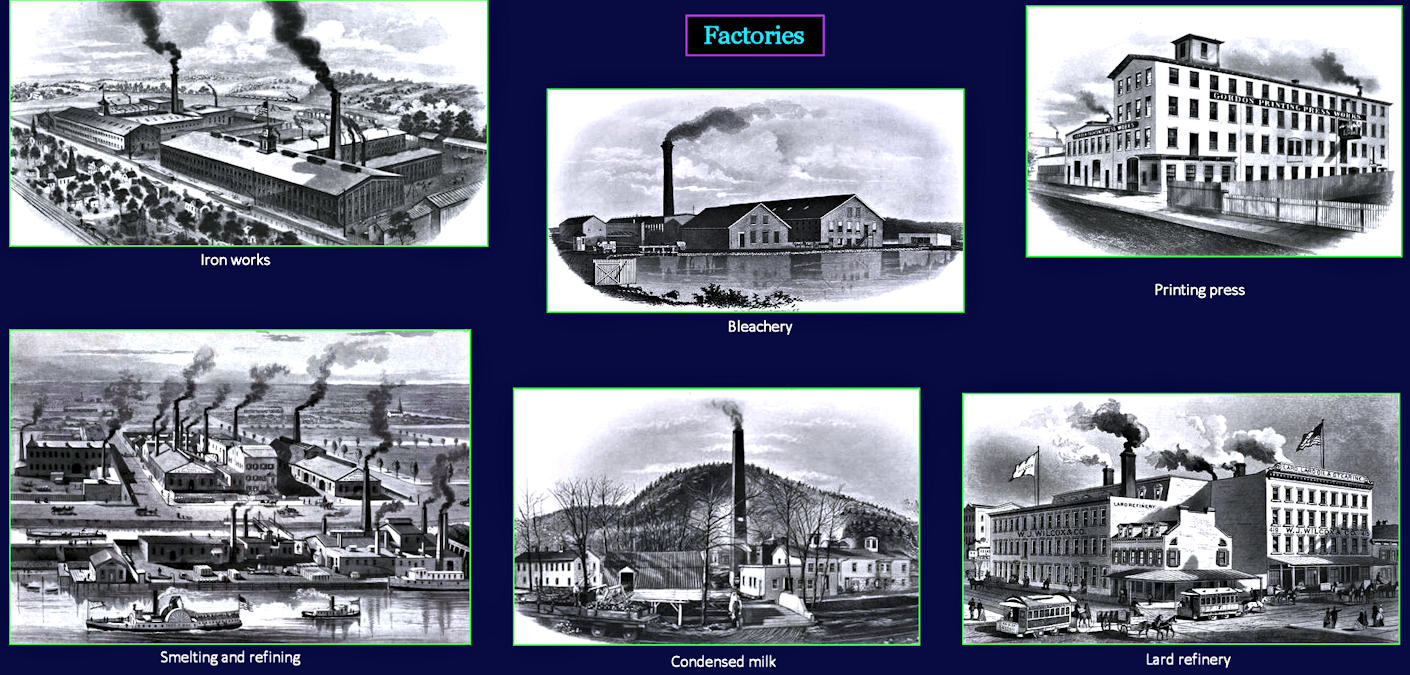
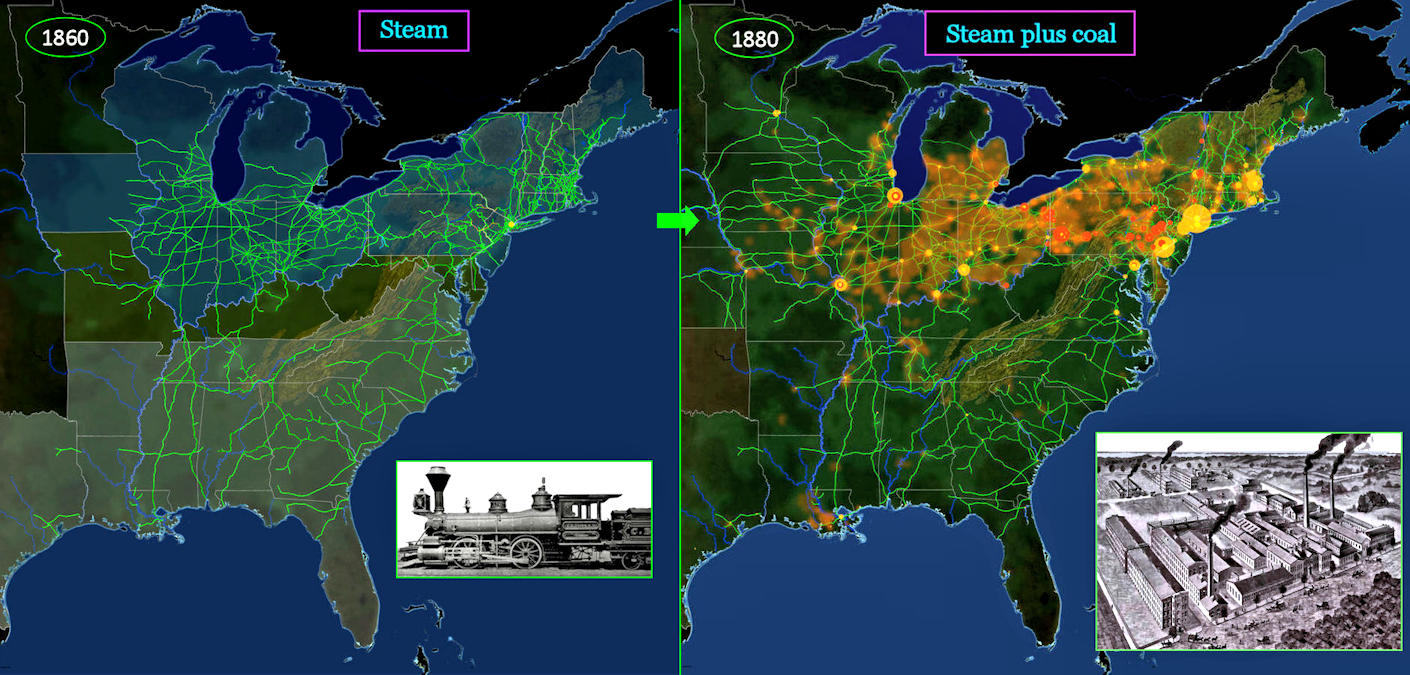
Manufacturing with Steam Railroads are the backbone of America's new industrial expansion, but there are five times as many steam engines powering industrial equipment as locomotives. Now that factories can deliver their products all over the country, all that it takes to grow a business is more machinery. All the new equipment, on top of the railroad expansion, drives a massive demand for more iron, and mountains of coal to provide the power. Note all the smokestacks in the scenes above. | |||||||||
| |||||||||
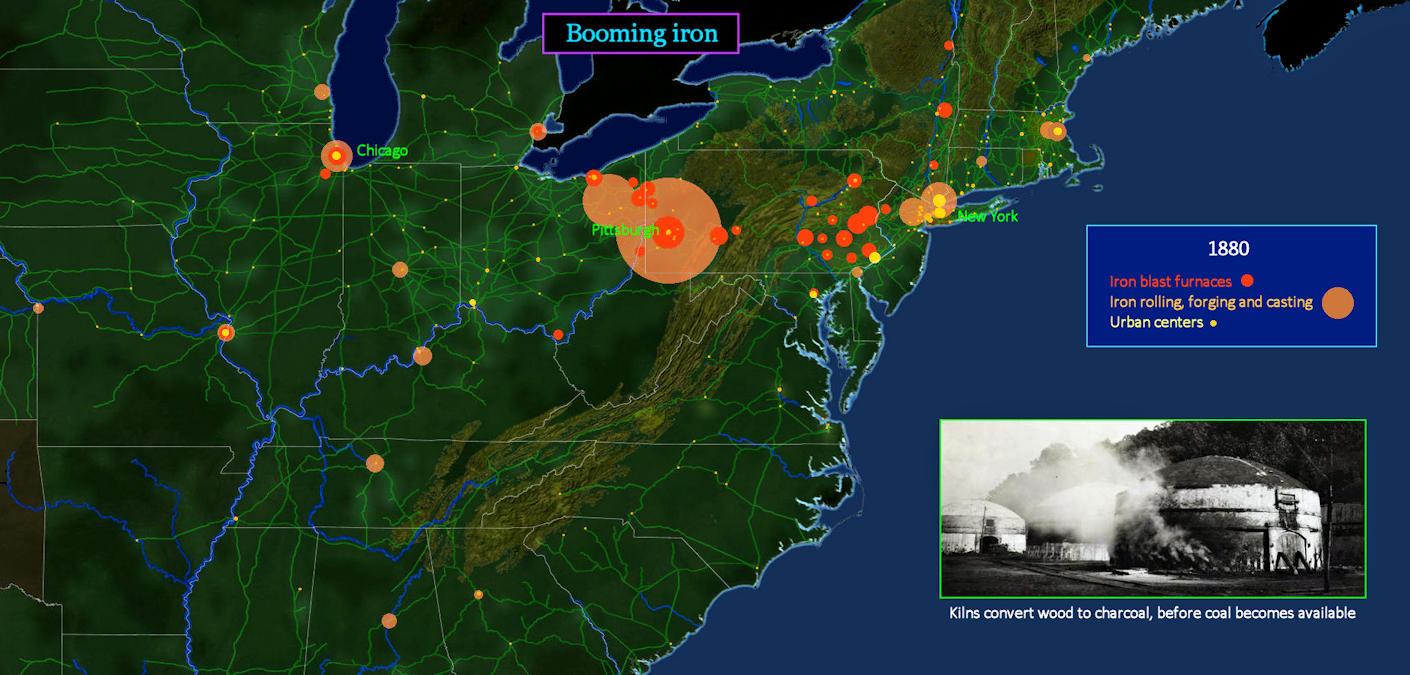
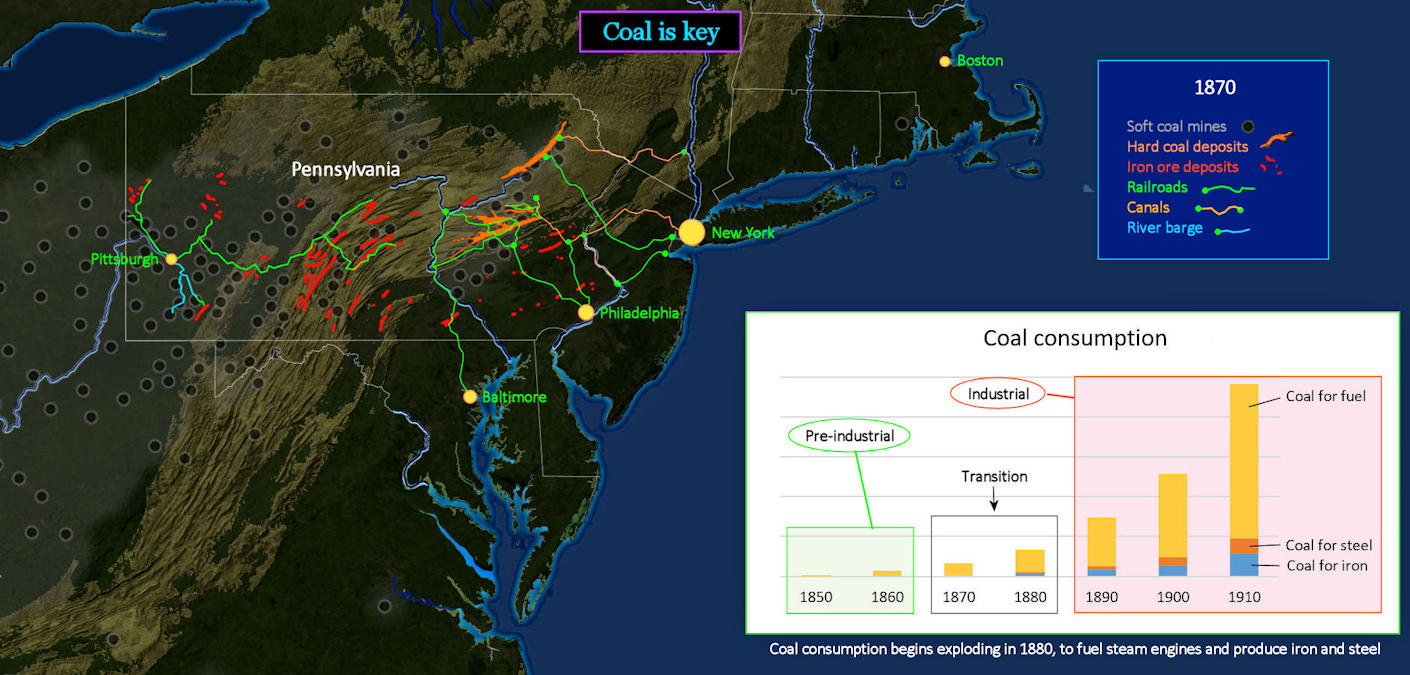
Fortunate Circumstance With surging demand for iron, huge new hot-blast furnaces are suddenly sprouting all over Pennsylvania, which is rich in iron ore. But until recently, the extremely high temperatures needed to melt iron could only be achieved by burning charcoal, which is slow and costly to produce. Worse yet, charcoal is made from great stacks of wood, and the woodlands surrounding blast furnaces are nearing exhaustion. Luckily, the railroads are now able to ship in whole trainloads of a much cheaper fuel. Coal. | |||||||||
| |||||||||
Indispensable Ingredient America is blessed with a great abundance of coal, almost everywhere, but most had previously been unusable. It took too much effort to move it from where it was located to where it was needed. As luck would have it, however, railroads had appeared at precisely the moment when needed to remedy this situation, moving trainloads with ease. Canal and river barges also helped. In coming years, industrial coal use would skyrocket (see chart), fueling America's rise to world prominence. | |||||||||
| |||||||||
Big Change The two maps above, separated by just 20 years, tell the story. Steam locomotives are essential to trigger this transformation, but after 40 years only manage to connect America. It is America's great abundance of both iron ore and coal that finally sets the economy on fire. Both are vital. But while iron can be imported, the sheer quantity of coal required demands an ample domestic source. Coal becomes the deciding factor, and continues to fuel America's industrial expansion well into the modern era. | |||||||||