| |
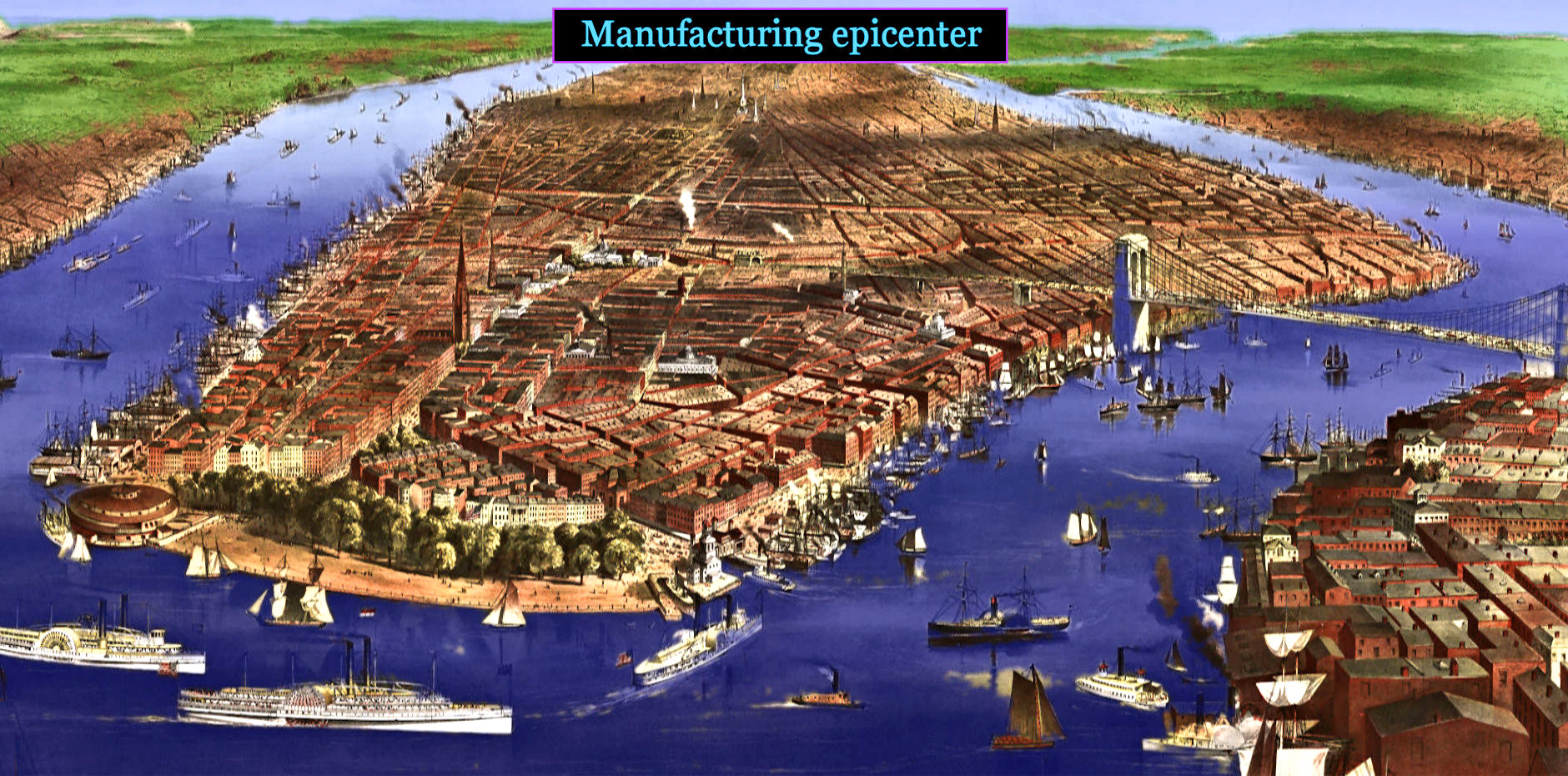
New York, 1885 When considering the formative years of industrialization, it's important to keep in mind that anything that didn't travel by rail or boat had to be moved by horse-drawn wagons. Including coal. Outside of cities, where roads were dirt or mud, even wagons were of marginal value. As a result, manufacturers naturally favored downtown locations. The structures visible above, near the shipping docks, are mostly industrial. |
| |||||||||
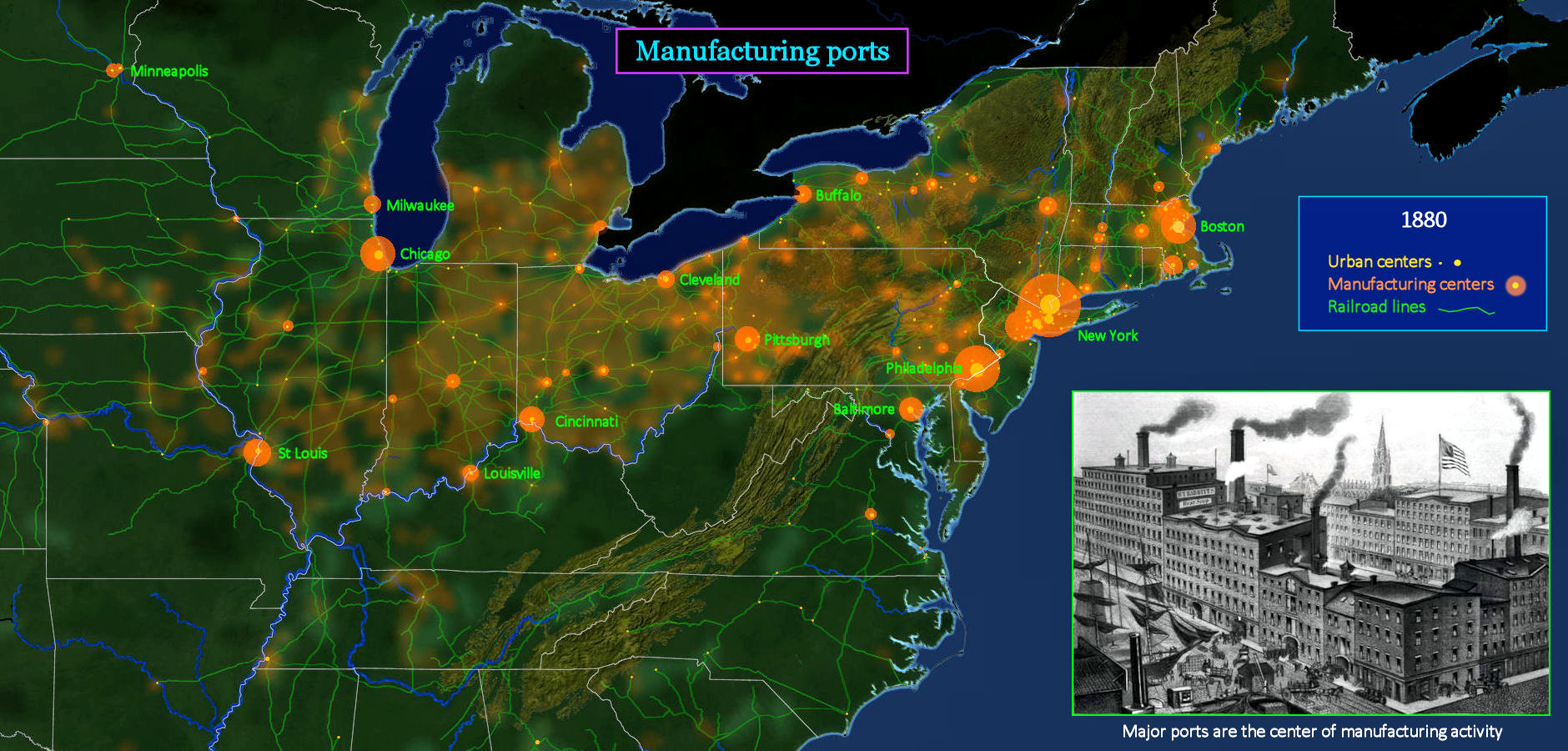
Ports Dominate On the map above, the smaller YELLOW circles and dots are urban centers, while the larger ORANGE circles that surround many cities indicate manufacturing profits. All the cities named on the map are ports, either along the coast, around the Great Lakes, or along the Mississippi and Ohio rivers. The fuzzier ORANGE zones indicate the overall level of manufacturing activity. Clearly, the ports are dominant. | |||||||||
| |||||||||
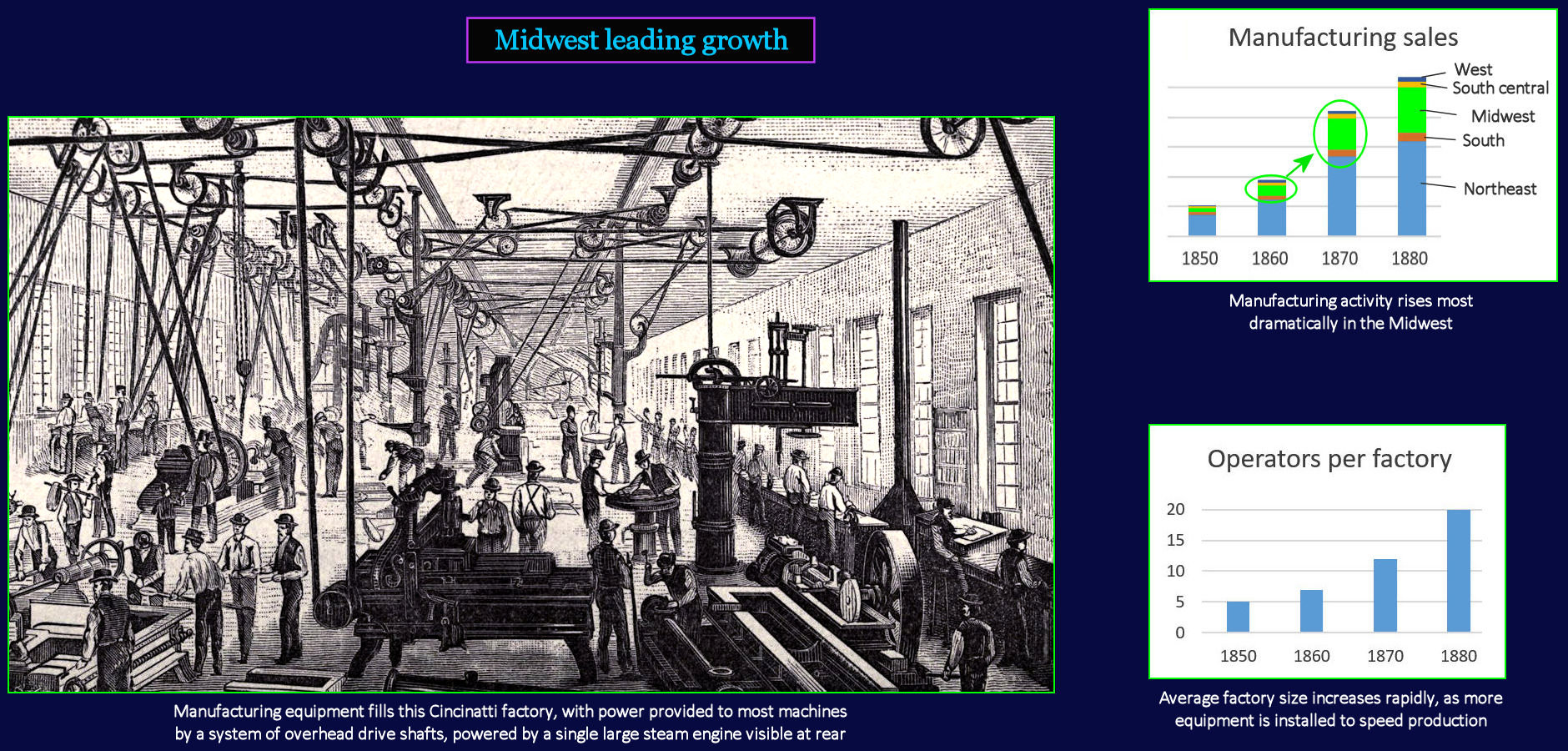
Manufacturing Spreads West The fastest-growing area of manufacturing activity has shifted from the traditional eastern powerhouses of Massachusetts, New York and Pennsylvania to the growing cities of the Midwest. Chicago leads this trend, but St Louis and Cincinnati are not far behind. All three are now among the eight largest cities in America. | |||||||||
| |||||||||
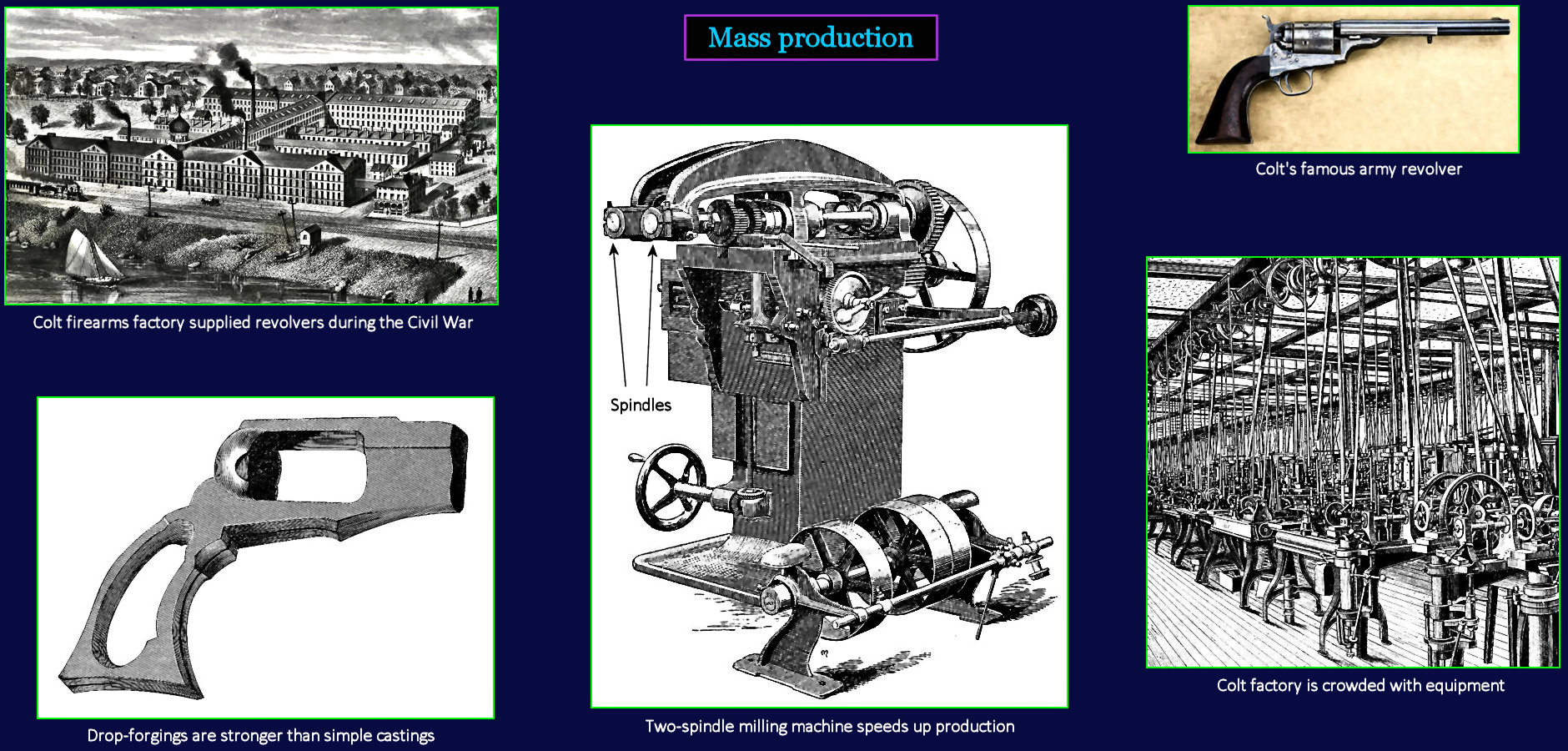
Truly Interchangeable Parts The Holy Grail of manufacturing is the concept of interchangeable parts. As production rates rise, overall efficiency is dependent on the ability to make individual parts with precise dimensions. That way, any part which an operator picks up from a bin of similar parts will fit into an assembly, since all are identical in the location of features likes holes and overall contour. Early pioneers like Eli Whitney made strides in this direction, but Colt Firearms is the first to arrive. New milling machines make it possible. | |||||||||
| |||||||||
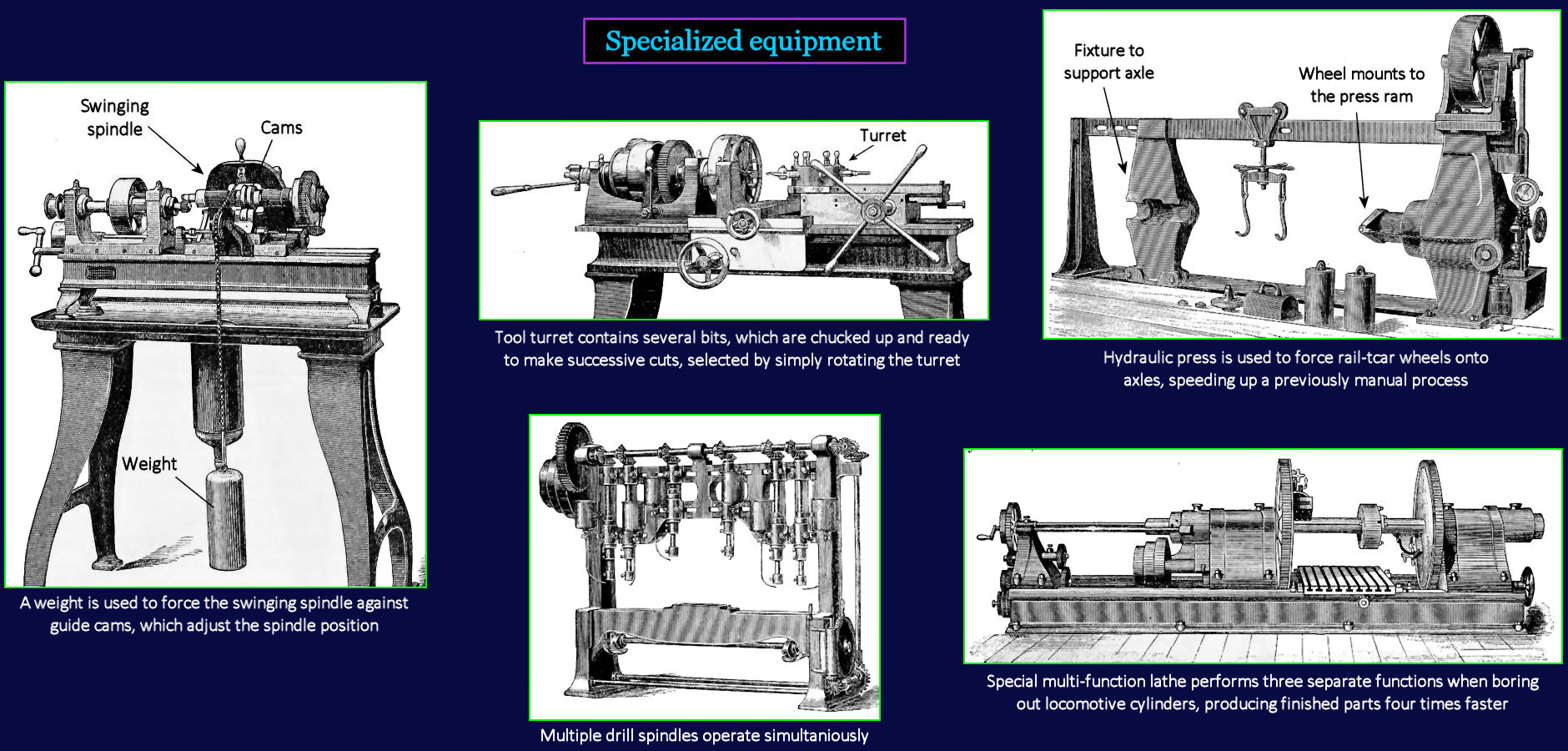
Cranking out Duplicate Parts Milling machines are the first truly versatile machine tools, capable of milling metal into complex shapes with precise dimensions. But these are general-purpose machines, requiring a new setup for every operation required. As factories get larger, the equipment becomes more specialized, as each machine is set up to run the same part, all day long. Manufacturers make these machines themselves, in their own foundries and tool shops. They are proprietary in nature, and very specific to the task at hand. | |||||||||
| |||||||||
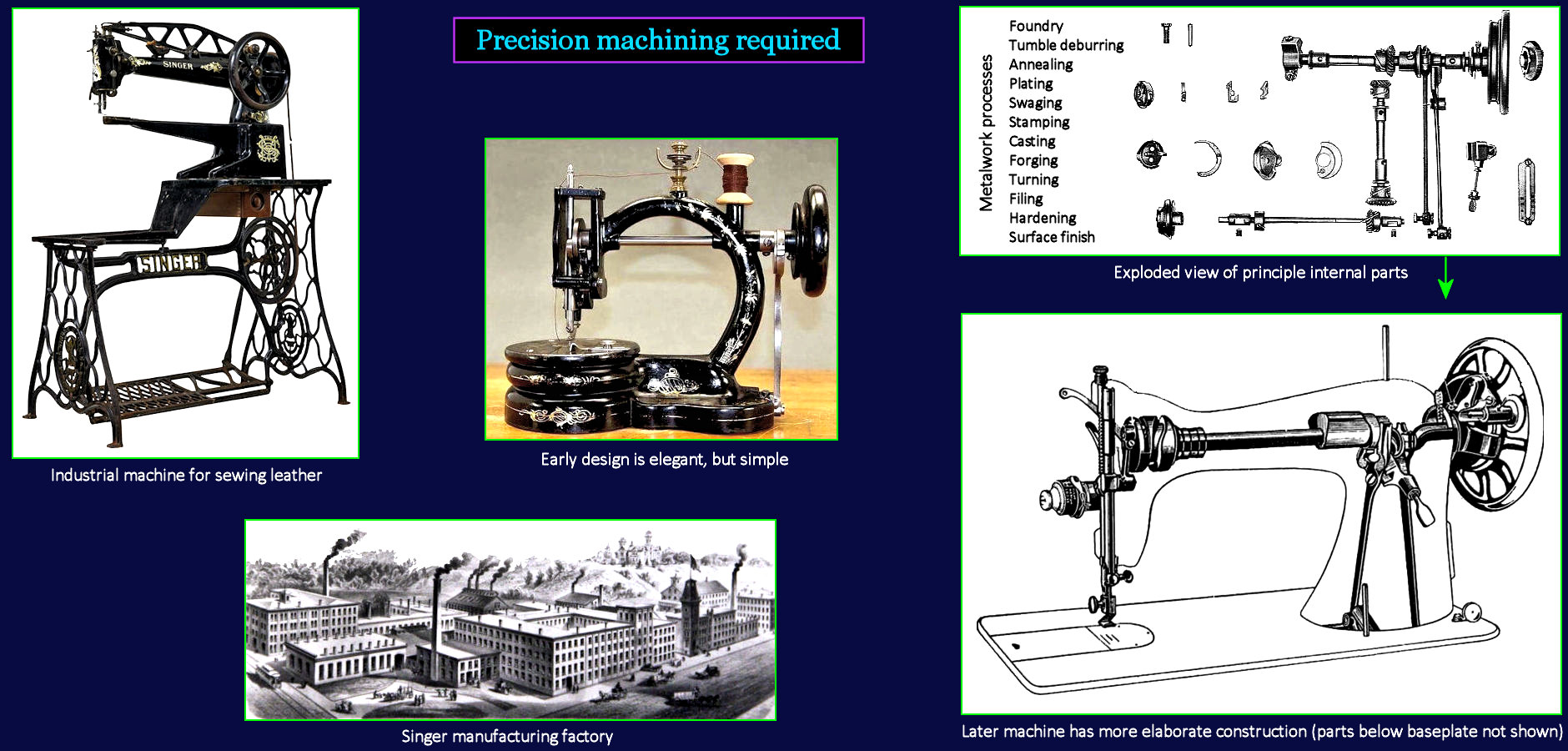
Finished Product The sewing machine is a good example of the kind of precision that is now required to make a successful product that can sell nationwide. Hidden inside the elegant casing are a multitude of equally elegant parts, each shaped to precise measurements, and often given special surface treatments. Many require heat treating or annealing to achieve the desired properties, and all must mesh precisely with the overall mechanism. Lots of specialized equipment is required to make this happen. | |||||||||