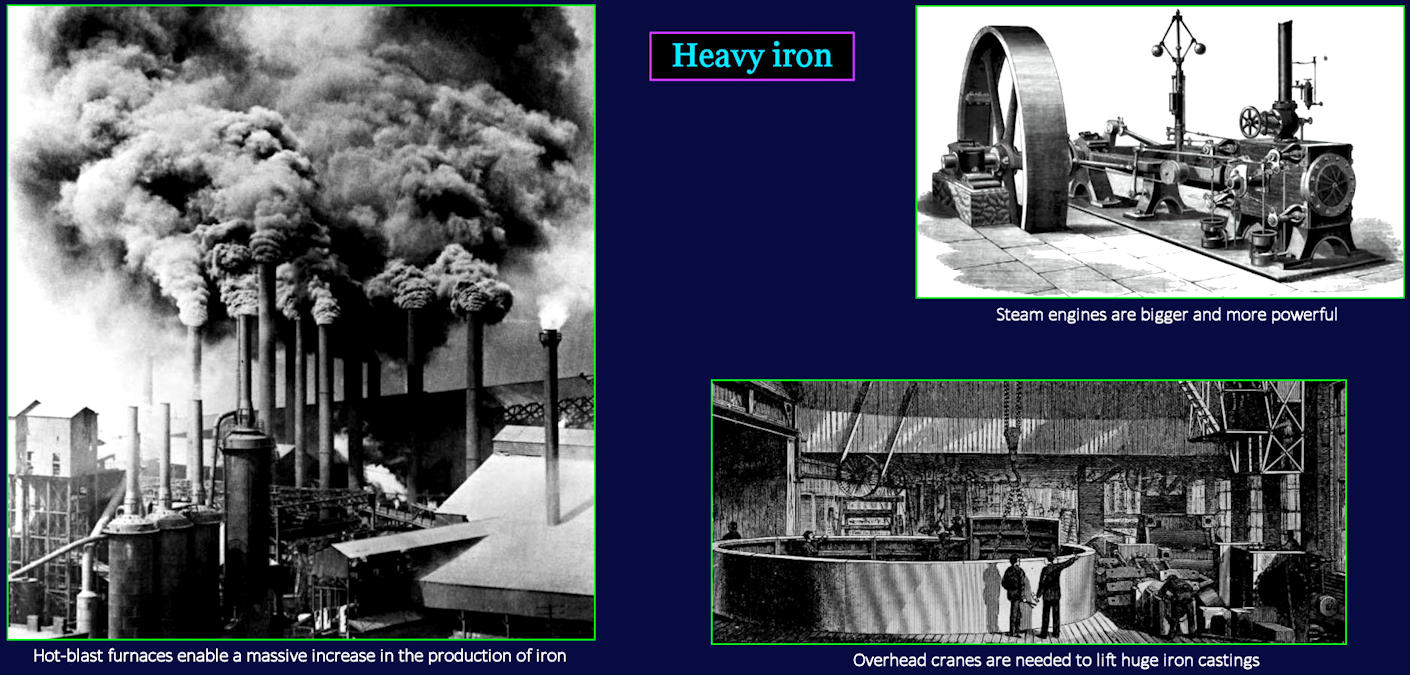
Industrial PowerIron has become the dominant features of the new urban environment, where most of the structures are now solid masonry. Steel is poised to replace iron as the industrial material of choice, but is still available only in limited quantities, and at high cost. |
| ||||||||||||||||
| |||||||||
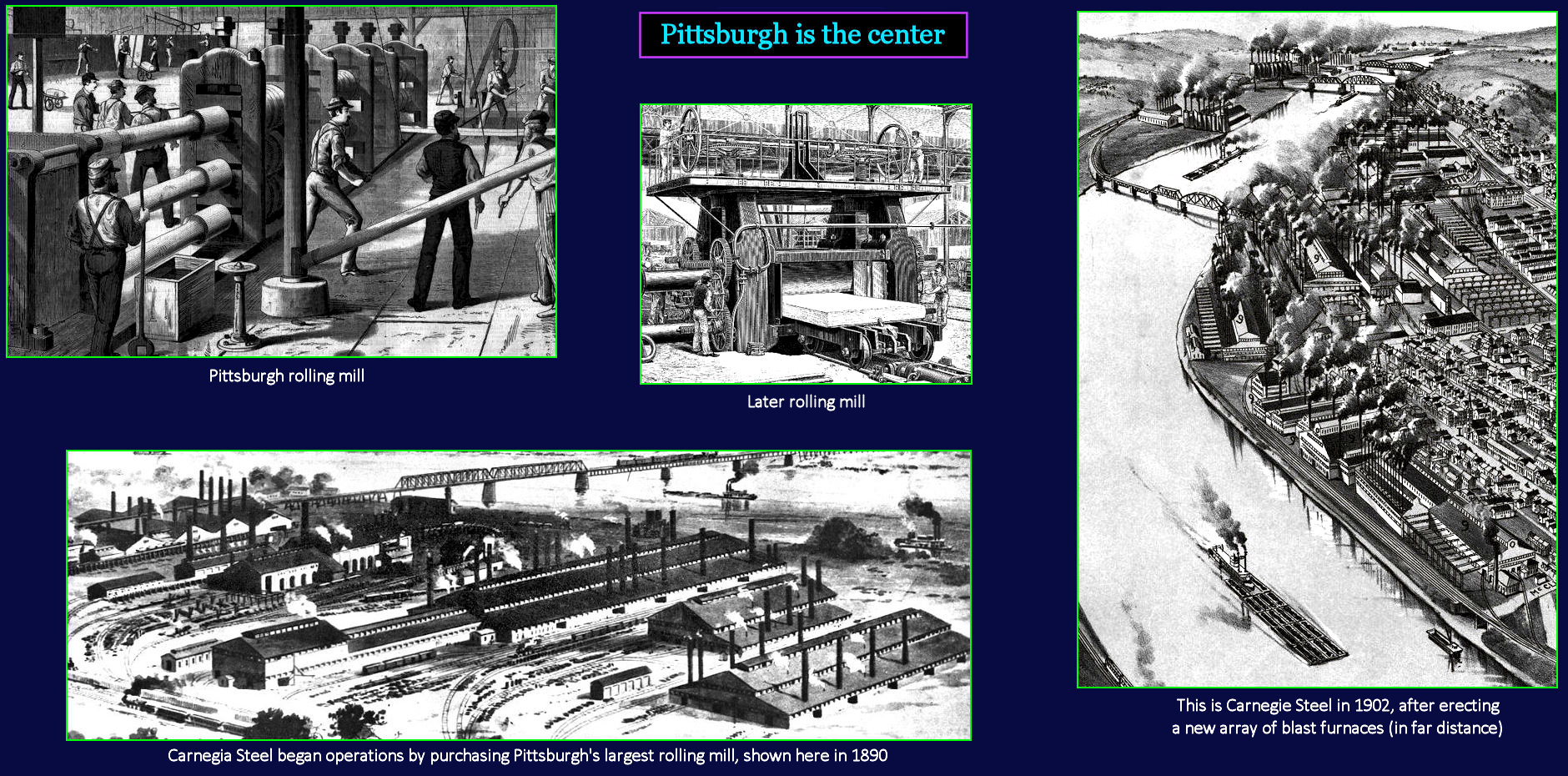
Steel City Pittsburgh is Ground Zero for iron production, dominated by Carnegie Steel. Thanks to the infusion of new capital from railroad-baron Andrew Carnegie, new hot-blast furnaces are being introduced at a rapid rate, along with the brand-new Bessemer process for cheaply converting iron into the steel needed by railroads. Steel rails last 10 times longer in service than those made of simple wrought iron. | |||||||||
| |||||||||
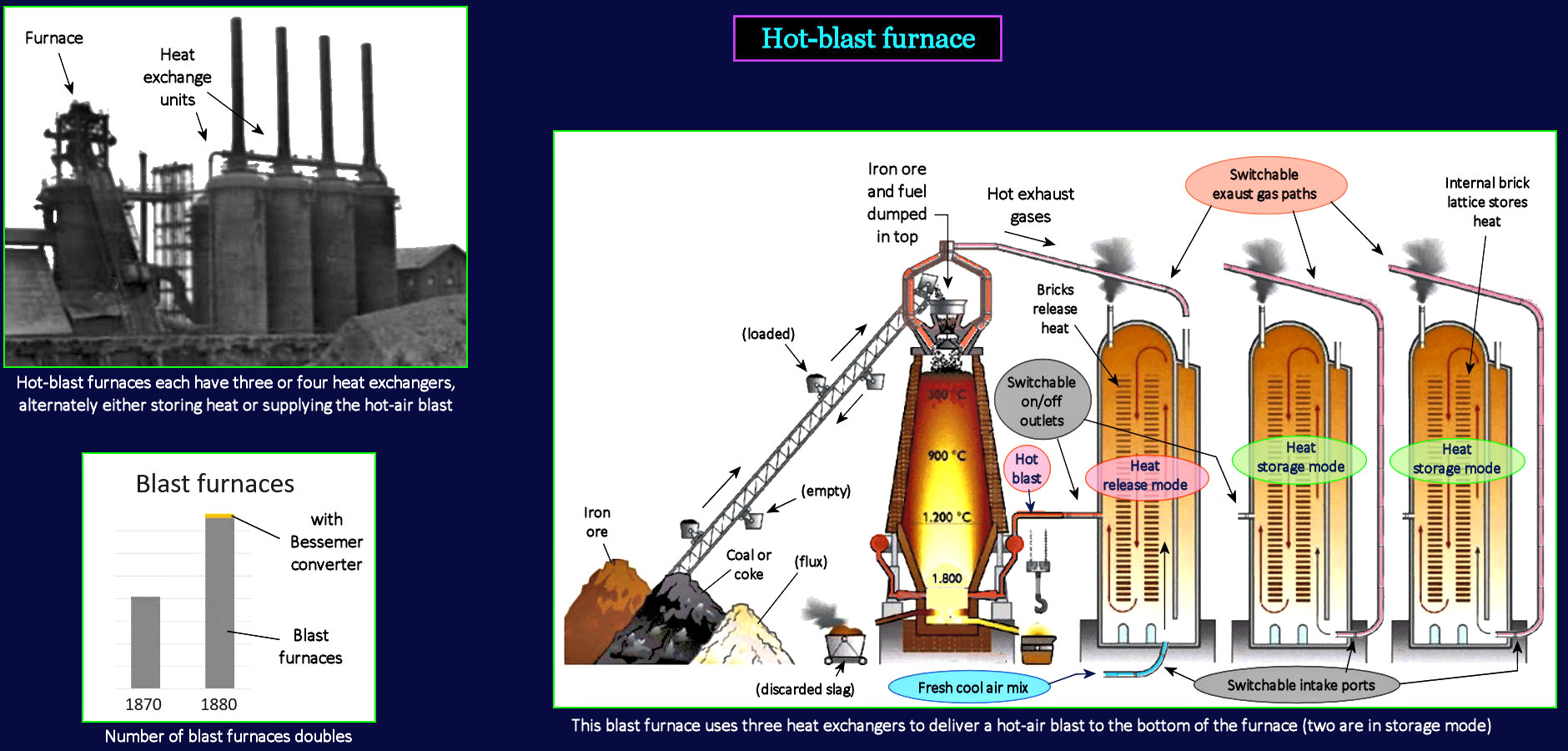
Efficiency Boost The hot-blast furnace itself is not markedly different from earlier blast furnaces, though it is typically larger. It has a mechanical elevator to move tons and tons of iron ore and coal to the very top of the furnace, where it is then dumped into the very top. But the real innovation is the use of multiple heat-exchange towers (with dome-shaped tops), which supply the hot blast. These identical towers have switchable piping, allowing them to either store heat or discharge it (see explanation above). | |||||||||
| |||||||||
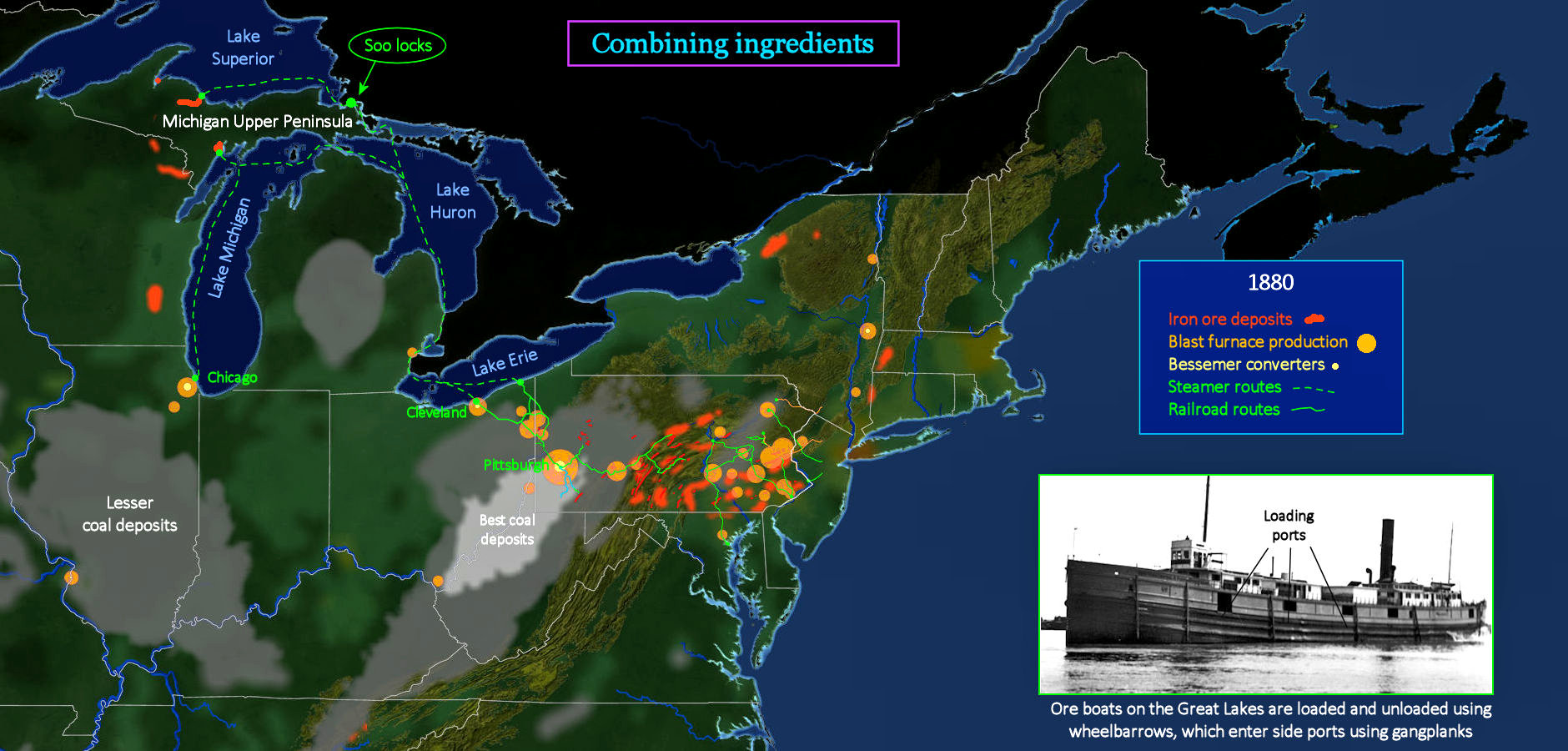
Unifying Transportation Network By 1880, the entire iron-based economy is being powered by a vast network of mining and transportation operations. As existing sources of iron ore level off, large new fields are developed in the Upper Peninsula of Michigan (see map). Ore is transported from the mines by rail, then loaded onto steam vessels for the voyage south to the receiving centers in Chicago and Ohio, some using the Soo Locks. Early ore boats are simply large lake steamers with special ports in the side to load and unload ore, by hand. | |||||||||
| |||||||||
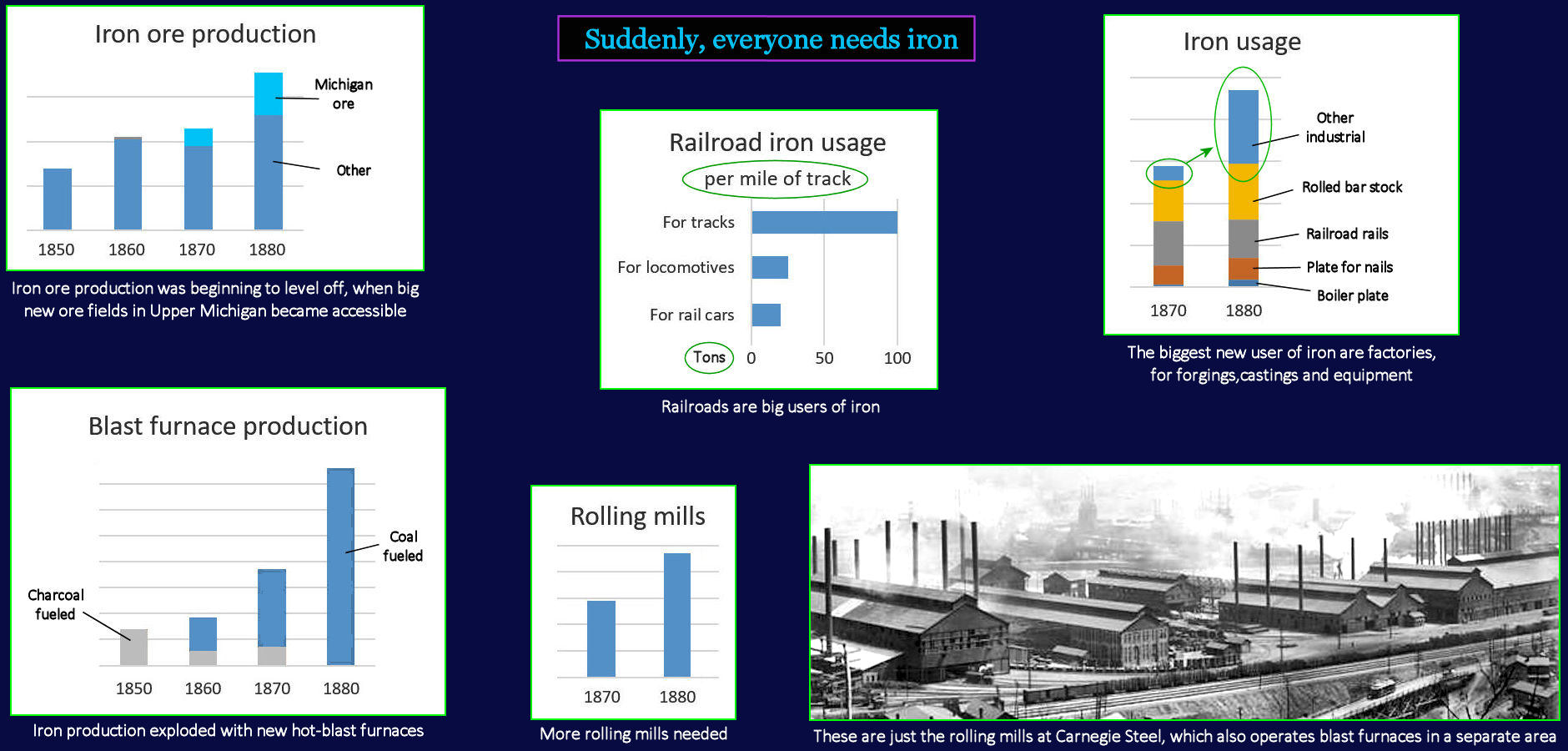
Steeply Rising Production The charts above document the rapidly-rising consumption of iron and iron products. Railroads continue to be big users, as it takes something like 100 tons of iron for each mile of new track and related equipment (center top). The chart at top right shows that railroad rails alone account for one-sixth of total iron usage. This chart also shows that by far the biggest growth segment is the 'other industrial' category, which reflects the exploding manufacture of industrial equipment. | |||||||||
| |||||||||
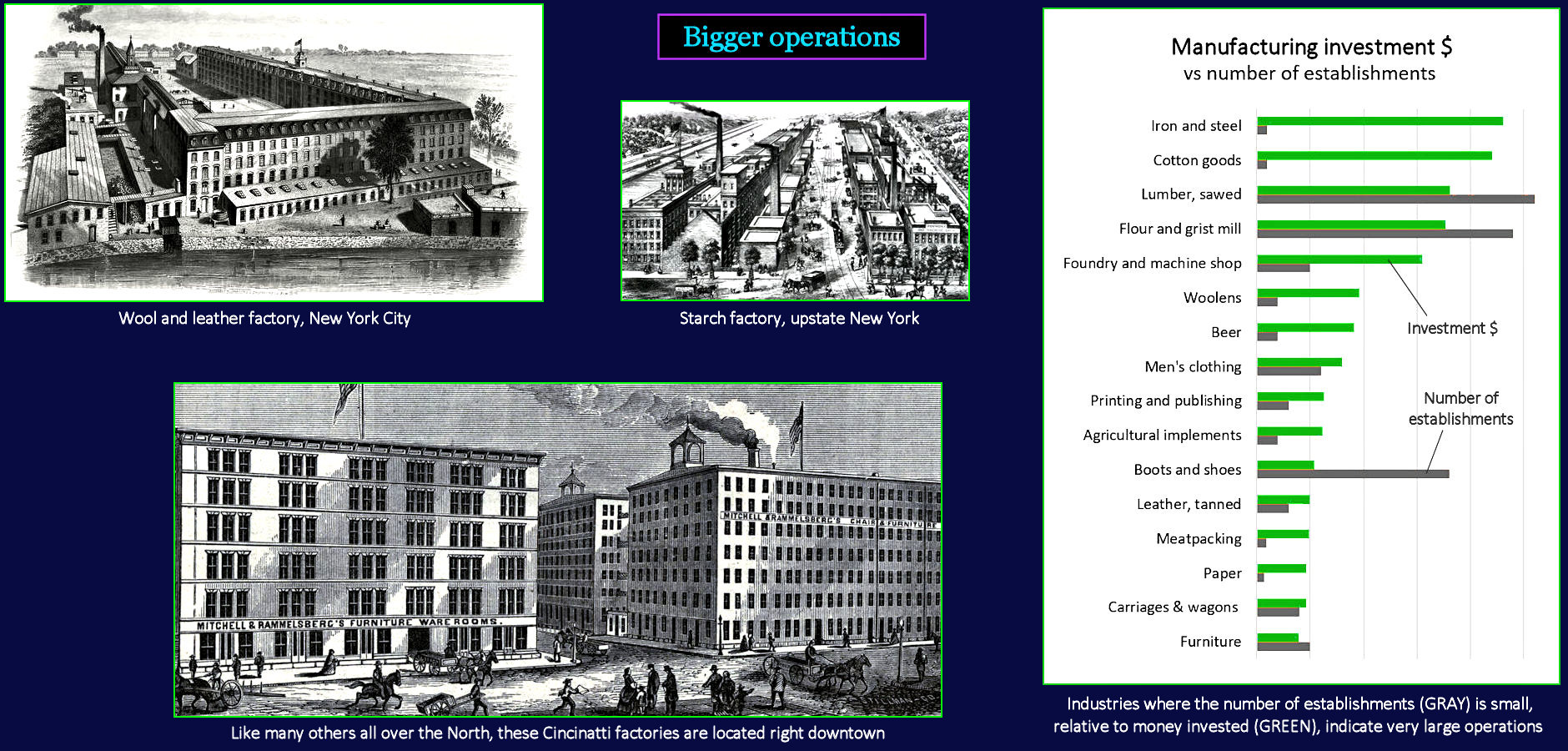
Economies of Scale One side effect of growth is the appearance of bigger operations, taking advantage of economies of scale. The top two listings in the chart (iron and steel, and cotton goods) both have very long green bars (investment in equipment), but very short gray bars (number of establishments). These are the big operators, which includes most textile mills. By contrast, the 'boots and shoes' category has a short green bar but long gray bar. This reflects many small-scale businesses, with little equipment. | |||||||||