| |
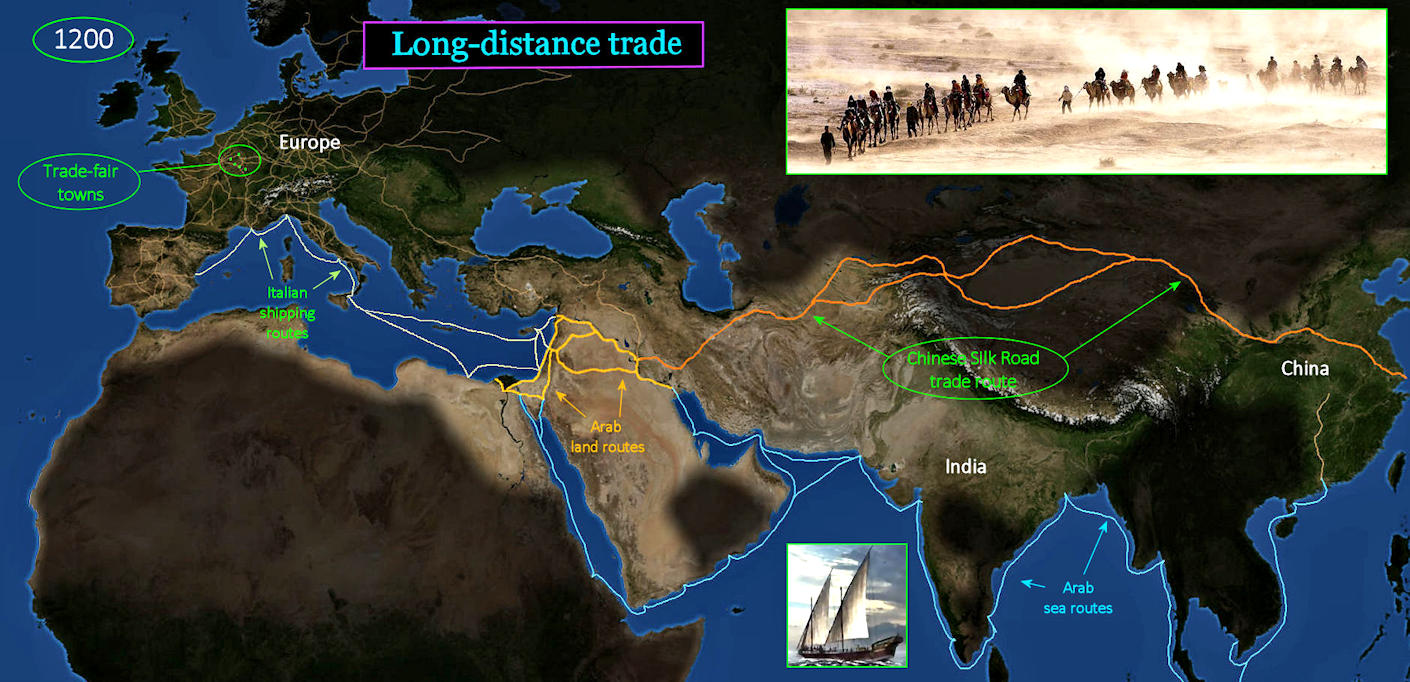
Silk and Spice Business is stable and thriving in Europe for the next 100 years. The big-money trades are long-distance exchanges between the gold-hungry Chinese in the Far East, and the silk-and-spice crazed Europeans. In the middle are Muslim Arab traders in the Middle East, and Italians controlling the connecting shipping routes up to the trade-fair towns in France (top left on map). |
| |||||||||
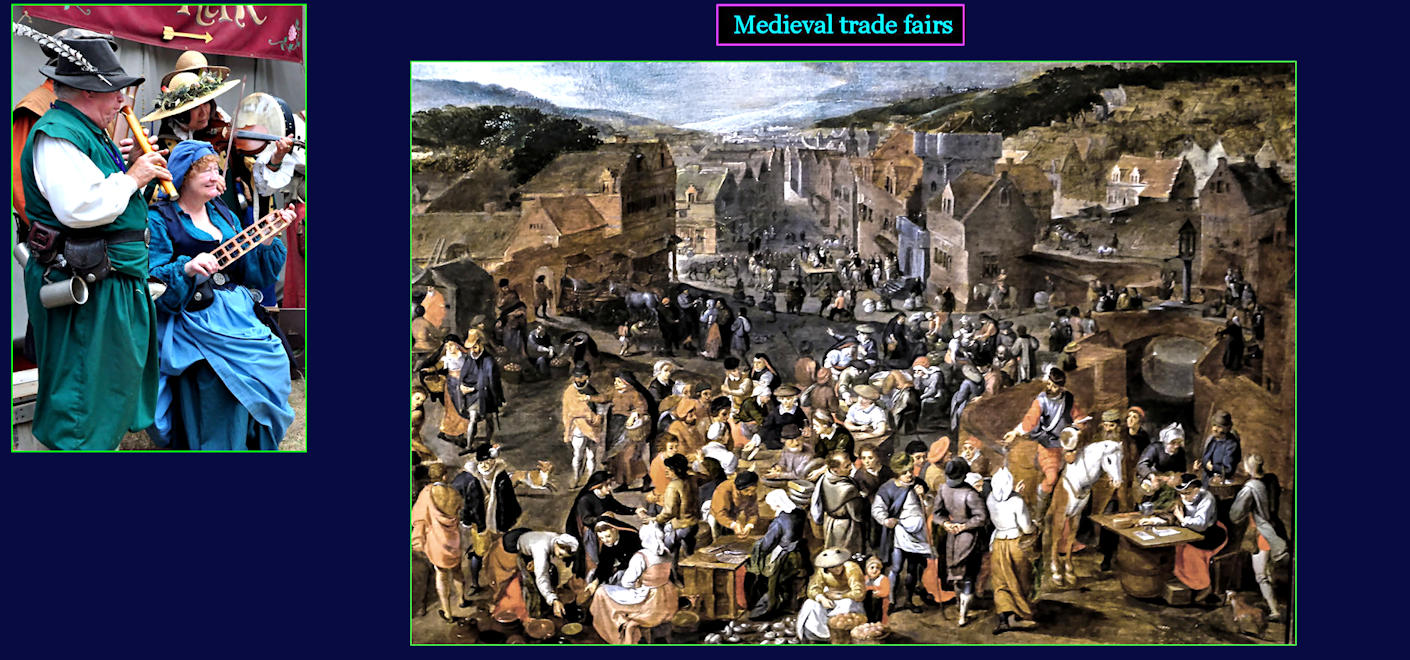
Free-market Capitalism Luxury items from the east are taken north, to towns in a special part of France where 'trade fairs' are held. These towns are particularly business-friendly, and the fairs operate free of government interference. The fairs last all year, with a different town acting as host every couple of months, one after the other. This marks a brief period when true 'free market' conditions actually exist in Europe. It all comes to a sudden halt around 1300, when the French king finally takes control of the region, and the business. | |||||||||
| |||||||||
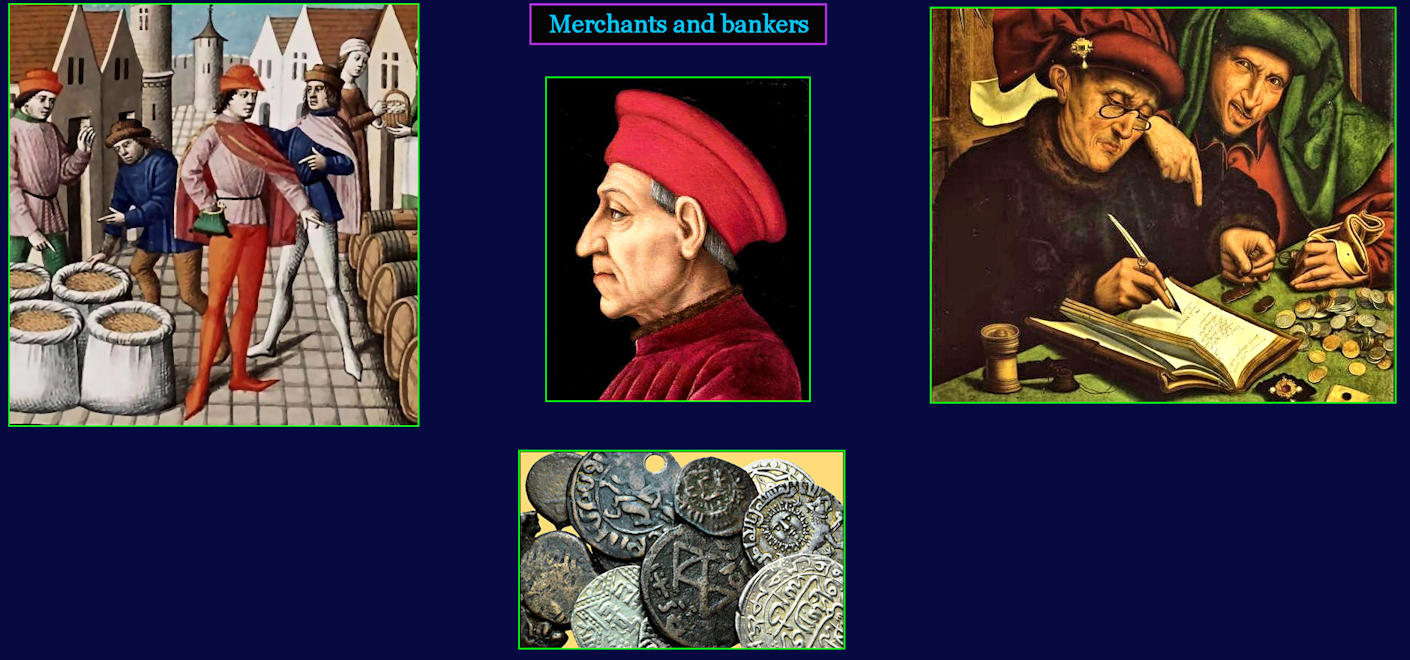
Commercial Transactions The term 'merchant' is rarely used today, but in medieval Europe it's a kind of all-purpose term for businessmen who trade in a wide variety of products. It refers to ordinary tradesmen, like shoemakers, but also to those who travel around looking for goods to buy, and then resell elsewhere at a higher price. Large transactions are usually handled by Jewish bankers and moneychangers, as Christians and Muslims are prohibited by their religion from charging interest. Jews are free to charge interest to non-Jews. | |||||||||