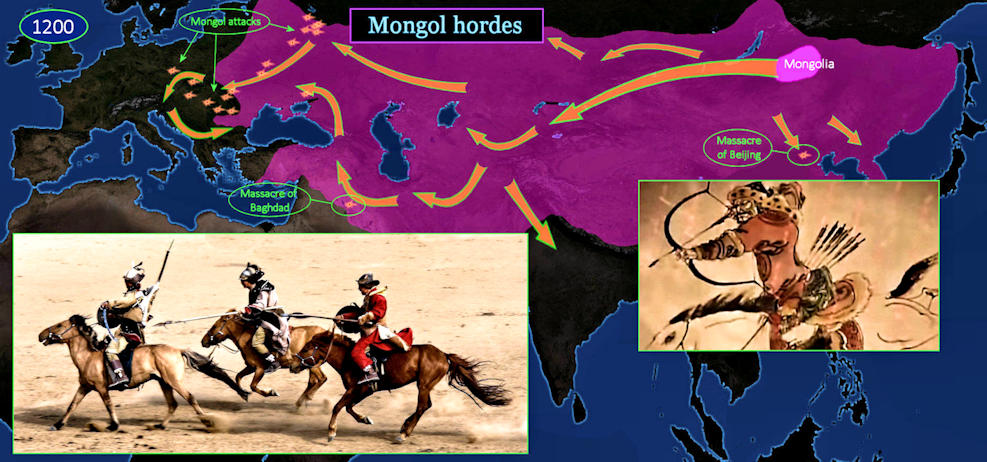
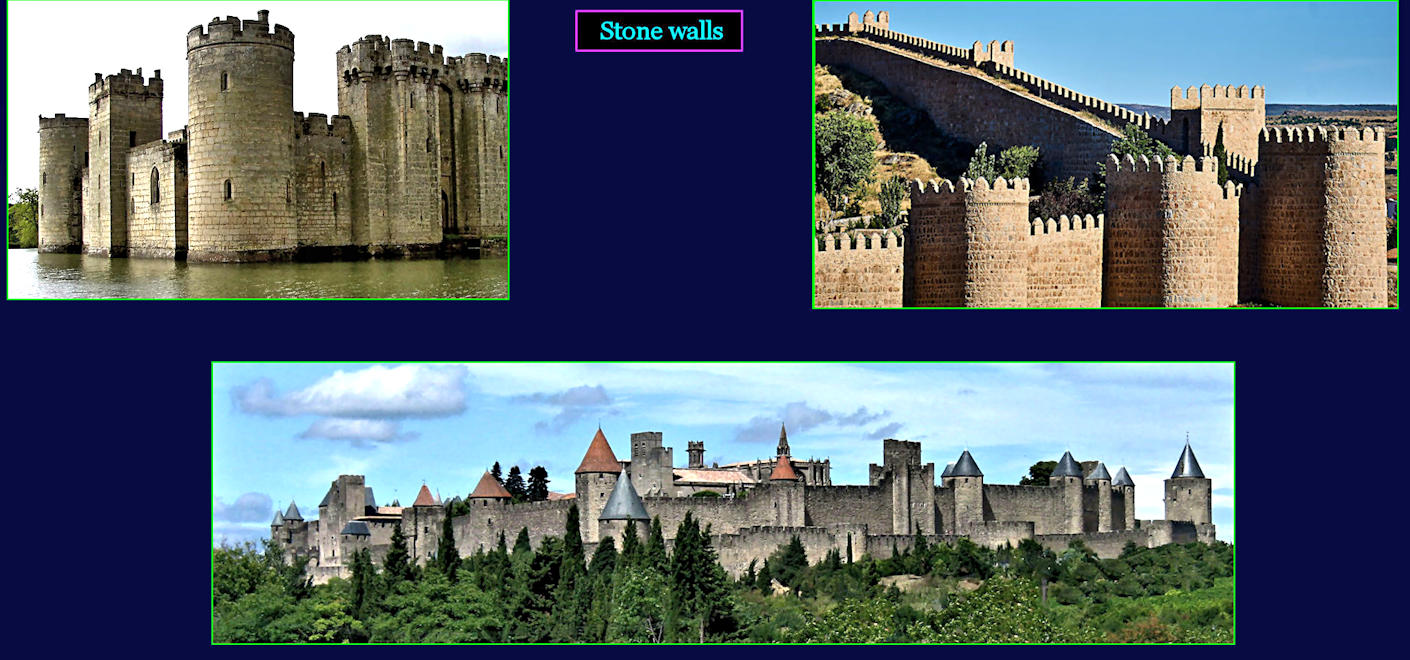
Hunkering DownThe Mongols are able to cover great distances in a single day, by swapping off their mounts. This enables them to arrive at a target before their surprised victims even know they are approaching. This accelerates an already existing trend of erecting walls around any potential target, as a deterrent to attack. Wealthy noblemen build great stone castles, while most important towns are enclosed in stone fortifications. |
| ||||||||||||||||
| |||||||||
Hiding Behind Walls With so much fighting, and the persistent threat of invasion, medieval people are understandably obsessed with security and protection. Although there are no machines to help with the construction, castles and fortified walls are built literally everywhere. The stones are raised into position using animals, ropes, rollers and pry bars. When you consider the effort it would take to erect these massive walls, with such huge individual stones, you get an idea of just how hair-raising these times must have been. | |||||||||
| |||||||||
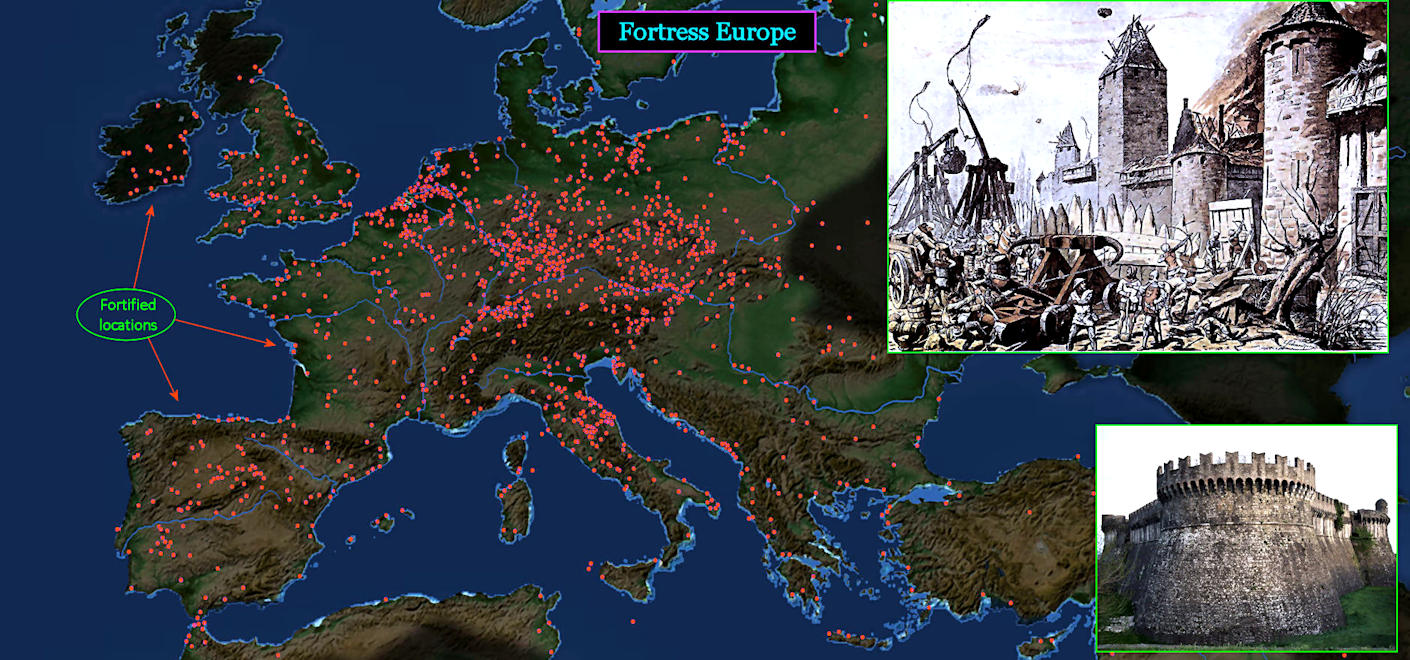
Defensive Fortifications Each RED dot on this map indicates the location of a castle or walled town. That's a lot of material and effort, just to get through the day without being overrun by hostile neighbors. Eventually, however, cannons are developed that can knock down any wall, no matter how thick. This brings an end to the strategy of trying to withstand a siege by sitting tight behind stout walls. In the future, great armies will be forced to meet in the field, to settle matters in open battle. | |||||||||