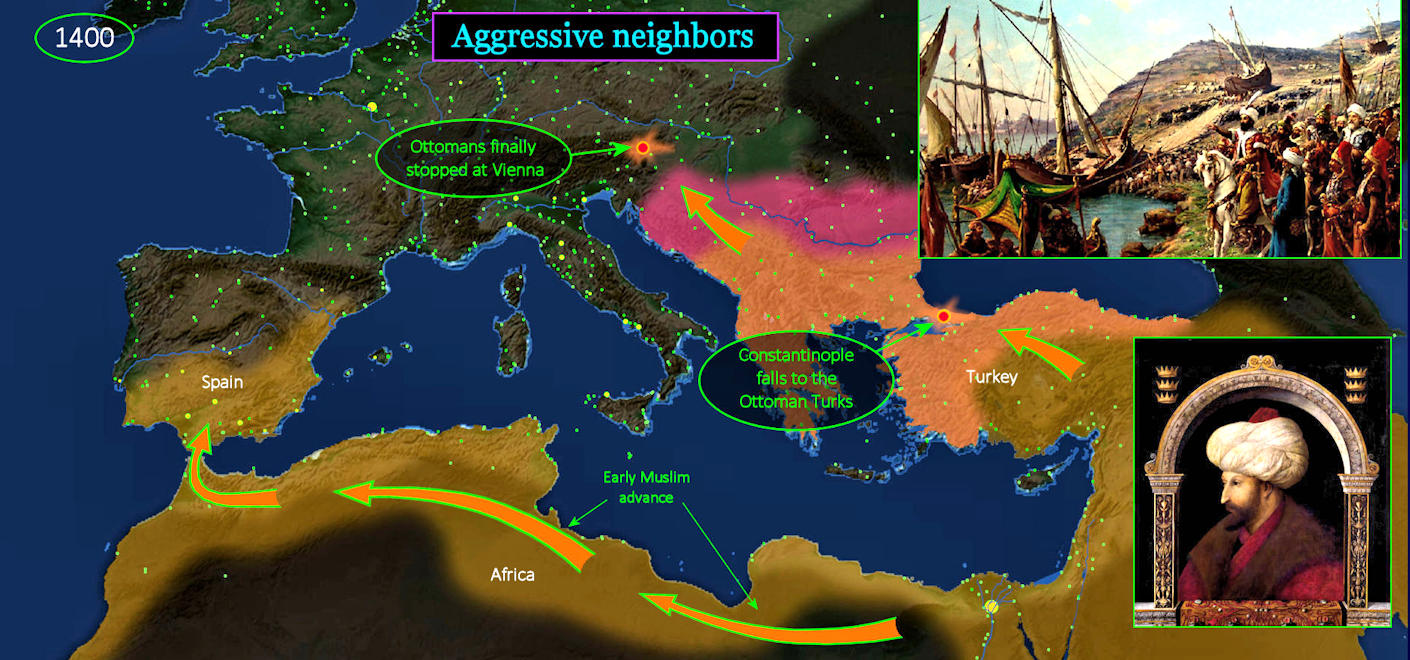
Approaching threatThe invasion of Arab-speaking Muslims is different. After spreading west across the rim of Africa, and up into Spain, Muslim armies shift their attention north, where their advance continues under the terrifying Ottoman Turks. Even mighty Constantinople, long considered impregnable, falls to their relentless onslaught. By the late 1400s, the Ottoman Turks are threatening central Europe itself. They are finally stopped for good at Vienna. |
| ||||||||||||||||
| |||||||||
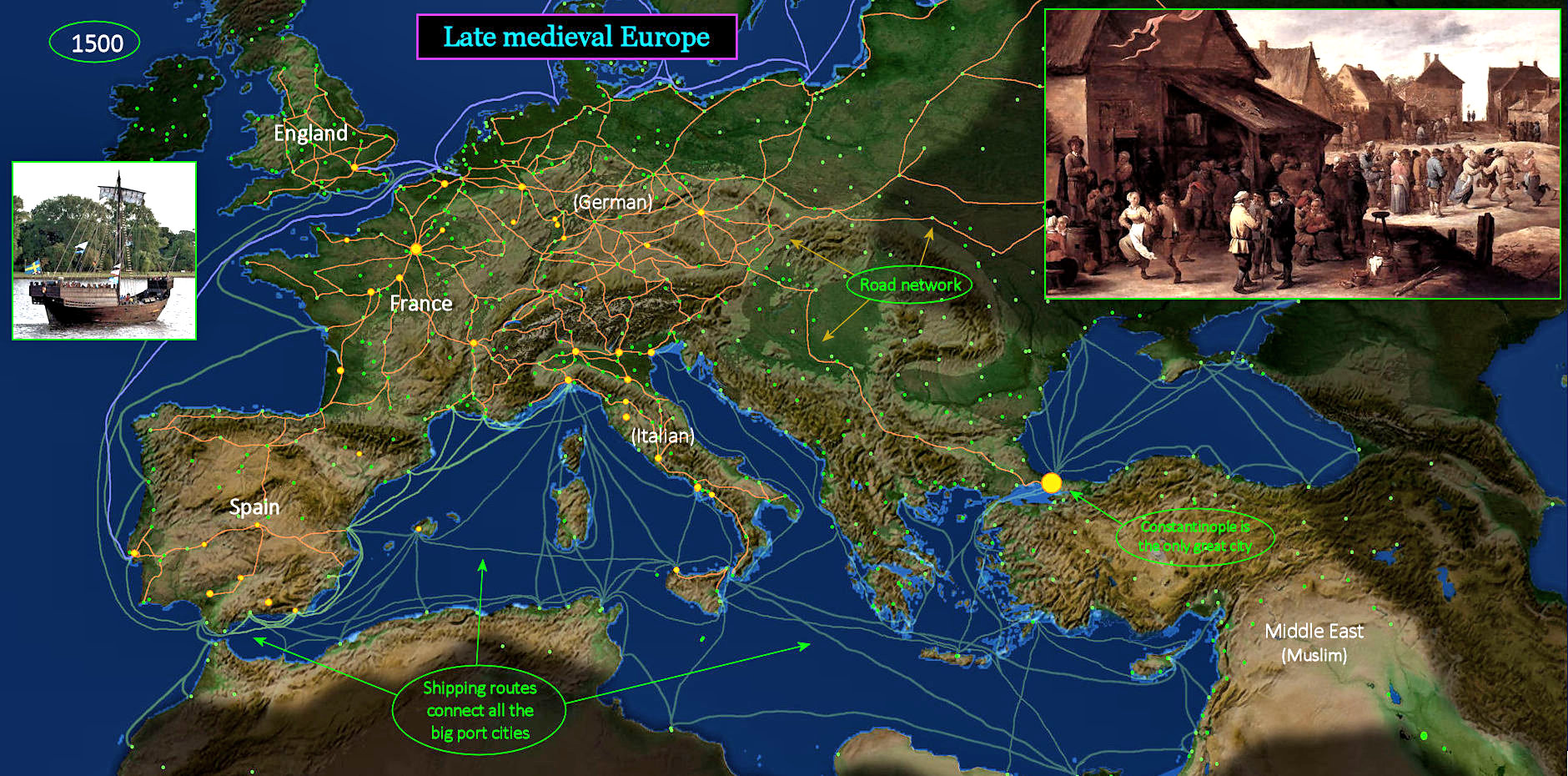
Medieval Commerce After the Muslims are safely pushed back, medieval Europe becomes a bustling hive of business activity, supported by complex shipping networks on both land and sea. Italians control shipping in the Mediterranean, and most of the Atlantic trade up to England. The Middle East, with extensive shipping connections to India and China, remains firmly under the control of Muslim Arabs, who are traders by long habit. | |||||||||
| |||||||||
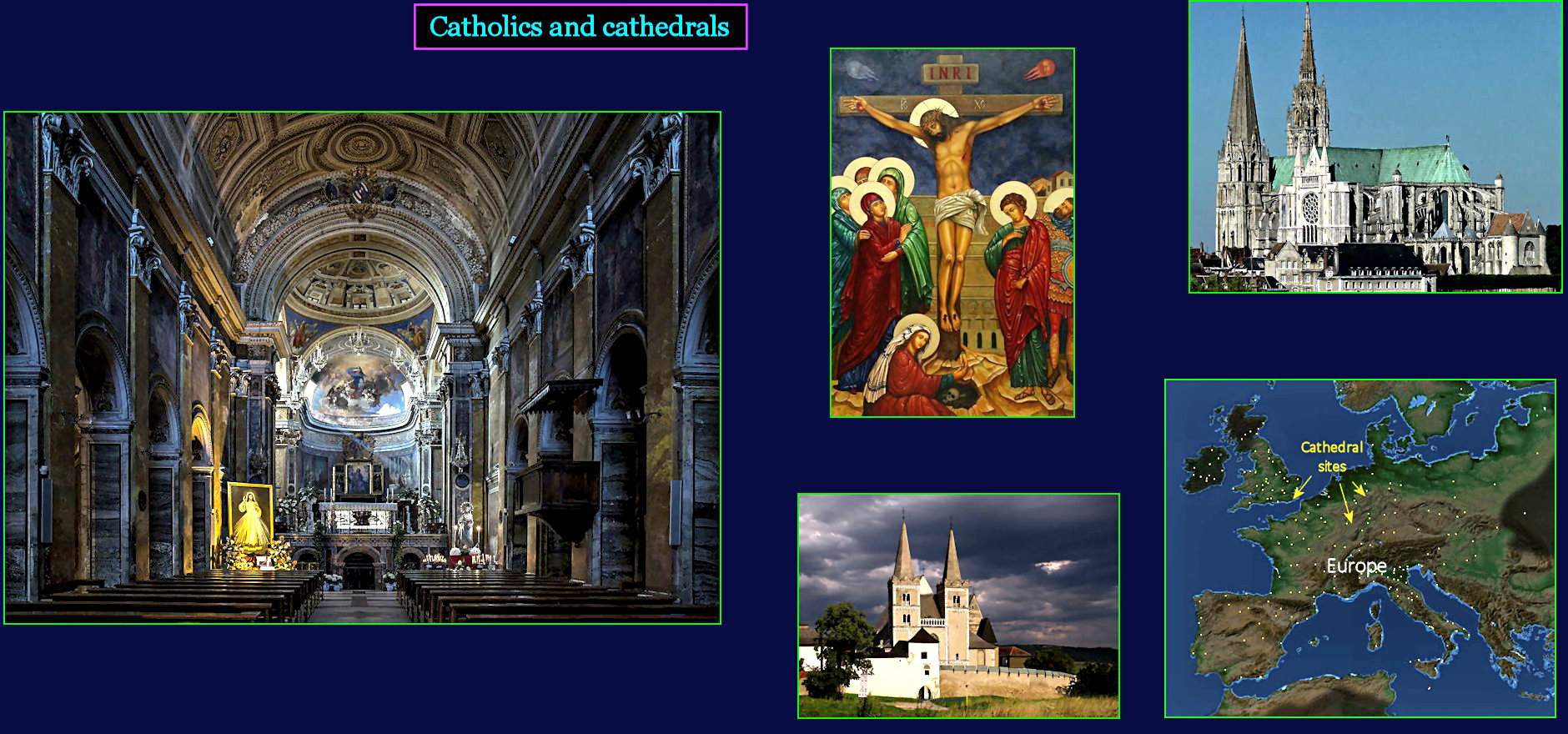
Medieval Cathedrals Until the mid-1400s, the only real church in Europe is the Catholic Church, ruled by the Pope in far-distant Rome. Even kings sometimes need the Pope's blessing. This gives the Church great power, and with it comes great wealth. The Church builds magnificent cathedrals all over Europe, and some smaller ones as well (center bottom). Protestants will eventually become dominant in England and Germany, after the introduction of the printing press, but Catholics remain in control elsewhere in Europe. | |||||||||