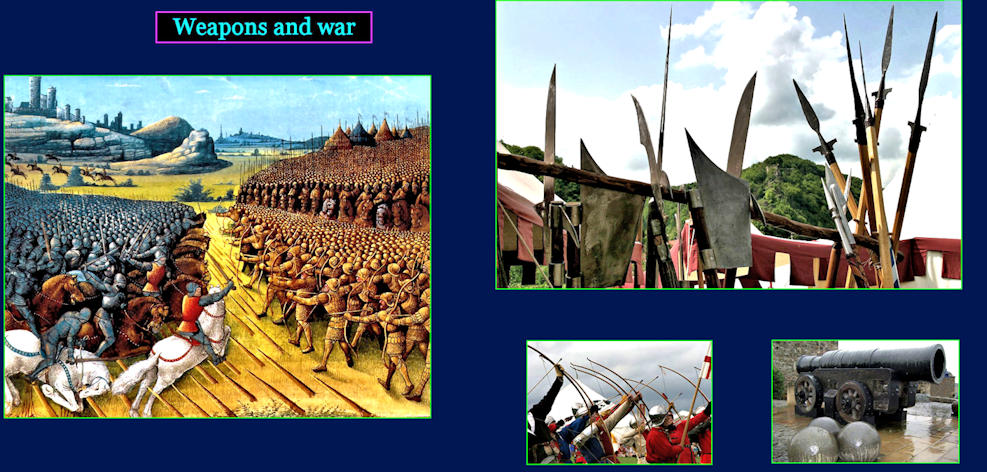
Military TechnologyThe bow-and-arrow remains a deadly weapon, perfected in the English longbow, while swords, lances and battle axes are still the norm for hand combat. Body armor is gradually upgraded from padded leather to iron. Armored knights are often mounted on large war horses, which are also often armored. When properly managed, they can plow into massed infantry with irresistible force. This is the 'battle tank' of its day. |
| ||||||||||||||||
| |||||||||
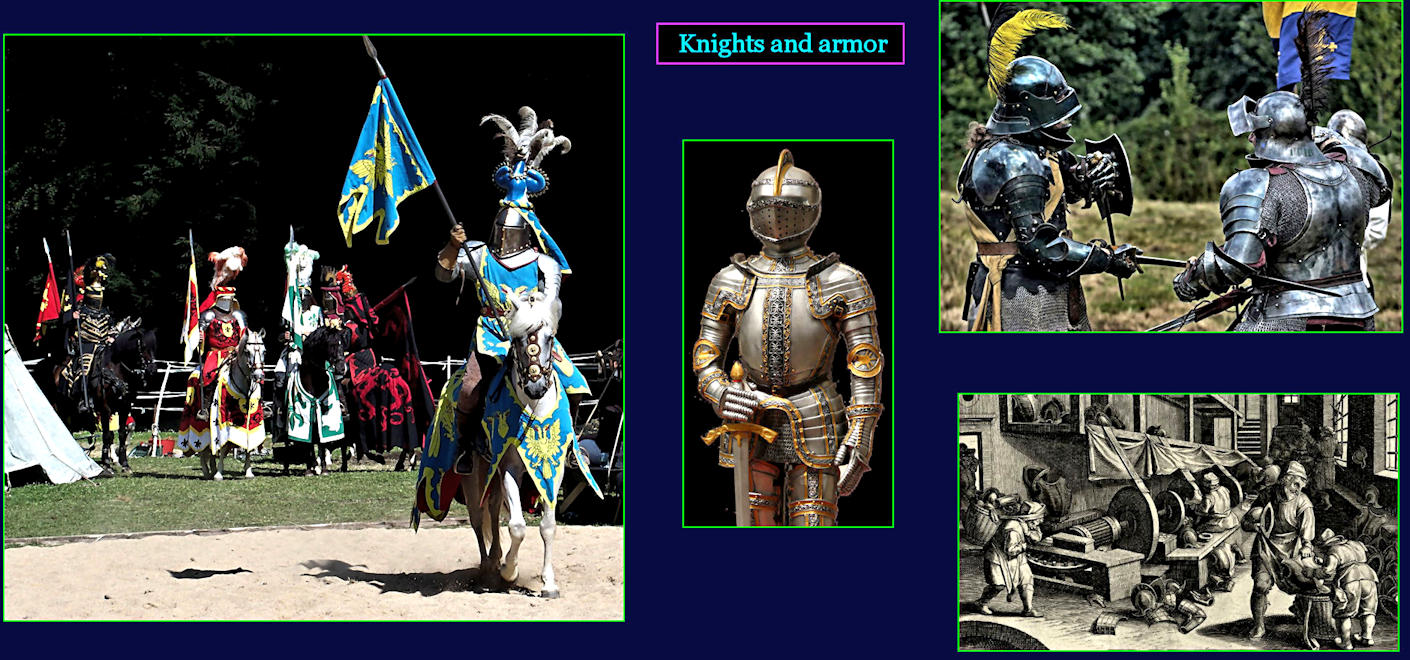
Armor The height of armored technology is the mounted knight. Imagine standing in a battle line, with several hundred mounted knights thundering down on you, at full gallop. The skill of the workmen who make the armor (lower right) results in marvelous examples of ornate body armor (center), for the wealthy few who can afford it. Everyone else fights in simpler armor, which is gradually made more comfortable by the introduction of a kind of flexible metal fabric called chain mail. | |||||||||
| |||||||||
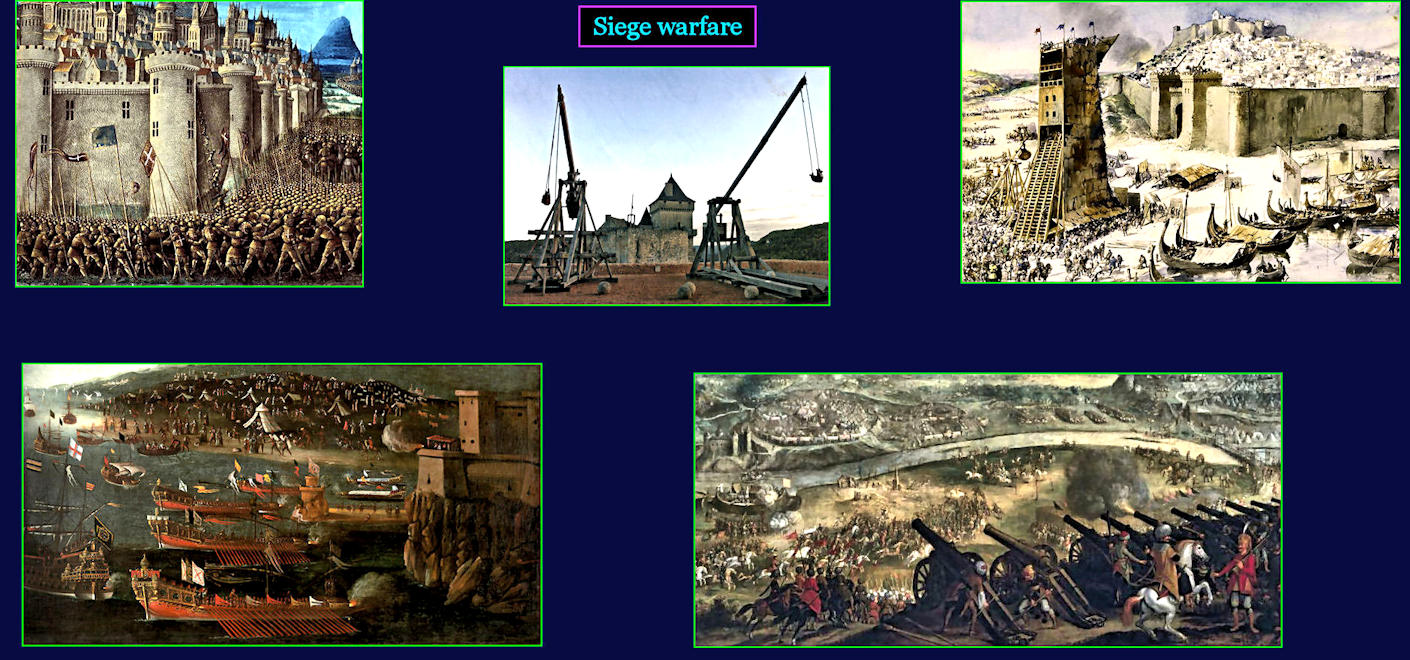
Europe Under Siege The favored form of battle is the siege. This involves surrounding a castle or town, and trying to starve the defenders into surrendering. The logic of the siege is brutal. If defenders surrender quickly, the invaders take everything of value, and levy taxes for years to come, but everyone survives. If defenders stubbornly resist, however, the invaders might manage to breach the defenses anyway, and slaughter all the remaining men. Women and children are then often sold into slavery. | |||||||||