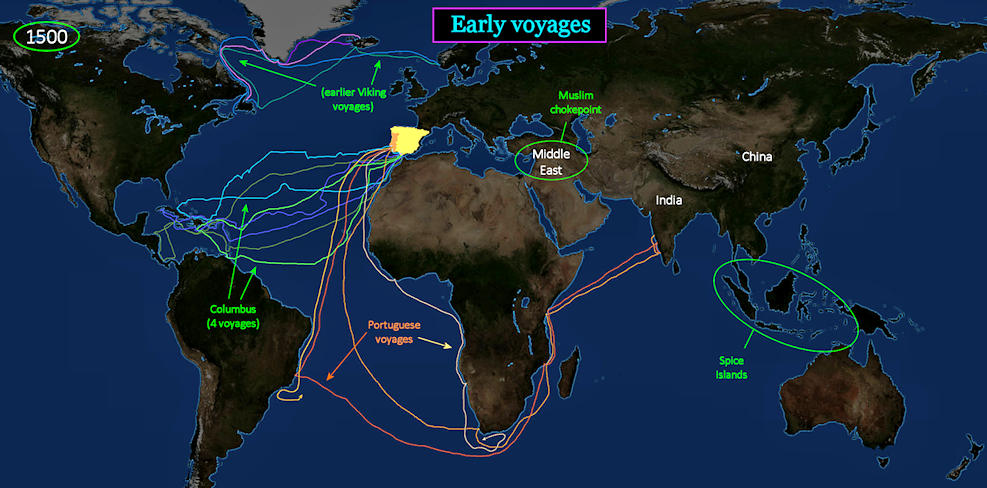
Searching for RichesThe solution is to bypass the Middle East altogether. The obvious route is to sail around the tip of Africa, and then head east. This is the option favored by the Portuguese, and later the Dutch and English. Like most seamen, Columbus knows that the earth's surface is curved, so the entire planet must therefore be round. He believes, correctly, that you can also get to India by sailing west. This ushers in a new era of exploration. |
| ||||||||||||||||
| |||||||||
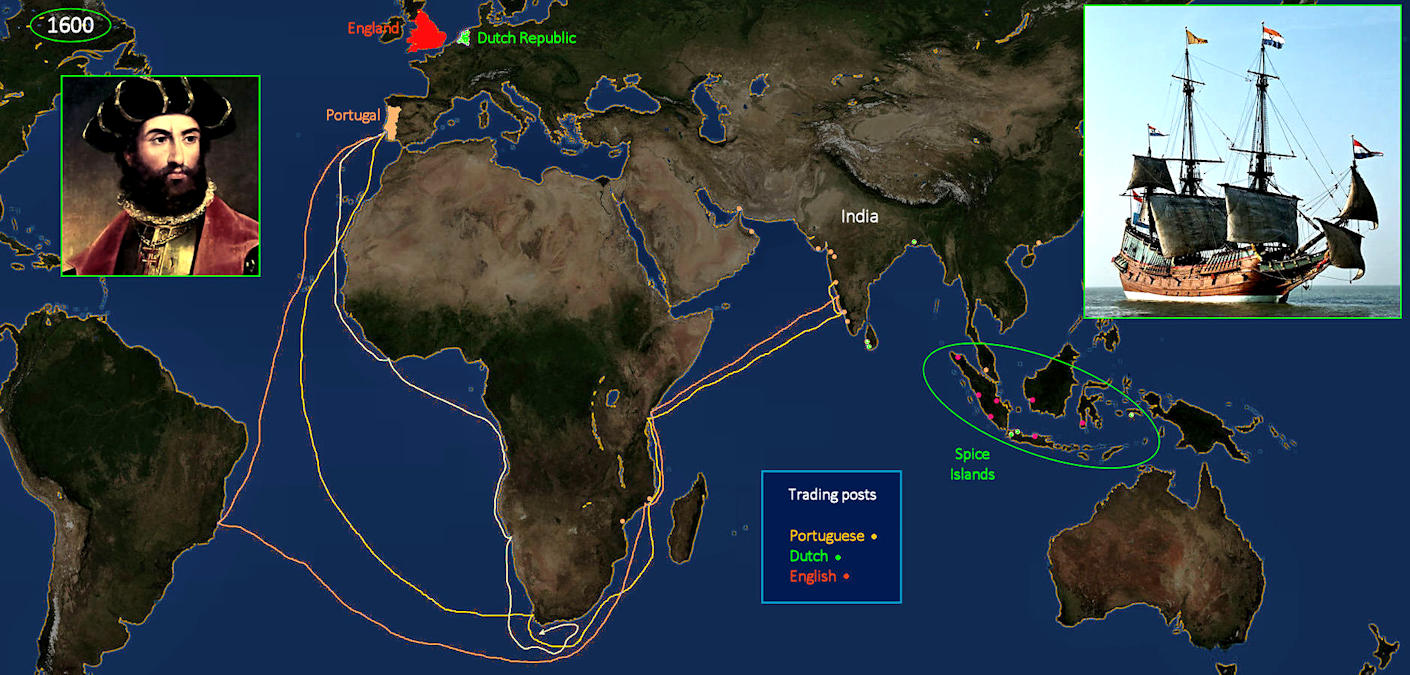
Sailing Around Africa The Portuguese focus on India, because it's the center of the lucrative pepper trade. They establish bases there (ORANGE dots), but are unable to hold onto bases further east in the Spice Islands. Enterprising Dutch merchants muscle their way into the Spice Island trade (GREEN dots). The Dutch create the world's first public stock offering, raising a vast sum of money to launch the hugely profitable Dutch East India Company. The British respond by creating a similar global trading company (RED dots). | |||||||||
| |||||||||
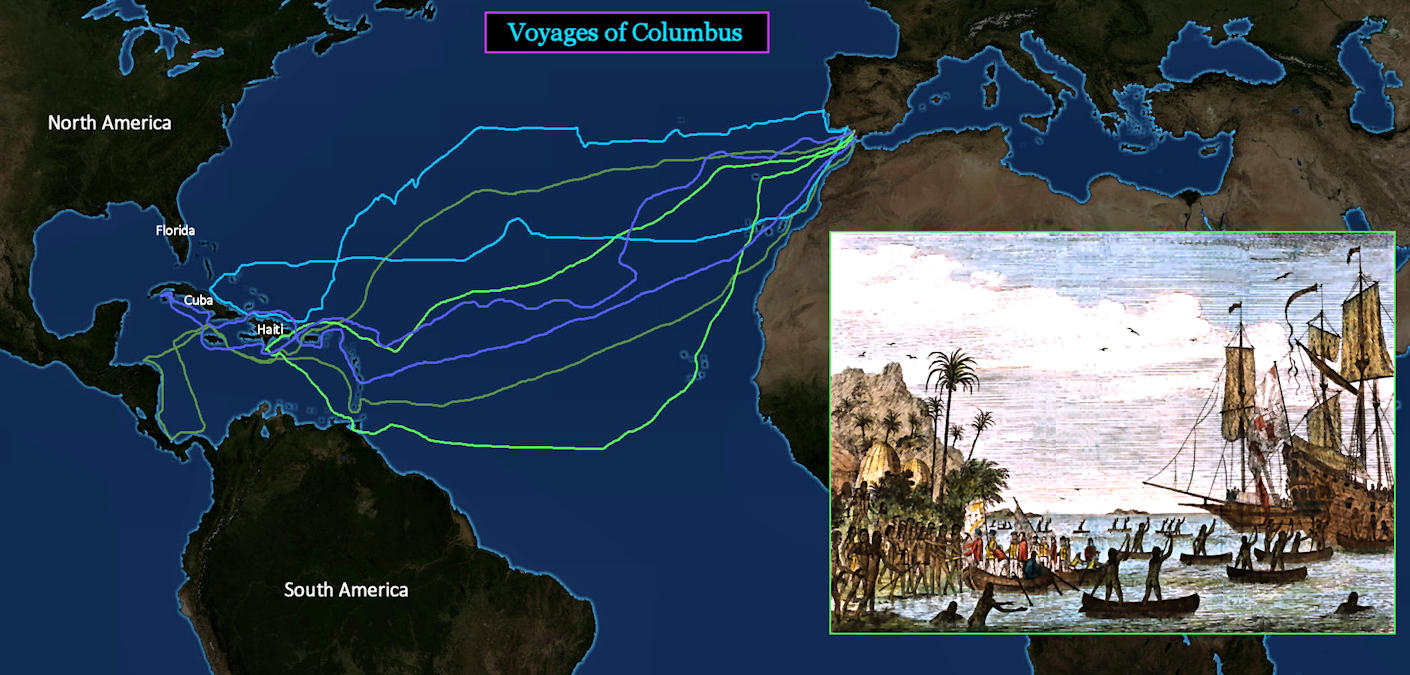
Searching for India The lines above show the routes of the four voyages of Columbus. Note that he never actually reaches the shore of Florida, or any other part of today's America. He is resolutely focused on exploring further South, knowing that India lies well south of Japan, his first planned stop. The native peoples he encounters do not look Japanese, so he assumes the islands must be near India. Columbus refers to the natives as 'Indians,' and continues to believe that he has actually made it to India. | |||||||||