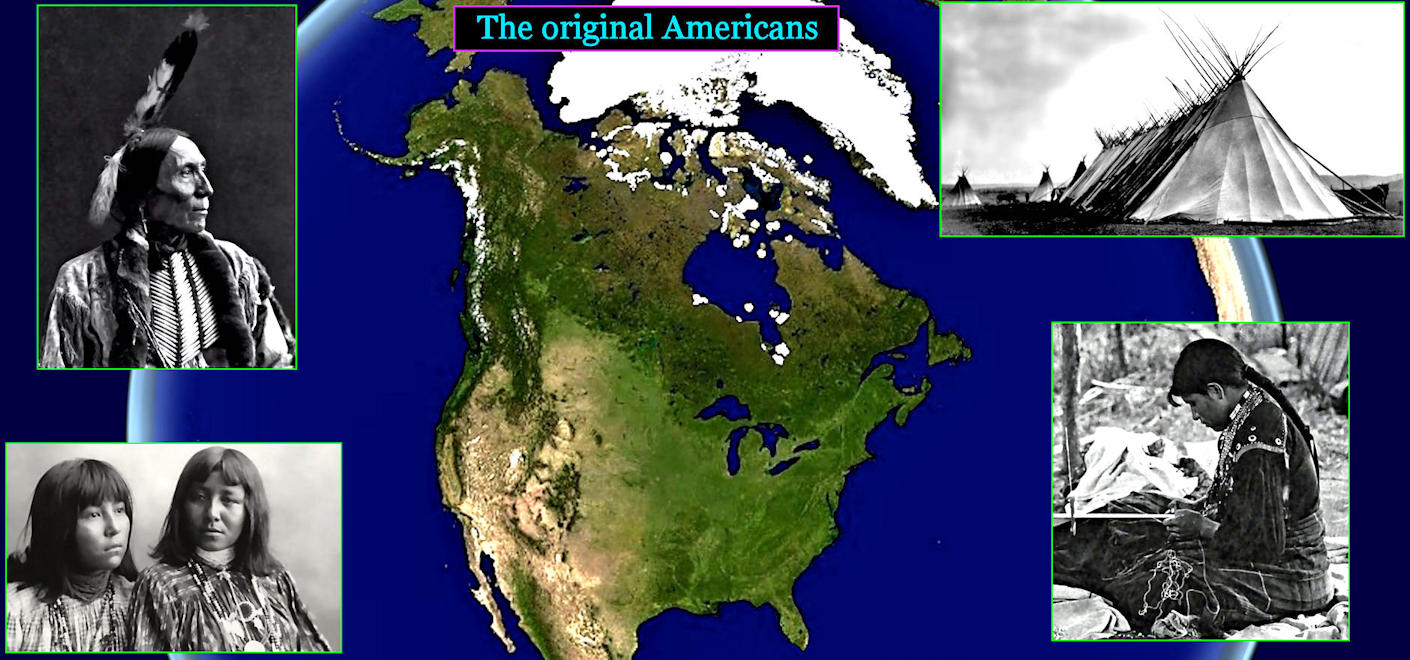
American IndiansIndians inhabiting the eastern half of America live in a land of plentiful rainfall, where game animals can be found almost everywhere, and hunted throughout the year. They live in permanent villages thinly sprinkled about. The Plains Indians inhabit a different, dryer land, and live in camps of teepees, as they follow the buffalo herds so necessary for survival. The herds move each year from summer to winter feeding grounds, and the Indians follow. |
| ||||||||||||||||
| |||||||||
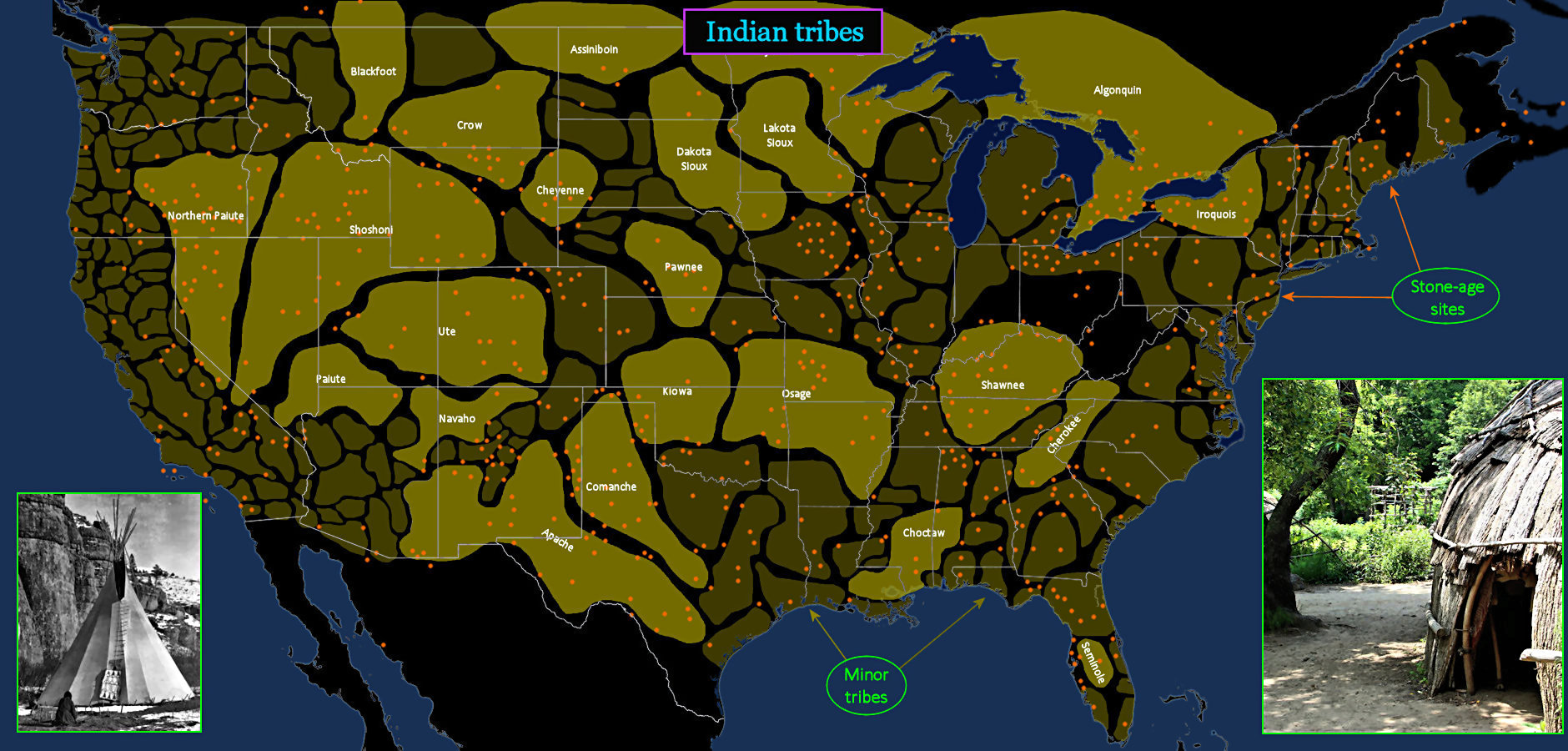
Indians Everywhere As shown above, there are about 20 large tribes, inhabiting extensive areas but sharing a single language (identified above with tribe names). Many of these are in the western half of America, where roaming buffalo herds are the only dependable source of sustenance. In the middle of the continent, and along the West Coast, are hundreds of much smaller tribes, each with a distinct language (tribe names omitted). The ORANGE dots indicate known stone-age settlements. | |||||||||
| |||||||||
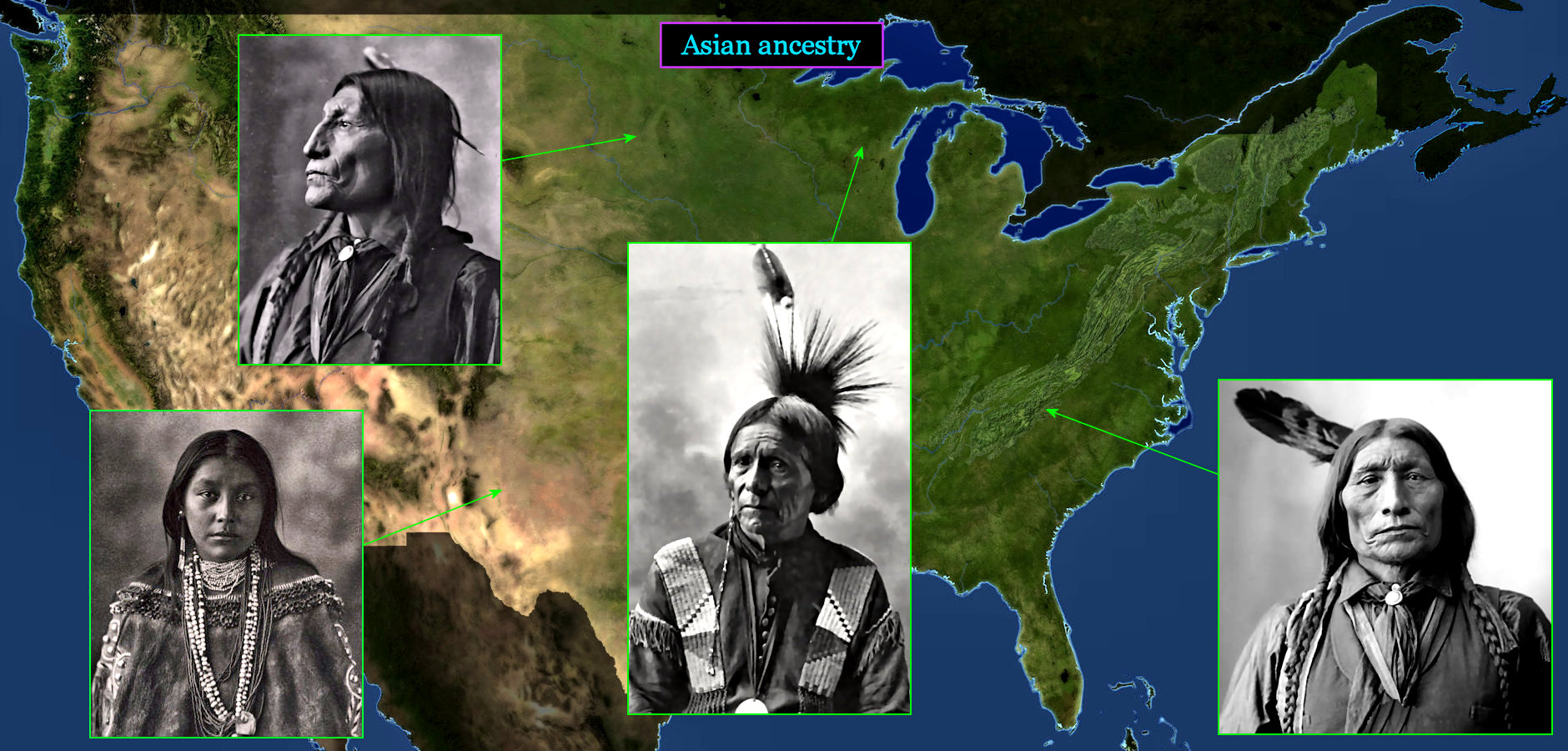
Not Like Europeans Indians come in many flavors, but they all share a common ancestry. They are all descended from stone-age humans that originally lived in and around Mongolia, in northern Asia. For this reason, they do not resemble the northern Europeans who later arrive in America. This helps cement a fundamental distrust between settlers and Indians which is never overcome. | |||||||||