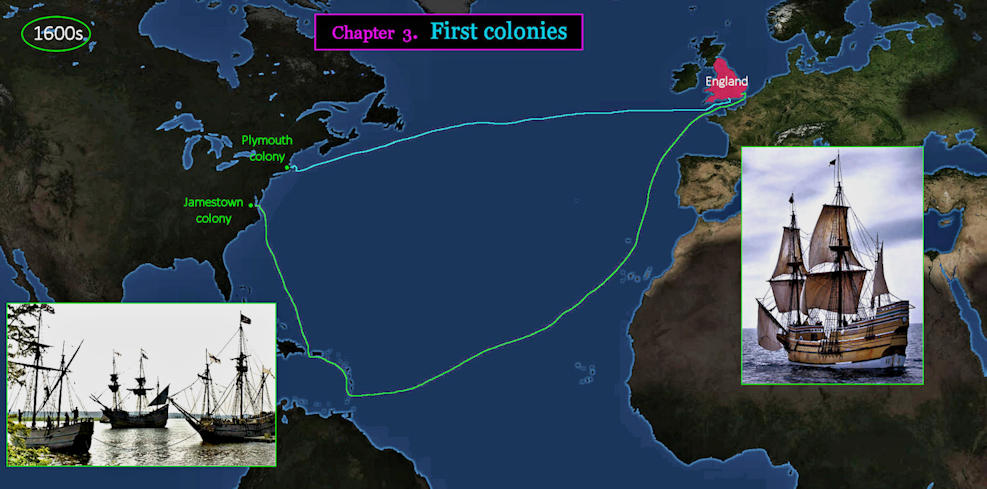
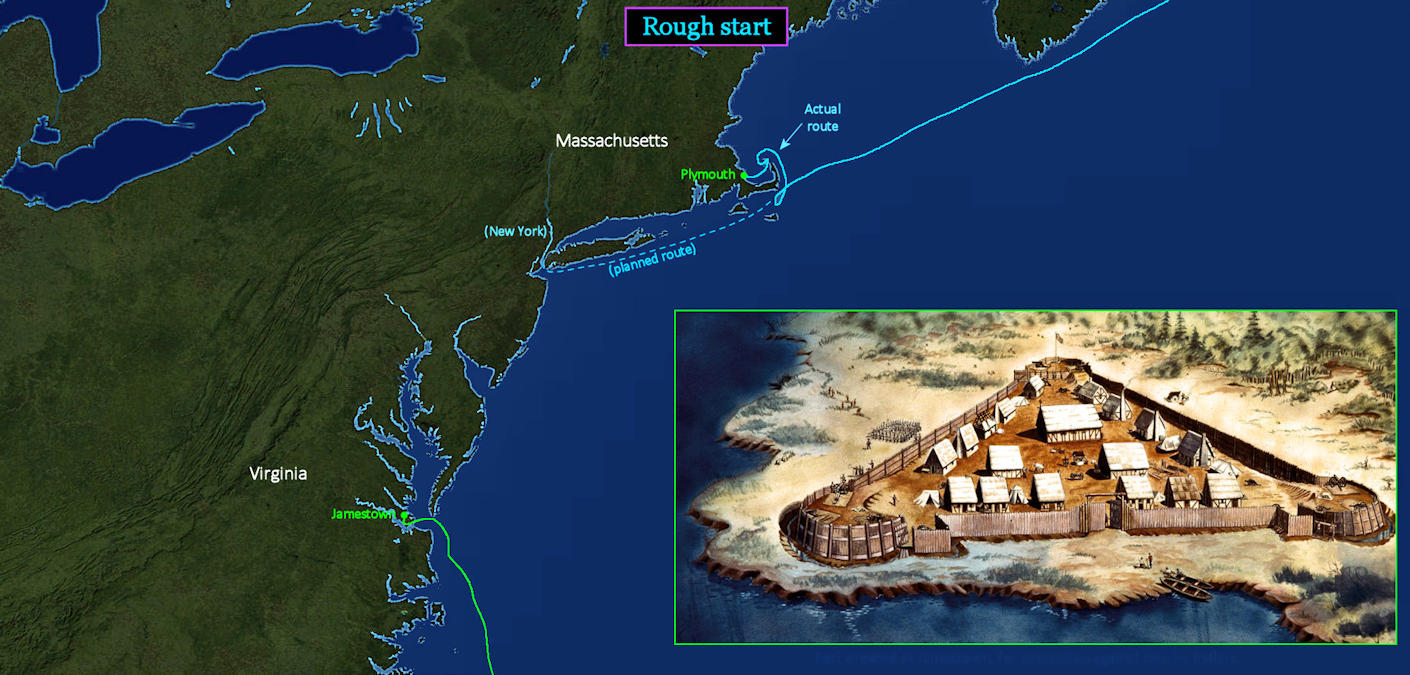
Across the OceanThe first successful settlement is established in Virginia, at Jamestown. Colonists arrive in three vessels, funded by a group of wealthy London merchants who are given a monopoly on the region by the King. A dozen years later, another group of colonists takes a more northerly route. Less well financed, it only manages to get a single ship to Massachusetts. It's the tiny Mayflower, crammed with 100 eager but nervous settlers. |
| ||||||||||||||||
| |||||||||
Adventurers and Pilgrims The Jamestown colony starts off well enough, with settlers who expect to be able to trade with the Indians for the food they will need. The Indians quickly turn hostile, however, and delays in the first re-supply mission lead to the 'Great Starving Time.' The Pilgrims at Plymouth have a similarly rocky start, finally arriving at their landing during the first snow of winter. There is little time to set up shelters, and half die before the first re-supply ship arrives, with more settlers but few supplies. | |||||||||
| |||||||||
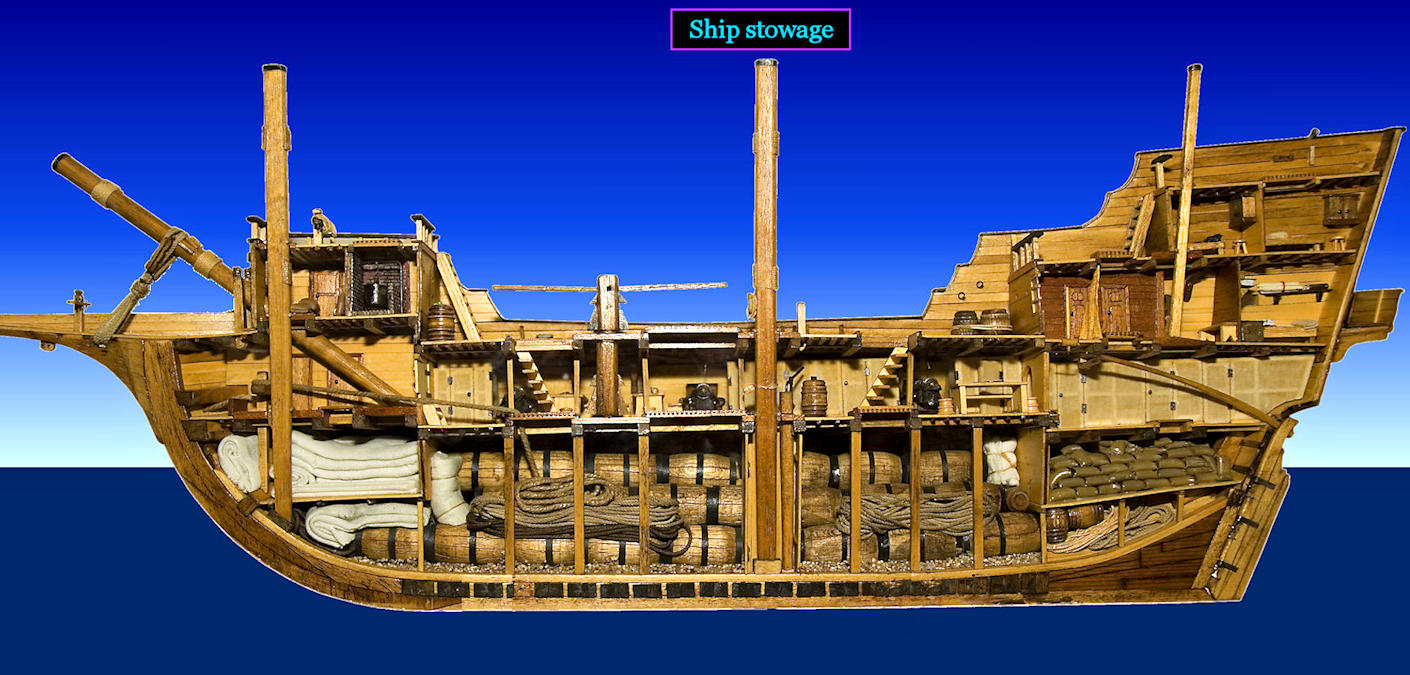
Stowage for the Journey This shows the typical layout of merchant vessels like the Mayflower, which aren't intended to carry passengers at all, and certainly not women or children. The top deck is used by the crew to manage the sails, and by passengers whenever conditions permit. During bad weather, passengers are forced to remain below, on the severely cramped gun deck, and anywhere else with available space. Supplies, gear and building materials for homes are stowed in the hold, just above the keel. | |||||||||