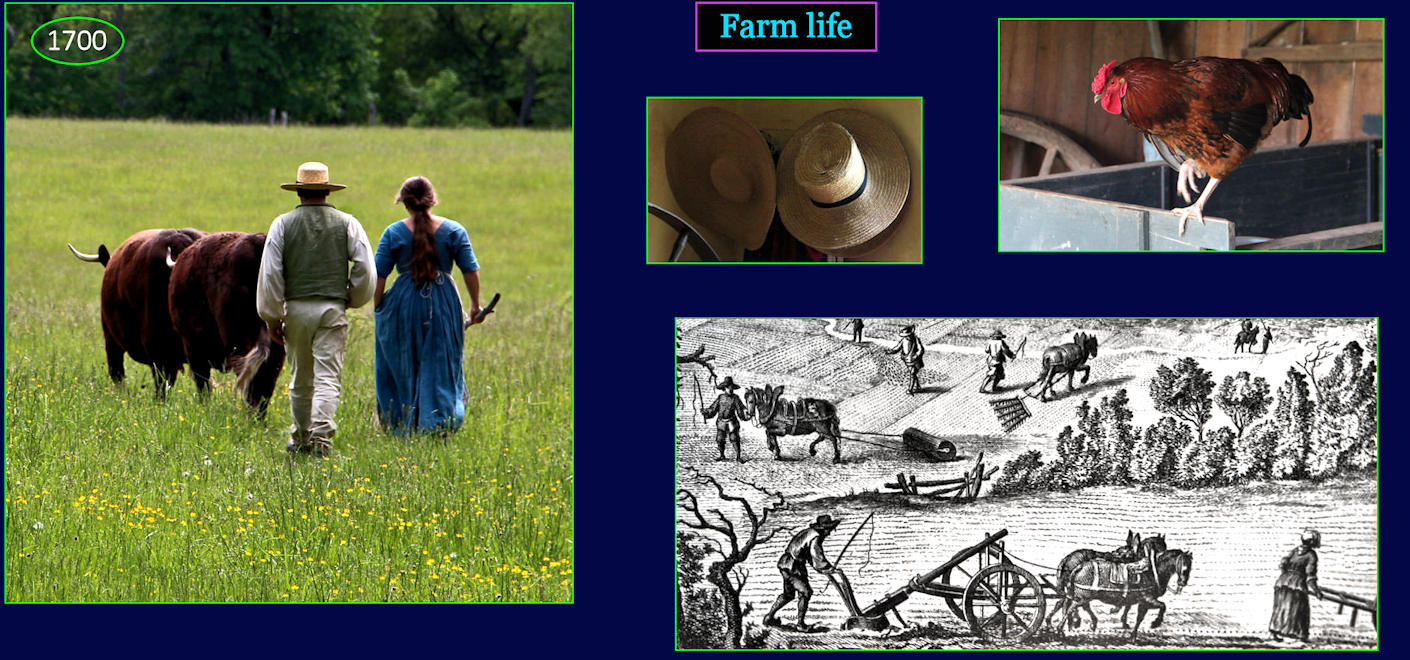
Living the Slow LifeWhile the land is called America, the colonies are still owned and managed by England. The settlers are English citizens, but are left pretty much to fend for themselves. Anything shipped to the colonies has to be paid for. The English are keen to protect businesses back in England from competition with their American colonies. They withhold anything that might help colonists become self-sufficient, especially in manufacturing or finance. |
| ||||||||
| |||||||||
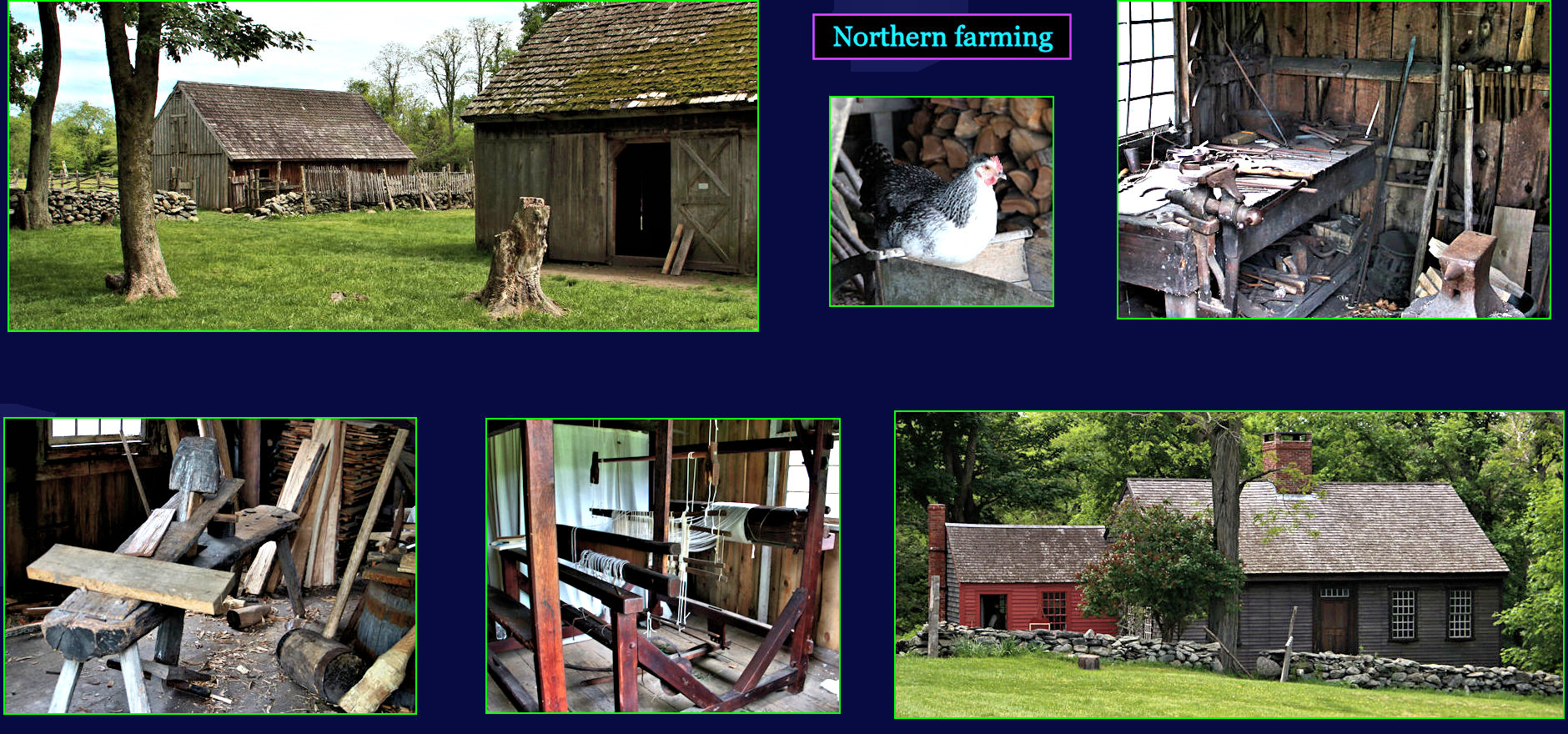
Do-it-yourself Farming Farms have small, simple barns, and sheds that often contain tools for both carpentry and metal-working. Farmers need many skills to survive, using simple tools and materials that are close at hand. The workbench at lower left is used to smooth cedar shingles for the roof. Blacksmiths can make horseshoes, nails and simple hardware, but almost anything else made from metal must be imported. Some wives have a loom to weave coarse fabric from home-grown flax. | |||||||||
| |||||||||
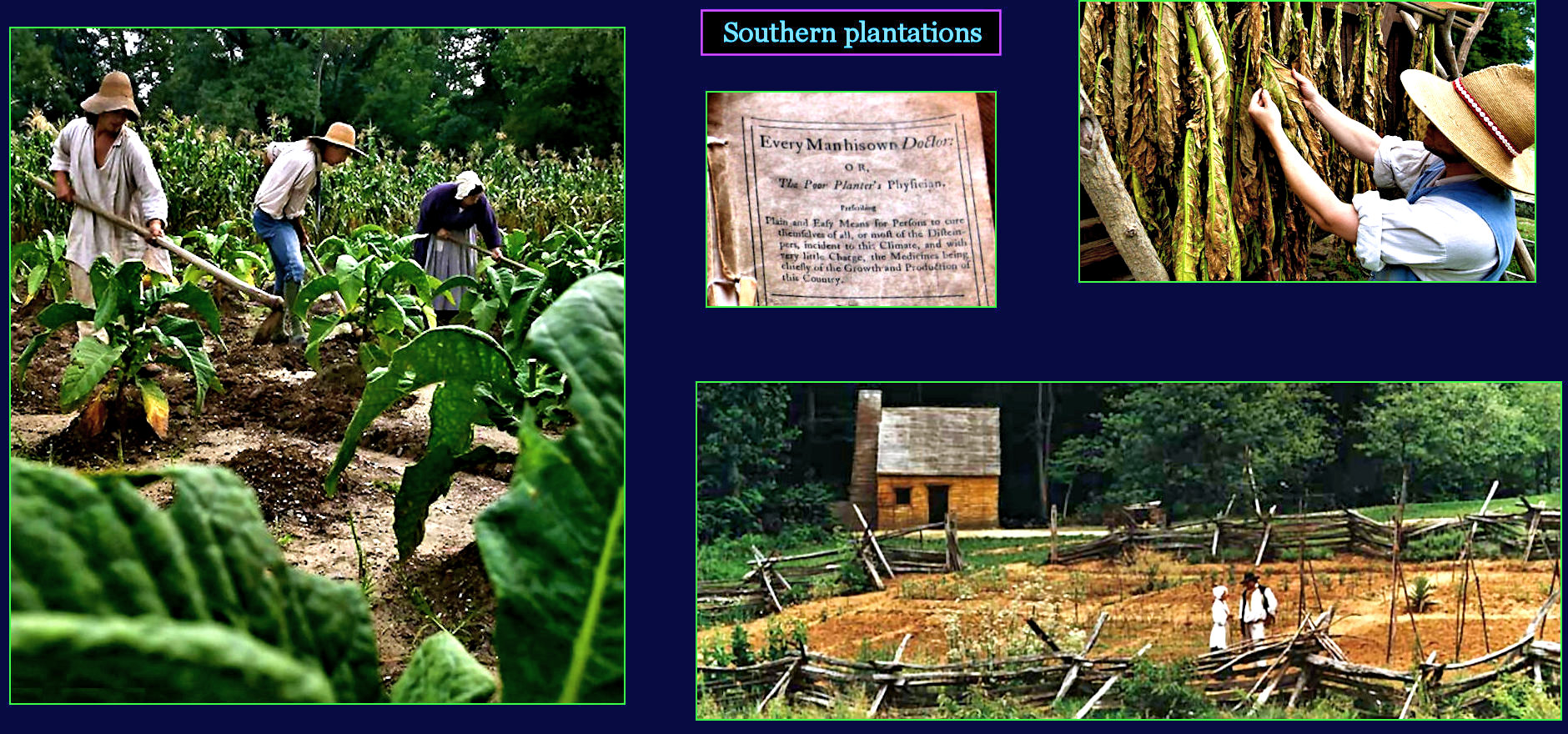
Tending Tobacco Farm work on southern plantations is almost completely different. Tobacco plants need special care under a blazing sun, the work is hard, and hired help is impossible to find. Slaves are only just beginning to become available, at great expense, but loans can only be obtained by those born to wealth, with pre-existing ties to London bankers. Farmers focus all their efforts on the main export crop, which is tobacco. Even more so than up north, southern farmers are on their own. | |||||||||