| |
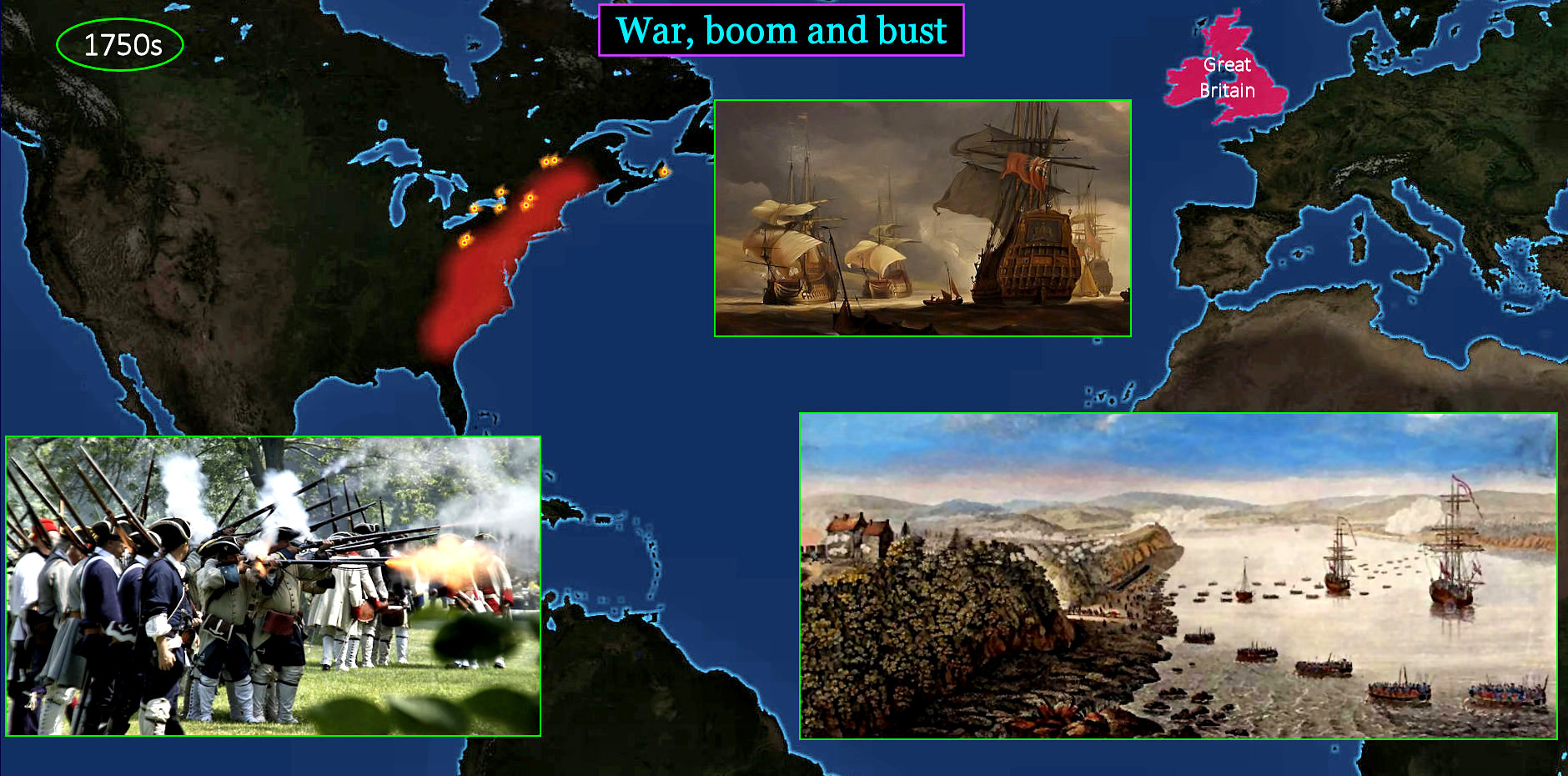
War Spending The British need material of all sorts to supply large-scale operations, like the assault on Quebec (lower right). Britain's Royal Navy (top right) is a hungry beast that needs constant feeding, and New Englanders are happy to oblige. But when the war ends, the feeding frenzy suddenly stops. The British are nearly bankrupt, and searching for ways to pay back their huge war debt. |
| |||||||||
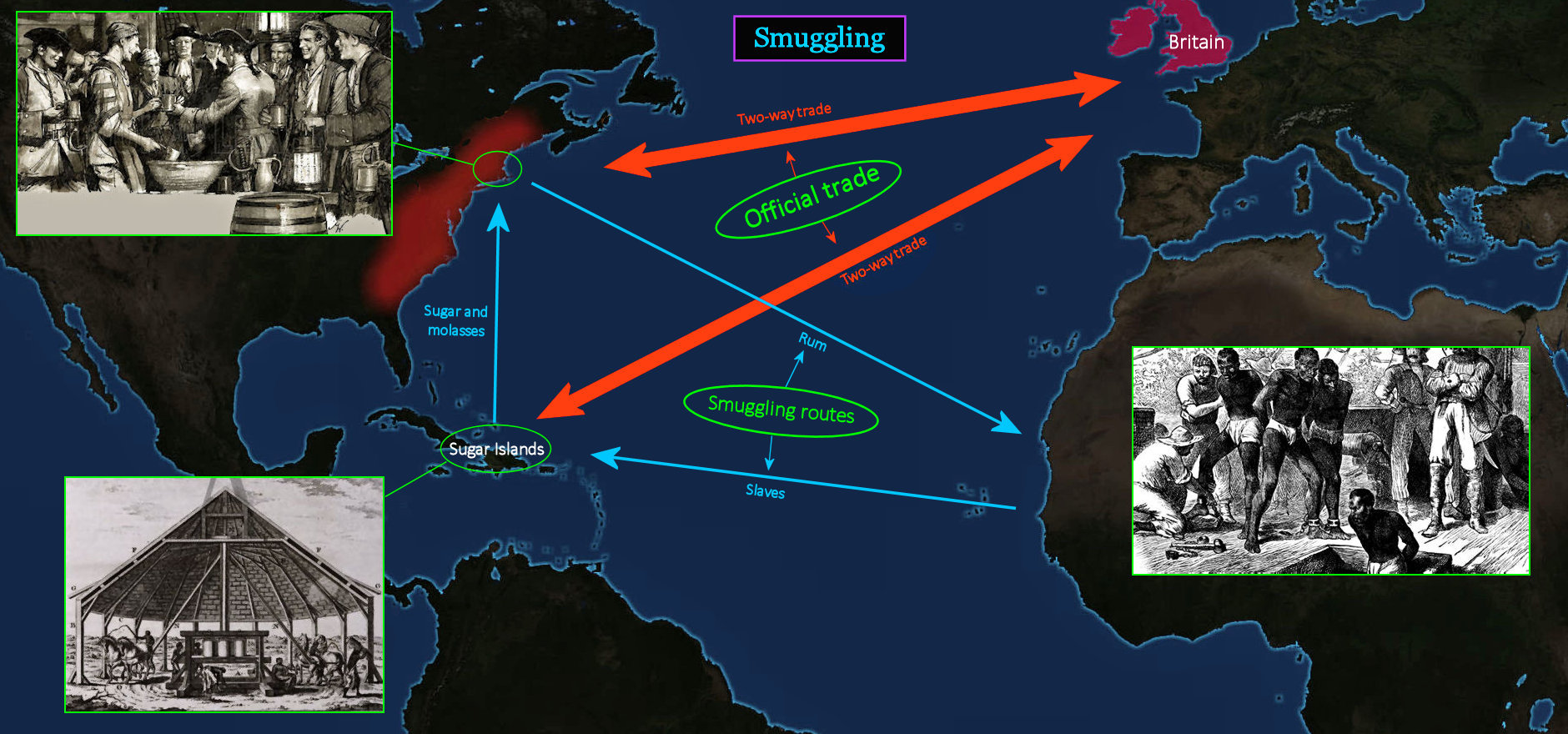
Cutting out the British To help repay debt, Britain tries to force all colonial shipments to sail directly to or from Britain, where the British can take a cut (RED arrows). New Englanders can't survive under such restrictions, however, and develop smuggling routes (BLUE arrows). They ship rum to Africa on vessels that then transport slaves to the Sugar Islands. The ships return to New England with the molasses that will be turned into rum. This completes a triangular circuit, which benefits everyone except the British, and the slaves. | |||||||||
| |||||||||
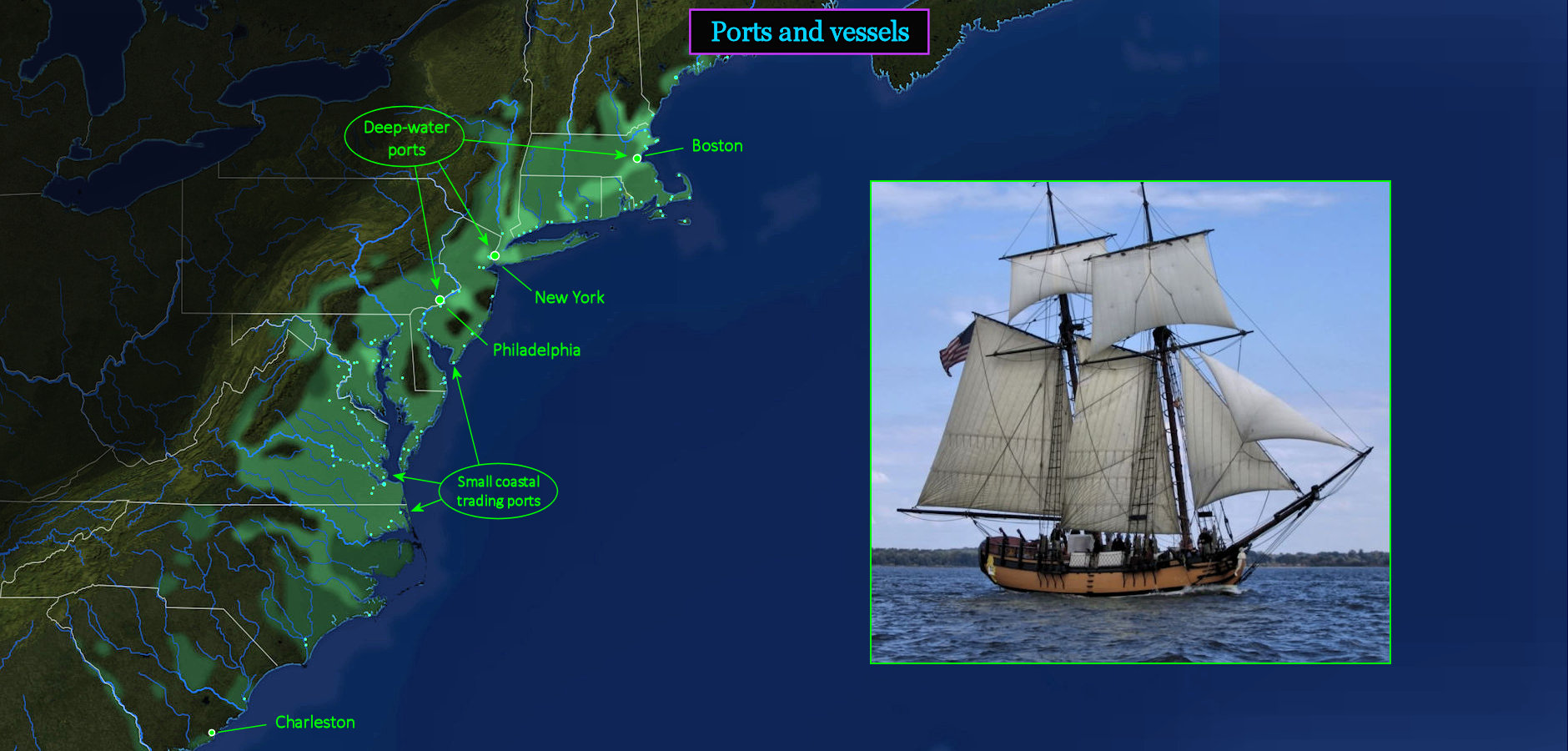
Sliding into Deficit For years, shipping activity at America's many small ports has been increasing steadily, with the value of goods being shipped back and forth to Britain remaining fairly equal. Shipbuilding has also grown briskly. By 1770, however, colonial products are barely covering half the cost of imported British goods. Tobacco is still making a slim profit, but northerners continue to suffer from the sharp drop in British demand for wheat and naval supplies that follows the end of hostilities with France. | |||||||||