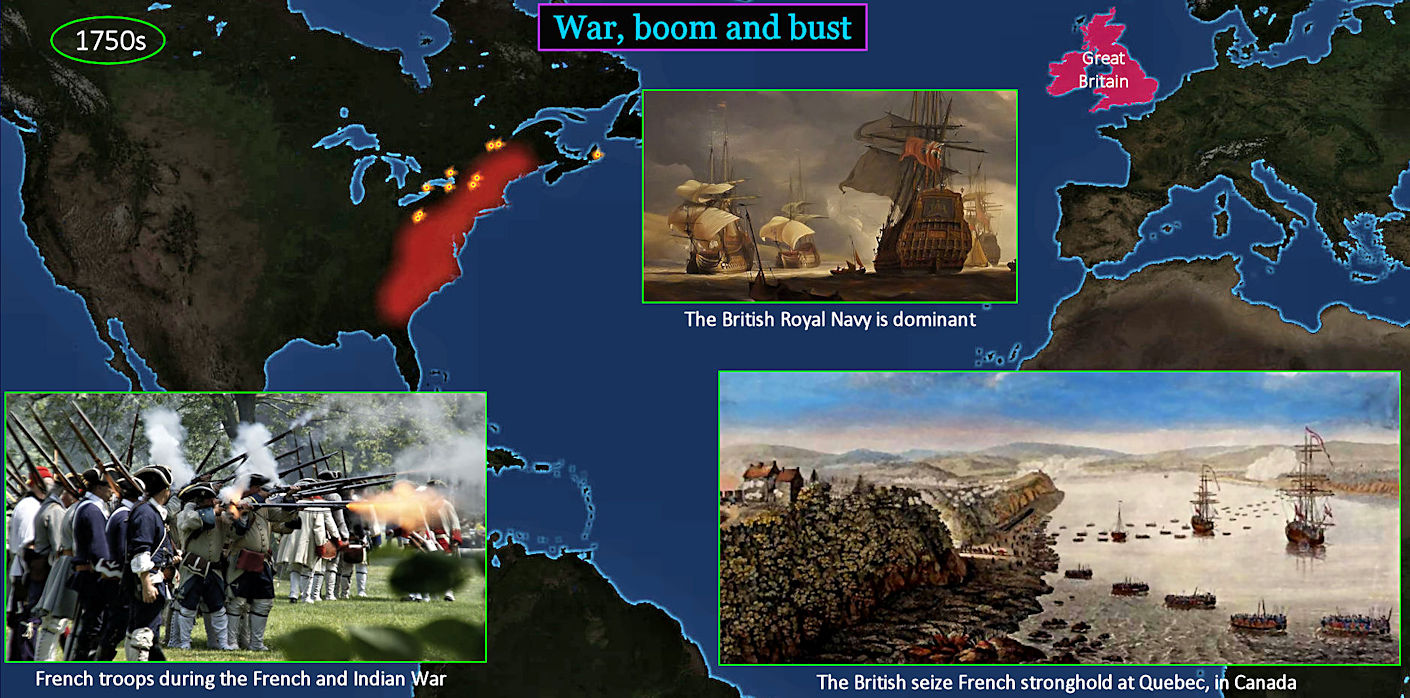
Supplying the TroopsThis is great for business in the American colonies, which provide supplies for the British war effort in America. When the war spreads to Europe, colonists increase exports of lumber, masts, tar and rope for the Royal Navy. The effect is magical. New England exports more than triple during the war years. With new money in their hands, Boston merchants become overconfident, taking on new debt to expand their business. This all comes to a screeching halt when the war ends, and war demand dries up. Colonists are left with debts they can't manage. Worse yet, Britain now wants the colonies to help pay back some of its massive new war debt. |
| ||||||||||||||||
| |||||||||
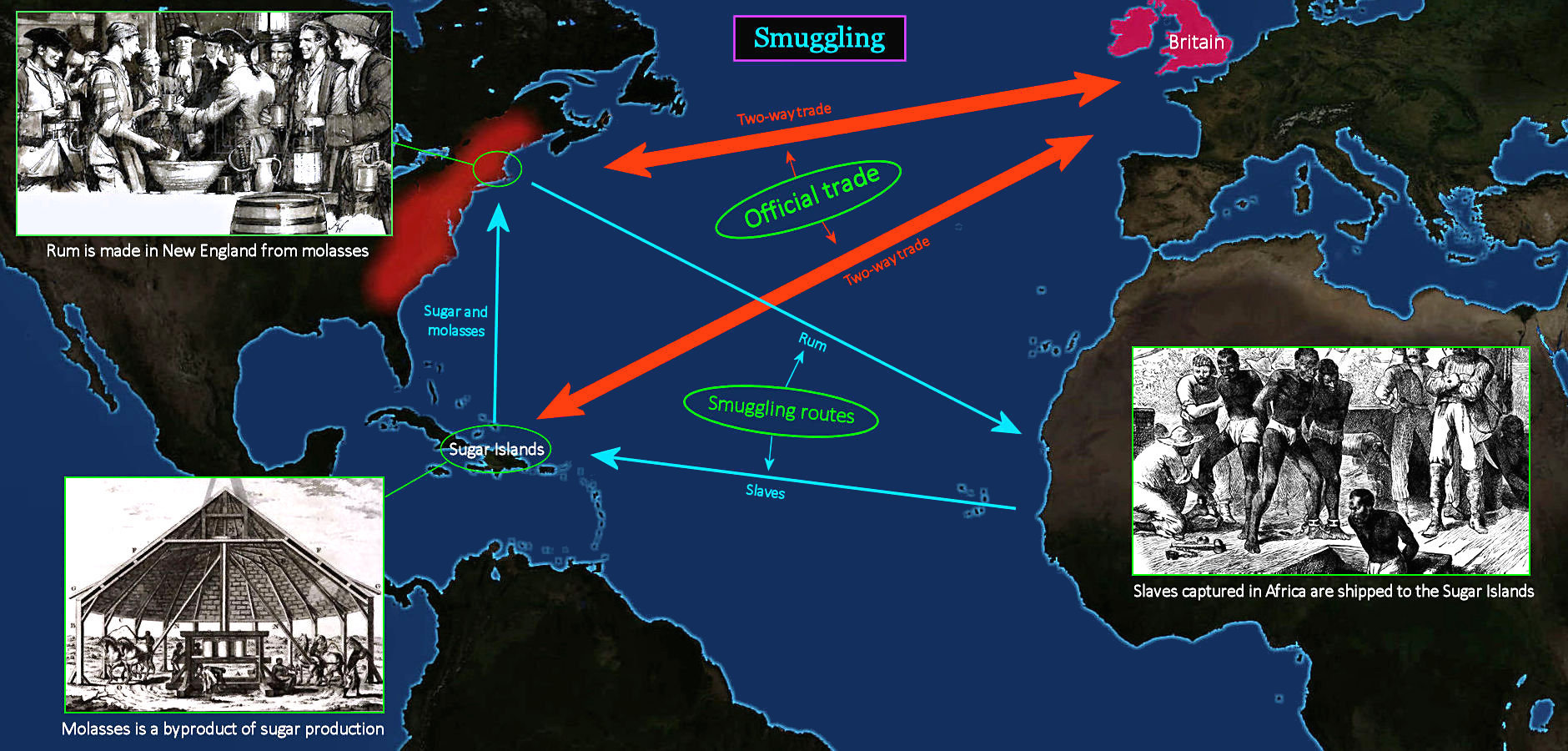
Cutting out the British Britain tries to extract extra money from the colonies by controlling trade more effectively. New laws mandate that all colonial shipments must go directly to or from Britain, (RED arrows) where the British are able to take a cut. This creates a tightly-controlled two-way trade pattern. Colonists can't make a profit under such restrictions, however, and turn to smuggling. They develop a secondary trading system which is basically triangular (BLUE arrows). New England rum is first shipped to Africa, on vessels that then transport slaves to the Sugar Islands. The ships return to New England with sugar, but also with the molasses that will be turned into rum. This completes the circuit, which benefits everyone except the British, and the slaves. | |||||||||
| |||||||||
Sliding into Deficit Throughout the 1700s, America's ports are busy with shipments of everyday items being imported from Britain, which colonists pay for by shipping tobacco, timber and fish back to Britain. Until about 1750, the value of goods being shipped back and forth is fairly equal. But by 1770, colonial products are barely covering half the cost of imported British goods. Tobacco is still being shipped in huge quantities, but profits are slim. Meanwhile, northerners continue to suffer from the sharp drop in British demand for wheat and naval supplies that follows the end of hostilities with France. The smuggling business in rum, slaves and molasses helps to make up some of the difference. | |||||||||
| |||||||||
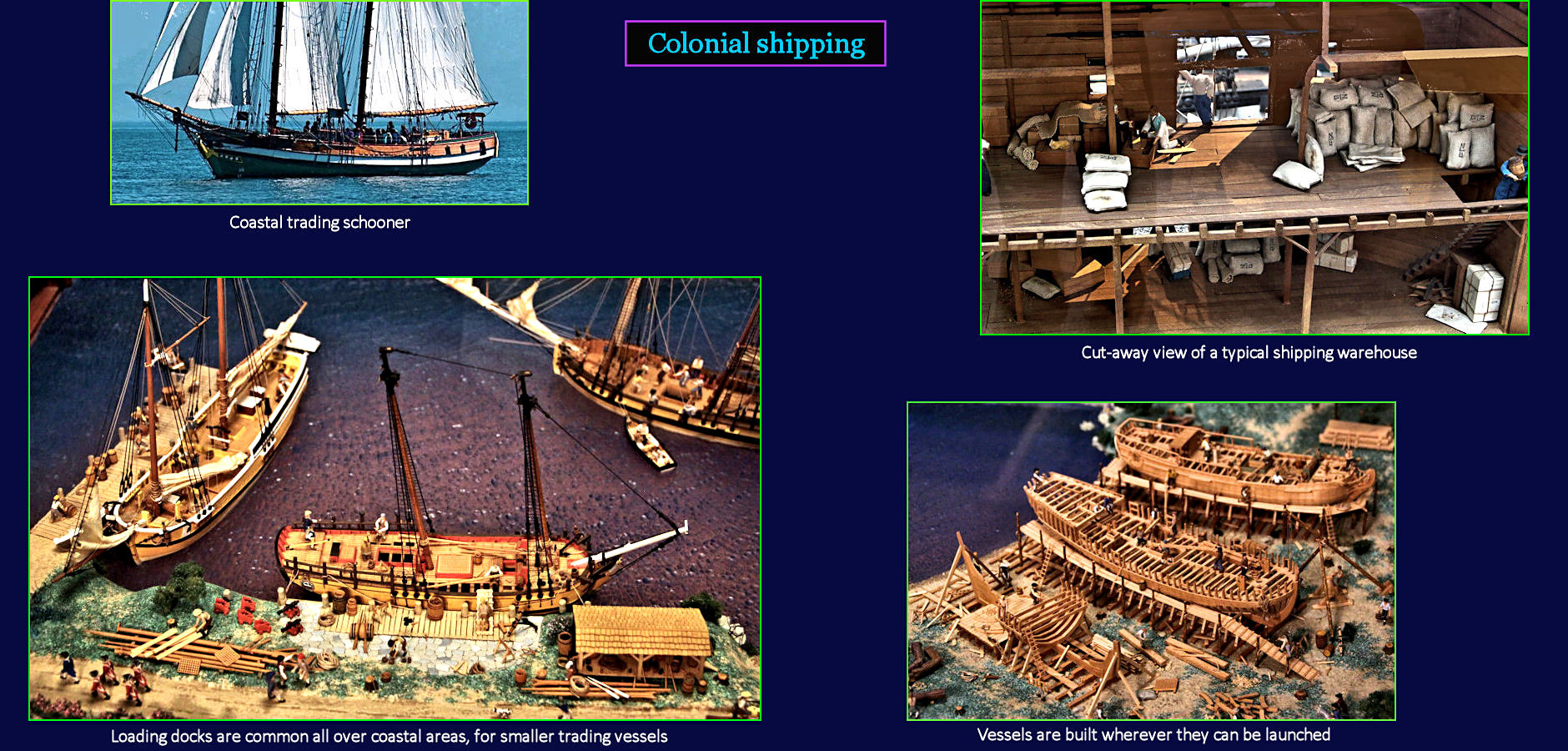
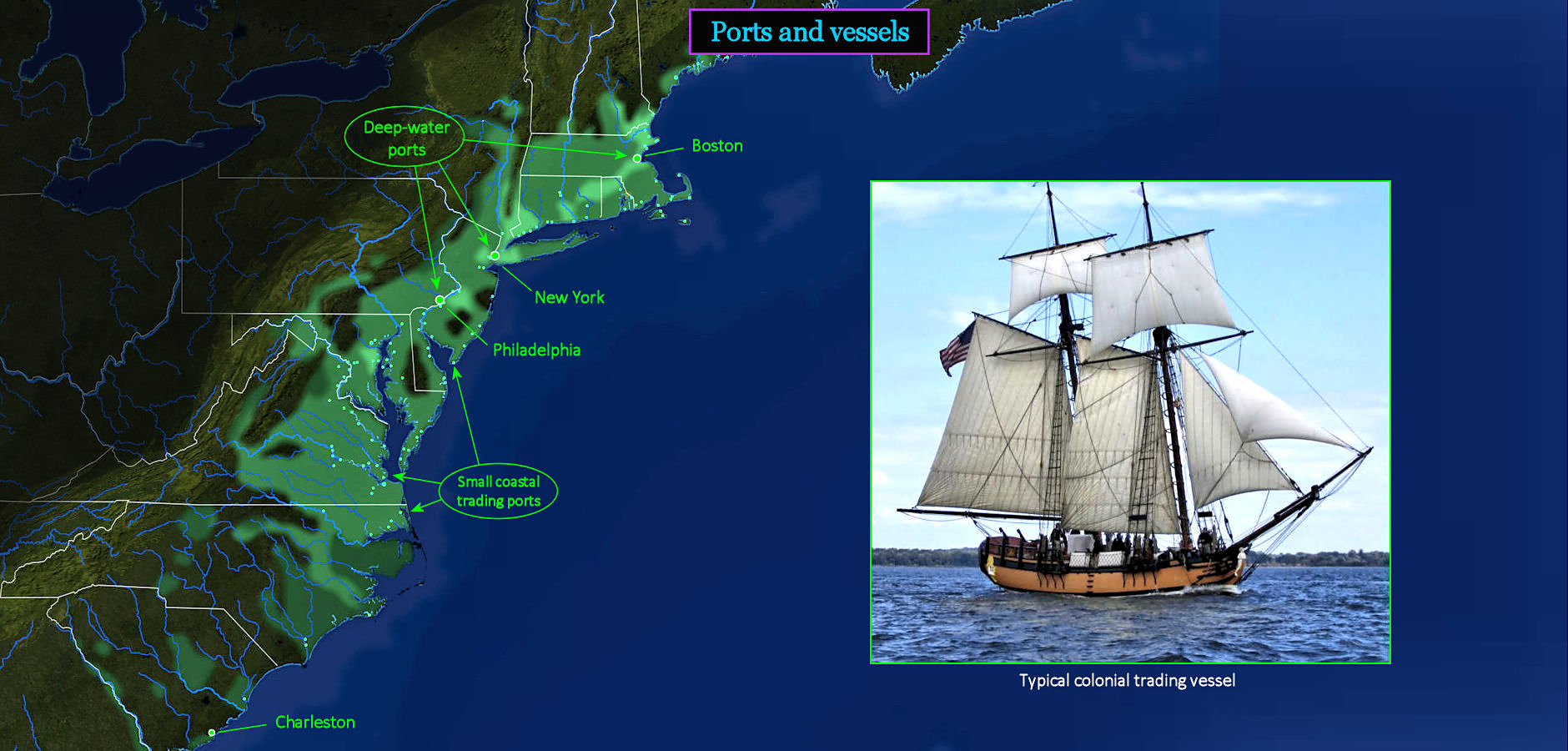
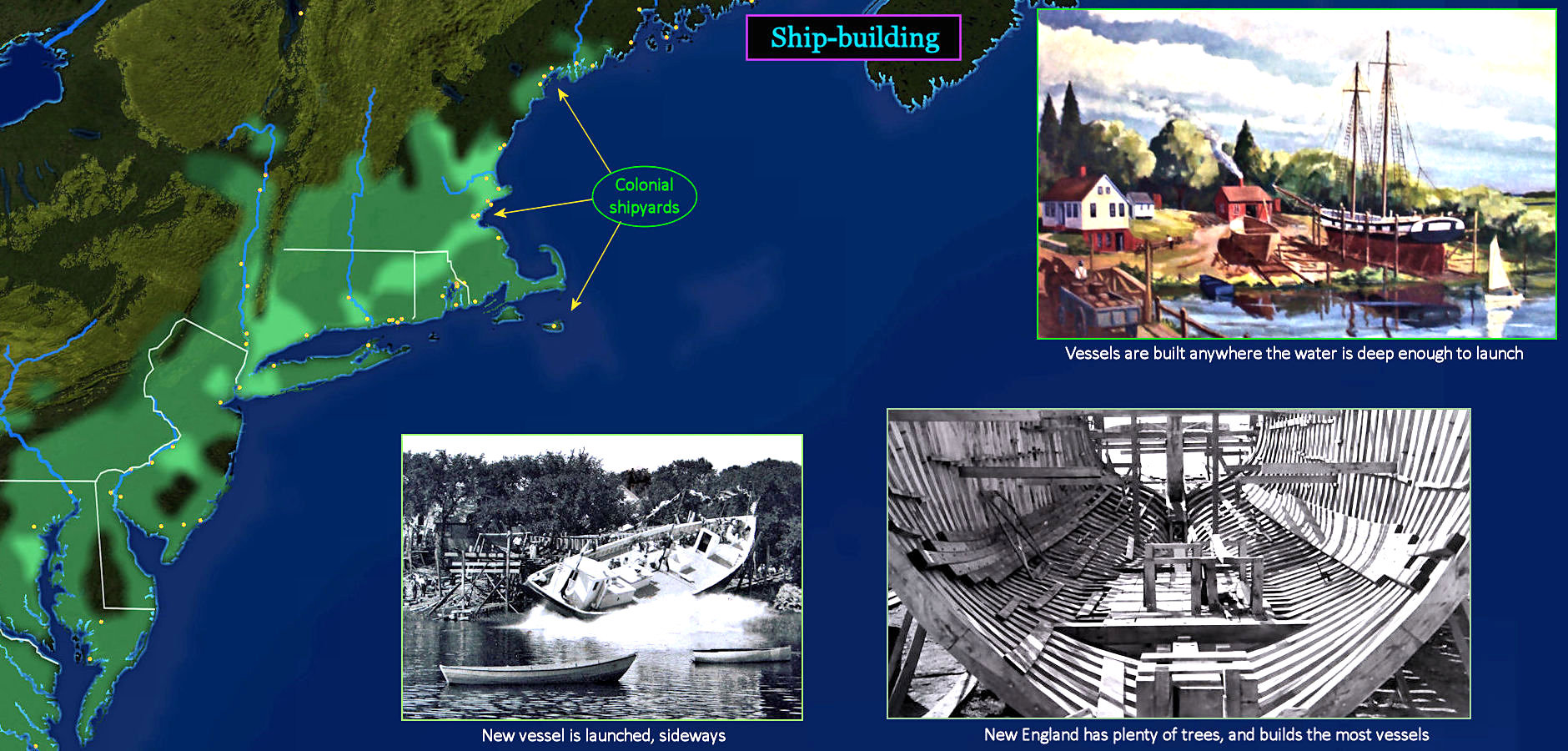
Smaller Vessels Trans-Atlantic trade is conducted in large ocean-going vessels that can only be received in a deep-water port, like New York. But colonists specialize in operating smaller vessels, which can be built almost anywhere, and are well suited to short-haul coastal trading. Some venture down to the Caribbean islands, for the rum and molasses trade, while others are bound for the fishing grounds off Newfoundland. Money can be made in shipbuilding, but also by sharp-witted captains with an eye for appraising the value of cargos. A Ship might stop at several ports along a route, trading part of the cargo for local items at each stop. Money rarely changes hands until the vessel returns home. | |||||||||
| |||||||||
Northern Specialty The northern colonies are particularly dependent upon shipping for income, because they don't have a cash crop like tobacco. Instead, they have an abundant source of wood for shipbuilding. YELLOW dots on the map indicate shipbuilding yards, where vessels are built at an astonishing rate. Boston alone is turning out 140 ships a year, while nearly 400 are built yearly in all the colonies, combined. The finest houses in town often belong to sea captains, some of whom actually sell their ships in Europe after unloading the cargo. American-built ships can be sold at very attractive prices, due to the relatively low cost of colonial wood. | |||||||||
| |||||||||
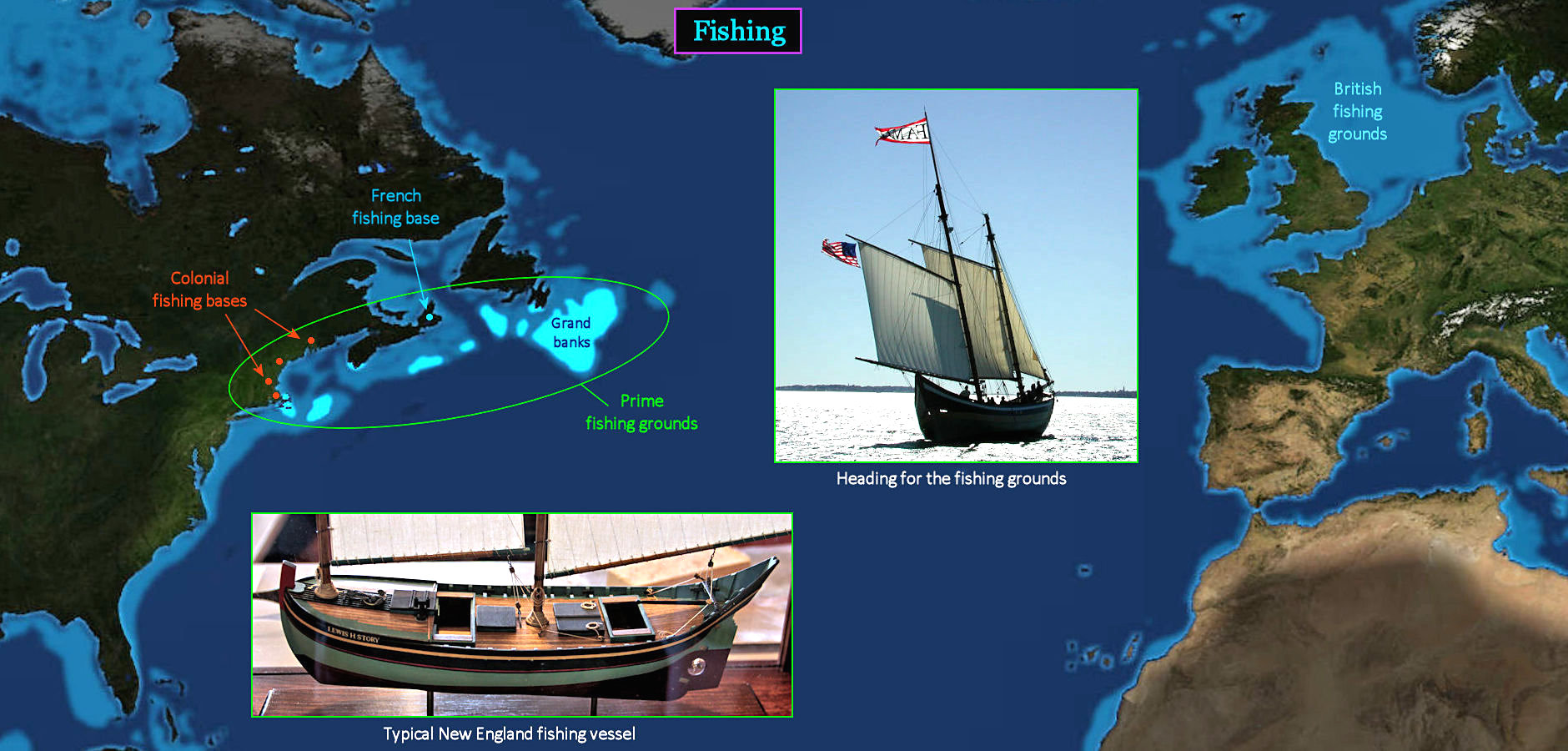
World's Best Fishing New England enjoys easy access to the incredibly productive fishing grounds off the coast of Newfoundland, at the eastern tip of Canada (BRIGHT BLUE highlights). The waters off the coast of Britain have become largely fished out by this time, making Newfoundland cod especially desirable in Europe. Because of this, French fishermen are willing to sail across the entire Atlantic to get to the unspoiled cod fisheries of America. The finest of these is the Grand Banks. Colonists in America fish this special area, but have to share it with 1,000 French fishing vessels. After the French lose the war to Britain, and are forced to leave, American colonists have the area all to themselves. They soon built up a fleet of similar size. | |||||||||