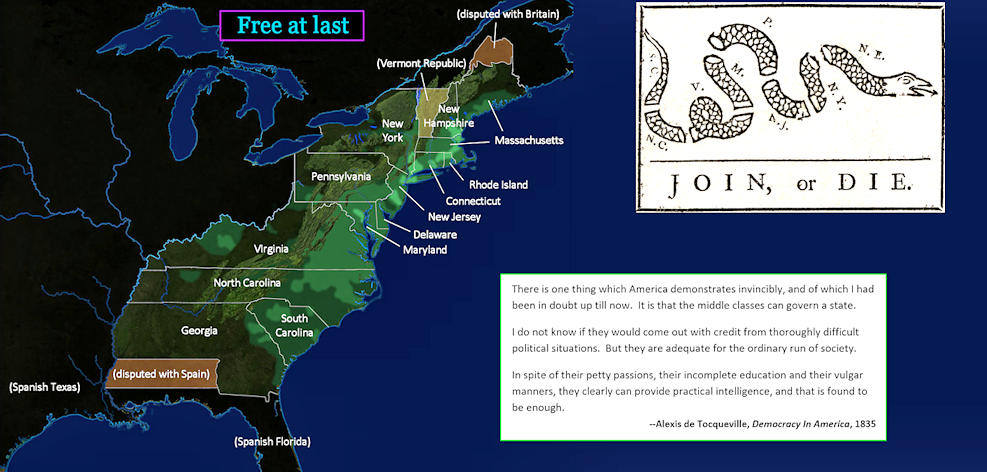
Long Journey AheadAmerica is now a 'republic,' meaning that the will of the people will be transmitted to the government via elected representatives. It gradually becomes apparent, however, that no one is really in charge. State legislatures send delegates to the Continental Congress in Philadelphia, which is a start. But Congress soon discovers it has no real mechanism to enforce the decisions that it tries to make. |
| ||||||||||||||||
| |||||||||
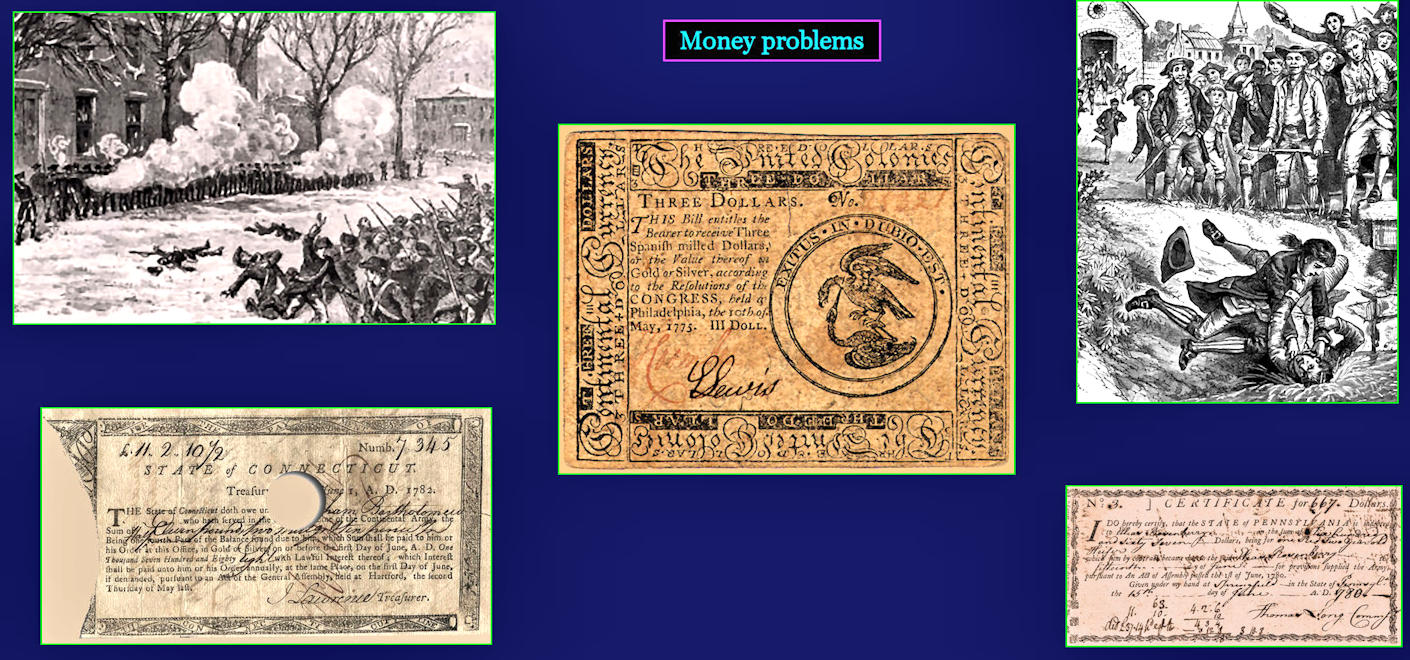
Post-war Chaos Right from the start, the problem is money. Congress has issued paper money to pay for the war (center top), while individual states have issued their own notes (bottom left and right). With the war over, these paper notes are now nearly worthless. Troops who had been paid with such paper find that no one will accept it, and are forced to borrow. When they are unable to pay back these loans, their property is confiscated. Meanwhile, the entire country is in a deep economic slump. | |||||||||
| |||||||||
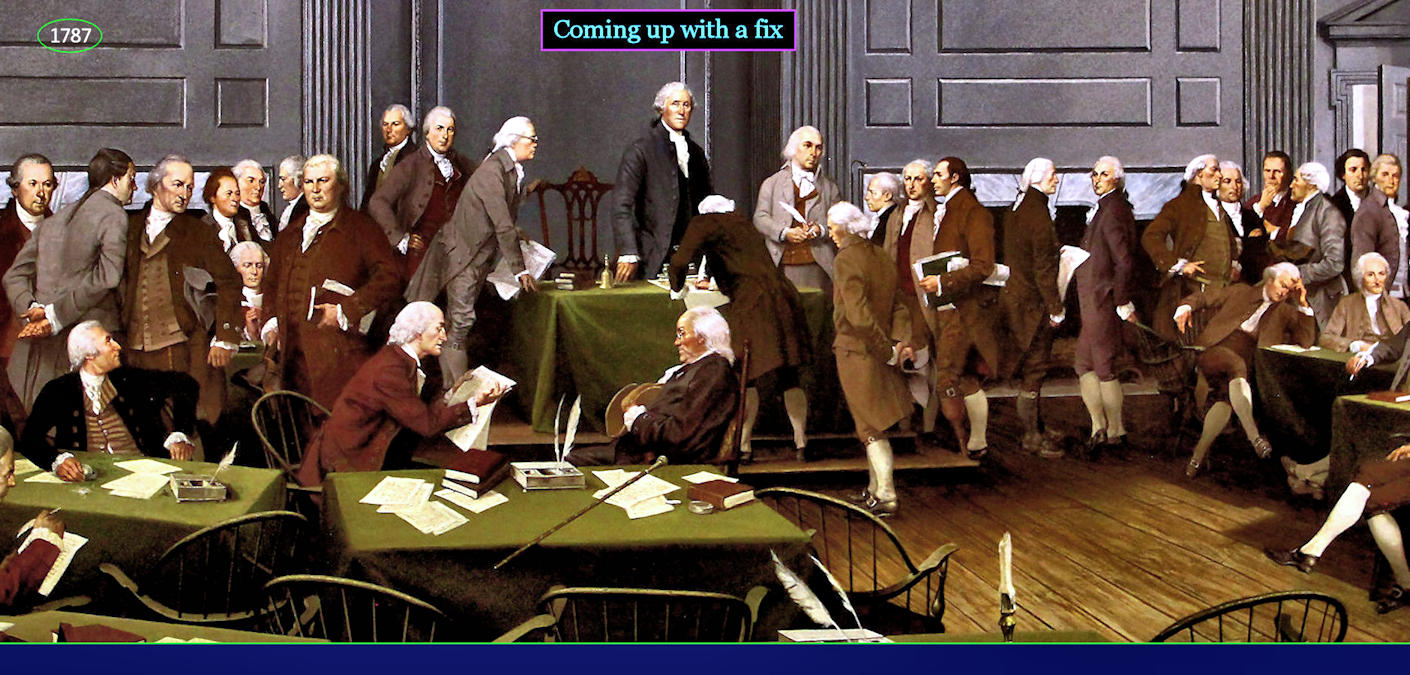
What to Do? After six years of frustration, the states once again send delegates to meet in Philadelphia. The original intent is just to patch up the existing system, but it doesn't take long to realize that the system has to be scrapped altogether. America needs an entirely new document, a Constitution, to create a functional government that preserves individual freedom. But no one has tried to develop a system of government responsive to the needs of ordinary citizens since the old days of the Roman Republic. | |||||||||