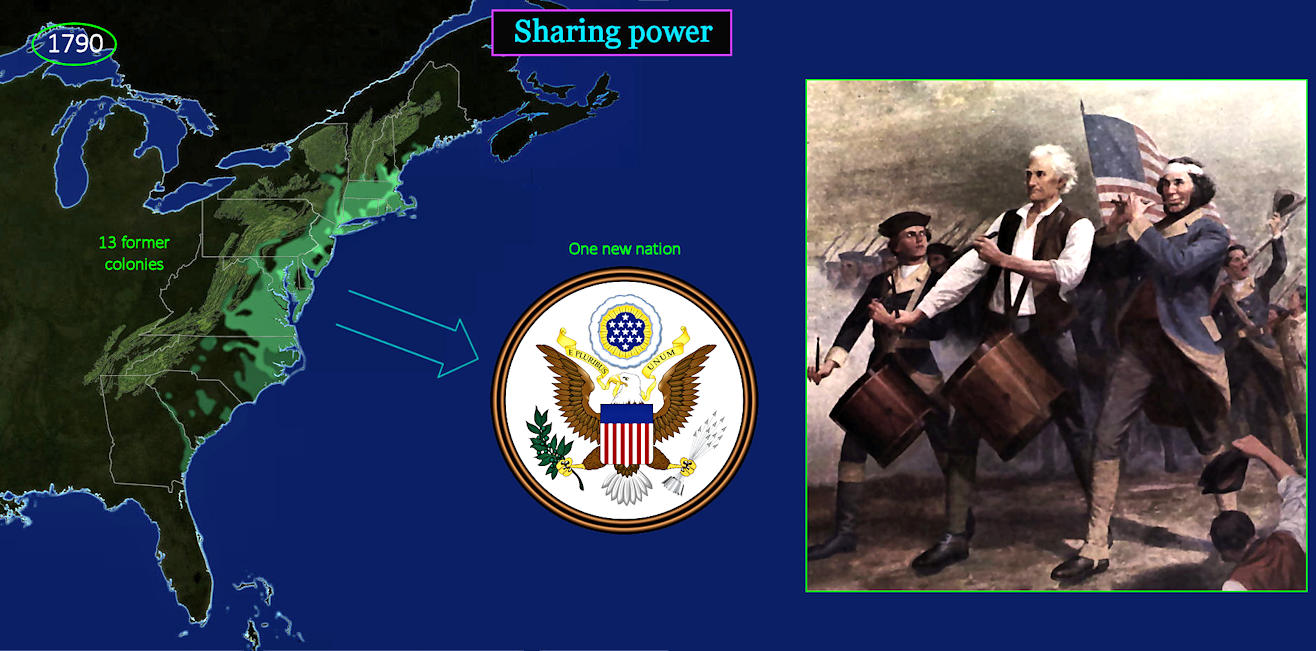
New ConstitutionThe government will be split into three equal branches. Congress will make the laws, which mostly deal with raising money and spending it. The President will be CEO, with powers to make sure that laws are obeyed. When disputes arise, as they surely will, they will be resolved in federal courts. When court decisions are challenged, they will be scrutinized by the Supreme Court, whose decision will be final. |
| ||||||||||||||||
| |||||||||
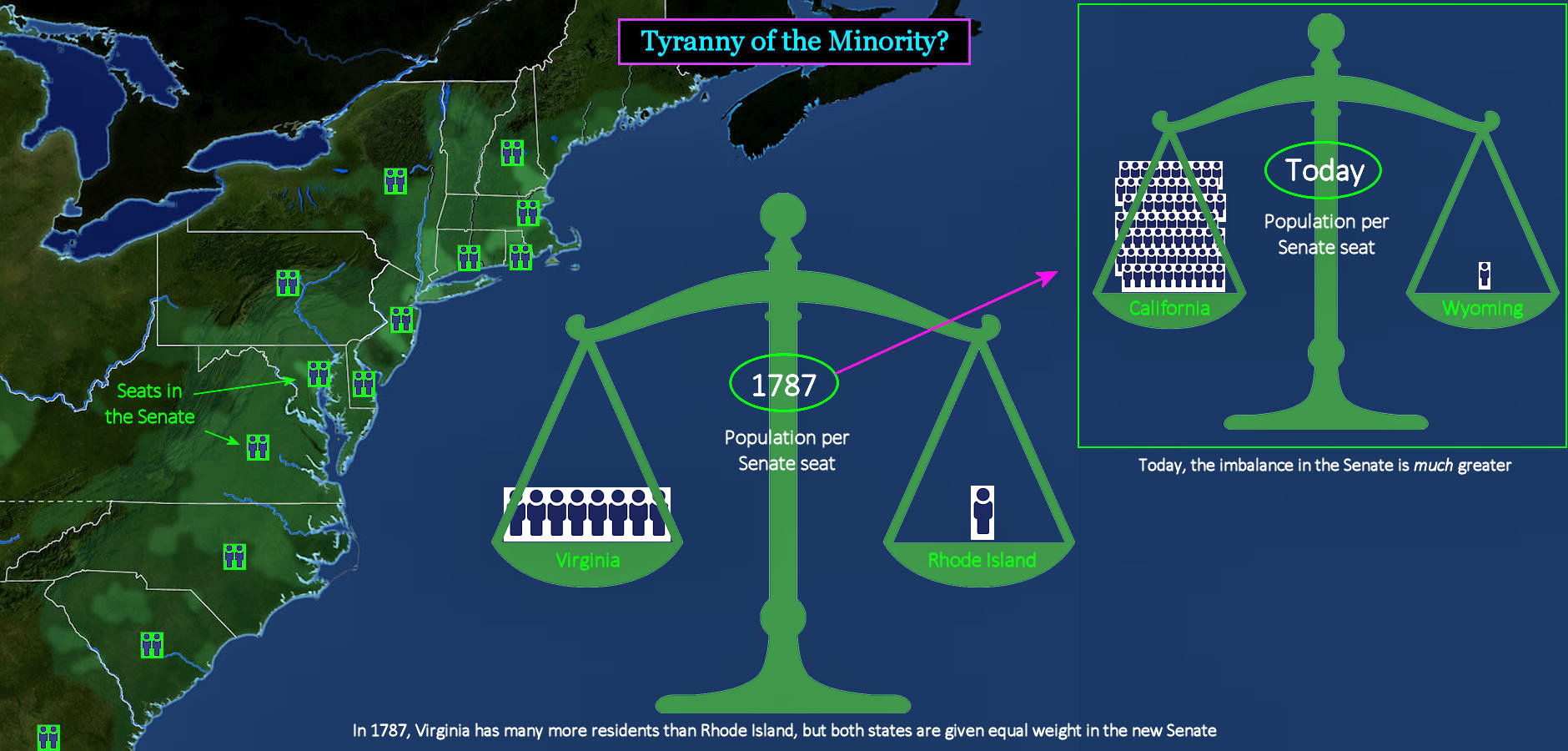
Satisfying the Small States The most difficult issue to settle is how states will be represented in Congress. Will small states be ignored in Congressional debate? If so, this could result in a 'tyranny of the majority.' Virginia has eight times more people than tiny Rhode Island, or Delaware. In the end, each state is given two seats in the new Senate, regardless of size. Today, differences in population between the largest and smallest states are far greater, resulting in what we might now call a tyranny of the minority. | |||||||||
| |||||||||
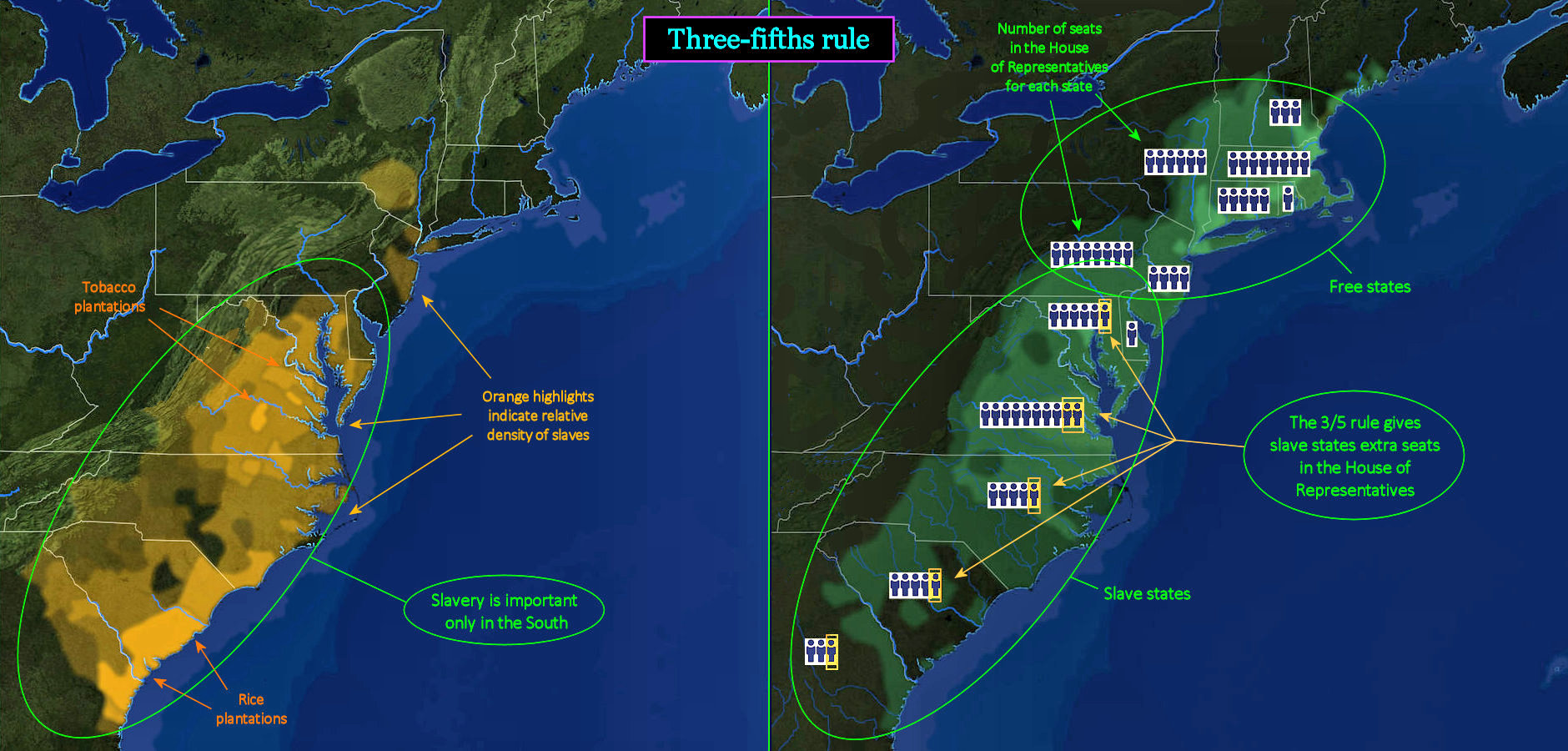
Satisfying the South The map at left shows the density of slaves in each state, highlighted in ORANGE. The brighter the highlight, the greater the density. The total population of northern and southern states is almost equal, but one-third of the southern population is comprised of slaves. The eventual compromise adds three-fifths of the slave population to the total white population in each state, before figuring the number of seats to which it is entitled. Thus, slave and free states will have almost equal representation. | |||||||||