| |
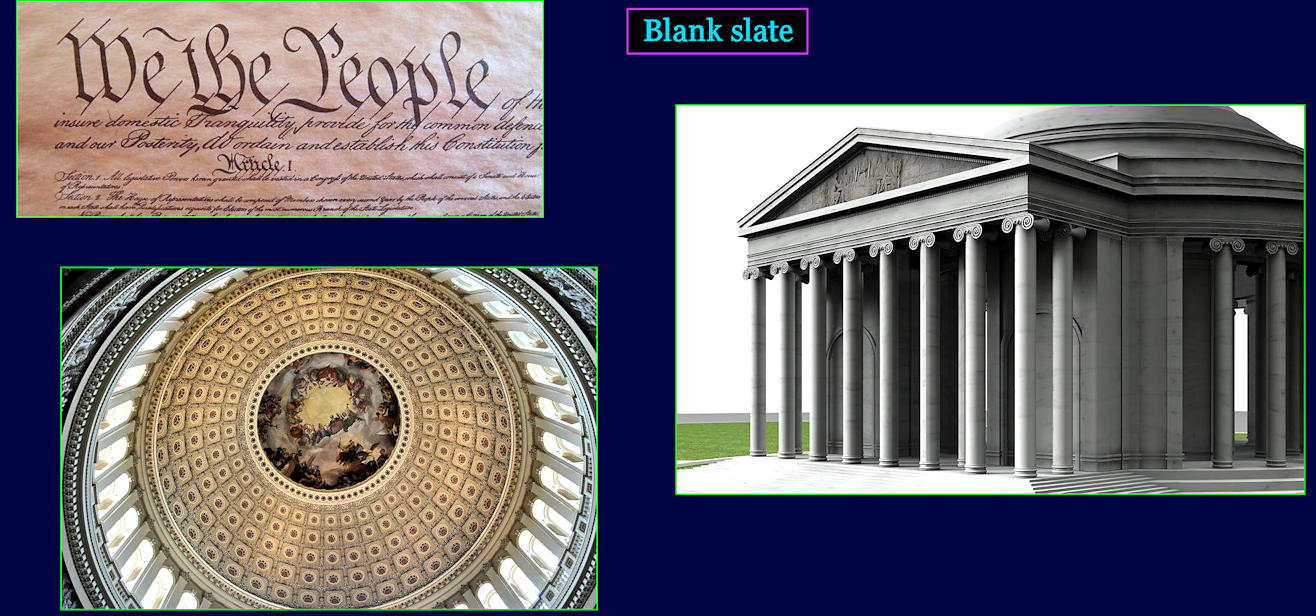
Hitting the Ground Crawling When the first Congress convenes in 1789, there are no rules on how to proceed. Who can talk, and for how long? Will bills pass with a simple majority vote, or something different? What about committees? Similarly, the President is supposed to implement policies, but what about staff? Who will keep track of money transactions? The court system is even less well defined. |
| |||||||||
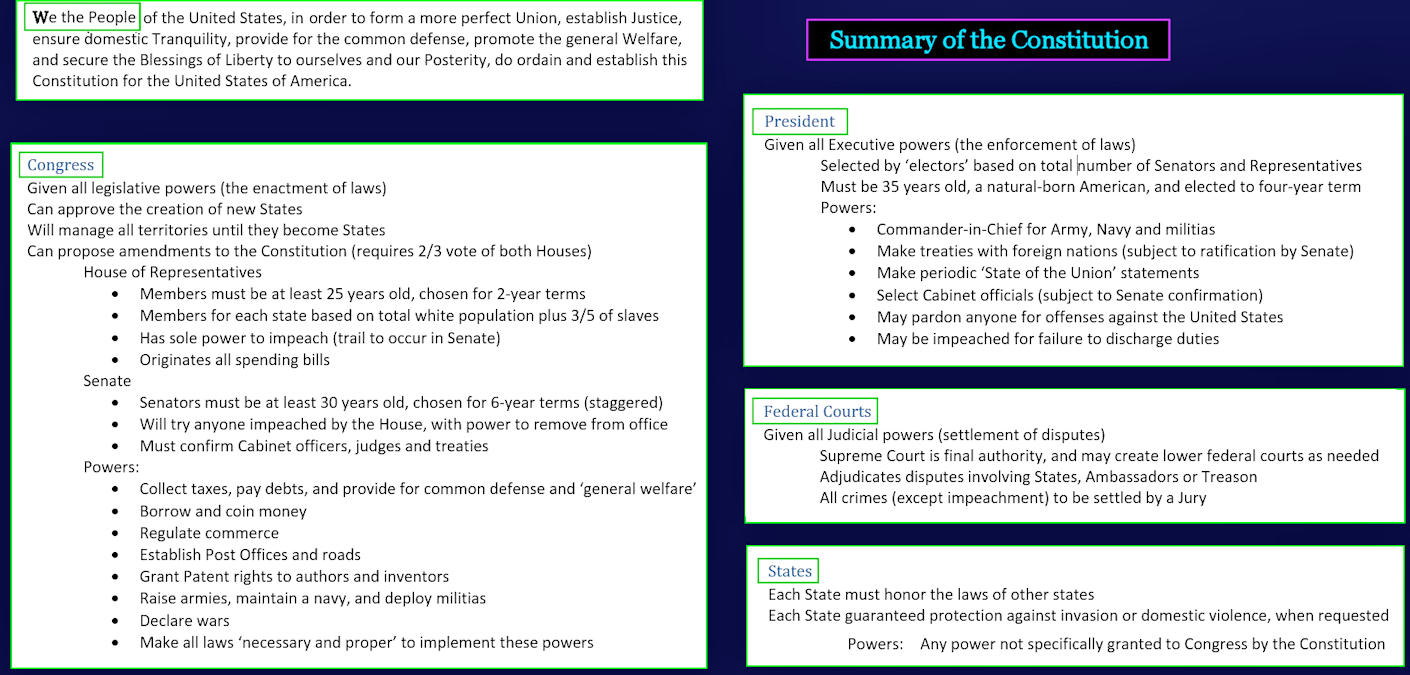
Just the Essentials The main text of the Constitution is summarized above, though there are additional details. The key elements are mostly limited to how members of each branch should be chosen. Note how few 'powers' are actually mentioned. Congress can collect money, regulate commerce, establish armed forces, declare war, and provide for the general welfare. That's basically it. Today, the powers to 'regulate commerce' and provide for the 'general welfare' are used to justify almost everything else the government does. | |||||||||
| |||||||||
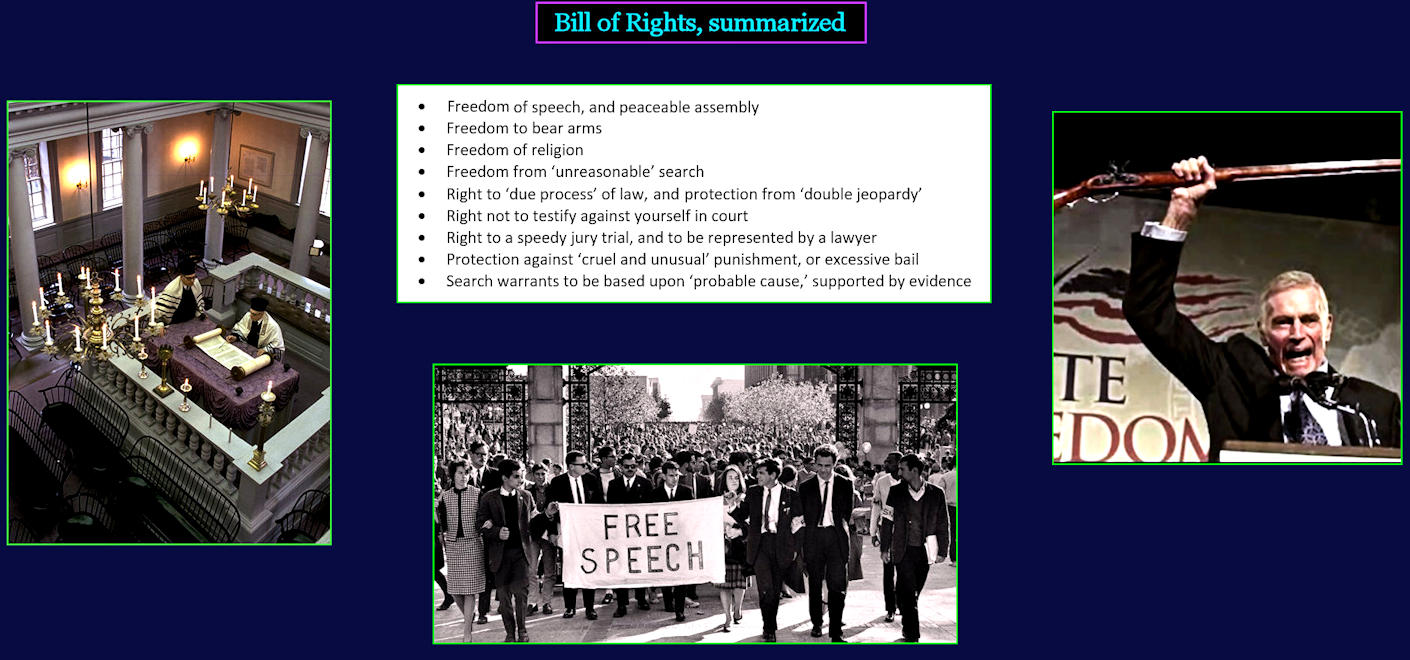
Core Freedoms If you ask someone today to describe the Constitution, they are likely to mention provisions contained in the Bill of Rights. But these were not part of the original document that the states voted to approve. The Bill of Rights are the first 10 amendments to the Constitution, which were ratified two years later. They are largely the creation of James Madison, intended to address concerns raised by those who had originally opposed adoption of the Constitution. Important provisions are summarized above. | |||||||||