| |
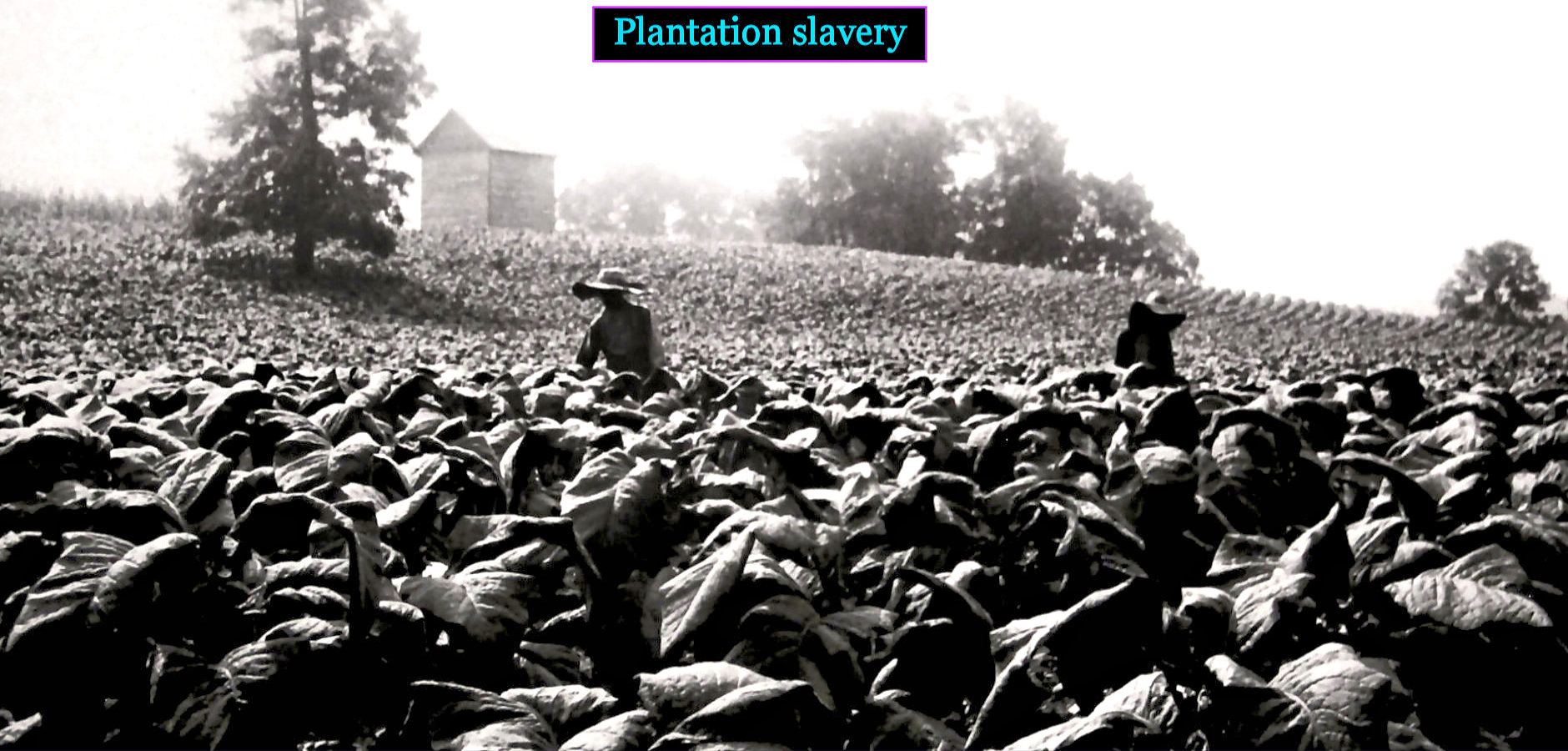
Sea of Tobacco The size of the tobacco field shown above gives a pretty good idea of the scale of the problem in the South. Every plant needs personal attention, but the fields are huge, and there is no machinery to tend or harvest the crop. This is equally true of rice, which can only be grown on land that has been flooded ankle-deep. This requires networks of ditches and canals. |
| |||||||||
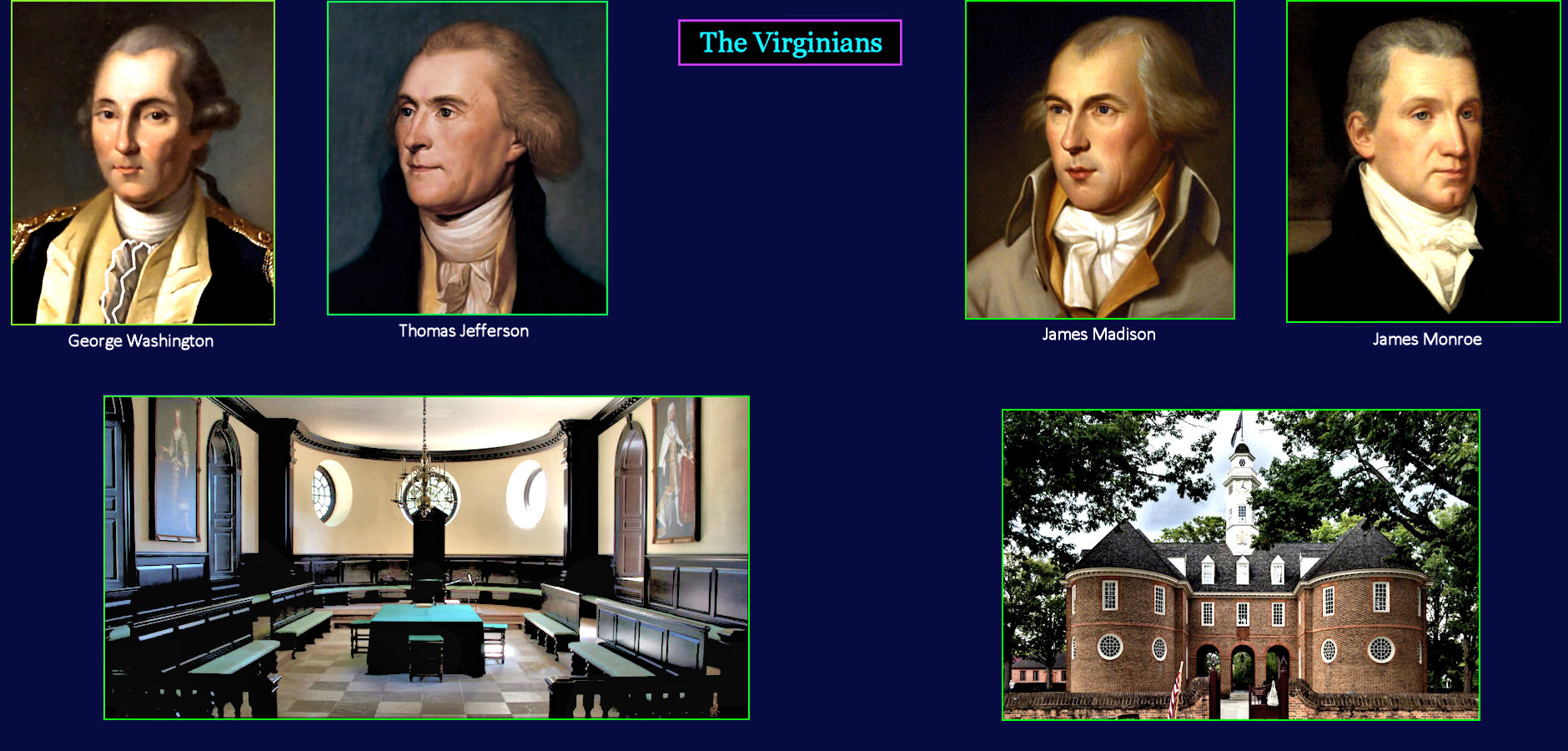
America's Aristocrats Virginians are prominent among the Founding Fathers of America, and all are tobacco plantation owners. Washington and Jefferson each own more than 100 slaves. Some planters act kindly towards their slaves, but this is not the general rule. Plantations need an active workforce, and slaves can only be forced to work through constant prodding, and threats of punishment. Tobacco and rice plantations produce 85% of all southern income, on land that isn't well suited to any other business activity. Slavery is vital. | |||||||||
| |||||||||
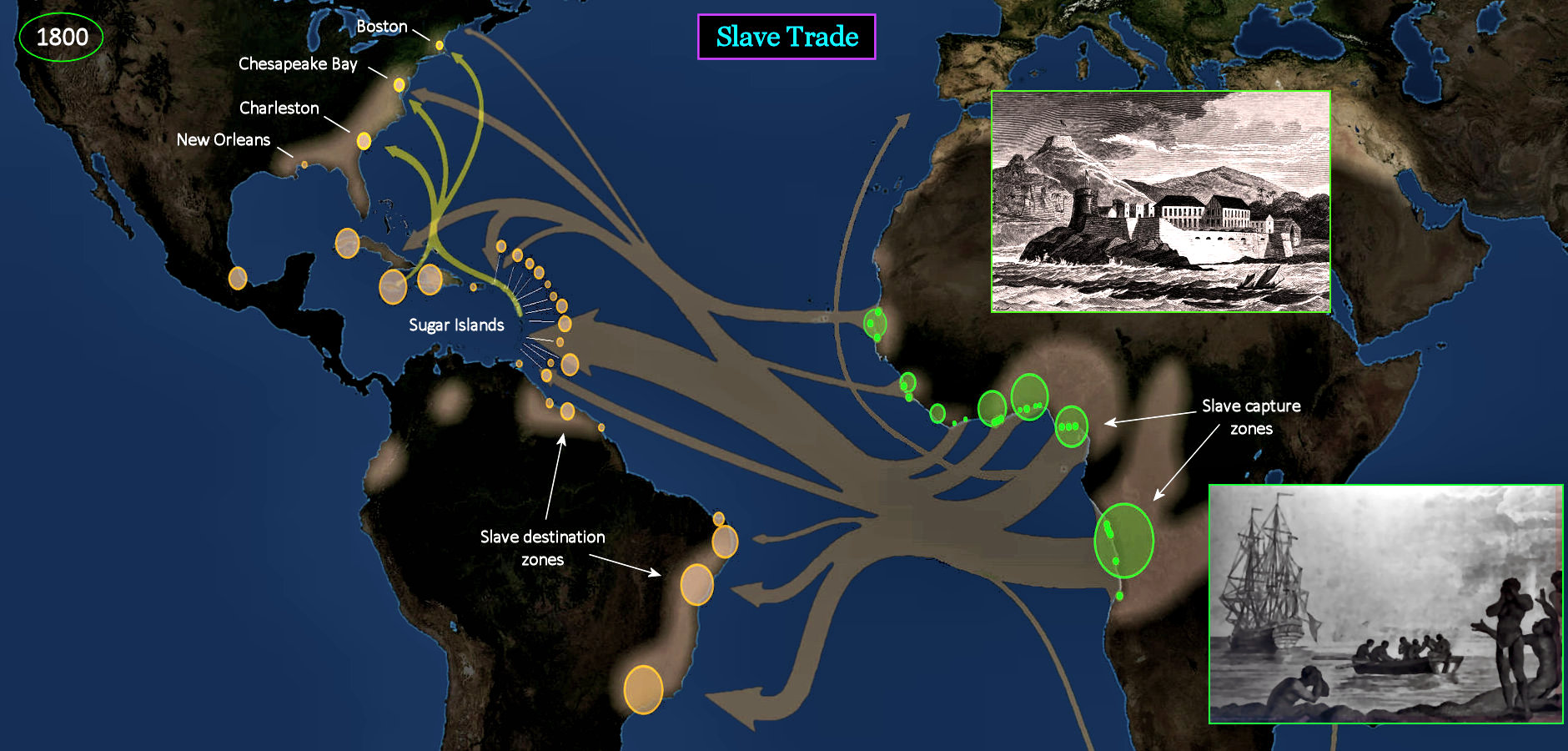
Dirty Business This is the trans-Atlantic slave trade at its peak, around 1800. The small GREEN dots are slave ports. Larger GREEN and ORANGE circles are departure and landing sites. The larger the circle, the greater the volume of slave traffic at that site. Slaves are kept in confinement structures resembling castles (top right) until ready to be loaded onboard. This will all soon come to an end, when the British finally abolish the trans-Atlantic transportation of slaves. Shipments to America effectively cease by 1825. | |||||||||