Declining Slave ImportsThis widens the divide between North and South. In the North, slavery is seen as a moral issue, while southerners view it as an entirely economic matter. This mismatch of viewpoints will persist, and grow more distinct. From the southern viewpoint, life is impossible without slaves. Tobacco and rice are the main sources of income, but neither can be grown profitably without slave labor. Southerners need slaves to pay the bills. |
| ||||||||||||||||
| |||||||||
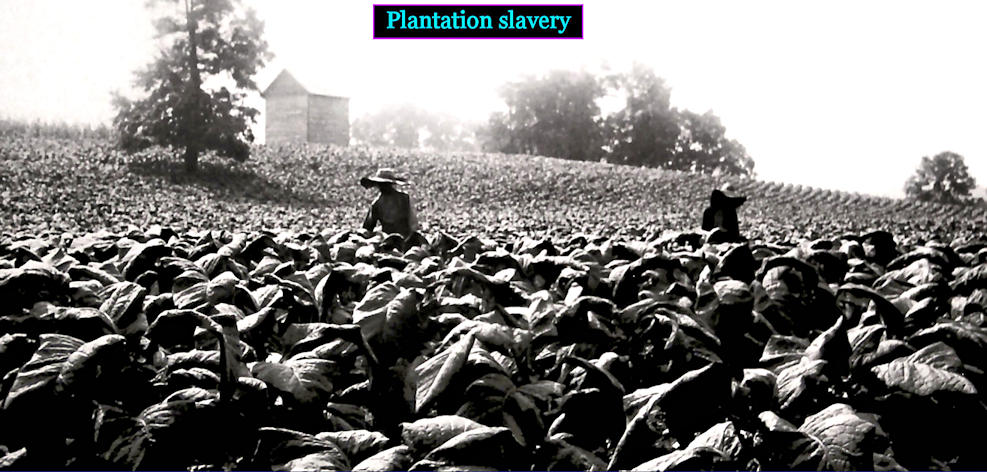
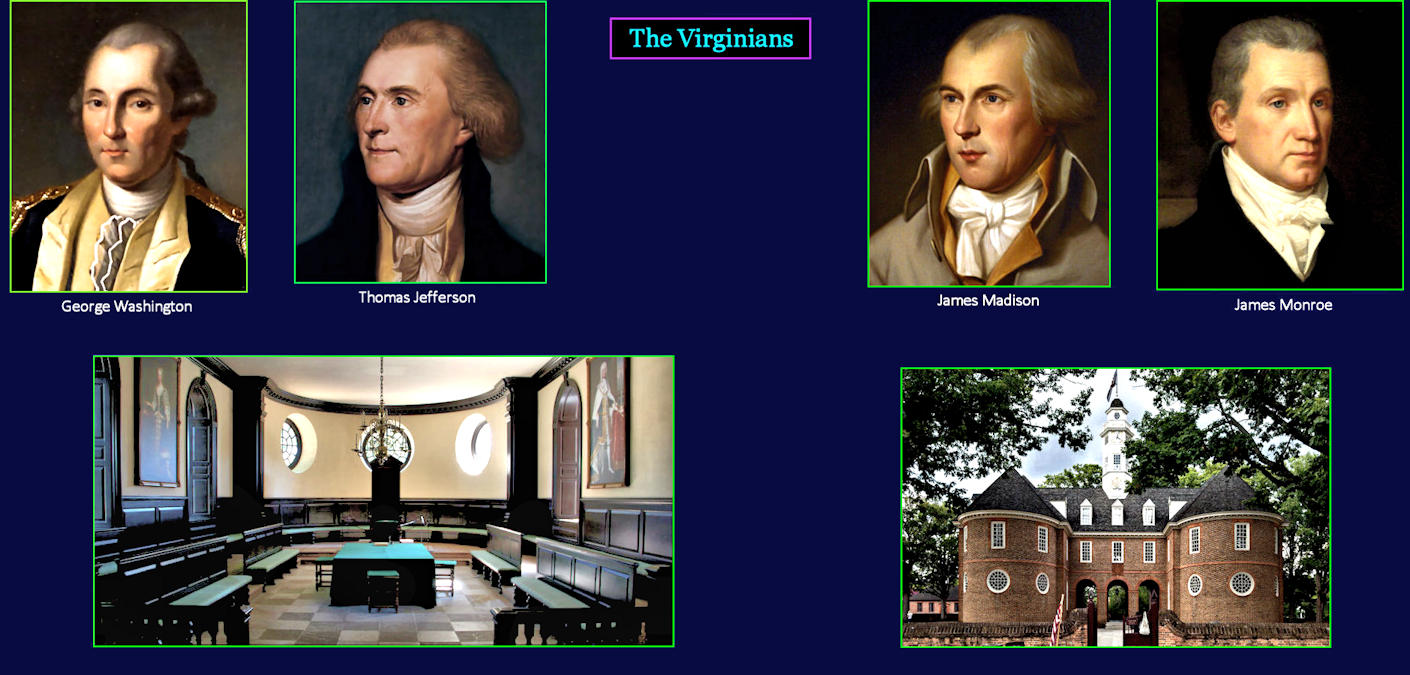
America's Aristocrats Virginians are prominent among the Founding Fathers of America, and all are tobacco plantation owners. Washington and Jefferson each own more than 100 slaves. Some planters act kindly towards their slaves, but this is not the general rule. Plantations need an active workforce, and slaves can only be forced to work through constant prodding, and threats of punishment. Tobacco and rice plantations produce 85% of all southern income, on land that isn't well suited to any other business activity. Slavery is vital. | |||||||||
| |||||||||
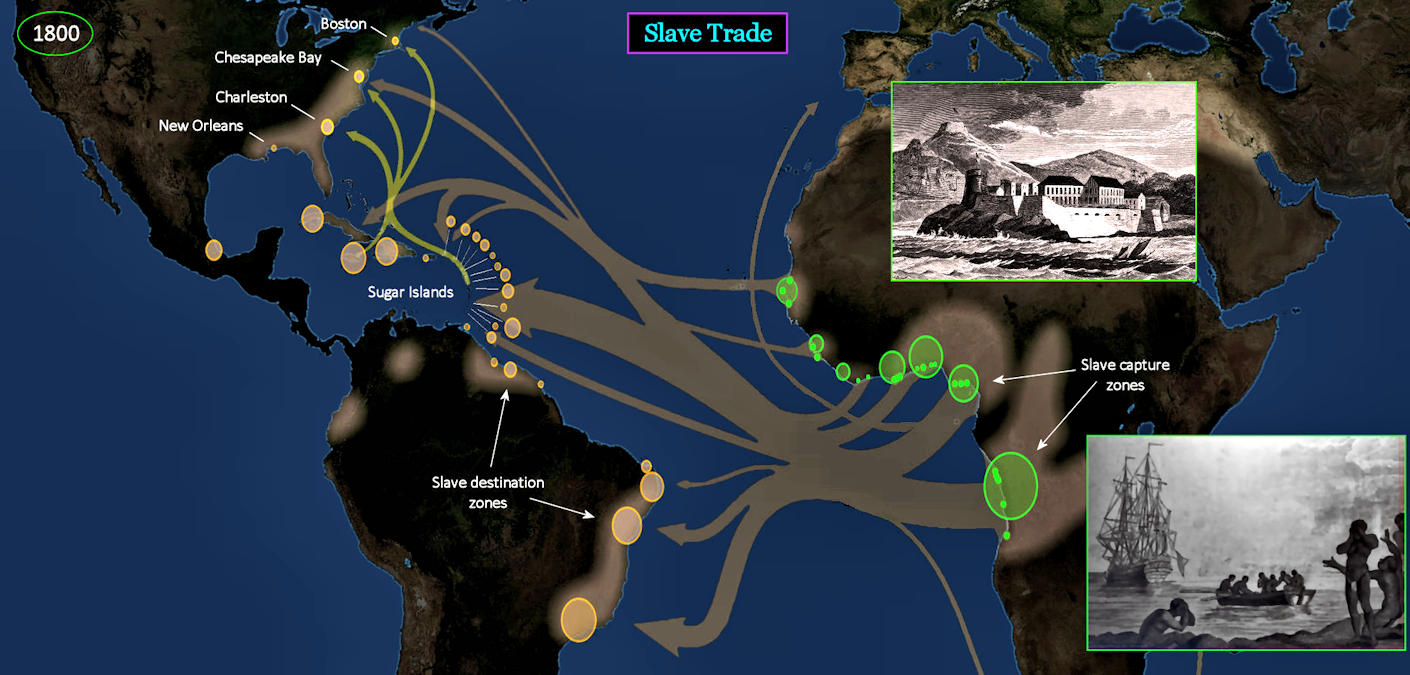
Dirty Business This is the trans-Atlantic slave trade at its peak, around 1800. The small GREEN dots are slave ports. Larger GREEN and ORANGE circles are departure and landing sites. The larger the circle, the greater the volume of slave traffic at that site. Slaves are kept in confinement structures resembling castles (top right) until ready to be loaded onboard. This will all soon come to an end, when the British finally abolish the trans-Atlantic transportation of slaves. Shipments to America effectively cease by 1825. | |||||||||