| |
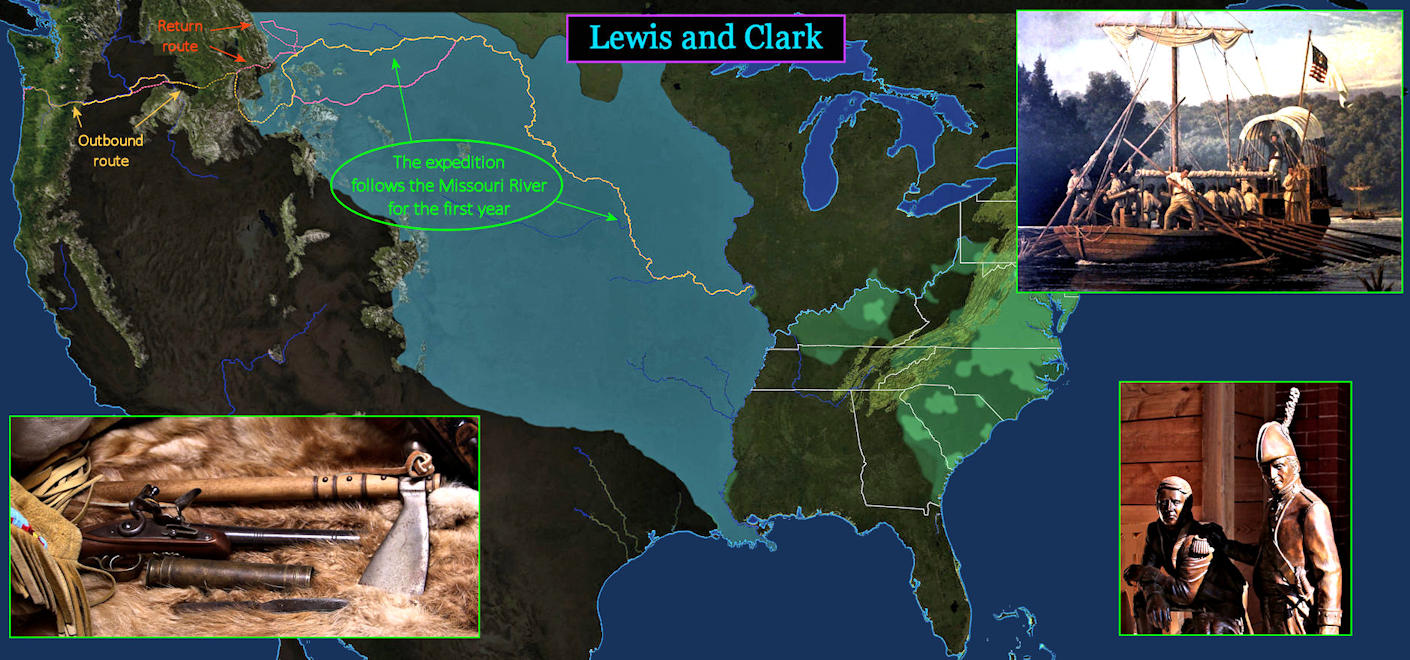
Westward Exploration Lewis and Clark (lower right) explore a vast new territory, traveling mostly by keelboat up to the base of the mountains. They then continue on foot (dotted lines on map), finally reaching the Pacific by canoe before returning, mostly along the same route. Lewis turns in his report with the disappointing news that most of the new territory is dry grassland, unsuitable for farming. |
| |||||||||
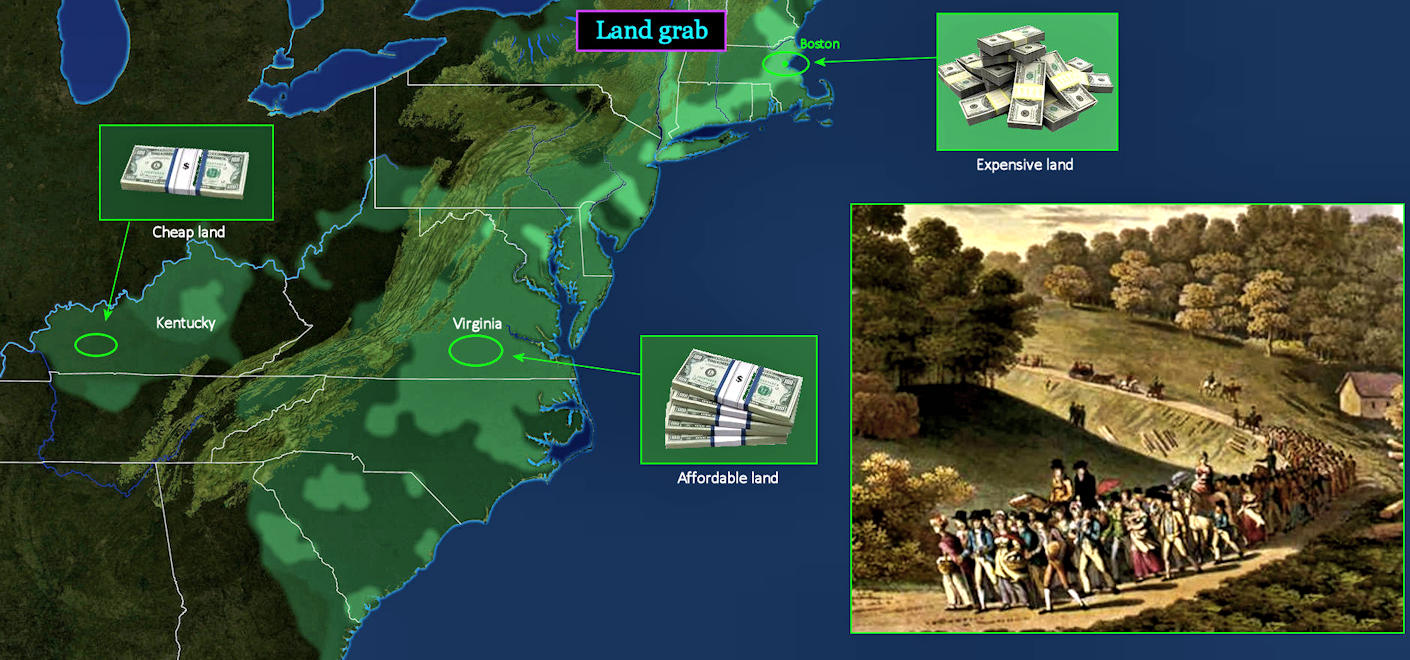
Cheap Western Land The sudden availability of new land sparks a growing flood of settlers from coastal regions to the wide-open expanse just across the mountains. You might wonder why people would be so eager to abandon their homes, and strike out for unbroken wilderness without stores, roads, or even houses. The easy answer is money. The new lands at the edge of previously settled territory are dirt cheap, and if history is any guide, will quickly jump in value. For the young and bold, the lure is irresistible. | |||||||||
| |||||||||
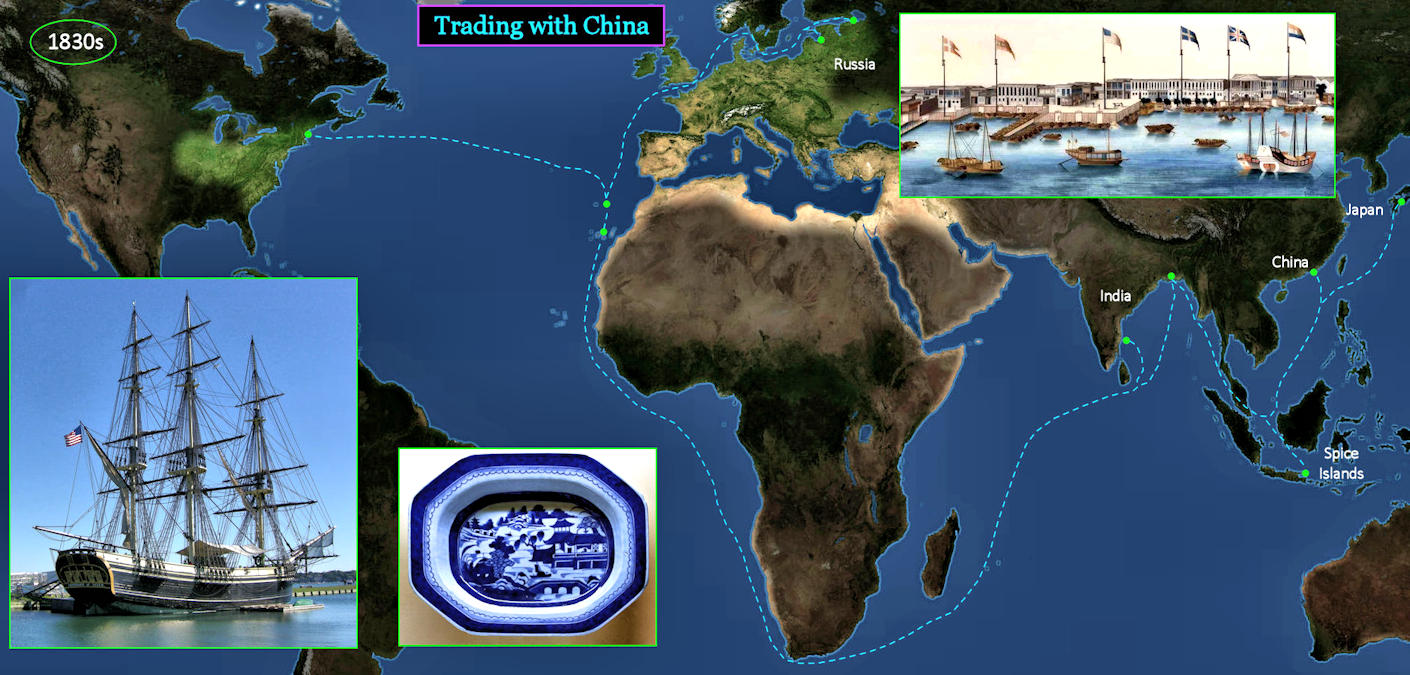
The China Trade While many Americans are heading west in their wagons, enterprising New Englanders are sailing off in the opposite direction. They are attempting to break into markets that have been so profitable for British and Dutch trading companies for the past 100 years. Captains from Salem and Boston are soon gathering cargos from India, China, and even Japan. They return with tea, coffee, spices and silks, and a new kind of blue-and-white porcelain from China that becomes instantly popular among Boston elites. | |||||||||