| |
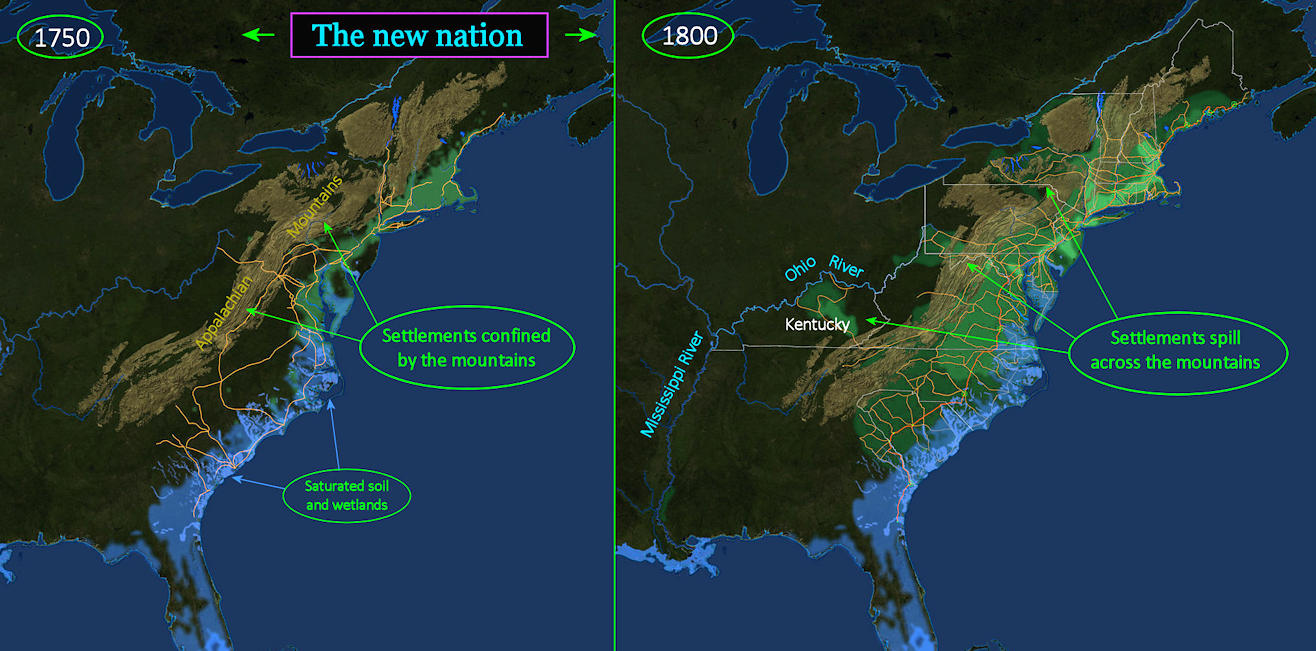
Settled Area Triples Before America wins its independence, settlements barely reach the foothills of the Appalachian Mountains (left). But just 50 years later, settlements spread in all directions, right up to the mountains and beyond. All this new settlement is held together by rough roads maintained and improved by the newly-energetic US Postal Service, with federal money (right). |
| |||||||||
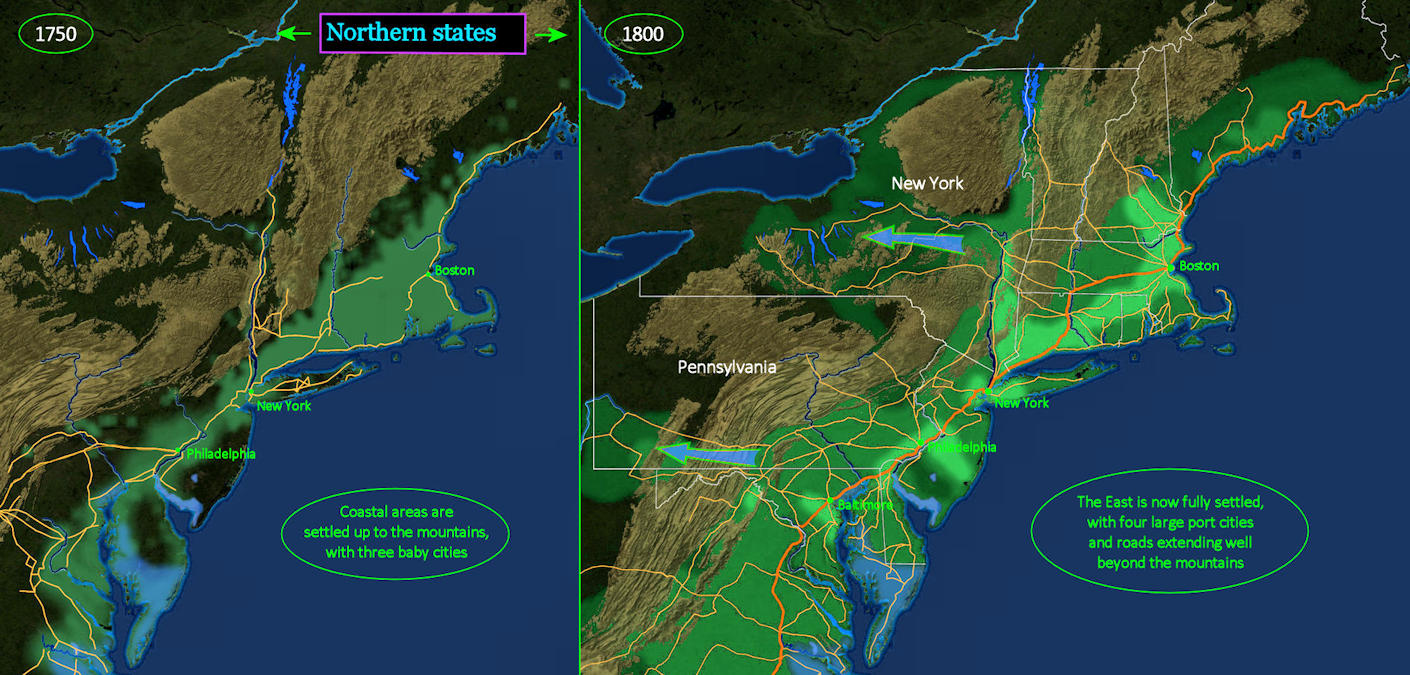
Filling in Fast By 1800, roads in northern states (right) have spread well up into New Hampshire, Vermont and coastal Maine, though it still takes several days to send a letter from Boston to New York. Business is still mostly confined to the major port cities, but tax revenues from shipping are no longer flowing to Britain, but staying in America. Settled areas have expanded, but have also filled in at the same time, with more people and more farms. The areas highlighted in BRIGHTER GREEN are the more thickly-populated areas. | |||||||||
| |||||||||
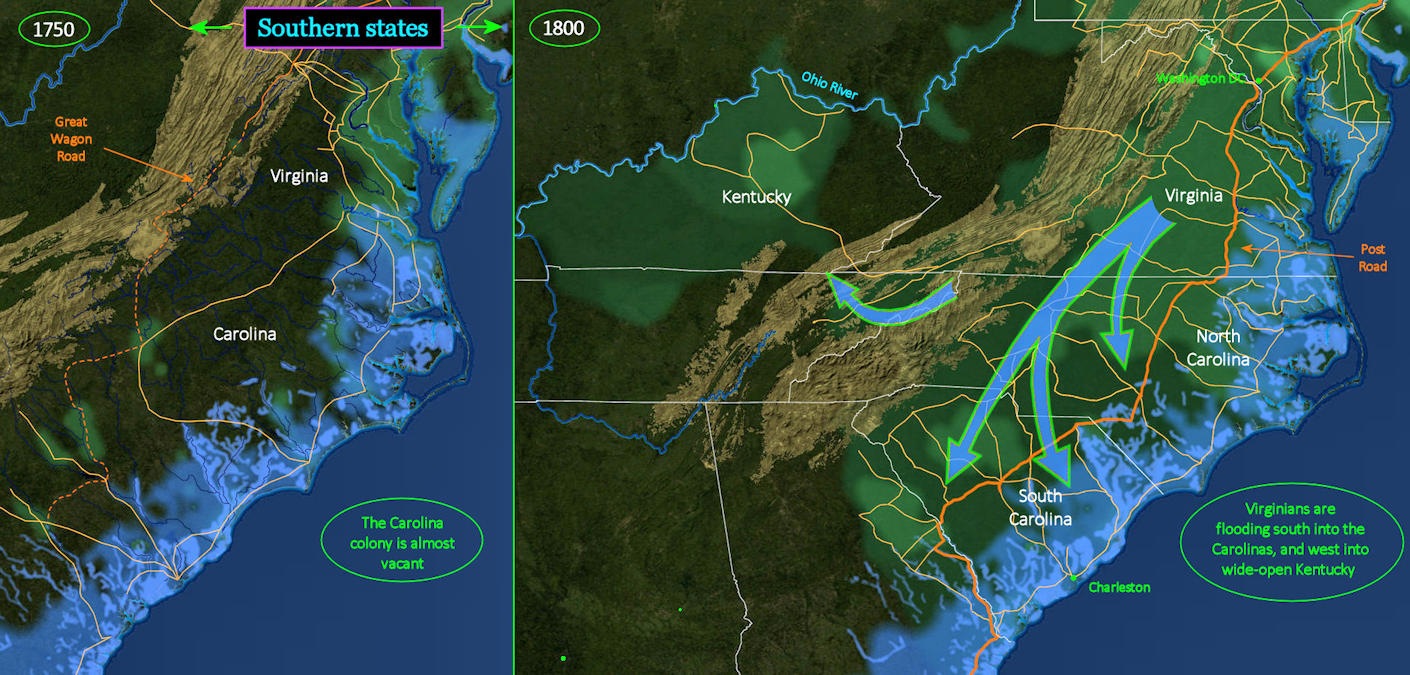
Flowing South and West Growth in the South is equally dramatic, led by Virginia tobacco planters spreading outwards to establish new plantations on fresh soil. They are pouring through a narrow mountain gap into Kentucky and Tennessee, and southward into Georgia. The newly-invented cotton gin results in the establishment of the first big cotton plantations, which are suddenly profitable. This is the first instance of new technology having a major impact on the future course of American history. | |||||||||